Small Business Optimism Rises at Yearend on Hopes for a Soft Landing
Small Business Confidence Improves Slightly
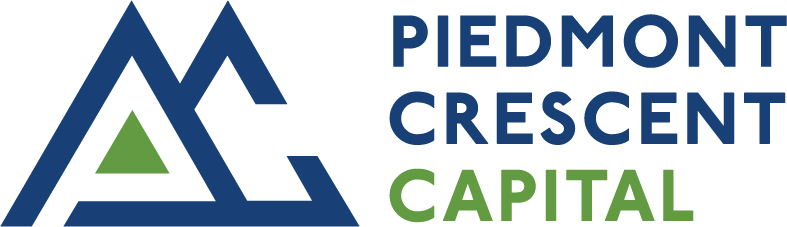
- The NFIB Small Business Optimism Index rose 1.3 points to 91.9 in December, its highest in the past five months.
- The improvement coincides with decline in interest rates and rise in stock price following the December 13 FOMC meeting.
- Five of the index’s 10 components rose in December, led by a 7-point improvement in earnings trends and share of business owners expect the economy to improve.
- Despite the recent improvement, earnings trends (-25%) and the net share expecting the economy to improve (-36%) remain extremely weak and near recession levels.
- Business owners remain concerned about inflation and hiring challenges, although these concerns have eased somewhat.
- Continued pressure from rising operating costs may push inflation higher.
- December's rise in Small Business Optimism further supports the growing consensus for a soft landing. While moderating final demand is limiting pricing power, rising wage pressures might still push inflation higher if the Fed eases too aggressively.
Small business confidence closed the year positively, with the NFIB Small Business Optimism Index rising 1.3 points to 91.9 in December, marking its highest level in five months. Despite this improvement, the index has remained below its 50-year average of 98 for the past 24 months. The index last reached or exceeded the average back in December 2021.
This boost in optimism corresponds to the substantial decline in interest rates and a subsequent rise in stock prices following the Federal Reserve’s FOMC meeting on December 13, where the Fed stated they had likely finished raising interest rates for this cycle and attention shifted toward rate cuts. The Santa Claus rally ended before New Year’s Day, however, and markets have experienced a partial retracement as bond yields rebounded.
Small business confidence got a boost from improved financial conditions during December.
Small business owners remain concerned about inflation and continue to face challenges hiring qualified staff, although both concerns have eased somewhat in recent months. Apprehension about sustaining profit margins amidst continually rising operating costs is also weighing on confidence, a challenge that likely intensified as the minimum wage rose across various states and municipalities at the start of the year. The capacity to offset these higher costs has diminished as demand has cooled.
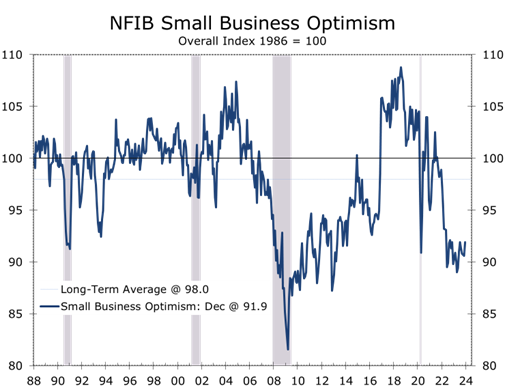
Small businesses are grappling with ongoing challenges in the labor market, as 40% of business owners report having unfilled job openings. This breakdown includes 33% seeking skilled workers and 14% seeking unskilled labor. Particularly noteworthy are the acute difficulties faced by construction firms and smaller trucking companies in filling positions.
Fifty-five percent of small businesses reported hiring or trying to hire in December, up 1 point from November. Forty-nine percent (89% of those hiring or trying to hire) of owners reported few or no qualified applicants for the positions they were trying to fill (down 1 point). Twenty-eight percent of owners reported few qualified applicants for their open positions (up 2 points) and 21 percent reported none (down 3 points).
Small business owners are less willing to compromise on qualifications and experience.
Given the cost constraints small businesses face, many owners seem to be choosing not to fill open positions unless there is a fully qualified applicant. There has been a steady decline in owners’ intentions to fill open positions in recent months, even as the share of businesses reporting they have open positions continues to rise. Additionally, businesses are paying more, with 36% of owners raising compensation and 29% planning to raise pay over the next three months.
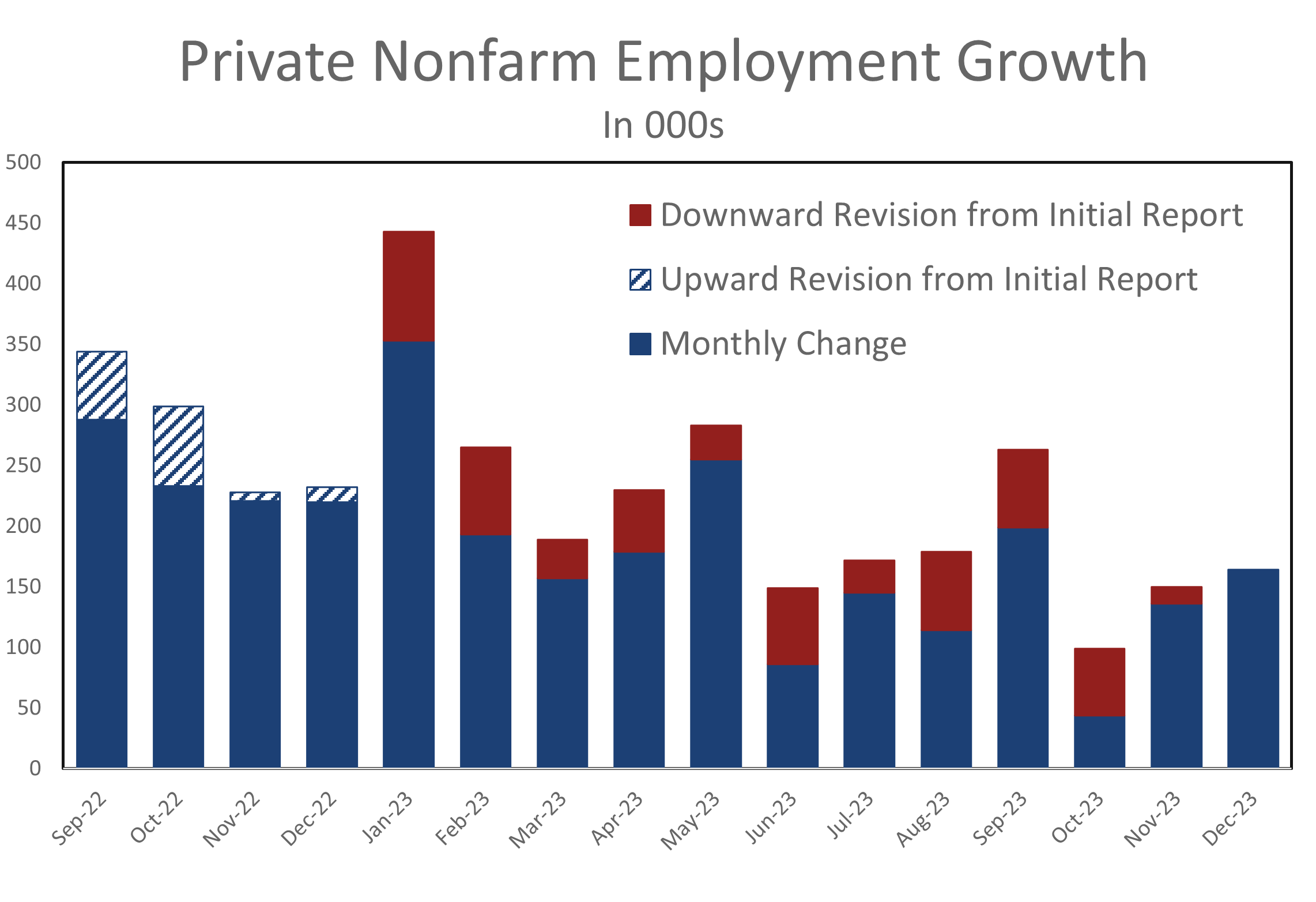
The reluctance small business owners show in adding staff comes at a time when labor markets are giving off mixed signals. Although the headline nonfarm employment numbers have exceeded expectations, job figures have consistently been revised lower. Other employment measures, including the household employment survey and ADP survey, suggest that hiring has been less robust. This gap will likely be reduced once the Bureau of Labor Statistics (BLS) releases their annual revisions along with the January employment data on February 2nd.
Small business owner have seen their pricing power diminish as economic growth has slowed.
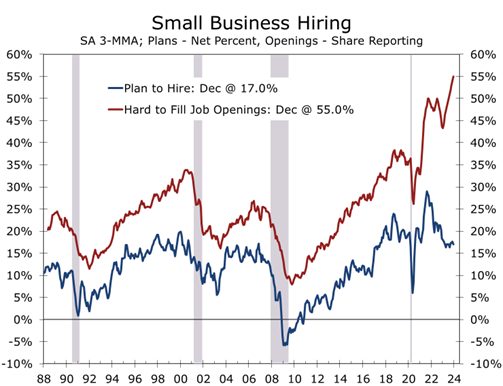
Continued pressure from rising operating costs may push inflation higher. The proportion of firms expecting to raise prices is trending higher again, even as the share of those actually raising prices continues to trend lower. This split reflects the diminished pricing power that small businesses currently have. The divide is also a concern for policymakers. If the Fed cuts interest rates too aggressively, demand would likely strengthen to the point that businesses would once again pass their higher costs onto consumers.Top of Form
Disclaimer: This publication has been prepared for informational purposes only and is not intended as a recommendation offer or solicitation with respect to the purchase or sale of any security or other financial product nor does it constitute investment advice.

December Job Growth Tops Expectations
But Hiring Is Softer Than the Headline Suggests
- Employers added 216,000 jobs in December, surpassing the consensus forecast of 165,000.
- Hiring was not as strong as the headline suggests, as payrolls were revised lower for the preceding two months.
- Fewer industries are hiring aggressively, with the majority of job growth now coming from government (+52K), leisure and hospitality (+40K) and health care (37.7K).
- Hiring is strongest in lower-paying occupations where rehiring workers laid off during the pandemic has proved challenging.
- The unemployment rate remained unchanged at 3.7%, as both the labor force and household employment falling by roughly the same proportion.
- Average hourly earnings rose a larger-than-expected 0.44% in December and are up 4.1% from last December.
- Job growth remains solid but is concentrated in a handful of industries, with weak hiring in the goods sector and a slowdown in certain parts of the services sector. Revisions to previous months' data reinforce the decelerating trend. We anticipate three quarter-point interest rate cuts this year, which is half of the current consensus.
There is much to digest from the December employment data. Although the overall gain of 216,000 jobs exceeded expectations by 41,000 jobs, downward revisions to the previous two months’ data tempered the positive headline number. Job growth was also concentrated in just a few sectors, with government payrolls (+52k) and health care and social assistance (+58.9k) contributing to over half of December’s increase.
Warmer-than-usual weather likely boosted job gains, particularly in leisure hospitality (adding 40,000 jobs), and retail trade and construction (both adding 17,000 jobs). Hiring in most other sectors was less robust. Manufacturers added 6,000 jobs, financial services added 2,000 jobs (primarily in property management), and information services added 14,000 jobs, mainly in motion pictures, indicating a sustained recovery from the recent writers and screen actors’ strikes.
Temporary staffing jobs continues to decline, possibly presaging weaker overall job growth.
The AI boom appears to be bolstering hiring in the tech sector. IT services added 4,400 jobs in December, and professional, scientific, and technical services saw a gain of 25,300 job. Overall job growth in professional services, however, continues to be hindered by declines in temporary staffing jobs (-33.3k).

The unusually wide gap between temporary jobs and nonfarm employment is primarily due to increased hiring in the public sector. Government payrolls have surged by 2.9% this past year, with the bulk of the increase occurring at the state and local levels. Hiring has accelerated in various line positions that were challenging to fill following the pandemic lockdowns, such as bus drivers, sanitation workers, and within public school systems and other public works.
Outside of government hiring is losing momentum., Private sector rose just 1.5% over the past year and at a 1.0% annual rate over the last three months. Furthermore, the initial estimate for private sector payrolls has been consistently revised lower in each subsequent month throughout the year.
Private sector payrolls have consistently been revised downward each month this year.
The BLS will provide a comprehensive employment update next month when they releases their annual revisions along with the January employment data. The BLS noted earlier these revisions are expected to reduce job growth by about 0.2% points lower than previously reported and private-sector payrolls will be 0.3% lower. The benchmark revisions reflect hard data through March 2023 but should also incorporate improved estimates for months since then, which should further reduce previously reported job growth.
Average hourly earnings rose a larger than expected 0.44% in December and finished the year 4.1% higher than in December 2022. Wages for production and supervisory workers rose 0.34% but are up an even larger 4.3% over the past year. Aggregate hours worked fell 0.2% in December and rose at just an 0.8% annual rate during Q4, which is consistent with our expectation for Q4 real GDP to rise at a 2% annual rate.
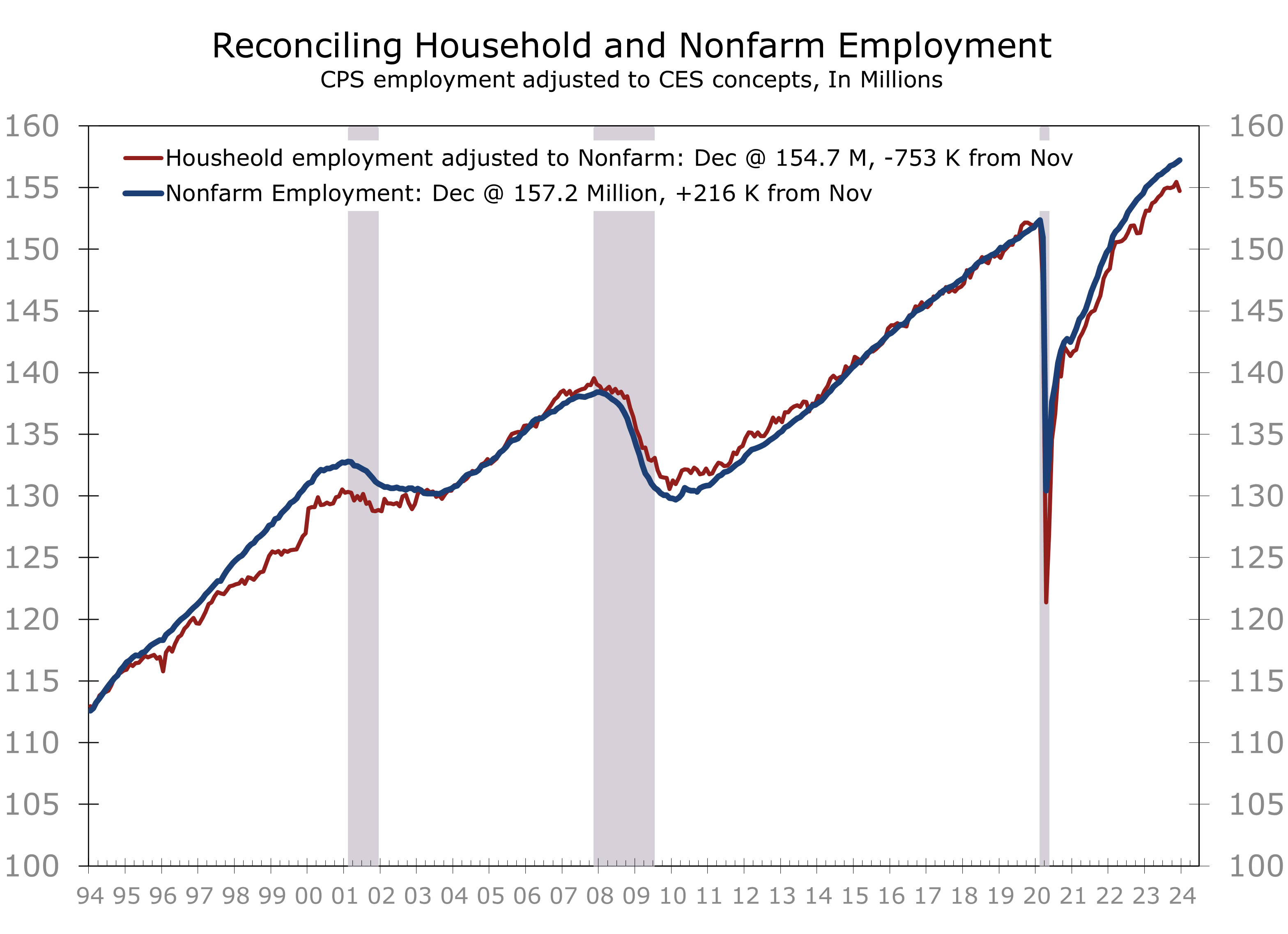
Nonfarm payrolls will likely be revised lower and more closely follow the household series.
The unemployment rate held steady at 3.7%, but the underlying data were unequivocally weak. Household employment dropped by 683k, offset by a 676k decline in the labor force. The labor force participation rate fell to 62.5%, reflecting declines in both men and women. Employment adjusted to the nonfarm employment methodology was even weaker, decreasing by 753k.
We expect nonfarm employment to be revised closer to the household series when the annual revisions are released next month. Despite the slower pace of job growth, we continue to believe the Fed will maintain a cautious approach to easing next year. We look for three quarter point cuts, most likely following the June, September, and December FOMC meetings.
Disclaimer: This publication has been prepared for informational purposes only and is not intended as a recommendation offer or solicitation with respect to the purchase or sale of any security or other financial product nor does it constitute investment advice.
Make Way for the Iowa Caucuses
The Iowa Caucuses Explained
- Caucus Process: Iowa Republicans kick off the primary season on January 15 with a caucus, involving small group meetings, speeches & debates among caucusgoers, and proportional delegate allocation.
- Top Issues: Economy (81%), Immigration & Border Security (80%), Government Spending/Deficit (72%) are top concerns for likely caucusgoers.
- Local Focus: Agricultural issues, particularly related to corn, eggs, pork, and ethanol, take center stage in the campaign.
- Policy Proposals: Candidates advocate relocating federal agencies to Iowa to amplify local voices in policymaking.
- Campaign Dynamics: Former President Trump highlights trade achievements, while Governor DeSantis emphasizes education reforms and school choice.
On January 15, the 2024 primary season will officially begin as Iowa Republicans meet to vote for their preferred presidential candidates. The caucus process works differently from a regular primary. Instead of casting a secret ballot, Iowa voters show up to their local caucusing precinct at 7 PM local time. The caucuses then begin with speeches from community leaders in favor of each candidate, after which attendees write the name of their preferred candidate on a blank piece of paper and give it to their precinct captain. After tallying the votes, the precinct captain reports the totals to the Iowa Republican Party. Delegates are then awarded proportionality to the candidates based on the totals. [1]
The economy is the most pressing issue to Iowa Republicans according to polling from the Des Moines Register. Eighty-one percent of likely caucusgoers feel the economy is extremely important. Immigration and border security is second at 80%, followed by government spending and the deficit at 72%. Other issues polled include the Israel-Hamas War, relations with China, and abortion restrictions. [2]
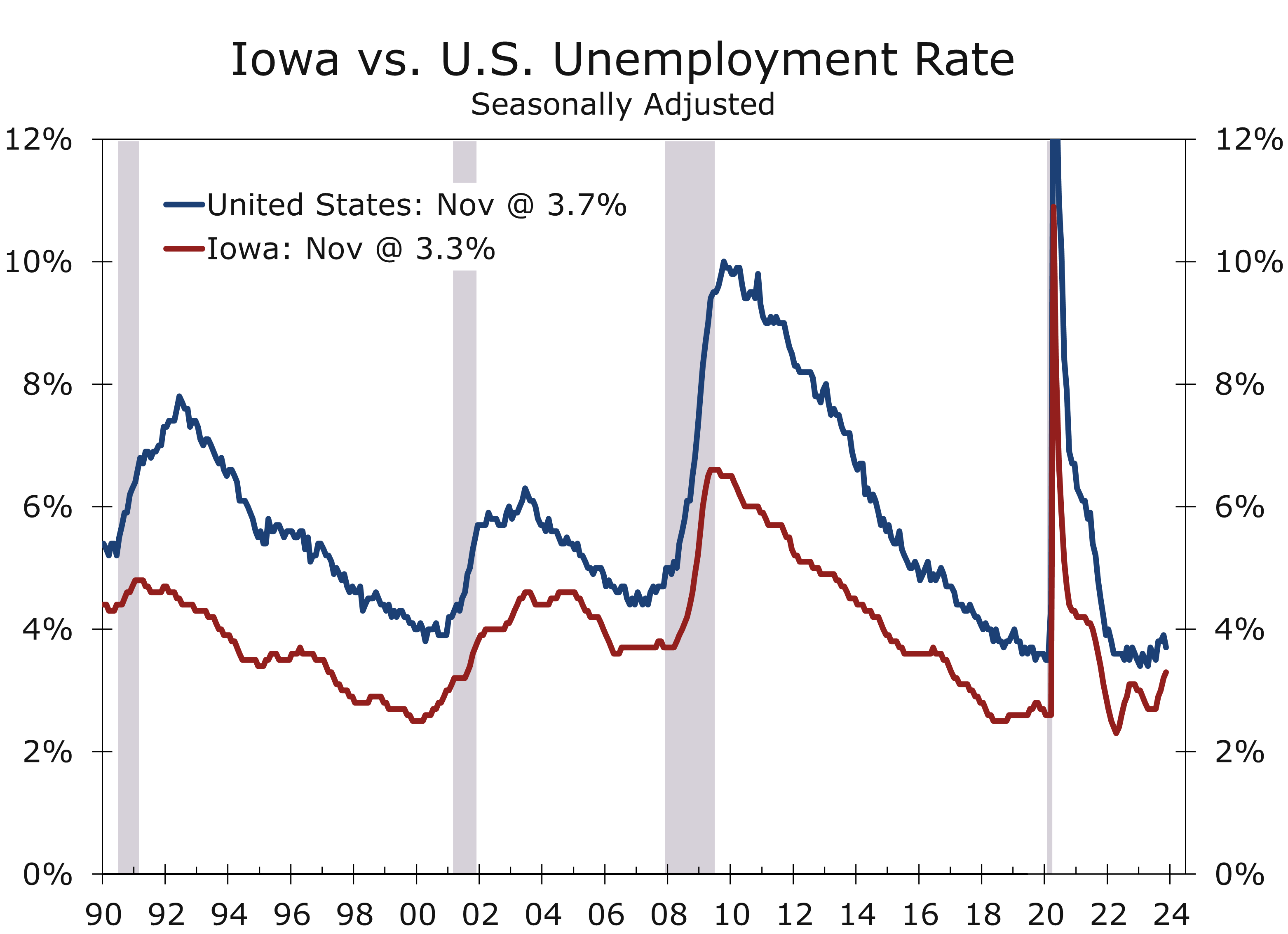
Iowa’s economy has slowed. Nonfarm employment dropped by 0.3% in the last seven months, resulting in a reduction of 5,100 jobs. The unemployment rate has risen slightly due to layoffs in the state’s large financial sector and a general slowdown in hiring.
[1] https://iowacapitaldispatch.com/2023/12/26/ethanol-is-a-key-iowa-issue-for-gop-presidential-contenders/
[2] https://iowacapitaldispatch.com/2023/12/26/ethanol-is-a-key-iowa-issue-for-gop-presidential-contenders/
While inflation has moderated, the higher cost of living remains a key concern. Housing costs have risen dramatically since the pandemic, with home prices rising 30% since the first quarter of 2021. Personal income surged when the stimulus checks were sent out in early 2021 but is up just 3.3% since then.
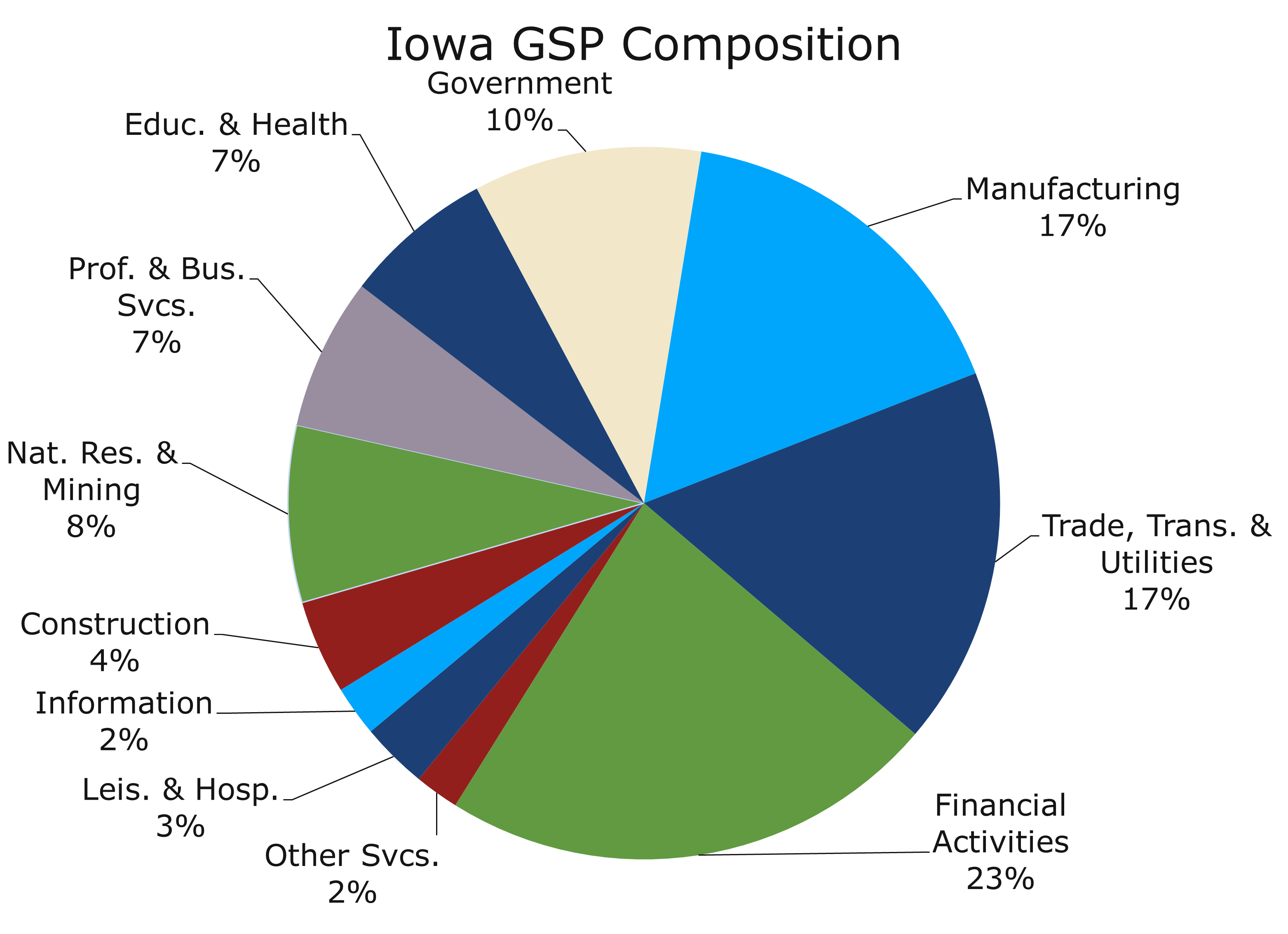
Iowa manufacturers have struggled of late. Business fixed investment has weakened in recent quarters, which is hurting capital goods producers. Exports have also struggled, reflecting weaker economies in Europe and China.
Even with inflation now moderating, the high cost of living remains a key concern.
Local concerns have been at the forefront of the campaign, particularly agricultural issues. Iowa is the nation’s largest producer of corn, eggs, and pork. Ethanol, a renewable fuel source from which most of Iowa’s corn is used to produce, has become a contentious source of debate during the campaign. Governor DeSantis came under attack from Trump for opposing the Renewable Fuel Standard during his time in Congress, a mandate that requires ethanol to be blended with gasoline. Vivek Ramaswamy was condemned by the Iowa Renewable Fuels Association for criticizing the use of eminent domain to build pipelines that would be used by ethanol producers.[1]
Candidates have made broader calls for deregulation and the removal of federal bureaucracy in the agricultural sector. Governor DeSantis pledged to move the U.S. Department of Agriculture to Iowa, an idea applauded by Iowa Governor Kim Reynolds. President Trump made a similar move in 2019 by relocating two Department of Agriculture research centers to Kansas City. Proponents of relocation laud the policy as giving local farming communities a larger voice in federal policymaking.[2]
[1] https://iowacapitaldispatch.com/2023/12/26/ethanol-is-a-key-iowa-issue-for-gop-presidential-contenders/
[2] https://www.desmoinesregister.com/story/news/elections/presidential/caucus/2023/12/02/gop-presidential-candidate-ron-desantis-completes-99-country-tour-during-iowa-caucuses-campaign/71718112007/
Former President Trump has invoked his record on trade during campaign rallies across the state. He discussed the reworking of NAFTA into the USMCA, and argued the benefits seen by farmers due to his tariffs on China.[1] Meanwhile, Governor DeSantis touted his own record in Florida. Education has been a key issue to the DeSantis campaign. Florida and Iowa have similar school voucher systems at the state level. DeSantis has campaigned alongside Governor Reynolds on the merits of school choice in their states while arguing for its implementation at the federal level.[2]
So how much do the Iowa Caucuses matter? The short answer is not as much as they used to. Over the past several election cycles, Iowa has provided a fairly poor predictor of overall success in the primaries. This holds especially true on the Republican side. Not since 2000 has a non-incumbent Republican won both the Iowa Caucuses and the presidential nomination.
[1] https://iowacapitaldispatch.com/2023/12/26/ethanol-is-a-key-iowa-issue-for-gop-presidential-contenders/
[2] https://www.kwqc.com/2023/12/19/iowa-gov-reynolds-joins-desantis-monday-bettendorf-campaign-event/
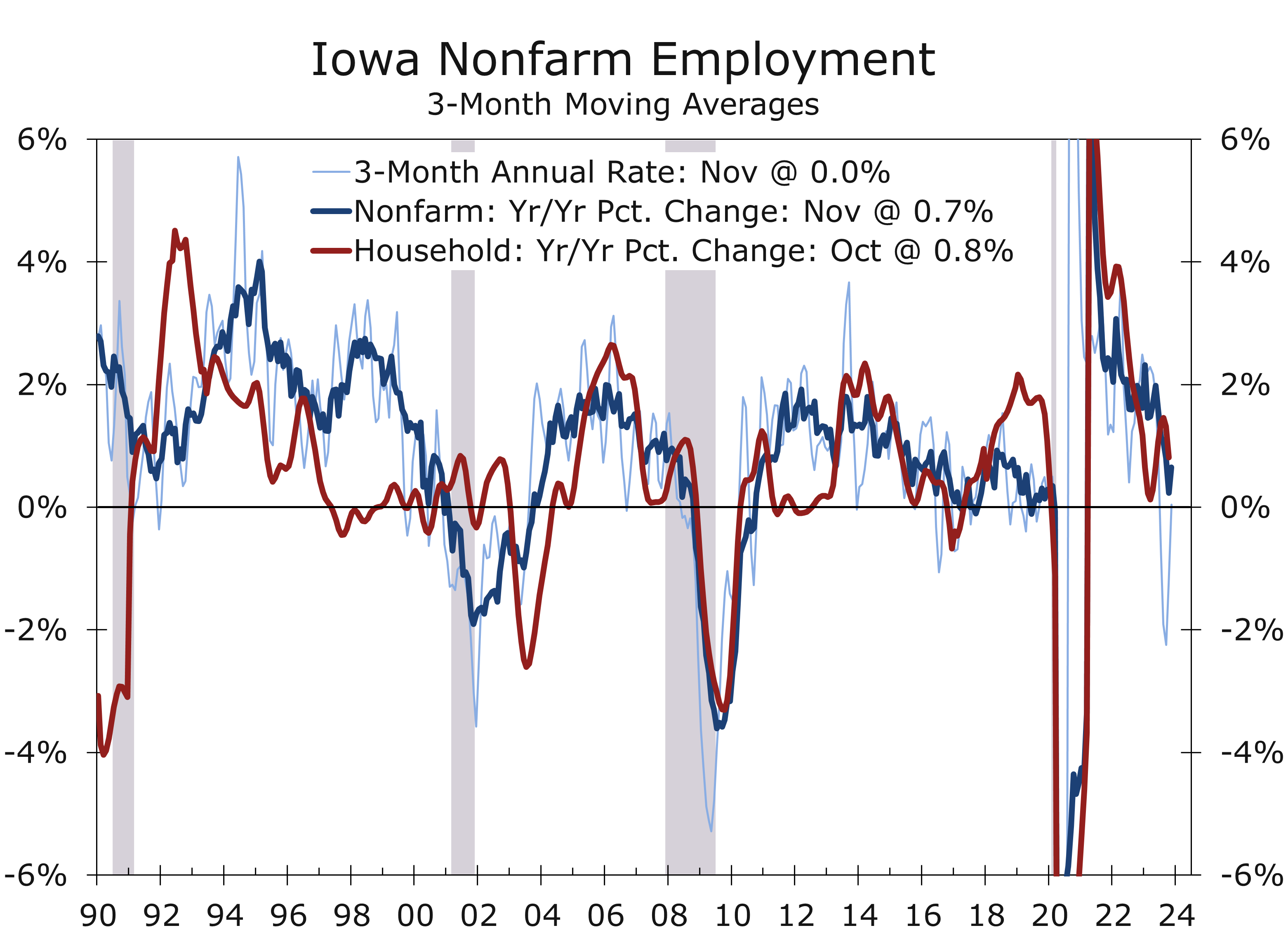
The Iowa Caucuses have been more predictive for the Democratic Party, predicting the nominee in 2004, 2008, and 2016. However, the famously chaotic 2020 Caucuses, in which President Biden placed fourth and no winner was declared for weeks, have led Democrats to question Iowa’s relevance. [1]
For the first time since 1972, Iowa will not be the first event on the DNC’s primary calendar. Instead, New Hampshire will be the first Democratic primary on January 23, followed by South Carolina on February 3. Iowa Democrats will forgo using a caucus altogether, although party leaders will still meet on the 15th. There will instead be an all-mail primary with the winner declared on Super Tuesday, March 5. [2]
The 2020 setback may have catalyzed change, but the DNC’s inevitable shifts were driven by Iowa’s electorate no longer mirroring the Democratic Party’s diverse support base. Iowa’s transformation from a swing state is evident, having leaned right since 2016. The 2022 midterms solidified Republican control over all congressional districts, the governorship, both senate seats, and nearly all statewide offices in Iowa, making it unlikely to be a competitive state in the 2024 general election. [3]
Despite Iowa’s flawed record, the caucuses hold significant importance for former President Trump’s primary challengers. Governor Ron DeSantis, especially, views the Iowa Caucuses as a critical test for his underwhelming campaign. Having toured all 99 Iowa counties with retail-style events, he garnered key endorsements from Governor Reynolds and numerous state legislators. [4] Governor DeSantis still faces one major hurdle, however; the polls. The governor continues to trail the former president in Iowa by over thirty percentage points, and endorsements have so far done little to reverse his fortunes. [5]
Governor DeSantis is no stranger to being the underdog. Polling underestimated him in both of his gubernatorial campaigns, something the governor often touts when questioned about the polls on the campaign trail. However, a thirty-point polling miss is virtually unheard of in national elections. There is also no guarantee the Florida governor will even finish second. Former South Carolina Governor Nikki Haley was enjoying solid upward momentum following multiple strong debate performances. She is now in a virtual tie with DeSantis in national polling and closing the gap in Iowa. A third-place finish in Iowa would likely spell the end of the DeSantis campaign, with Haley already well-ahead of the Florida governor in New Hampshire and South Carolina. [6]
Absent a significant surprise, the former president is highly likely to win the Iowa Caucuses. The margin of Trump’s expected win will be revealing. If the January 15 results align with the polls, the primaries could essentially be decided before they even officially begin. But a close second place finish from either DeSantis or Haley could keep the next few weeks interesting. If the GOP field hopes to have any chance of upending Trump, it will need to consolidate quickly. The second-place finisher in Iowa will likely emphasize this point after the caucuses, especially if the margin between them and Trump is closer than expected. Whether the other candidates heed such a call is another matter.
Of the remaining major candidates, only Governor DeSantis would probably drop out following a disappointing night in Iowa. Nikki Haley and Chris Christie are unlikely to call it quits before New Hampshire, the state where their poll numbers are strongest. Vivek Ramaswamy is somewhat of a wildcard. Though his chances of receiving the GOP nomination are near zero, he is a vocal disruptor who does not seem deterred by his low polling numbers. Indeed, his unwavering flattery of President Trump has led many to believe his run is not about winning rather than boosting his national profile for 2028 or beyond. In this case, he has an incentive to stay in the spotlight for as long as he can, after which he will most certainly endorse the former president.
[1] https://www.kwqc.com/2023/12/19/iowa-gov-reynolds-joins-desantis-monday-bettendorf-campaign-event/
[2] https://www.kwqc.com/2023/12/19/iowa-gov-reynolds-joins-desantis-monday-bettendorf-campaign-event/
[3] https://www.kwqc.com/2023/12/19/iowa-gov-reynolds-joins-desantis-monday-bettendorf-campaign-event/
[4] https://www.kwqc.com/2023/12/19/iowa-gov-reynolds-joins-desantis-monday-bettendorf-campaign-event/
[5] https://www.kwqc.com/2023/12/19/iowa-gov-reynolds-joins-desantis-monday-bettendorf-campaign-event/
[6] https://www.kwqc.com/2023/12/19/iowa-gov-reynolds-joins-desantis-monday-bettendorf-campaign-event/
Disclaimer: This publication has been prepared for informational purposes only and is not intended as a recommendation offer or solicitation with respect to the purchase or sale of any security or other financial product nor does it constitute investment advice.
The South Once Again Accounts for the Bulk of the Nation’s Population Growth
Migration Trends Continue to Favor the South
- The US added 1.6 million people in 2023, with population growing by 0.5% to reach 334,914,895 residents.
- Population trends are still returning to their pre-pandemic norms, with fewer deaths and more typical migration patterns.
- Although births remain well below their pre-pandemic norms, a substantial increase in immigration resulted in the nation’s largest population gain since 2018.
- The South continues to attract new residents both from other states and other nations, accounting for 87% of the nation’s population growth in 2023.
- Texas added the most new residents, while Florida led the nation in both domestic and international net migration.
- North Carolina added the third-largest influx of new residents, and South Carolina saw the fastest percentage increase.
- Immigration has re-emerged as the primary driver of US population growth. Internal migration is influenced by ongoing affordability concerns and a growing numbers of retiring baby boomers.
The latest Census population estimates show population growth continues to recover towards its pre-pandemic norms. The nation added 1.6 million new residents from July 1, 2022, to July 1, 2023. The 0.5% increase brought the US population up to 334,914,895. Immigration accounts for more than two-thirds of last year’s gain. Net natural increase added 504,495 residents, as deaths fell sharply.
Immigration is likely to remain the dominant source of growth, as births remain below their pre-pandemic pace. Deaths exceeded births in 19 states this past year, with Pennsylvania posting the largest ‘natural decrease’ with 11,079 more deaths than births. Pennsylvania also saw 24,825 more residents move away to other states than move in. That loss was offset by a net 25,766 increase in immigration from abroad.
Puerto Rico actually posted the largest net natural decrease in population, with 35,099 deaths far eclipsing 18,805 births. Immigration into Puerto Rico was only slightly positive, with a net 1,872 more residents moving into Puerto Rico than moving away, leaving the territory with a net loss of 14,422 residents.
Texas young and dynamic economy make it a top destination for businesses and residents.
Texas led the nation with the largest net natural increase, 158,253 more births than deaths, and ranked second in domestic migration and third in international immigration. Population growth once again led the nation, with Texas adding 473,453 residents. Most of that growth has been in the state’s largest metro areas.
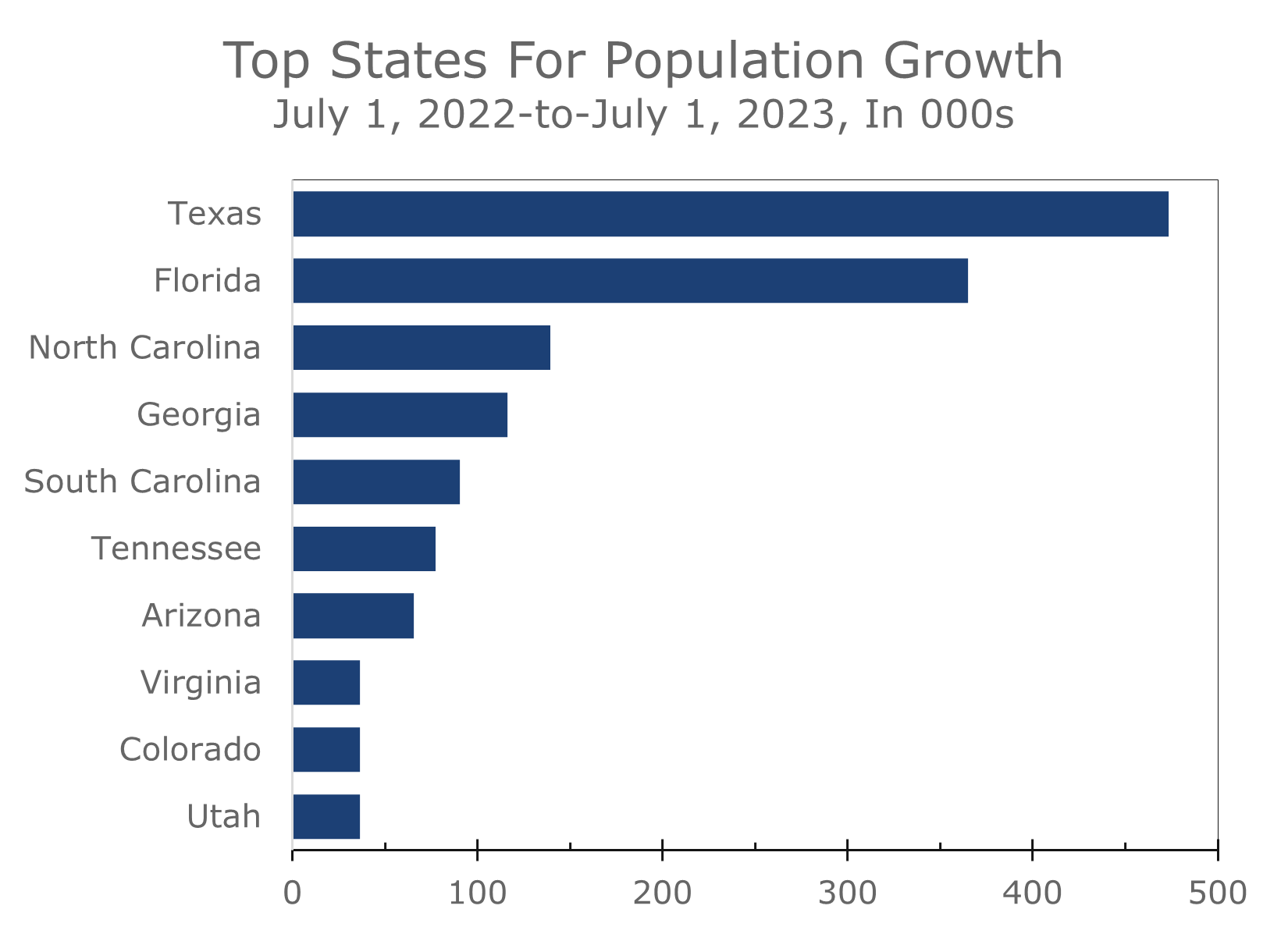
Dallas attracts more companies relocating out of California than any other metro area, while Austin consistently ranks as one of the nation’s fastest growing metro areas and is one of the nation’s leading technology hubs. Growth is extending to outlying areas due to rising housing costs closer to Austin. Similarly, in historically affordable Houston, home prices have increased, pushing residents to more distant suburbs like Fulshear, Conroe and Pearland.
Rapid population growth is extending into distant suburbs and undiscovered areas.
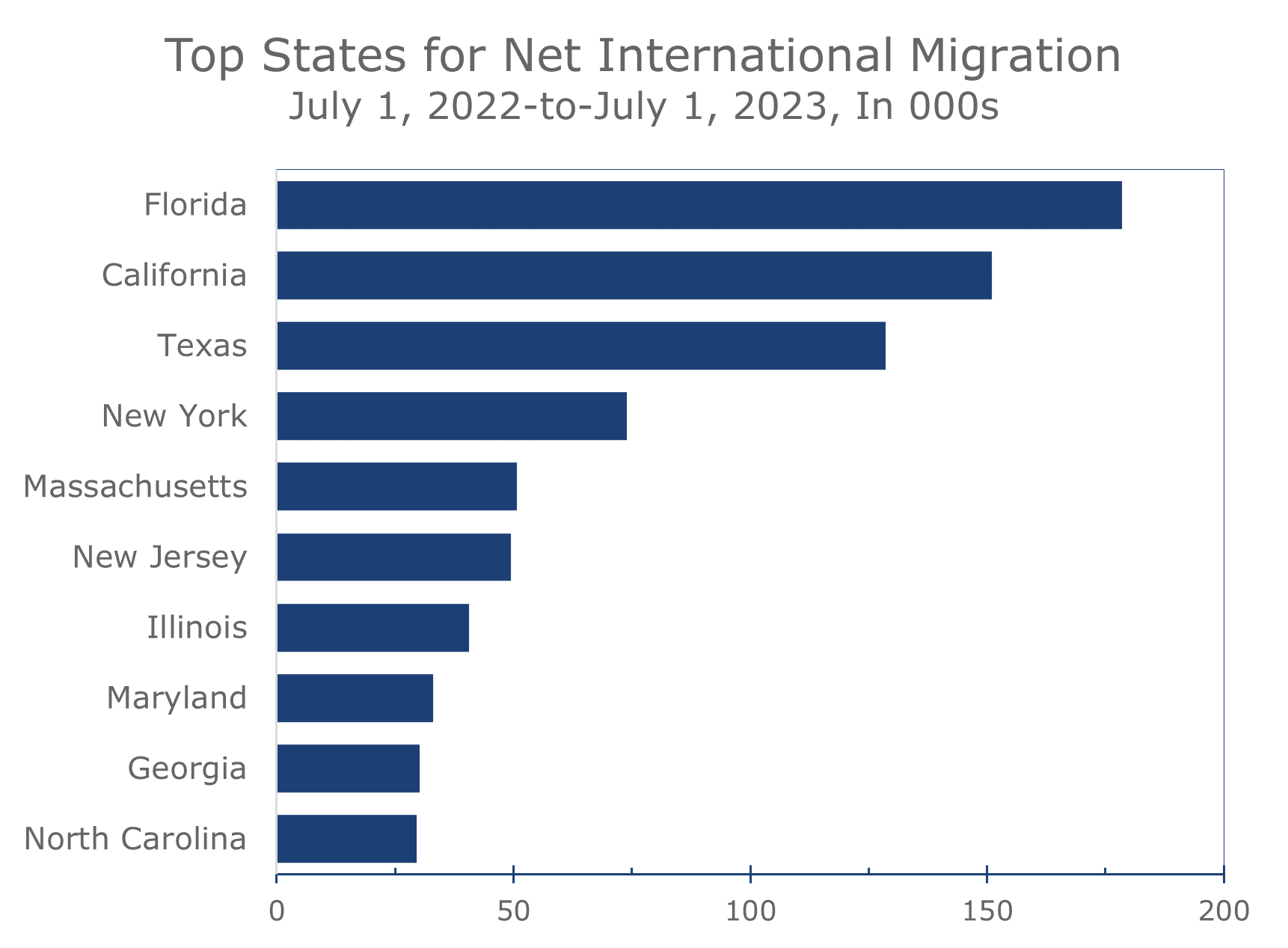
Florida’s ongoing development is pushing affordability to historic lengths. The state continues to lead in net domestic migration, attracting a growing number of Baby Boomer retirees, particularly in Central and Southwest Florida. In 2022, Florida was home to seven of the nation’s ten fastest-growing metro areas, including Lakeland, Cape Coral-Fort Myers, North Port-Sarasota, and Punta Gorda. The Villages, situated approximately 55 miles north of Orlando, retained its status as the fastest-growing metro area in the country, boasting a population growth of 7.5%.
Jacksonville, in Northeast Florida, has experienced a significant increase in new residents since the pandemic. The metro area, with a younger demographic, reflects the dynamic economies of other rapidly growing Southeast metro areas. Jacksonville gained approximately 35,000 residents in 2022, with the fastest growth in St. Johns County to the South and Nassau County to the North.
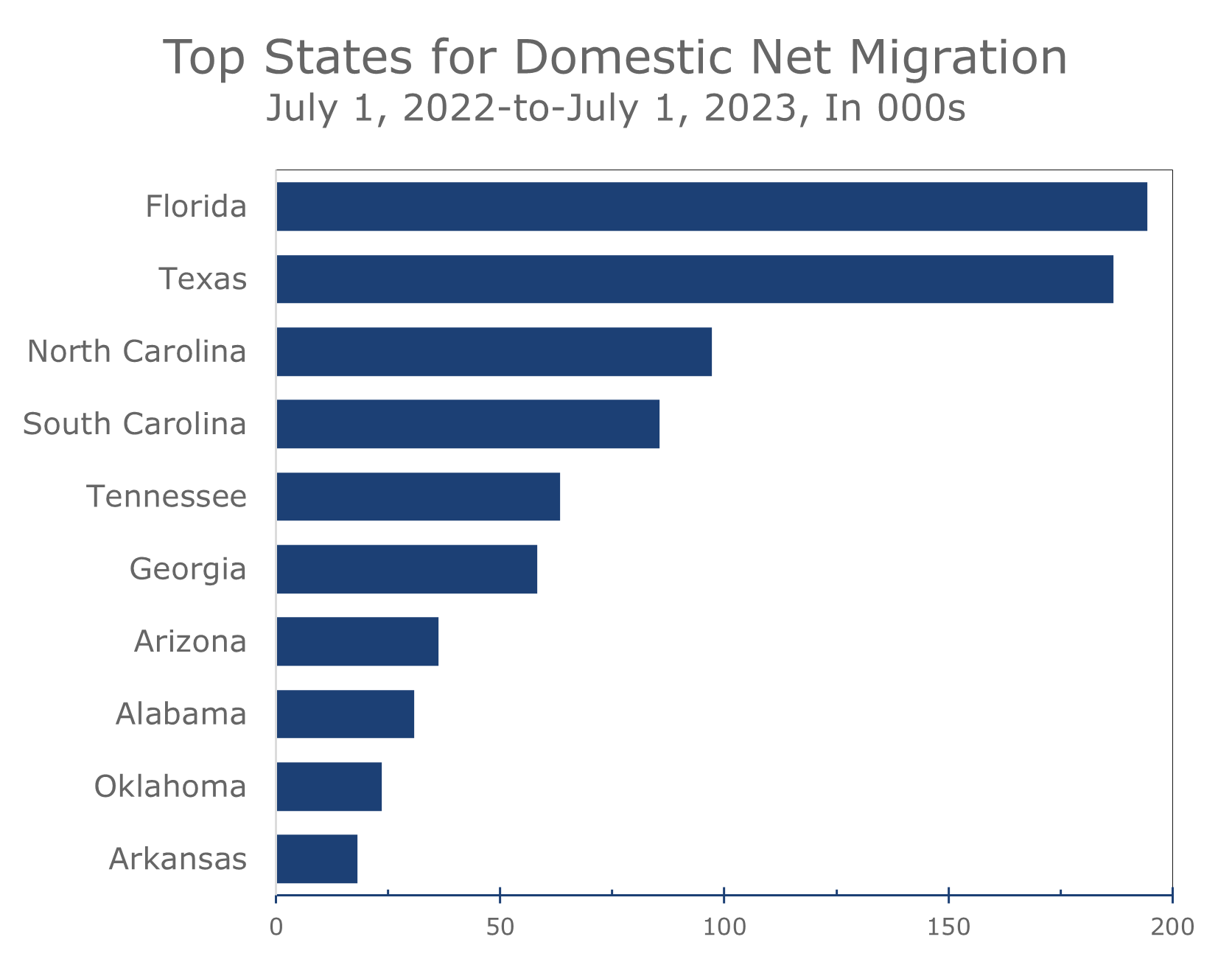
Georgia ranked fourth in the nation for population growth, adding 116,077 residents. Fueled by robust net natural growth and gains in domestic and international migration, most newcomers favored the Atlanta metro area, especially in the northern fringes of the 29-county MSA. Georgia’s coastal areas are also experiencing rapid growth, led by the Port of Savannah and a continuous influx of new industry.
North Carolina gained the third-largest number of new residents (+133,088), and South Carolina added the fifth-largest number (+89,368). This influx includes prime-working age residents in larger metro areas, mainly along the Piedmont, and a significant number of retirees along the coast. Charlotte, Raleigh, Greenville, and Charleston consistently rank among the fastest-growing large metro areas, with Myrtle Beach is the nation’s second-fastest-growing MSA.
The affordability migration is fueling growth in the Carolinas and Eastern Tennessee.
South Carolina was the fastest-growing state in 2023 (+1.7%), driven primarily by retirees seeking more affordable alternatives to relocating to Florida. This trend is also benefiting Tennessee, especially Nashville, Knoxville, and eastern Tennessee.
Disclaimer: This publication has been prepared for informational purposes only and is not intended as a recommendation offer or solicitation with respect to the purchase or sale of any security or other financial product nor does it constitute investment advice.
Five Key Questions About the 2024 Economy
What’s Ahead for the U.S. Economy in 2024?
- This past year has seen the economy move away from the brink of recession, even with many of the most hallowed business cycle indicators flashing warning signals. While the risks of recession have subsided, there remains considerable uncertainty about the economic outlook. Our final report for 2023 looks at five critical questions for the New Year.
- The first question is just how soft the soft landing will be. We expect real GDP to contract slightly during the first half of 2023 but do not believe the National Bureau of Economic Research (NBER) will label this decline a recession, as long as nonfarm employment continues to increase.
- Question 2: Will inflation decelerate enough for the Federal Reserve to cut the federal funds rate? We suspect that it will and look for the Fed to cut the federal funds rate by one-quarter point three times this year beginning in late June, with another cut in September and a third cut following the November election.
- Question 3: Have long-term interest rates peaked for this cycle? We believe they have but look for the 10-Year Treasury retrace about half the drop seen since the October CPI report.
- Question 4: Will the drop in long-term interest rates provide a significant boost to home sales. Partially Yes. New home construction will certainly get a boost, but with job growth slowing even fewer existing homeowners will put their homes on the market, limiting sales in the much larger resale market.
- Question 5: Will Commercial Real Estate deteriorate to the point that it leads to a significant credit crunch? The credit crunch already underway will linger and intensify but credit conditions will not tighten so much that they stifle overall economic growth.
The case for a soft landing was bolstered this past month, which saw the majority of economic data continue to come in on the soft side, while inflation continued to moderate. Fears of recession have subsided, and a majority of economists now see a soft landing in 2024, with real GDP growth slowing below its long-term potential and inflation continuing to moderate towards the Fed’s 2% inflation target. We continue to expect the economy to slow to a pace just a touch softer than a traditional soft landing and expect to see real GDP decline slightly during the first half of 2024. Nonfarm employment is expected to continue to edge higher, however, which we believe will prevent the NBER from labeling this slowdown as an outright recession.
Interpreting the ups and downs of economic activity is unusually difficult today because of the enormous swings in economic activity brought about by the pandemic and the policy response to it. Direct and indirect stimulus to households, businesses, and state and local governments helped fuel a massive economic recovery when the economy reopened following the pandemic. The resurgence led to widespread shortages, which helped drive inflation sharply higher and eventually caused the Fed to aggressively hike interest rates. This past year has seen conditions begin to normalize, as higher interest rates and tightening credit conditions have slowed capital spending, home sales, and consumer spending for big-ticket items. Spending remained strong enough for real GDP to grow 3.0% this past year, a point driven home by the third quarter’s blistering 5.2% annual rate growth.
The abrupt swings in economic activity and inflation led to unusually large moves in some of the most hallowed economic indicators. The yield curve, which captures the difference between short-term and long-term interest rates, inverted 17 months ago and has remained inverted. Inverted yield curves have preceded every recession in the modern era, with a typical lag of between 12 and 18 months. In addition, the Leading Economic Indicators index has declined for nineteen consecutive months and is currently 7.6% below its year ago level. The LEI has never fallen this far or for this long without the economy falling into recession.
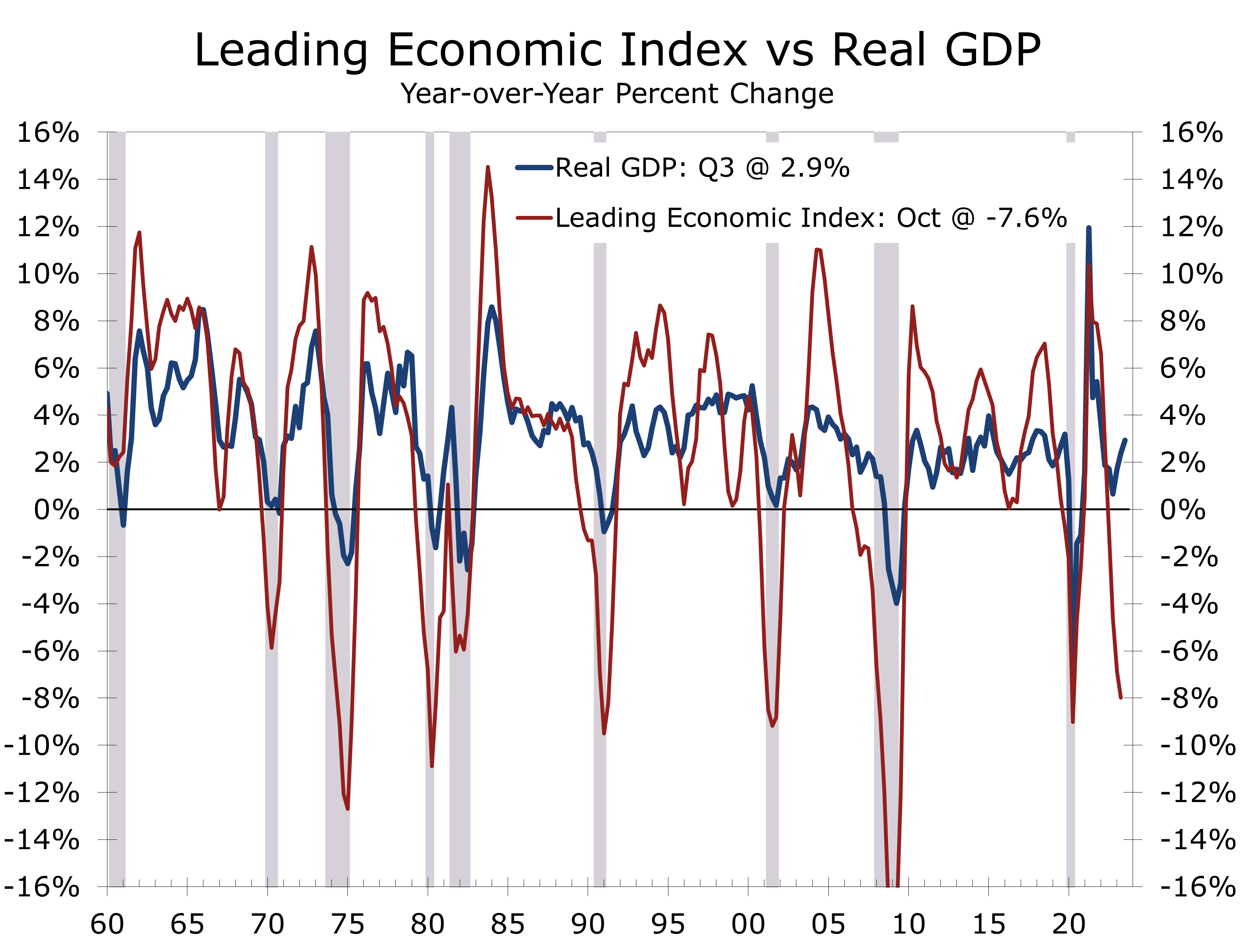
Given the plunge in the LEI, it is surprising that talk of recession has subsided as much as it has. One reason the slide in the LEI may not be as telling as it has been the past is that several components of the LEI have been distorted by the huge swings in economic activity surrounding the pandemic and its aftermath. The surge in consumer purchases of big-ticket items including furniture, appliances and home electronics led to a surge in factory orders for consumer goods and output, which lifted the LEI as the economy emerged from the pandemic. Goods purchases weakened this past year, however, as spending shifted toward services and experiences. Services and experiences spending does not directly feed into the LEI, so this summer’s strength did not stem the slide in this key indicator.
History suggests it would be a mistake to dismiss the risks of recession associated with the slide in the LEI and the inverted yield curve. Afterall, banks borrow short-term and lend long-term, which means an inverted yield curve, with short-term rates higher than long-term rates, means bank lending is less profitable. This means banks will lend more selectively and take fewer risks, which slows credit growth and economic growth more broadly.
The primary reason so many economists have backed off their calls for a recession is job growth remains remarkably resilient. Employers added 199,000 jobs in November, continuing a string of solid, albeit gradually decelerating job gains. November’s job growth was bolstered by the return of 38,000 workers on strike in the auto sector and motion picture business. As in recent months, Health care (+76,800), government (+49,000), and Leisure and Hospitality (+40,000) accounted for the bulk of job gains. Employment declined in a few notable sectors including Retailing (-38,400), Employment Services (-24,600), Nondurable Goods Manufacturing (-8,000) and Transportation & Warehousing (-5,000). Even with these losses, however, the share of industries adding jobs in November edged higher to 54.6%. Job gains were more widespread a year ago, however, when the private payroll diffusion index was a robust 63.4%.
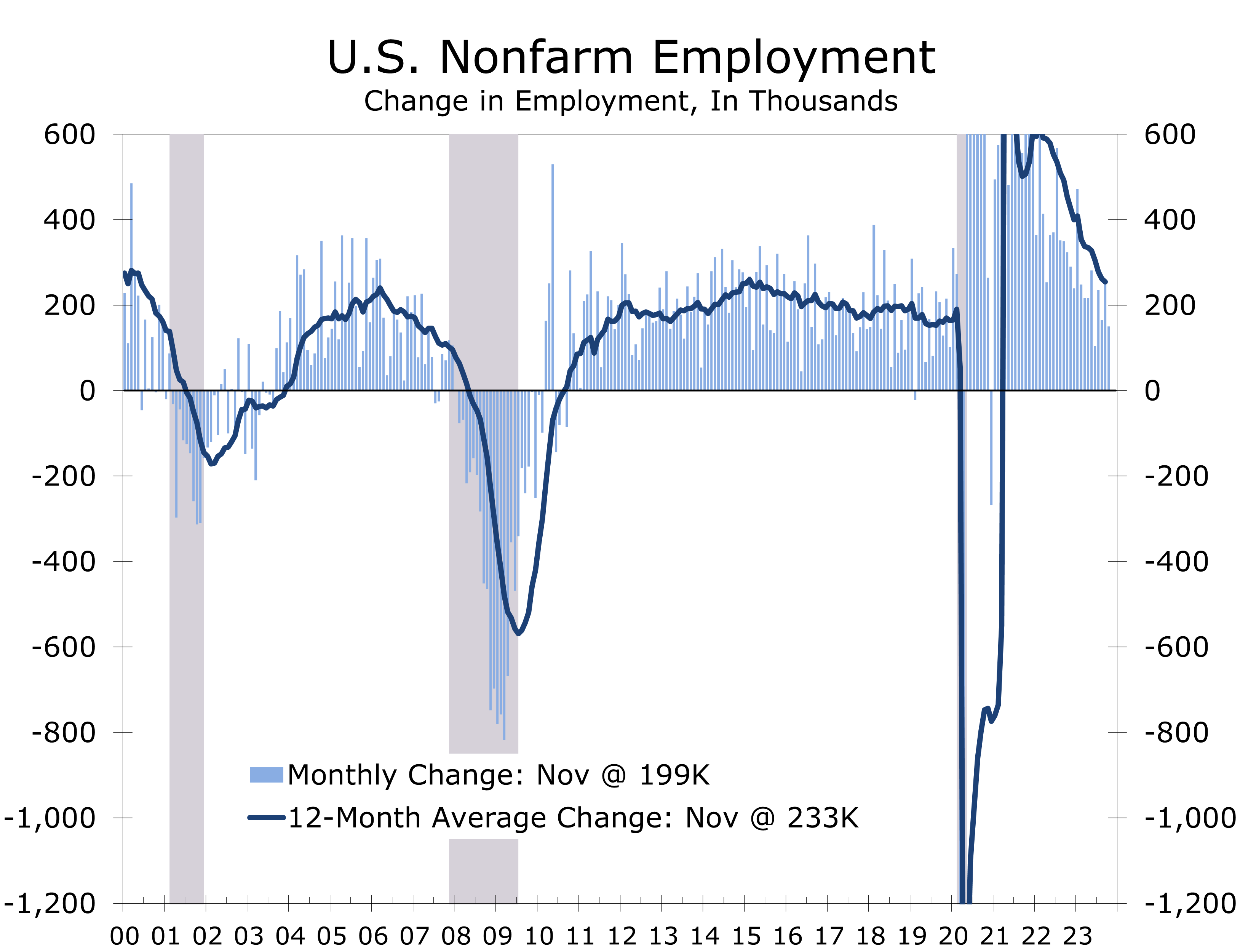
While nonfarm employment growth is clearly decelerating, job growth remains strong enough to keep the unemployment rate at the lower end of the range considered to be ‘full employment.’ The number of employed in the household survey surged by 747,000 in November, significantly outstripping a 532,000-person rise in the labor force. The unemployment fell 0.2 percentage points to 3.7%.
We expect hiring to decelerated further in coming months and suspect nonfarm employment is currently overstated. The BLS annual revision to nonfarm payrolls that will be released in early February will reduce payroll growth from April 2022 to April 2023 by 306,000 jobs, or about 0.2%. Job growth has likely decelerated further since then, however. Private sector payroll growth has been revised lower from its initially reported gain every month this year, including a -14,000 job revision to the October data. Even with the downward revision, private employers have added an average of 145,000 jobs a month over the past 3 months. That should provide enough cushion to keep payroll growth in positive territory, even if GDP growth dips slightly into negative territory early next year.
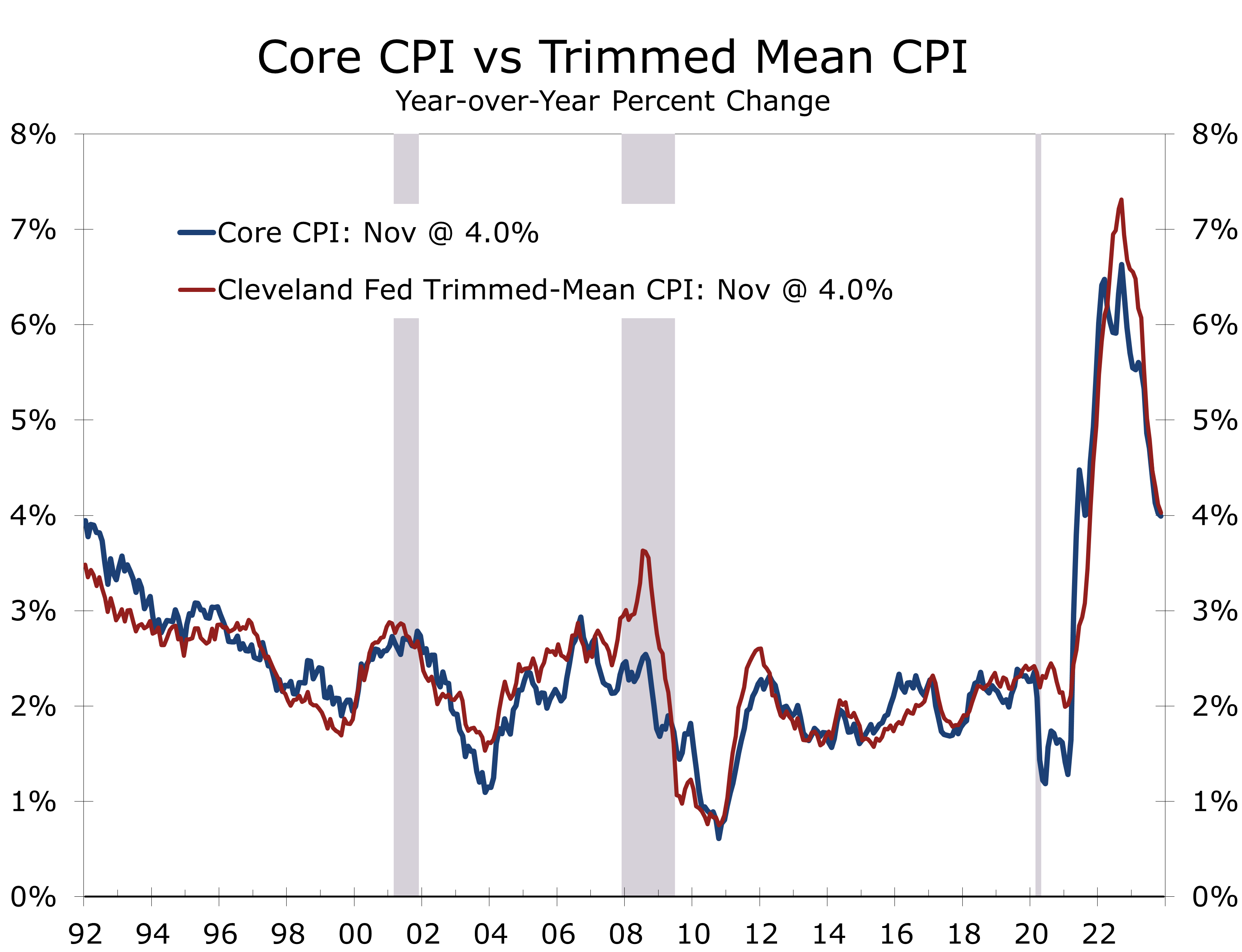
Question 2: Will inflation decelerate enough for the Federal Reserve to cut the federal funds rate? We believe it will. The overall CPI topped out at 9.1% in June 2022 and has fallen back to just 3.1% in November. The bulk of the improvement in the CPI has come from two areas: falling energy prices and a reversal in the spike in used car prices. Price pressures are moderating more broadly. We follow the Trimmed-Mean CPI, produced by the Federal Reserve Bank of Cleveland, and provides a broader picture of inflation than the widely followed core CPI but still excludes outliers. The Trimmed-Mean CPI has moderated along with the core CPI, falling from a recent peak of 7.3% in September 2022 to 4.0% in November of this year.
We expect inflation to continue to decelerate in 2024 but do not look for the core CPI to fall back to the Fed’s 2% target until the latter part of 2025 or later. Even so, the Fed should still be able to reduce the federal funds rate this coming year, however. The real federal funds rate, as measured as the difference between the mid-point of the federal funds rate target (5.50%) and trailing 12-month change in the core CPI (4.0%), is currently 150 basis points. We expect the year-to-year change in the core CPI to decelerate to 3.2% by the end of this year, which should allow the Fed to cut the federal funds rate by a quarter point three times in 2024. We feel the earliest the Fed would cut would be at the June FOMC meeting, followed by another cut in September and then another following the November election.
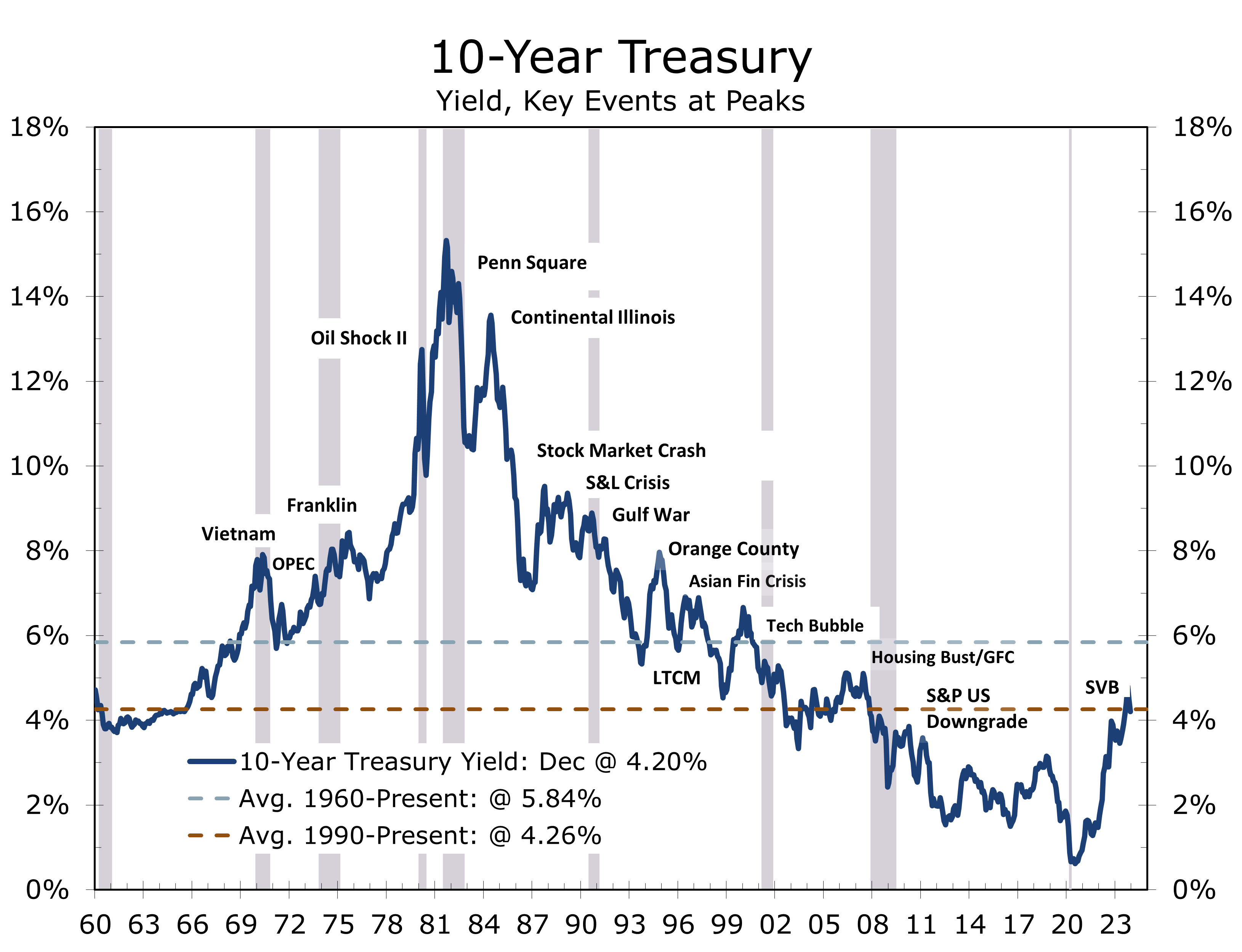
Question 3: Have long-term interest rates peaked for this cycle? Long-term interest rates have peaked for the cycle but may overshot to the downside in the rally that followed the better than expected inflation data for October and more recent acknowledgement by the Fed that they would likely cut interest rates in 2024. While we expect inflation to continue to decelerate, the improvement this coming year will be less dramatic than this past year. Prices for core services, which are primarily driven by wages, remain more problematic and are likely to improve only modestly this year. Inflation will still improve enough for the Fed to cut interest rates, just as not as early as the financial markets are now pricing in and not as aggressively. We look for a maximum of three quarter point cuts in 2024 and four quarter point cuts in 2025. Bond yields will retrace part of their recent declines, rising back to 4.50% and remain slightly above the 4.26% the 10-Year Treasury has averaged for the past 33 years.
Question 4: Will the drop in long-term interest rates provide a significant boost to home sales. Partially Yes. Home sales nearly ground to a halt when mortgage rates briefly spiked up to 8% and there was also a slew of cancelations to previously signed purchase contracts. Now that mortgage rates have fallen back to 7.20%, buyers will return to the market. New home sales and new home construction will certainly get a boost, but with job growth slowing even fewer existing homeowners are likely to put their homes on the market, which will further limit resales.
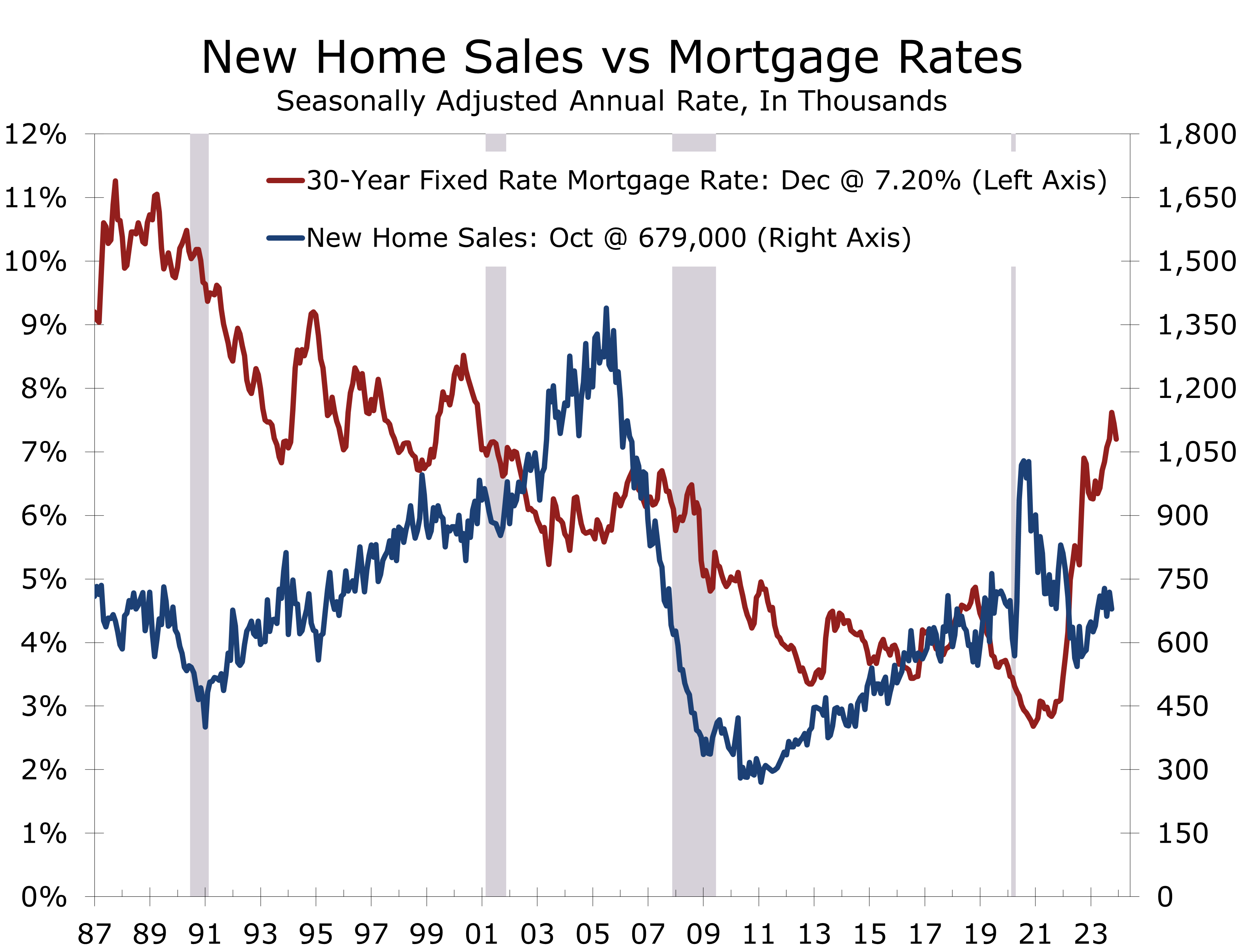
We have a cautious housing forecast for the coming year. Slower job and income growth will weigh on consumer confidence and slow overall home sales. We look for existing home sales to fall 6% from their current level by the middle of 2024. New home construction will continue to take market share from the existing home market, with the large national home builders faring the best. Home builders are routinely using their incentive budgets to buy down mortgage rates, which is particularly appealing to first-time buyers. That said we, are still looking for new home sales to decline modestly (-4.3%) during the first half of 2024, reflecting slower overall job growth.
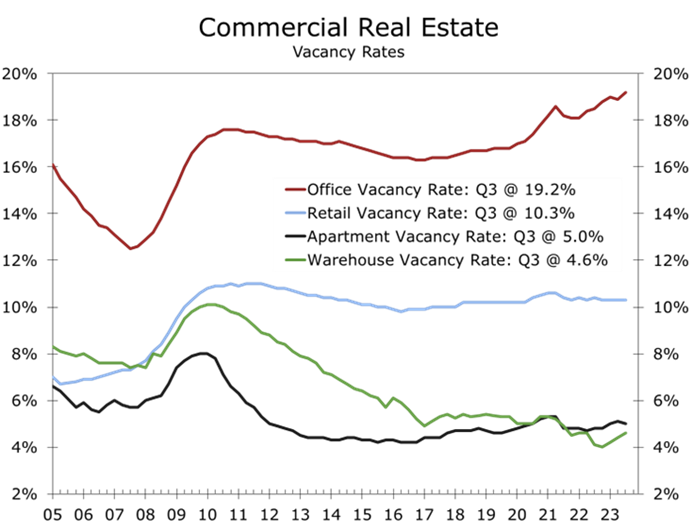
Question 5: Will Commercial Real Estate deteriorate to the point that it leads to a significant credit crunch? The credit crunch already underway will linger and intensify but credit conditions will not tighten so much that they stifle overall economic growth. The office market presents the greatest challenge, as office workers have been reluctant to return to the office full-time. Office vacancy rates has climbed steadily this past year as businesses have consolidated their space needs. True vacancy, which would account for leased but vacant space, may be as much as ten percentage points higher than the current 19.2%. We see that as the upper bound, however, as some of this space will be repurposed to other uses.
Attention is now swinging to the apartment and industrial markets, both of which have seen a tremendous amount of new construction in recent years and have a significant pipeline of projects under construction. Lending for new apartment projects tightened this past year and we expect multi-family starts to decline 50% from their 2023 levels. Demand for apartments remains fairly strong and vacancy rates appear manageable at around 5%. Unfortunately, there are close to one million apartments under construction and demand for apartments will slow as job growth decelerates further in 2024.
The warehouse and industrial market has been one of the top-performing real estate sectors, benefiting from a surge in ecommerce and the recent push for near-shoring. Demand cooled this past year as goods purchases slowed, but vacancy rates remain low at just 4.6%. We expect new construction to moderate next year amidst tighter credit and generally slower economic growth.
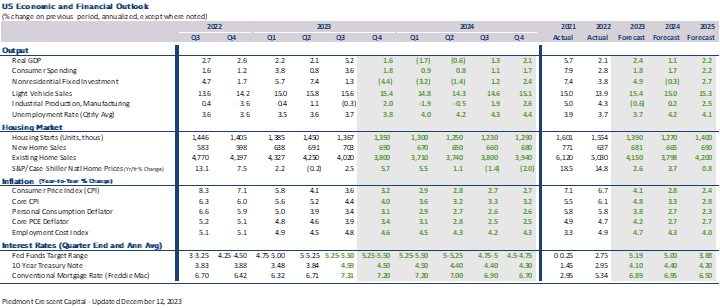
Economic growth has slowed from its torrid third quarter pace, which saw real GDP grow at a 5.2% annual rate. The widely followed Atlanta Fed GDPNow nowcast, which was one of the first to call for a spike in growth during the third quarter, pegs current growth at just 1.2%. Our forecast is a little higher than that at 1.6%, but much of the growth occurred at the start of quarter and we expect activity to slow toward the end of the quarter. Holiday retail sales got off to a soft start and we expect spending to rise at the lower end of the 3% to 4% range projected by the National Retail Federation. Sluggish real income growth is back holding spending, although falling gasoline prices are providing a short-term boost to consumer sentiment and buying power.
Our forecast for the first half of 2024 is likely toward the lower end of consensus. We expect to see a preponderance of disappointing economic reports early next year and look for real GDP to decline at a 1.7% annual rate in the first quarter, followed by a 0.6% drop in Q2. Such a decline would be similar to the drop seen at the start of 2022, which the NBER did not label as a recession. This downturn is likely to be more broad based, but as we noted earlier, we do not expect nonfarm payrolls to post an outright decline. If payrolls do decline, the odds a recession increase exponentially.
As for interest rates, we feel the bond market has gotten ahead of the Fed. Policymakers will take their time moving from a tightening bias to a neutral bias and finally to an easing bias, which will push the first rate cut out into June. Bond yields will need to rise from current levels to incorporate a slower pace of rate cuts and higher end point, which we currently see as somewhere around 3.50%. An outright recession would speed this process up and result in a lower end point for the federal funds rate, likely closer to 2%.
Disclaimer: This publication has been prepared for informational purposes only and is not intended as a recommendation offer or solicitation with respect to the purchase or sale of any security or other financial product nor does it constitute investment advice. Any forward-looking statements or forecasts are not guaranteed and are subject to change at any time. Information from external sources have not been verified but are generally considered reliable.
© 2023 CAVU Securities, LLC
Consumer Confidence Rises Solidly in December
A Santa Claus Rally for Consumer Confidence
- Consumer Confidence surged ahead of the holiday season, with the overall index rising 9.7 points to 110.7. The data from the prior month was slightly revised downward.
- Present conditions rose 12 points to 148.5, while expectations rose by 8.2 points to 85.6. Both hit their highest levels since July.
- Consumers' assessment of current labor conditions improved significantly. The share stating jobs are 'plentiful' rose 2.1 percentage points to 40.7%, and the share stating jobs are 'hard to get' fell 2.4 points to 15.4%.
- Consumers appear to be buying into the soft landing narrative. The expectation for conditions to improve over the next 6 months rose 1.5 percentage points to 18.7%, while the share expecting conditions to weaken fell 2.9 percentage points to 20.1%.
- Consumer Confidence rose alongside the stock market in early December. Recession fears have subsided as lower gas prices and falling interest rates bolster hopes for a soft landing. Gains were particularly notable among lower-income households.
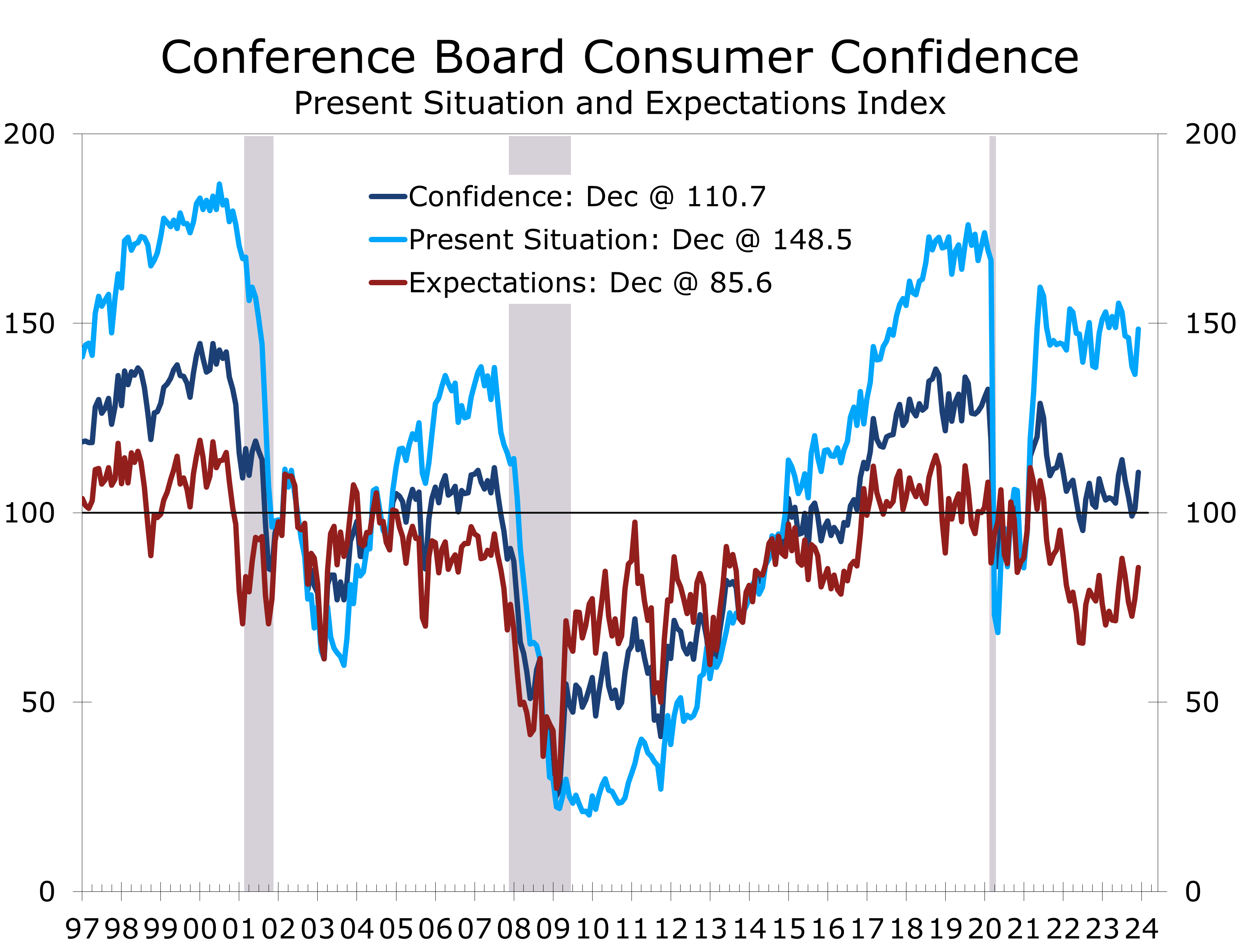
The Consumer Confidence Index surprised to the upside in December, leaping by 9.7 points to 110.7, its highest level since July. Both the present conditions and expectations indices saw robust gains, signaling a retreat from the brink of recession. Inflation expectations also eased, thanks to lower gasoline prices, which bolstered purchasing power for middle and lower-income households.
Consumers’ assessment of current economic conditions rose by 12 points to 148.5, and expectations for the next six months increased by 8.2 points to 85.6, hitting their highest level since July. Falling gasoline prices and the apparent conclusion of the Fed’s interest rate hikes drove this improvement.
The improvement in the expectations series is particularly notable, as it had been flirting with recession levels for most of this year. More consumers now anticipate business conditions improving over the next 6 months (+1.5 pp to 18.7%), while fewer foresee conditions worsening (-4.1 pp to 16.0%).
Consumers see the economy taking a step back from the edge of recession.
Consumers are also slightly more upbeat about their personal finances. The share expecting their income to increase over the next 6 months rose by 1 percentage point to 18.7% in December, while the share anticipating a decline in income fell by 0.1 percentage points to 12.6%.
Consumers’ perceptions of both current and future labor market conditions have improved, with the share stating jobs are ‘plentiful’ rising by 2.1 points to 40.7%, and the share characterizing jobs as ‘hard to get’ decreasing by 2.4 points to 13.2%. The labor market differential, representing the difference between these two measures, increased by 4.5 points to 27.5, marking the most substantial monthly improvement since February 2022.
Expectations for labor market improvement in the next six months also saw a notable uptick. The proportion of consumers anticipating more available jobs rose by 1.1 points to 17.8%, while those expecting fewer jobs declined by 2.9 points to 17.2%.
Lower gasoline prices have reduced inflation fears and bolstered purchasing power.
Consumer confidence improved across income brackets, with the most significant gains observed at both the higher and lower ends. Households earning $125,000 or more saw the largest surge, jumping by 18.3 points in December to 128.8. In the $15,000 to $30,000 income range, confidence rose by 17.1 points to 102.1. The increase among higher-income households is likely due to lower interest rates and rising stock prices, while lower gasoline prices likely fueled the gain among lower-income households.
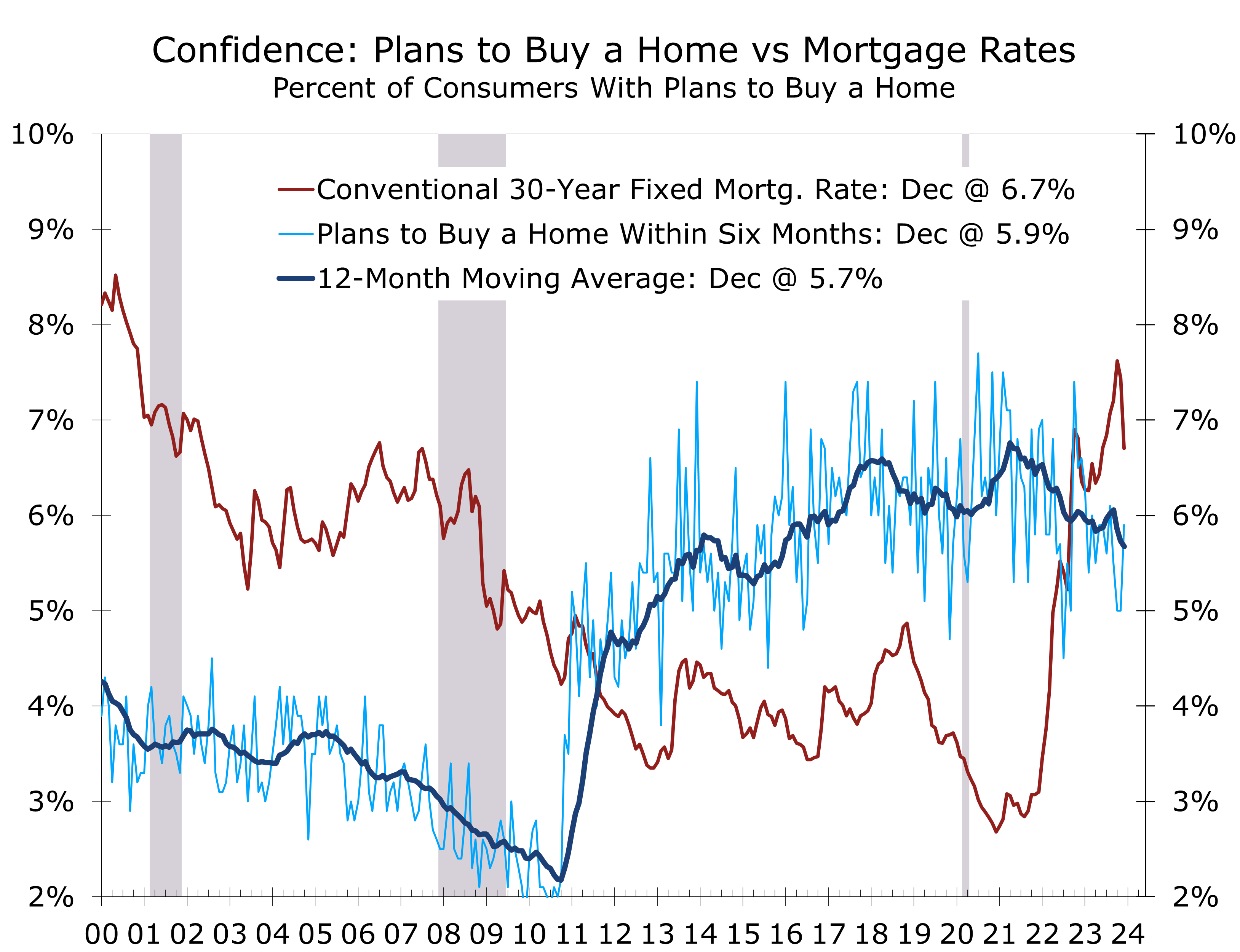
Interest rate expectations have undergone a significant shift recently, with the percentage of households anticipating a rise in interest rates over the next year dropping by 7 points in the last two months to 52.4%, the lowest since January 2021. Conversely, the share expecting rates to fall has increased 6.6 points over the same period to 18.5%, reaching the highest level since October 2020.
The pullback in mortgage rates should further bolter home buying plans in coming months.
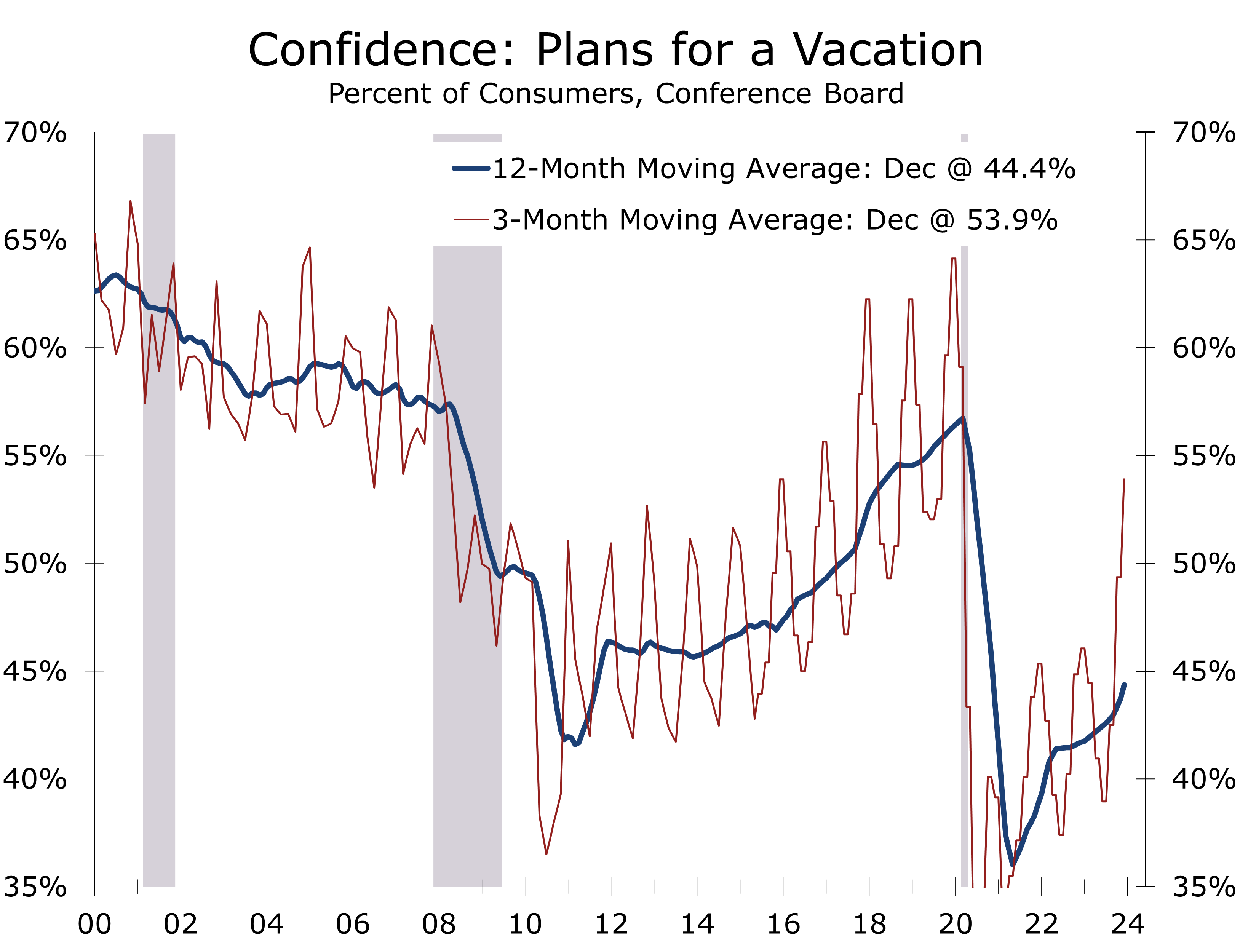
With improved consumer confidence, more individuals are planning vacations. Intentions to travel within the next six months have risen 3.8 points over the past two months and a whopping 17.5 points over the past six months. This improvement is predominantly among consumers planning domestic travel, as intentions to travel overseas have slightly decreased.
December’s strong consumer confidence numbers are another key piece of data supporting the notion a soft landing is taking hold. Concerns about inflation are easing, thanks largely to falling energy prices. Interest rates also appear to have peaked, which should help bolster home sales and spending for big-ticket items.
Disclaimer: This publication has been prepared for informational purposes only and is not intended as a recommendation offer or solicitation with respect to the purchase or sale of any security or other financial product nor does it constitute investment advice.
Housing Starts Rise Solidly in November
Home Building Tops Expectations
- Housing starts spiked 14.8% to a 1.56 million-unit pace in October. Starts for the prior month were revised slightly lower.
- Single-family starts leaped 18.0% to a 1.143 million-unit pace, rising to their highest level since April 2022. Multi-family starts rose 6.9% to a 417,000-unit pace.
- Permits fell 2.5% to a 1.468-million-unit pace. Single-family permits rose 0.7% to a 976,000-unit pace, while multi-family permits fell 8.5% to 484,000-unit pace.
- Housing starts rose across the country, doubling in the Northeast and rising 16.3% in the South. Starts rose more modestly in the West (2.1%) and Midwest (1.4%).
- Home builder confidence rose 3 points to a still very low 37 in December. Buyer traffic remained low at just 24 but expected sales jumped 6 points to 45.
- Home builders are making an aggressive bet that inventories of existing homes will remain tight and mortgage rates will remain below the highs hit last fall. November’s starts were also helped by unseasonably mild weather.
Housing starts surpassed expectations in November, surging 14.8% to a robust 1.56-million-unit pace. We suspect that unseasonably mild weather contributed to this increase, with warmer and drier weather allowing more construction to commence. Seasonally adjusted housing starts doubled in the Northeast, rising from a 72,000-unit pace in October to a 144,000 unit pace in November.
Even after factoring in warmer-than-usual weather, home building remains surprisingly strong, with single-family starts surging 18% to a 1.143 million unit pace in November. Starts averaged a 1.026 million unit pace over the past three months, which may not be sustainable given slowing job and income growth.
Home Builders expect demand for new homes to remain strong as existing home sales founder.
Building permits, which are less impacted by weather, fell 2.5% to a 1.468-million unit pace. Permits for single family homes rose 0.7% to a 976,000-unit pace, marking the 10th consecutive increase and highest level for single-family permits in 18 months.
Home builder confidence rose 3 points in December to 37 but expected sales over the next six months leapt 6 points to much more healthier 45. Builders are clearly more upbeat about the sales outlook and expect sales to benefit from the recent slide in mortgage rates. New home sales will also continue to benefit from less competition from existing homes.
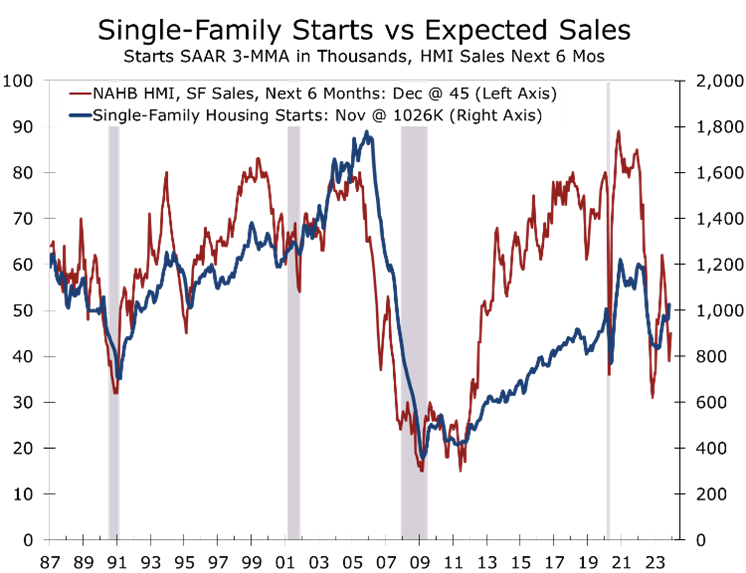
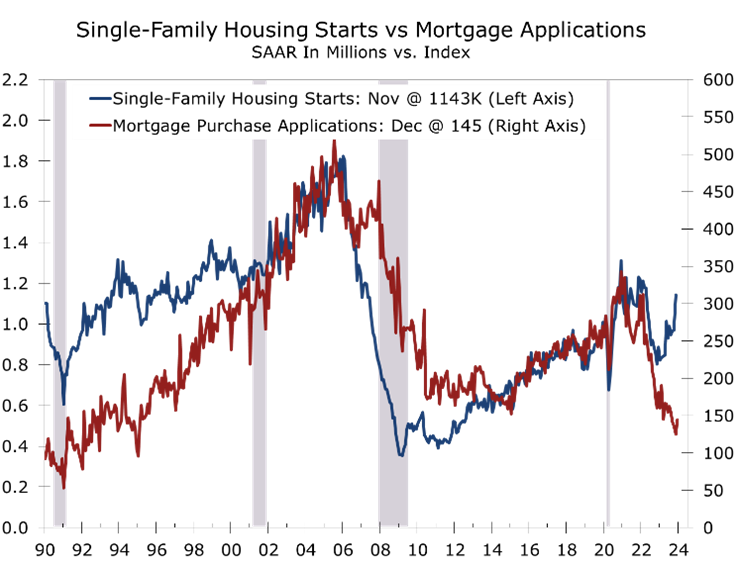
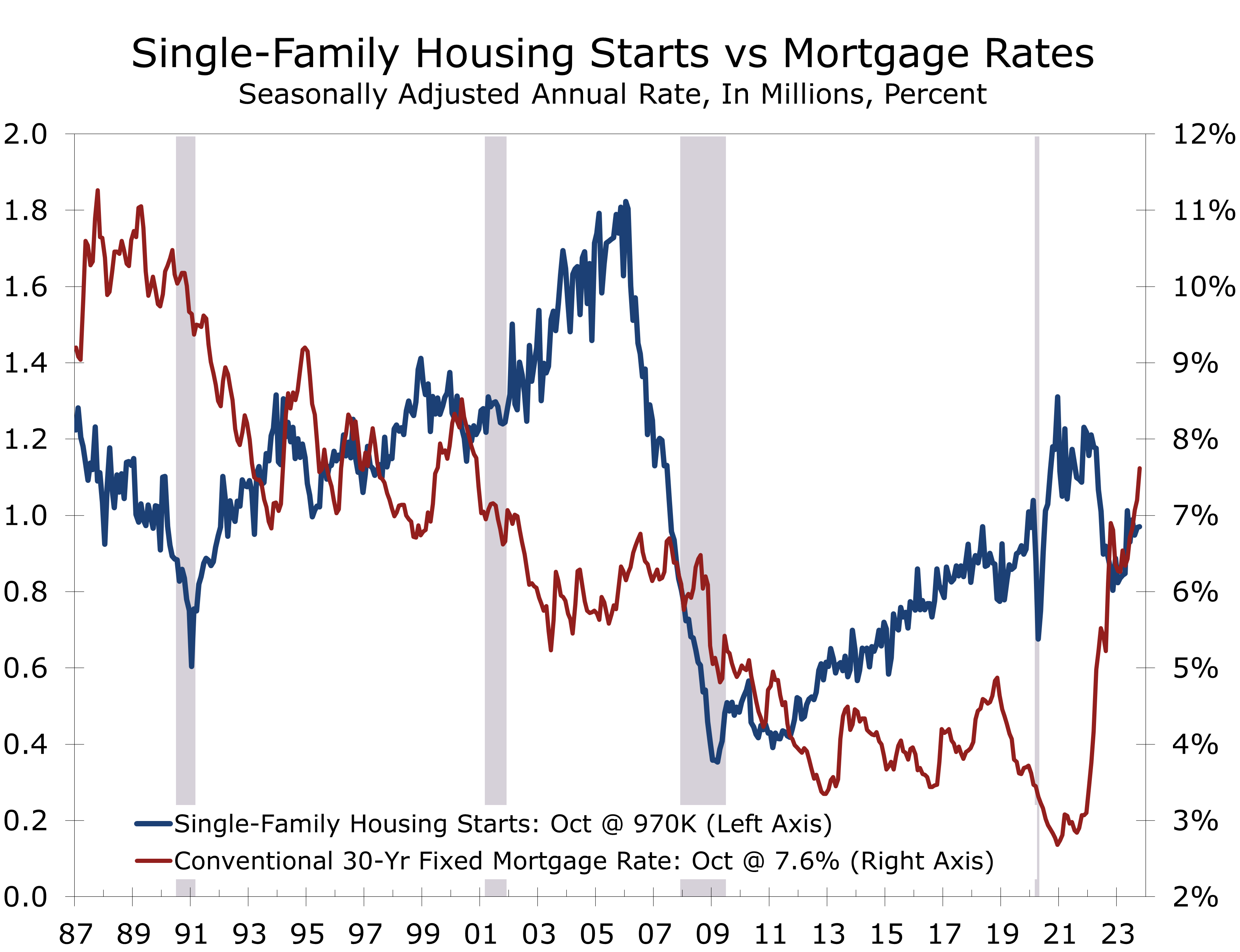
Home builders appear to be betting interest rates will remain lower and existing homeowners will continue to be reluctant to put their homes on the market. Single-family housing starts have typically closely followed mortgage purchase applications. The two have diverged more recently, however. This discrepancy may be due to sampling issues, as many home builders now provide financing through affiliates and then sell those mortgages into the secondary market. These mortgages might not be fully reflected in the weekly MBA survey.
Builders are banking on interest rates remaining low and existing homeowners remain in place.
Builders may also simply be striving to have inventory in place ahead of the spring selling season. New home sales have been steadily gaining market share from existing sales, inventories of which remain near historic lows. Mortgage rates are currently 140 basis points below their fall highs and will likely remain around 6.5% this spring. That should be low enough to bring out buyers but not so low to entice a torrent of existing homes back on the market.
The strength in single-family starts is good news for Q4 GDP growth, and housing will also be less of a drag on economic growth in 2024. The stronger numbers present some upside risk to our forecast for 1.6% real GDP growth in Q4 and 1.1% growth in 2024.
Multi-family starts rose a stronger than expected 6.9% to a 417,000-unit pace, the highest level since July. The rise, however, does not signal a reversal in the correction in apartment building currently underway. Multi-family permits fell 8.5% to a 484,000-unit pace. After a 15% decline in 2023 to 417,000 units, we expect multi-family starts to fall 25% in 2024 to 340,000 units.
A record 1.04 million multi-family units are currently under construction. The pipeline is improving as shortages and bottlenecks have eased. On a 12-month moving average basis, multi-family starts peaked last November at 555,000 units and have since declined 14.4%. The decline is more pronounced on a 3-month moving average basis, with starts down 32.5% to 399,000 unit. Permits have decreased even more significantly, while completions continue to rise.
Apartment construction has peaked but starts are showing a surprising degree of resilience.
With historically low housing affordability, strong demand for apartments is bolstering developer confidence in proceeding with planned projects. Banks remain cautious about lending for new apartment developments, which will continue to weigh on starts.

Disclaimer: This publication has been prepared for informational purposes only and is not intended as a recommendation offer or solicitation with respect to the purchase or sale of any security or other financial product nor does it constitute investment advice.
Consumer Confidence Edges Higher in November
A Mixed Bag Ahead of the Holidays
- Consumer Confidence rose a stronger-than-expected 2.9 points to 102.0 in November, following three consecutive declines.
- The expectations component rose 5.1 points to 77.8, accounting for all of November’s increase. By contrast, current conditions slipped 0.4 points to 138.2.
- Consumers’ assessment of current labor conditions was mixed, with the share stating jobs are ‘plentiful’ (+1.4 pp to 39.3%) and the share stating that jobs were ‘hard to get’ (1.3 pp to 15.4%) both rising in November.
- Consumers are more optimistic about their income prospects, however, with 17.2% expecting their incomes to increase over the next six months (+1.6 pp), and just 12.1% expecting their incomes to decline (-1.3 pp).
- Consumers remain generally upbeat about employment and income prospects, which is a bit of good news ahead of the holiday season. We still look for holiday retail sales to rise at the lower end of the National Retail Federation’s 3% to 4% forecast.
November’s 2.9-percentage point increase in the Consumer Confidence Index exaggerates the extent of the improvement seen this past month. While Consumer Confidence posted its first increase since July, the gain was only possible because of a 3.5 percentage point downward revision to the prior month’s data, from 102.6 to 99.1. In other words, Consumer Confidence is actually lower today it was initially reported to be a month ago and currently sits at the second lowest level for this year.
All of November’s increase in Consumer Confidence came from an improvement in the expectations series, which rose 5.1 points to 77.8. That still leaves expectations at a fairly low level, however. Any reading below 80 is generally consistent with a recession.
Expectations for business conditions over the next six months remain guarded at best, with 17.3% of consumers expecting conditions to improve over the next six months (+1.8 pp) against 19.5% expecting conditions to worsen (- 1.4 pp). Consumers are also looking for continued moderation in employment conditions, with 19.6% expecting fewer jobs to be created (-0.1 pp) and just 16.1% expecting more jobs to be created (+0.8 pp).
Consumers are slightly more optimistic about the outlook for their personal finances.
Consumers remain more upbeat about their personal finances. The share expecting their income to increase rose 1.6 pp to 17.2% in November, while the share expecting their incomes to decline fell 1.3 pp to 12.1%.
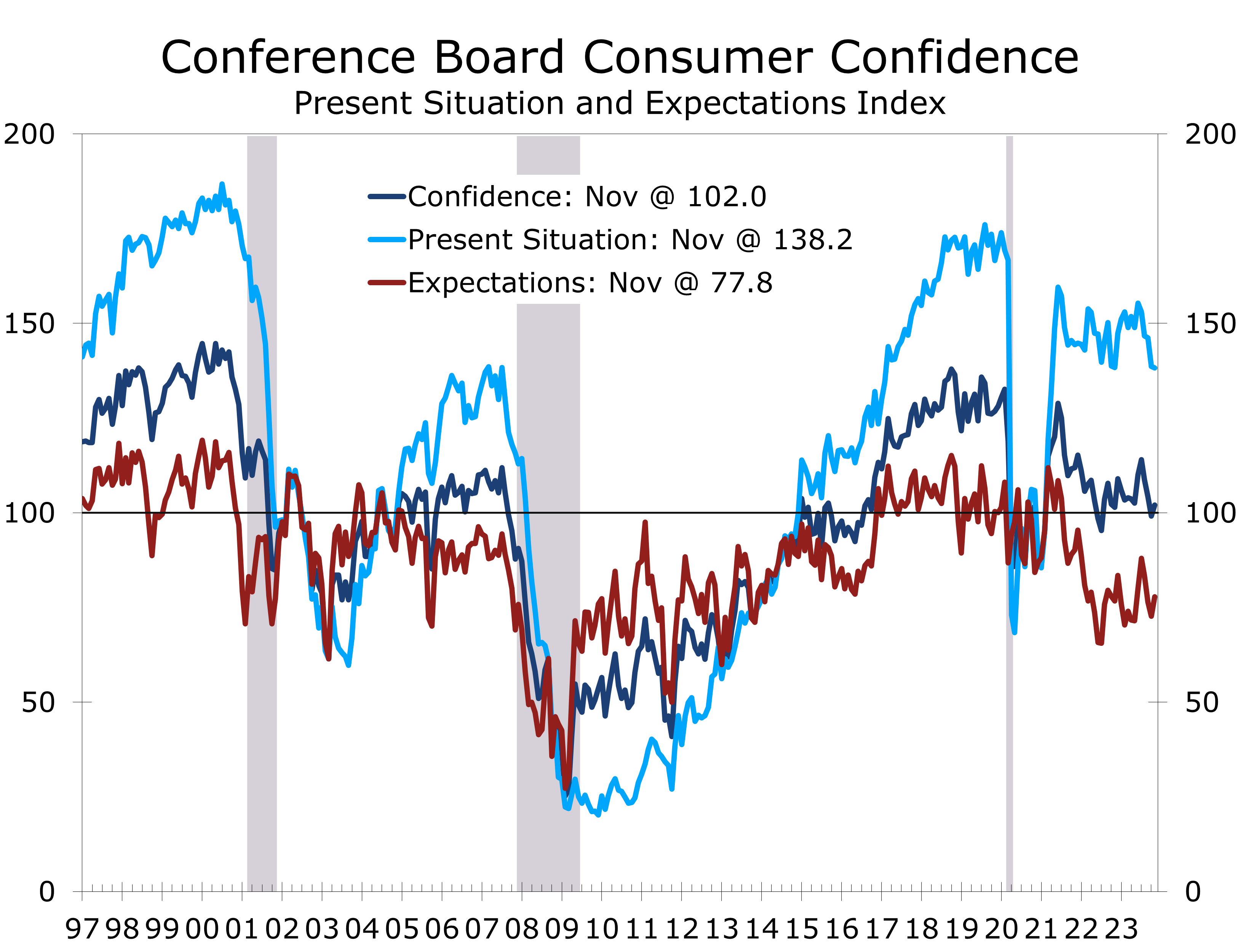
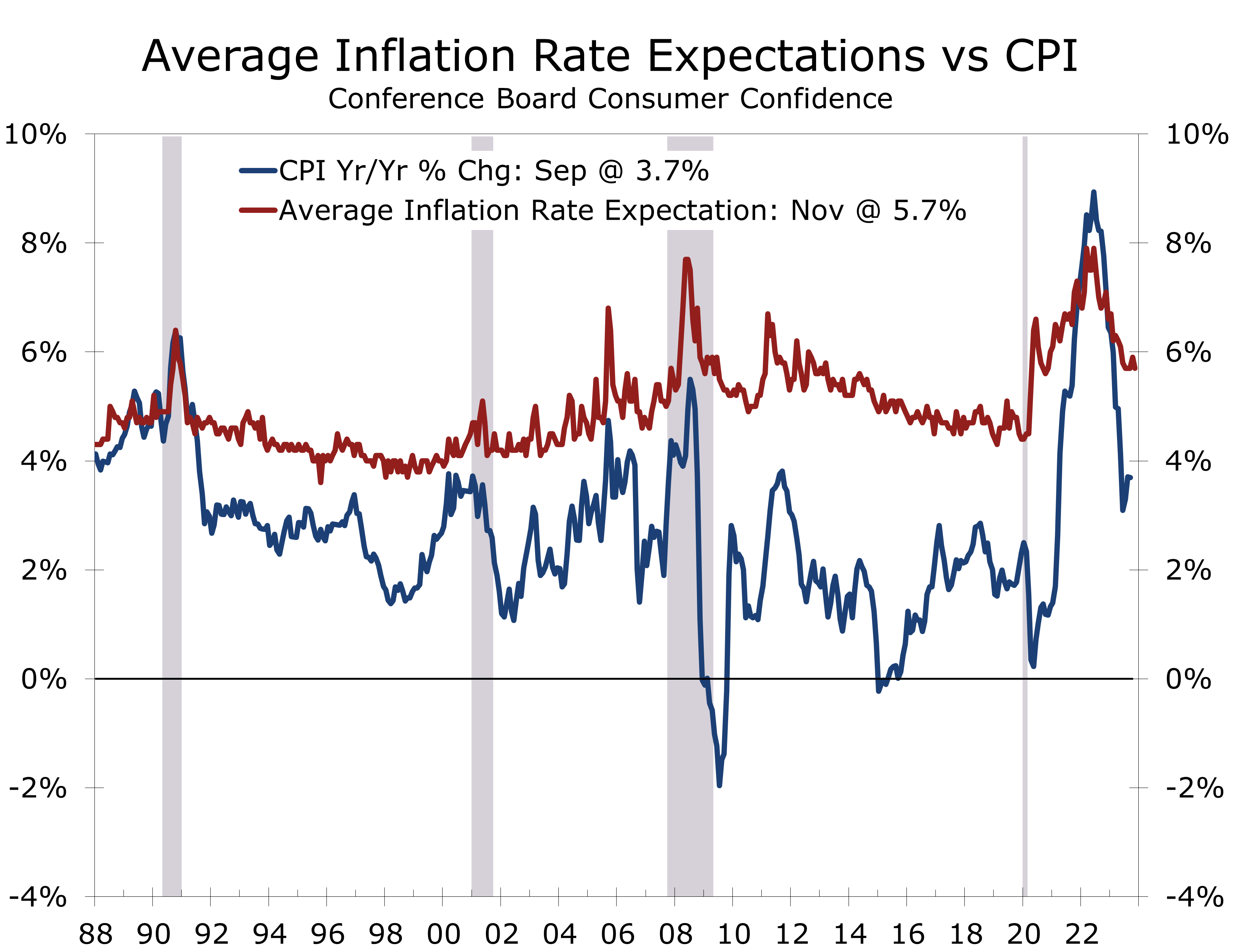
Consumer expectations are generally a better predictor of consumer behavior than either current conditions or consumer confidence. Despite the low level, the improvement is a positive for the holiday season and aligns with our forecast of a 3.2% rise in holiday retail sales. Several other measures of consumer expectations also improved, including the share expecting interest rates to drop over the next year as well as year-ahead inflation expectations, which fell from 5.9% to 5.7%.
Consumers’ outlook for stock prices continued to weaken, despite the early start to the Santa Claus rally that began following October’s better than expected CPI report. That improvement came only a couple days before the preliminary November Consumer Confidence Survey concluded on November 15.
Consumers are looking for a continued moderation in employment conditions.
Consumers’ assessment of current employment conditions remains unambiguously positive, yet hiring is clearly moderating and expected to continue to do so. The share of consumers perceiving jobs were plentiful in November rose 1.4 pp to 39.3%, while the share seeing jobs as hard to get rose 1.3 pp to 15.4%. Nonfarm employment growth has closely followed the jobs plentiful series and should continue to moderate.

The recent uptick in the jobs ‘hard to get’ series is consistent with the recent rise in the unemployment rate, from 3.4% in April to 3.9% currently. That said, consumer confidence remains more consistent with a soft landing rather than a recession, a point that is amplified by the 0.2 pp drop in year-ahead inflation expectations to 5.7%. The improvement comes at a time when gasoline prices have been sliding and prices for other goods and services have generally been rising less rapidly.
Consumer Confidence remains confounding, yet it aligns more with a soft landing than recession.
Consumers’ perceived likelihood of recession over the next 12 months, as tracked by the Conference Board, fell more than 3 pp in November to its lowest level this year. Hold the champagne, however, as even after this drop nearly two-third of consumers expect a downturn over the next 12 months. The Conference Board also noted November’s increase in consumer confidence was concentrated on householders aged 55 and up, while confidence among those aged 35 to 54 declined slightly. This split reinforces our cautious view on spending this holiday season.
Disclaimer: This publication has been prepared for informational purposes only and is not intended as a recommendation offer or solicitation with respect to the purchase or sale of any security or other financial product nor does it constitute investment advice.
Higher Mortgage Rates Cut into New Home Sales
New Home Sales Weaken in October
- New home sales declined 5.6% to a 679,000 unit pace. Sales for the prior month were also revised significantly lower.
- Sales rose in the Northeast (+13.2%) and the South (+2.1%) during October but fell sharply in the West (-23.3%) and Midwest (-16.4%).
- The inventory of new homes rose slightly to 439,000, which translates into a 7.8-months’ supply at October’s slower sales pace.
- The median price of a new home fell 3.1% to $409,300 in October and is a whopping 17.6% below its year ago level.
- The sharp decline in home prices over the past year reflects both increased discounting by home builders and an increased focus on building lower-priced homes.
- New home sales continue to benefit from the paucity of existing homes for sale. New home sales are up 17.7% year-to-year, while existing home sales have fallen 14.6%.
- Mortgage rates spiked to their highest level in 23 years during mid-October, which likely priced out many would-be buyers. Mortgage rates have since fallen back to below 7.5% in the past month, which might bring some of those buyers back in November.
New home sales fell 5.6% to a 679,000-unit pace in October and sales for the prior two months were also revised lower. The slower sales pace is not surprising given the spike in mortgage rates, which saw rates peak just under 8% in late October. We suspect that spike in rates was too much for many buyers and likely led to some contract cancellations as well. Rates have since fallen about a half percentage point to just under 7.5%, which should bring some buyers back to the market in the normally seasonally slow months of November and December.
The pullback in new home sales has allowed inventories to increase, with overall inventories climbing by 6,000 to 439,000 homes at the end of October. That translates into a 7.8-months’ supply of homes at October’s sales rate, which is a bit high from a historic standpoint but not all that concerning given the historically low levels of existing home inventories.
New home buyers stepped back from the market as mortgage rates approached 8%.
Home builders continue to benefit from the lack of existing homes, which has sent more buyers to the new home market. New homes accounted for 16.7% of overall single-family home sales in October, compared to 12.7% a year ago. New home sales are also proving more resilient to rising mortgage rates, as home builders are able to buy down mortgage rates to help reduce the sting of rising interest rates.

The median price of a new home fell 3.1% to $409,300 in October and has fallen 17.6% over the past year. That marks one of the sharpest pullbacks in the median price of a new home on record. Part of the drop reflects the increased use of discounts and incentives. Builders are also shifting their mix of offering to smaller and more affordable homes, many of which are aimed at first-time home buyers.
The use of incentives has become commonplace. The latest NAHB survey shows that 60% of builders offered incentives in November, which was down from 62% in October. Mortgage rate buydowns are the most commonly offered incentive, which makes homes more affordable and also protects community home values. Price discounts are also becoming more prevalent, however, with 36% of builders reducing price in November, which marks a high for the cycle.
Home prices have fallen sharply, reflecting price cuts and a shift toward lower priced homes.
Builders have some room to offer discounts because building material prices have stabilized somewhat. Most incentives, however, come out of an existing incentives budget. Buyers are simply choosing to use incentives to reduce their mortgage rate or reduce their purchase price rather than upgrade their countertops or appliances.
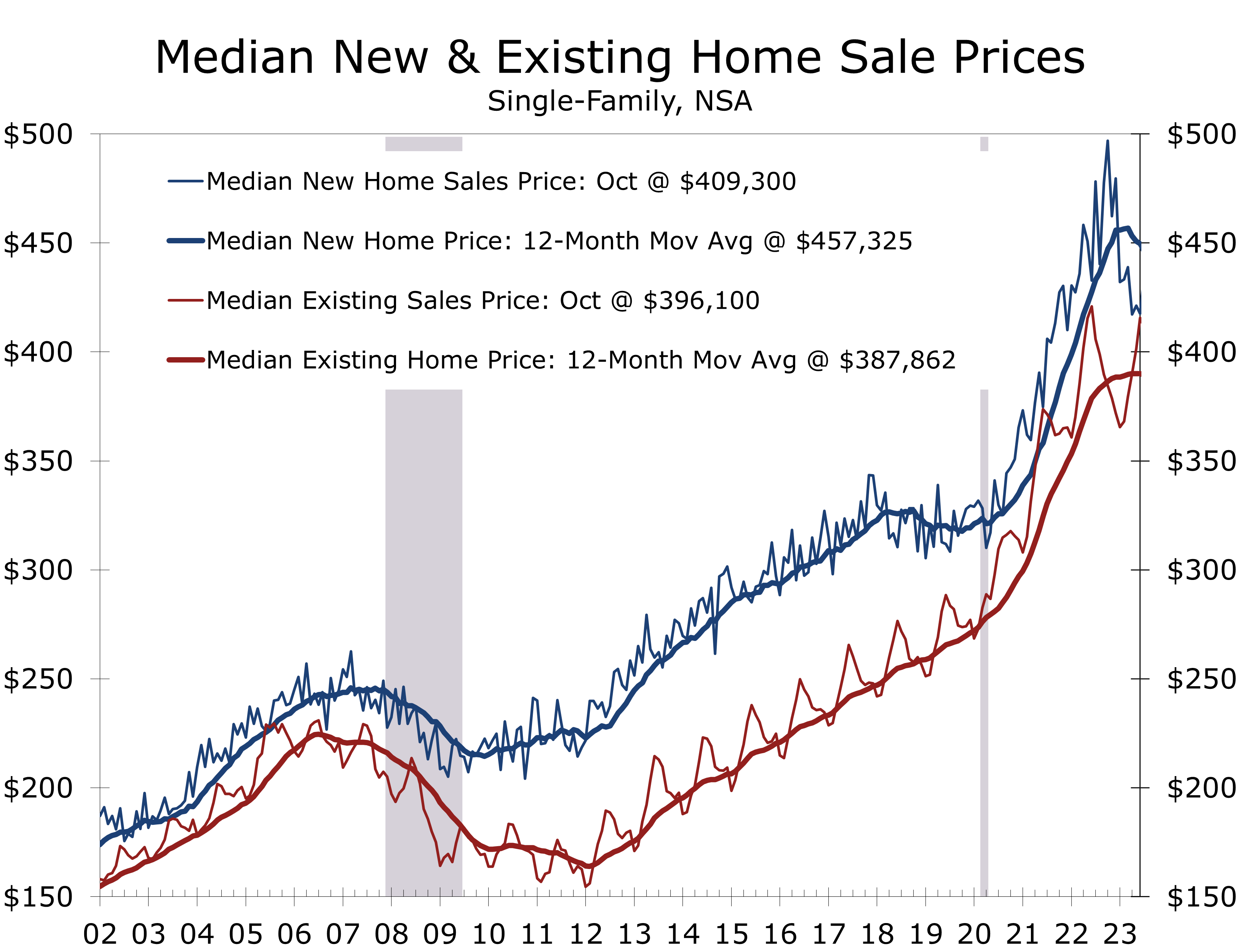
The sharp decline in the median price of a new home has significantly narrowed the gap between the median price of new and existing single-family homes. New homes have typically sold a premium to existing homes. The gap, which averaged $68,216 in the five years prior to the pandemic, has now narrowed to just $13,200 or 3.2%. The narrower premium for new homes means more home buyers are likely to opt for a new home versus an existing home, particularly if the builder can provide below market financing.
The narrower new home price premium means more home buyers will likely opt for new homes.
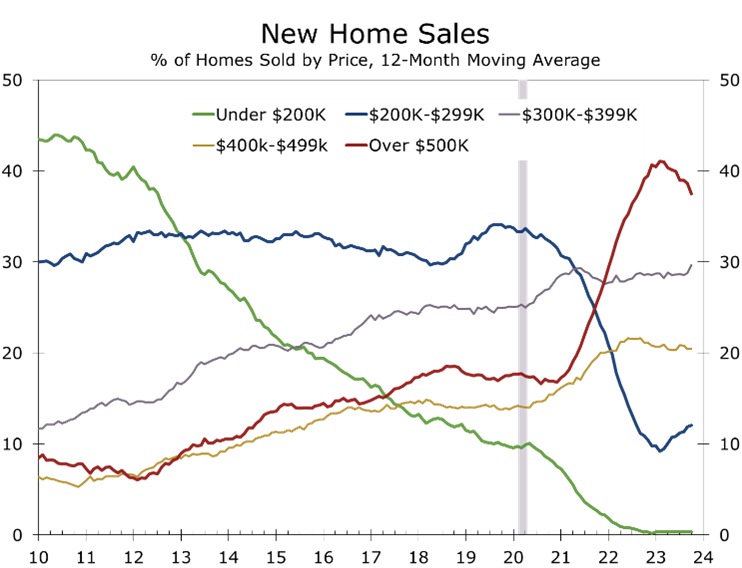
The improved market position new homes have relative to existing homes is likely to continue, as more than half of existing homeowners that have a mortgage have one locked in at a rate of 5% or less. With existing inventories remaining lean, home builders are responding by building smaller and more affordable homes. The share of new homes sold at prices below $300,000 has risen over the past year, while the proportion of new homes sold at more than $500,000 has fallen slightly.
Disclaimer: This publication has been prepared for informational purposes only and is not intended as a recommendation offer or solicitation with respect to the purchase or sale of any security or other financial product nor does it constitute investment advice.
Housing Starts Remain Resilient
Housing Starts Edged Higher in October
- Housing starts rose 1.9% to a 1.372-million-unit pace in October. Starts for the prior month were revised slightly lower, however.
- The rise was led by multifamily units, which saw starts rise 6.3%. By contrast, single-family starts edged just 0.2% higher.
- Permits rose 1.1% to a 1.487-million unit pace, with single-family permits rising 0.5% and multi-family permits rising 2.2%.
- The Midwest (+28.4%) and West (+12.5%) both posted strong gains in October, while starts fell 14.5% in the Northeast and slipped 6.8% in the South.
- Home builder confidence fell 6 points to 34 in November, reaching is lowest level since last December. The present sales (-6) expected sales (-5) and prospective buyer traffic (-5) indices all fell decisively.
- Home building remains surprising resilient amidst sharply higher interest rates and tightening credit. Some leading indicators for housing, however, continue to flash warning signals, suggesting activity will slow.
Housing starts once again topped expectations in October, rising 1.9% to a 1.372 million unit pace. The majority of the increase was in multi-family starts, mainly apartments, which climbed 2.2%. Single-family starts inched up 0.2% to a 970,000-unit pace. The increase comes despite surging mortgage rates and historically low housing affordability.
Home building appears to be in a race against time. Home builders are racing to take advantage of the shortage of homes available for sale, due to the lock-in effect for many existing homeowners. Of those homeowners that have mortgage, most have locked rates well below the current 7.40%, and are not interested in parting with their current mortgage.
Given the lack of existing homes for sale, more buyers are shifting to new homes.
With fewer existing homes on the market, more buyers are turning to new homes. Mortgage applications for the purchase of a new home rose 6% in October (not seasonally adjusted) and are up a whopping 39.7% over the past year. Much of the increase is coming from first-time home buyers.
Builders are making new home purchases more affordable through various incentives. In November, 36% reduced prices, the highest share this cycle, with an average reduction of 6%. Furthermore, 60% offered incentives, primarily mortgage rate buydowns. The effectiveness of these incentives is what is giving builders the confidence to continue to build in the face of soaring mortgage rates.
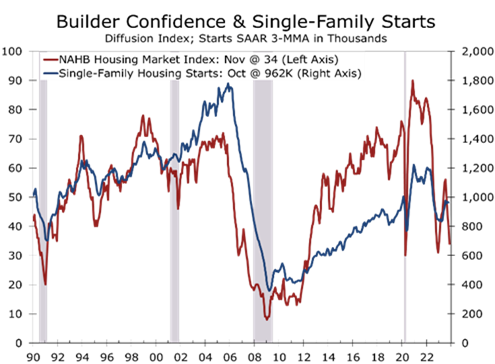
How much longer builders will be able to seemingly defy gravity remains to be seen. November saw a six-point drop in home builder confidence to 34, marking the fourth consecutive decline. The NAHB/Wells Fargo Housing Market Index (HMI) has plummeted 22 points since July, nearing the lows observed in December and during the pandemic lockdown.
Home builder sentiment has tumbled as interest rates have increased and credit has tightened.
All three major HMI components declined sharply in November. The current sales index fell six points to 40, builders’ expectations for sales over the next six months fell five points to 39 and the gauge measuring traffic of prospective buyers dipped five points to 21, which is the lowest since last December.
The HMI dropped eight points in both the South and West to 35 and 28, respectively, marking their lowest readings since last December. These regions accounted for 81% of the nation’s single-family starts this year. The HMI fell five points to 32 in the Midwest, while it rose seven points to 52 in the Northeast. The Northeast, however, accounts for just 6% of the nation’s single-family starts this year.
Most HMI survey responses were submitted before the better-than-expected October CPI data were released. Since then, bond yields and mortgage rates have fallen, potentially boosting builder confidence in December.
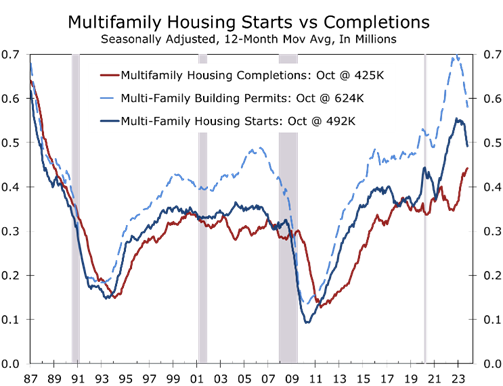
Apartment developers are also in a race against time. Overall multi-family starts rose 6.3% to a 402,000-unit pace in October and starts of projects with five units or more, mostly apartments, rose 4.9%. Permits also increased, rising 2.2% to a 519,000-unit pace.
There are close to a record 1 million apartments currently under construction and the pipeline of projects is just beginning to clear. On a 12-month moving average basis, the number of multi-family permits topped out at around a 705,000-unit annual rate last October and is down 17.5% over of the past year. Multi-family starts topped out at around a 550,000-unit pace and are down 9.5% over the past year. Completions are continuing to trend higher.
The hurdles for financing new apartment projects have risen substantially.
The large gap between permits and starts likely reflects the difficulty apartment developers are having securing financing. With fewer lenders offering apartment loans and stricter equity requirements, we anticipate a roughly 50% drop in multi-family permits and starts over the coming year.
Disclaimer: This publication has been prepared for informational purposes only and is not intended as a recommendation offer or solicitation with respect to the purchase or sale of any security or other financial product nor does it constitute investment advice.