
Inflation Comes in Hotter Than Expected
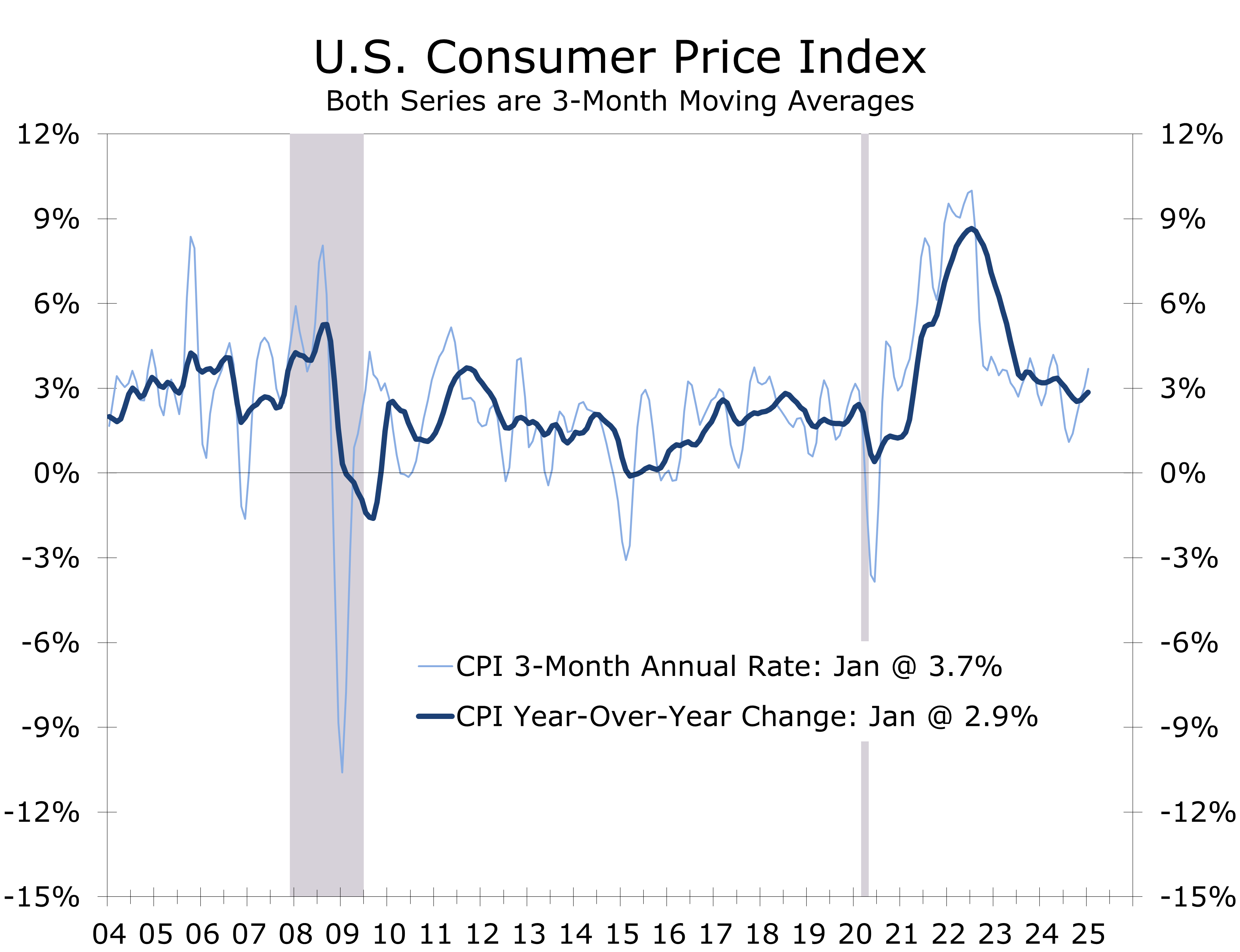
- The headline CPI jumped 0.5% in January and has risen at a 3.7% annual rate over the past three months.
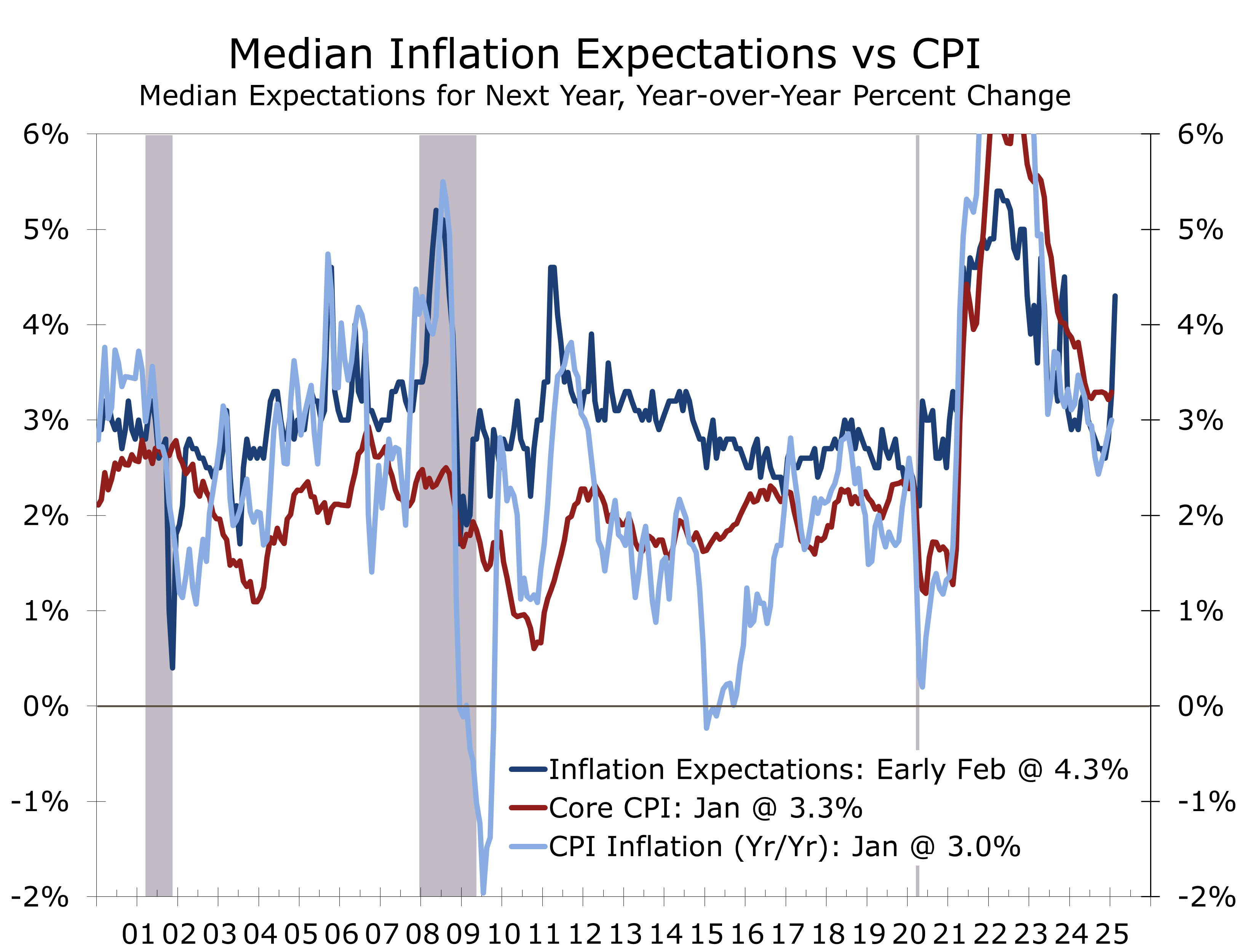
- The core CPI rose 0.4% in January and 3.3% year-over-year, highlighting persistent price pressures for key essential purchases.
- Energy prices rose 1.1%, led by a 1.8% jump in gasoline prices, though year-over-year energy inflation remains subdued (+1.0%).
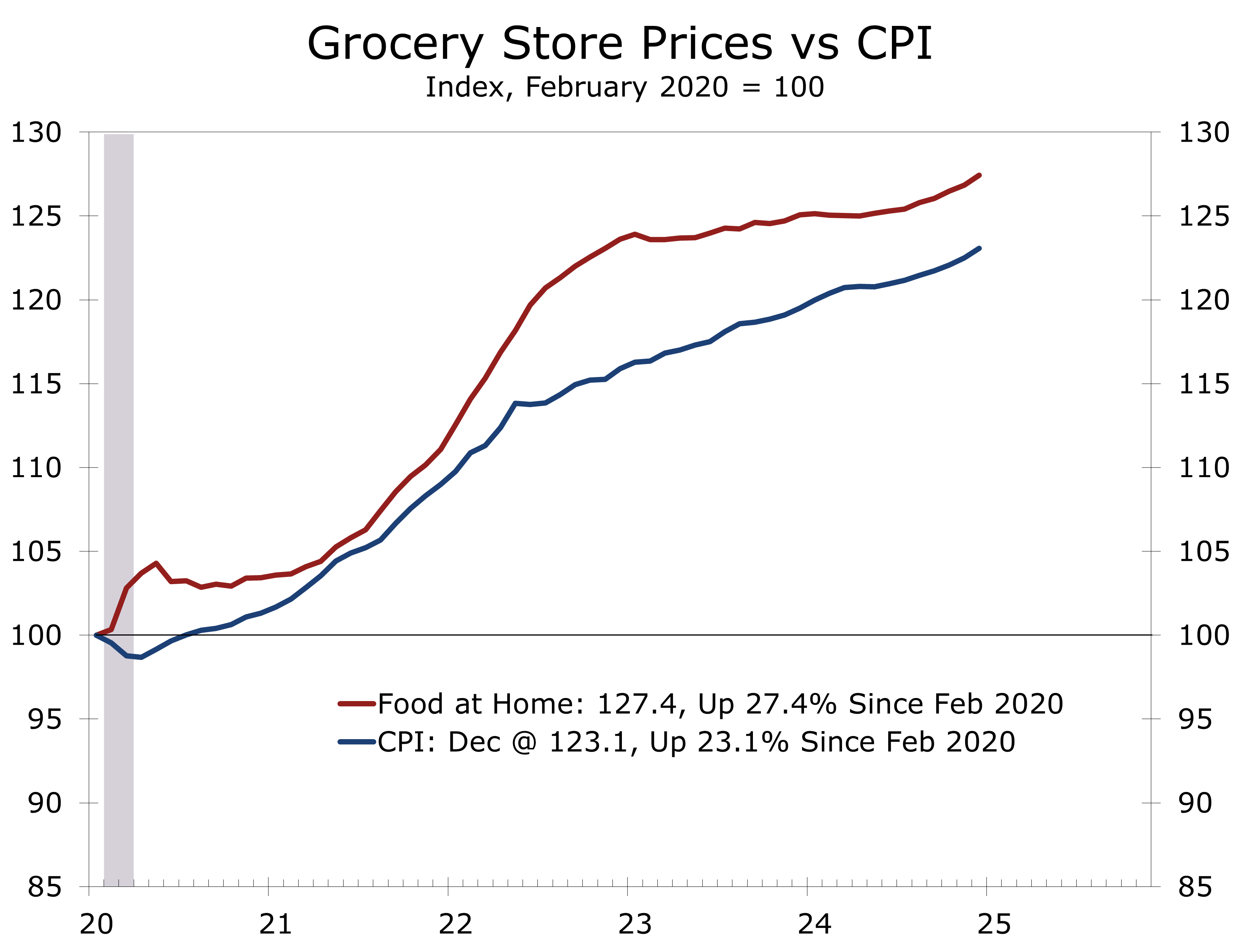
- Egg prices surged 15.2% in January, up 53.0% year-over-year, contributing to two-thirds of the 0.5% increase in grocery prices.
- Auto-related costs surged, with motor vehicle insurance up 2.0% in January and 11.8% year-over-year, while used car prices increased 2.2%.
- Service-sector inflation remains stubborn, driven by rising costs for motor vehicle insurance, airline fares, medical care, and recreation.
- Policymakers are likely to keep interest rates elevated to prevent an inflation resurgence, particularly given persistent price pressures in essentials such as food, shelter, and transportation.
The January Consumer Price Index (CPI) report showed inflation running slightly hotter than expected, with the headline CPI rising 0.5%, following a 0.4% increase in December. Over the past three months, the CPI has increased at an annualized rate of 3.7%, and on a year-over-year basis, inflation remains at 3.0%. The core CPI, which excludes food and energy, rose 0.4% in January and 3.3% over the past year, reflecting persistent price pressures in key service categories.
Shelter costs continued to be a significant contributor to inflation, rising 0.4% and accounting for nearly 30% of the overall CPI increase. Energy prices also moved higher, with the index rising 1.1% in January, driven by a 1.8% jump in gasoline prices. Food prices rose 0.4%, with food at home up 0.5% and food away from home increasing 0.2%. The sharp rise in grocery and fuel costs aligns with the uptick in near-term inflation expectations seen in the University of Michigan’s Consumer Sentiment Survey.
In addition to January’s rise in gasoline prices, other auto-related prices surged in January.
Core goods prices were mixed, with used vehicle prices climbing 2.2%, further intensifying affordability concerns in the new car market, while apparel and household furnishings declined. On the services side, price pressures remained strong, with motor vehicle insurance up 2.0%, and airline fares, recreation, medical care, and communications posting gains.
Eggflation Rocks the Grocery Aisle
Food inflation was driven by a 1.9% rise in meats, poultry, fish, and eggs, with egg prices surging 15.2%, the largest monthly jump since June 2015. Egg prices are now up 53.0% year-over-year, contributing to two-thirds of the monthly increase in food-at-home costs. Other notable gains included nonalcoholic beverages (+0.9%) and dairy (+0.3%). In contrast, fruit and vegetable prices fell 0.5%, led by a 2.0% drop in tomatoes and a 2.6% decline in other fresh vegetables. The cereals and bakery index also slipped (-0.4%), with breakfast cereals down 3.3%.
Dining-out costs rose more modestly (+0.2% month-over-month, +3.4% year-over-year), with limited-service meals up 0.3% and full-service meals up just 0.1%. Rising food costs will impact restaurants, however, with some chains already adding surcharges.
Energy prices jumped 1.1% in January, led by a 1.8% surge in gasoline prices.
The energy index rose 1.1% in January, with gasoline prices increasing by 1.8%. Electricity prices remained unchanged, while natural gas prices rose 1.8%. Over the past 12 months, energy prices have increased by just 1.0%, with gasoline prices down 0.2% year-over-year and fuel oil down 5.3%, partially offset by increases in electricity (+1.9%) and natural gas (+4.9%).
Excluding food and energy, the core CPI rose 0.4% and is up 3.3% year-to-year. Shelter costs remain elevated, with owners’ equivalent rent and rent both up 0.3% in January and lodging costs rising 1.4%. Medical care costs rose 0.2%, with prescription drug prices up 2.5%.
Auto-related costs were another major driver, with motor vehicle insurance jumping 2.0% in January and 11.8% year-over-year. Used car prices increased 2.2%, possibly reflecting heightened demand following this past fall’s storms and floods. Other notable gains included recreation (+1.0%), communication, airline fares, and education. Apparel prices declined 1.4%, and personal care and home furnishings costs also fell.
Stubbornly high prices, particularly for essentials like food, shelter, transportation, and medical care, will likely keep the federal funds rate higher for longer, as policymakers work to prevent an inflation flare up.
Tariffs add another layer of risk. While their direct impact may be limited, they could fuel inflation by boosting expectations or giving businesses cover to raise prices. The chief risk is a feedback loop—firms preemptively hike prices, households adjust expectations, and wage pressures build—potentially forcing the Fed to adopt a more restrictive stance.
Disclaimer: This publication has been prepared for informational purposes only and is not intended as a recommendation offer or solicitation with respect to the purchase or sale of any security or other financial product nor does it constitute investment advice.