
Housing Starts Edged Higher in October
- Housing starts rose 1.9% to a 1.372-million-unit pace in October. Starts for the prior month were revised slightly lower, however.
- The rise was led by multifamily units, which saw starts rise 6.3%. By contrast, single-family starts edged just 0.2% higher.
- Permits rose 1.1% to a 1.487-million unit pace, with single-family permits rising 0.5% and multi-family permits rising 2.2%.
- The Midwest (+28.4%) and West (+12.5%) both posted strong gains in October, while starts fell 14.5% in the Northeast and slipped 6.8% in the South.
- Home builder confidence fell 6 points to 34 in November, reaching is lowest level since last December. The present sales (-6) expected sales (-5) and prospective buyer traffic (-5) indices all fell decisively.
- Home building remains surprising resilient amidst sharply higher interest rates and tightening credit. Some leading indicators for housing, however, continue to flash warning signals, suggesting activity will slow.
Housing starts once again topped expectations in October, rising 1.9% to a 1.372 million unit pace. The majority of the increase was in multi-family starts, mainly apartments, which climbed 2.2%. Single-family starts inched up 0.2% to a 970,000-unit pace. The increase comes despite surging mortgage rates and historically low housing affordability.
Home building appears to be in a race against time. Home builders are racing to take advantage of the shortage of homes available for sale, due to the lock-in effect for many existing homeowners. Of those homeowners that have mortgage, most have locked rates well below the current 7.40%, and are not interested in parting with their current mortgage.
Given the lack of existing homes for sale, more buyers are shifting to new homes.
With fewer existing homes on the market, more buyers are turning to new homes. Mortgage applications for the purchase of a new home rose 6% in October (not seasonally adjusted) and are up a whopping 39.7% over the past year. Much of the increase is coming from first-time home buyers.
Builders are making new home purchases more affordable through various incentives. In November, 36% reduced prices, the highest share this cycle, with an average reduction of 6%. Furthermore, 60% offered incentives, primarily mortgage rate buydowns. The effectiveness of these incentives is what is giving builders the confidence to continue to build in the face of soaring mortgage rates.
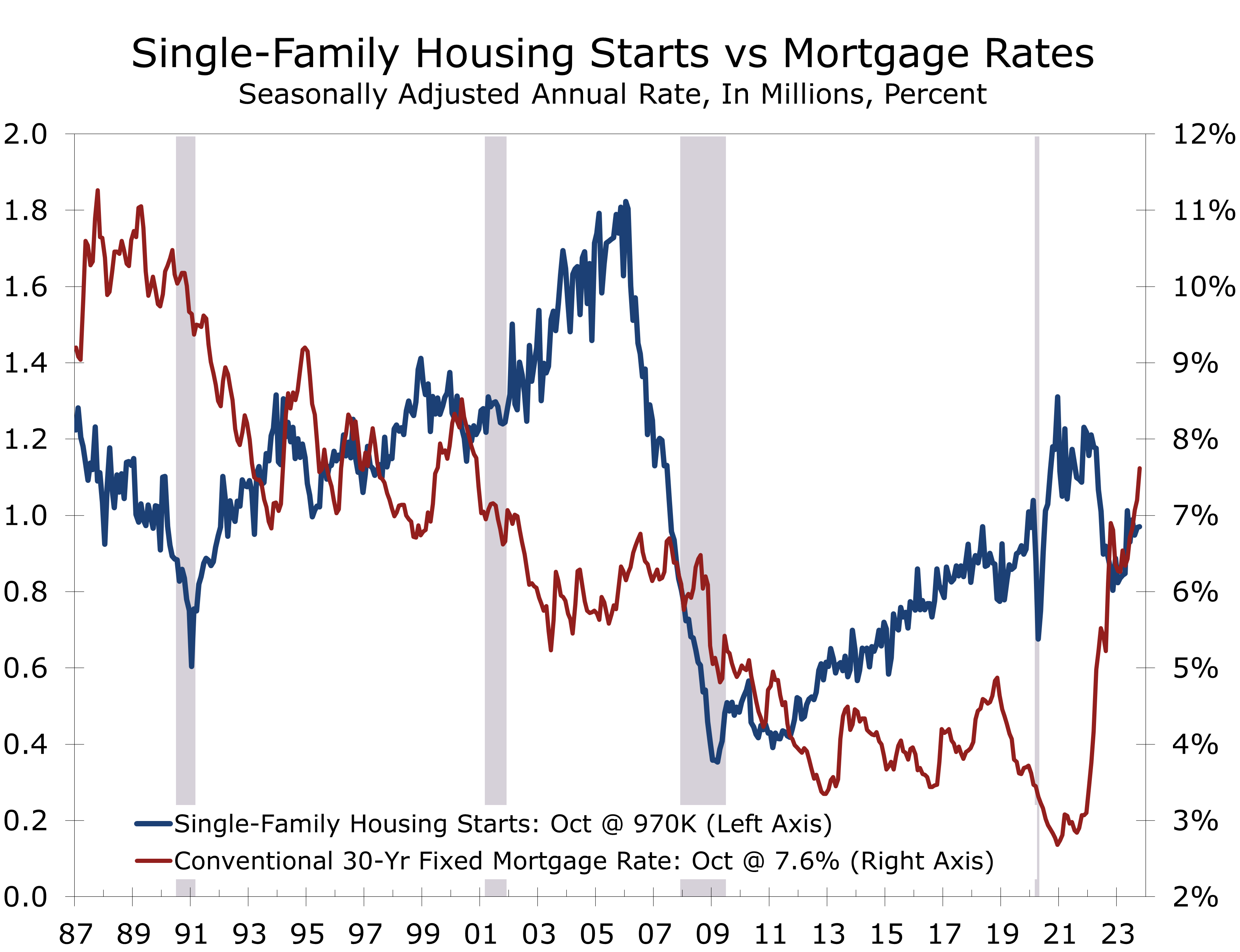
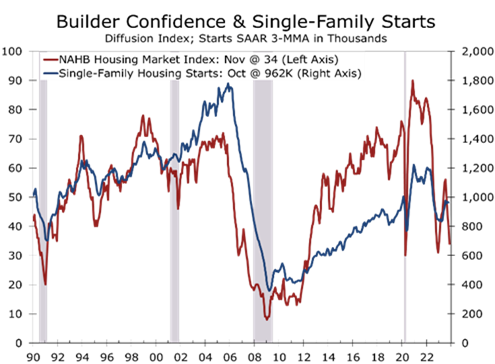
How much longer builders will be able to seemingly defy gravity remains to be seen. November saw a six-point drop in home builder confidence to 34, marking the fourth consecutive decline. The NAHB/Wells Fargo Housing Market Index (HMI) has plummeted 22 points since July, nearing the lows observed in December and during the pandemic lockdown.
Home builder sentiment has tumbled as interest rates have increased and credit has tightened.
All three major HMI components declined sharply in November. The current sales index fell six points to 40, builders’ expectations for sales over the next six months fell five points to 39 and the gauge measuring traffic of prospective buyers dipped five points to 21, which is the lowest since last December.
The HMI dropped eight points in both the South and West to 35 and 28, respectively, marking their lowest readings since last December. These regions accounted for 81% of the nation’s single-family starts this year. The HMI fell five points to 32 in the Midwest, while it rose seven points to 52 in the Northeast. The Northeast, however, accounts for just 6% of the nation’s single-family starts this year.
Most HMI survey responses were submitted before the better-than-expected October CPI data were released. Since then, bond yields and mortgage rates have fallen, potentially boosting builder confidence in December.
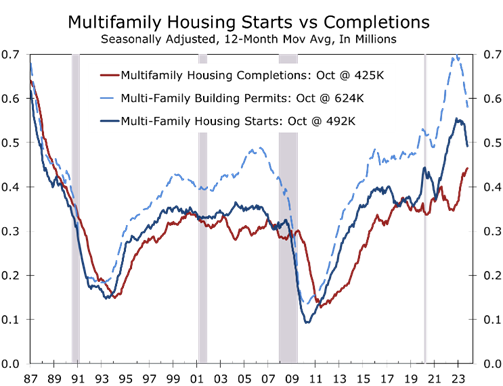
Apartment developers are also in a race against time. Overall multi-family starts rose 6.3% to a 402,000-unit pace in October and starts of projects with five units or more, mostly apartments, rose 4.9%. Permits also increased, rising 2.2% to a 519,000-unit pace.
There are close to a record 1 million apartments currently under construction and the pipeline of projects is just beginning to clear. On a 12-month moving average basis, the number of multi-family permits topped out at around a 705,000-unit annual rate last October and is down 17.5% over of the past year. Multi-family starts topped out at around a 550,000-unit pace and are down 9.5% over the past year. Completions are continuing to trend higher.
The hurdles for financing new apartment projects have risen substantially.
The large gap between permits and starts likely reflects the difficulty apartment developers are having securing financing. With fewer lenders offering apartment loans and stricter equity requirements, we anticipate a roughly 50% drop in multi-family permits and starts over the coming year.
Disclaimer: This publication has been prepared for informational purposes only and is not intended as a recommendation offer or solicitation with respect to the purchase or sale of any security or other financial product nor does it constitute investment advice.