
A Key Early Season ACC Matchup
- Florida State and Georgia Tech will kick off the 2024 College Football season on Saturday, August 24th, in Ireland.
- ESPN will make its first trip outside the U.S. to provide pre-game coverage at its usual time. Kickoff is scheduled for noon ET.
- Our football reports combine elements of economics, school and team history, and an outlook for a key game each week.
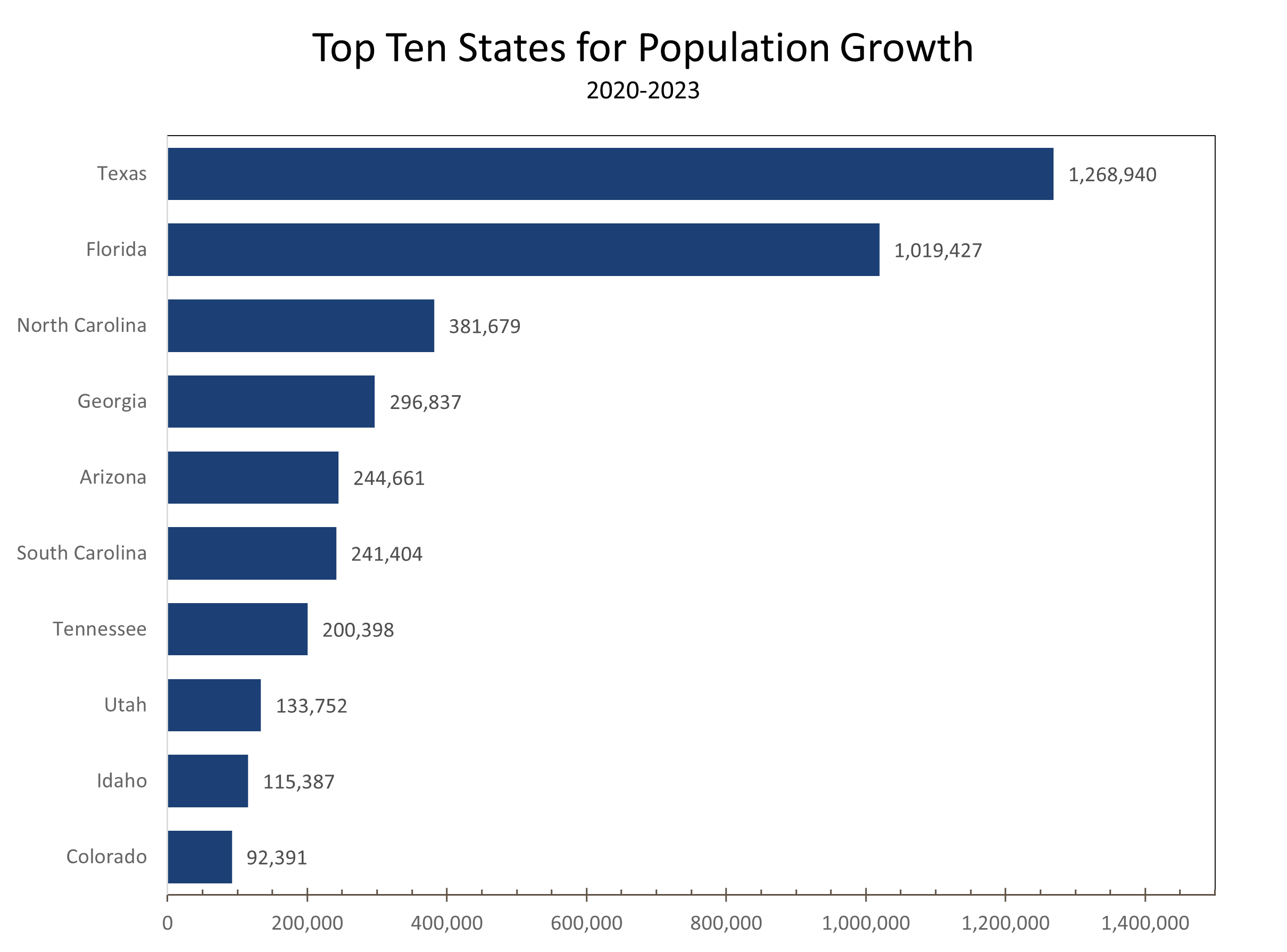
- This week’s matchup features major college teams from the state capitals of Florida and Georgia, the two largest states in the Southeast. Texas, located in the Southwest, joins the SEC this year.
- We review how Atlanta and Tallahassee became their respective state capitals.
- Both schools are key economic drivers for their regions, a role they have enthusiastically embraced in recent years.
- Florida State is an 11.5-point favorite going into the game. The Seminoles went undefeated in the regular season last year and won the ACC Championship. Georgia Tech returns a high-powered offense from last year’s team, which finished strong.
The college football season will kick off Saturday internationally this year in Dublin, Ireland. The Georgia Tech Yellow Jackets will face the Florida State Seminoles at Aviva Stadium on Saturday, August 24th in the Aer Lingus College Football Classic. This marks the sixth time since 2012 that this venue has been used for an American college football game, reflecting Ireland’s ongoing efforts to attract American tourists. Many of the previous matchups featured Catholic institutions like Notre Dame and Boston College, an intentional choice to appeal to Irish American and Catholic visitors. This will be Georgia Tech’s second trip to Dublin in the last decade, following their 2016 game against Boston College. For Florida State, this will be their first overseas matchup.
This game will also be the first time ESPN’s award-winning pre-game show, College Gameday, is held outside the United States. Historically, college football games in Ireland have drawn affluent tourists who not only attend the game but also plan extended vacations around the event. With Aviva Stadium’s capacity of over 50,000, the game is expected to bring a significant influx of visitors to Dublin. Event officials estimate that past matchups have contributed approximately €100 million in tourism revenue to the region. However, this will be the first game in Ireland without a traditionally Catholic school, which could pose a challenge for attendance.
On the field, the game promises to be competitive. Florida State narrowly missed the College Football Playoff last year despite an undefeated season and winning the ACC Championship. The Seminoles, who lost 10 players to the NFL Draft, have been aggressive in the transfer portal and continue to recruit well. Meanwhile, Georgia Tech, which has been in a rebuilding phase, finished last season strong. The Yellow Jackets challenged arch-rival Georgia as well as any team did all season in their regular-season finale and went on to win the Gasparilla Bowl, finishing 7-6.
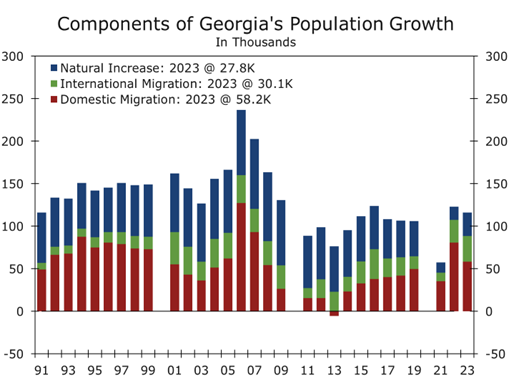
The matchup also features schools from the state capitals of the Southeast’s two largest states. The South has accounted for the majority of the nation’s population growth since the pandemic, with Florida and Georgia being two of the biggest beneficiaries. Despite this common trend, the two capitals could not be more different.
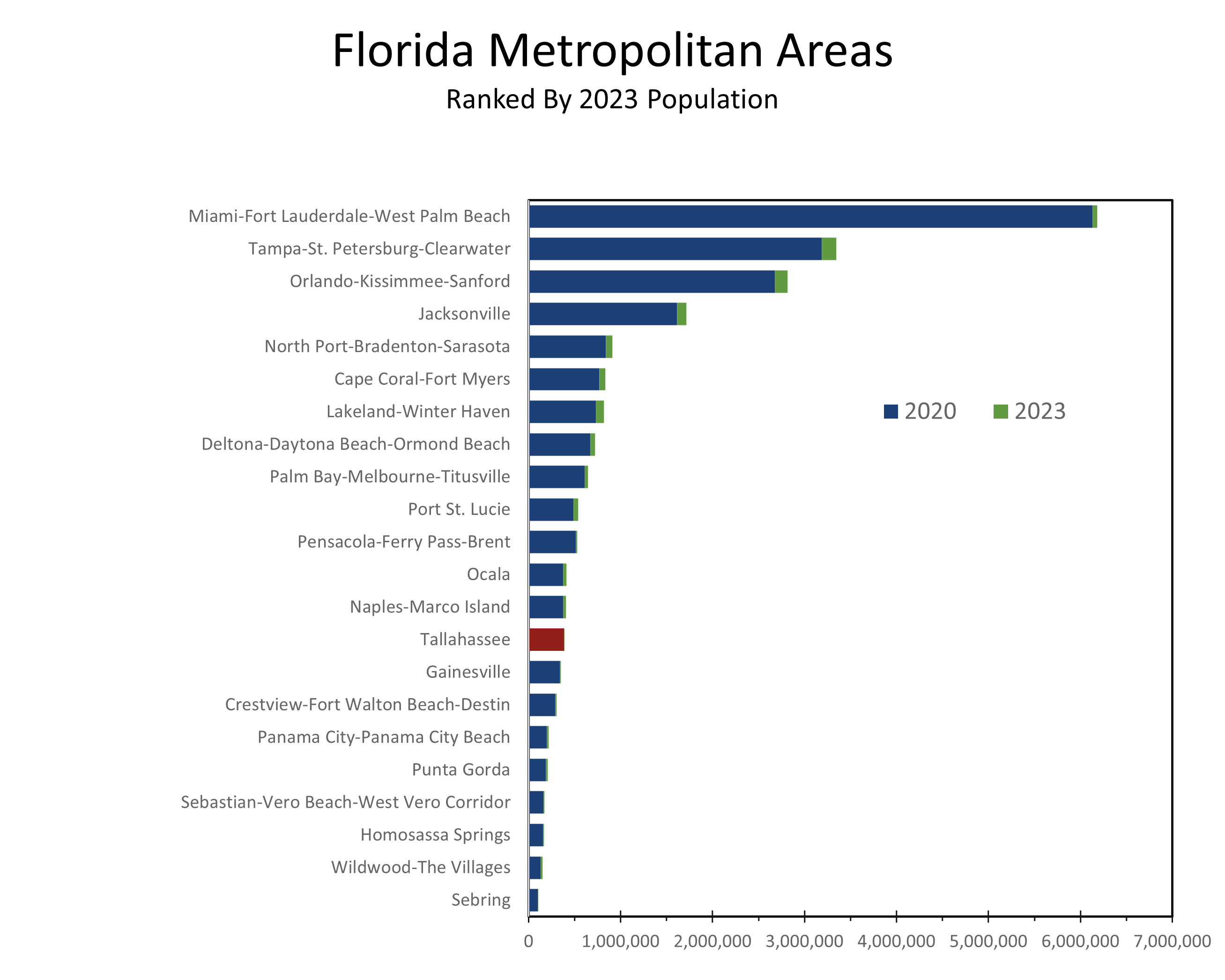
The Atlanta metropolitan area, often referred to as the capital of the Southeast, boasts a population of over 6.3 million residents and serves as a major hub for business and tourism. In contrast, Tallahassee is situated in North Central Florida, near the junction of Florida’s sparsely populated Big Bend region and the Panhandle, far from the state’s main population centers. The Tallahassee metropolitan area’s population is growing steadily and is currently home just under 415,000 residents.
Georgia Tech is situated in Atlanta’s Midtown, about 2 miles north of downtown. Atlanta became Georgia’s capital in 1868, replacing Milledgeville. Savannah, which originally served as the colonial entry point and a defensive position against Spanish forces, was Georgia’s original capital. After Savannah fell to the British during the Revolutionary War, the capital moved to Augusta. Post-war, both Savannah and Augusta served as seats of governance until Augusta became the official capital in 1786.
The expansion of agriculture and the search for flatter land prompted legislators to move the capital further inland to Milledgeville, requiring a new treaty with the Creek tribe. Milledgeville remained the capital for 60 years, a city modeled after Savannah and Washington, D.C., and carved out of the wilderness. The region thrived during the cotton boom and largely survived Sherman’s March to the Sea, preserving much of its architecturally significant structures and squares.
After the Civil War, the capital was relocated to Atlanta, which, despite being burned by Sherman, remained a vital railroad hub. The name “Atlanta,” derived from the Atlantic Railroad, was chosen as a compromise to avoid the more feminine name, Martha. After two decades and multiple rounds of voting, Atlanta was officially designated as the state capital. This move symbolized a push to industrialize the South during Reconstruction, aiming to compete with the North’s growing production capabilities.
This same drive led to the founding of the Georgia Institute of Technology in 1885 to advance technological development in the predominantly agrarian region. Today Georgia Tech occupies 450 acres in Midtown Atlanta, educates 16,000 students and employs over 4,900 staff members. Sixty percent of its students are from Georgia, contributing to the school’s $4 billion impact on the state and $3 billion impact on Atlanta.
Initially located on the eastern side of the downtown connector where I-75 and I-85 merge through the heart of downtown Atlanta, Tech expanded in the late 1990s by purchasing eight acres to develop “Tech Square” as part of its business outreach program.
By 2021, Tech Square had become the Southeast’s densest hub of startups, corporate innovators, and research centers, hosting 100 startups, 25 corporate innovation centers, 10 research labs, and seven venture funds. Georgia Tech’s emphasis on community partnerships in Midtown has spurred a wave of innovative projects from North Avenue to Brookwood Station. Additionally, new developments from the Woodruff Arts Center, a Savannah College of Art and Design campus, and numerous businesses have led to 50 new buildings valued at $13 billion. With an average of 60 new residents moving to Midtown each week, it has become one of the region’s fastest-growing submarkets.
Florida State University is located in Tallahassee—a location many newcomers and outsiders likely find unusual for a state capital. Tallahassee is Florida’s 14th largest metropolitan area and sits about 460 miles away from South Florida, where over a quarter of the state’s population resides. This choice dates back to a time when Florida was divided into two separate territories, and most of the population concentrated in the northern part of the state. The western territory’s capital was Pensacola, while the eastern territory’s capital was St. Augustine, both coastal cities central to their respective regions.
In 1819, the western territory seceded from Spain and was claimed by the United States, which took over Pensacola and other port cities during a military campaign, including raids against the Creek and Seminole tribes (the namesake of Florida State University). When the eastern territory was ceded to the U.S., Florida became one unified territory, and Tallahassee was chosen as the capital.
While economic and demographic power has since shifted southward, the northern part of the state still retains considerable clout. The region is home to the state’s two largest universities, the University of Florida and Florida State, as well as the largest Historically Black College and University, Florida A&M. Even the University of South Florida, located in Tampa, is still 246 miles northwest of ‘South Florida.’
In 1851, the Florida State Legislature called for the creation of two educational institutions on opposite sides of the Suwannee River. By 1854, the City of Tallahassee established the Florida Institute, a boys’ school run as a seminary. In 1858, the Florida Institute absorbed the Tallahassee Female Academy and became a coeducational institution.
After serving as a military academy during and after the Civil War, the school grew into a recognized collegiate institution. By 1901, it was officially known as Florida State College, then Florida Female College in 1905 and Florida State College for Women in 1909, with male students relocated to Gainesville. In 1947, the growing demand for education following the G.I. Bill led to its designation as Florida State University.
The university has continued to expand, graduating its first PhD candidate in 1952, adding research facilities for Molecular Biophysics and Space Biosciences in the 1960s, establishing the National High Magnetic Field Laboratory (MagLab) in 1990, and adding the College of Medicine in 2001. FSU has grown from its original few acres to 1,550 acres, comprising over 500 buildings. The university has focused on investing in programs that can be commercialized, attracting researchers, research funding, and new industries to Florida. Currently, Florida State is home to over 44,000 students and 14,700 employees.
Bobby Dodd Stadium and Atlanta
Georgia Tech plays its football games at Bobby Dodd Stadium in the shadows of Midtown Atlanta. Originally opened in 1913 as Grant Field, the stadium was renamed in 1988 to honor legendary coach Bobby Dodd. The stadium has undergone several expansions and renovations. Its capacity, which peaked at about 58,000 in the 1980s, is now around 55,000. Known for its classic bowl-shaped design, historic charm, and skyline backdrop, Bobby Dodd Stadium features modern synthetic turf and is the oldest FBS college football stadium, with college football continuously played at the site since 1905. Most recently the stadium was renamed “Bobby Dodd Stadium at Hyundai Field” following a sponsorship by Hyundai, which has a large and growing Georgia presence.
One of the more memorable games at the stadium occurred in 2015 when Georgia Tech upset the 9th-ranked Florida State. With Florida State leading 16–13 and driving late for a potential game-clinching score, a pass was deflected off Georgia Tech cornerback Lawrence Austin’s shoe and intercepted by Georgia Tech’s Jamal Golden. Harrison Butker subsequently tied the game with a 25-yard field goal.
Florida State had a chance to win the game in the final seconds but Roberto Aguayo, who had been perfect for the fourth quarter, saw his 56-yard field goal attempt blocked by Patrick Gamble. Lance Austin returned the blocked kick 78 yards for a touchdown as time expired. This thrilling finish was the high point of a disappointing season and came to be known as the Miracle on Techwood Drive. The Yellow Jackets, who began the year ranked in the top 20 and rise to #14 before losing 5 straight games, finished the year 3-9.
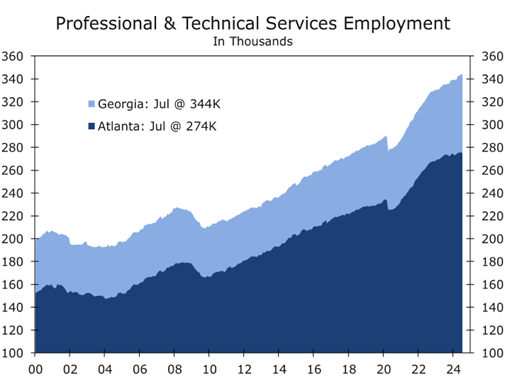
Atlanta’s selection as Georgia’s state capital was driven by its role as the South’s primary railroad hub. This foresight was validated as Atlanta’s transportation significance grew with the expansion of the federal highway system, the creation of the nation’s largest airline hub, and the intersection of major fiber optic networks in the metro area. These developments have cemented Atlanta’s status as the Southeast’s economic capital, home to 16 Fortune 500 companies and a leader in trade, transportation, digital payments, sports, and entertainment.
Atlanta’s economy has recently endured an unusually sluggish patch. Overall job growth has slowed as the entertainment industry has struggled in the aftermath of the writers’ and actors’ strikes, as well as financial challenges by many long-time industry leaders. Transportation and warehousing have also come under pressure, as the economy has worked through a goods recession after pent-up demand from the pandemic was sated after the economy reopened.
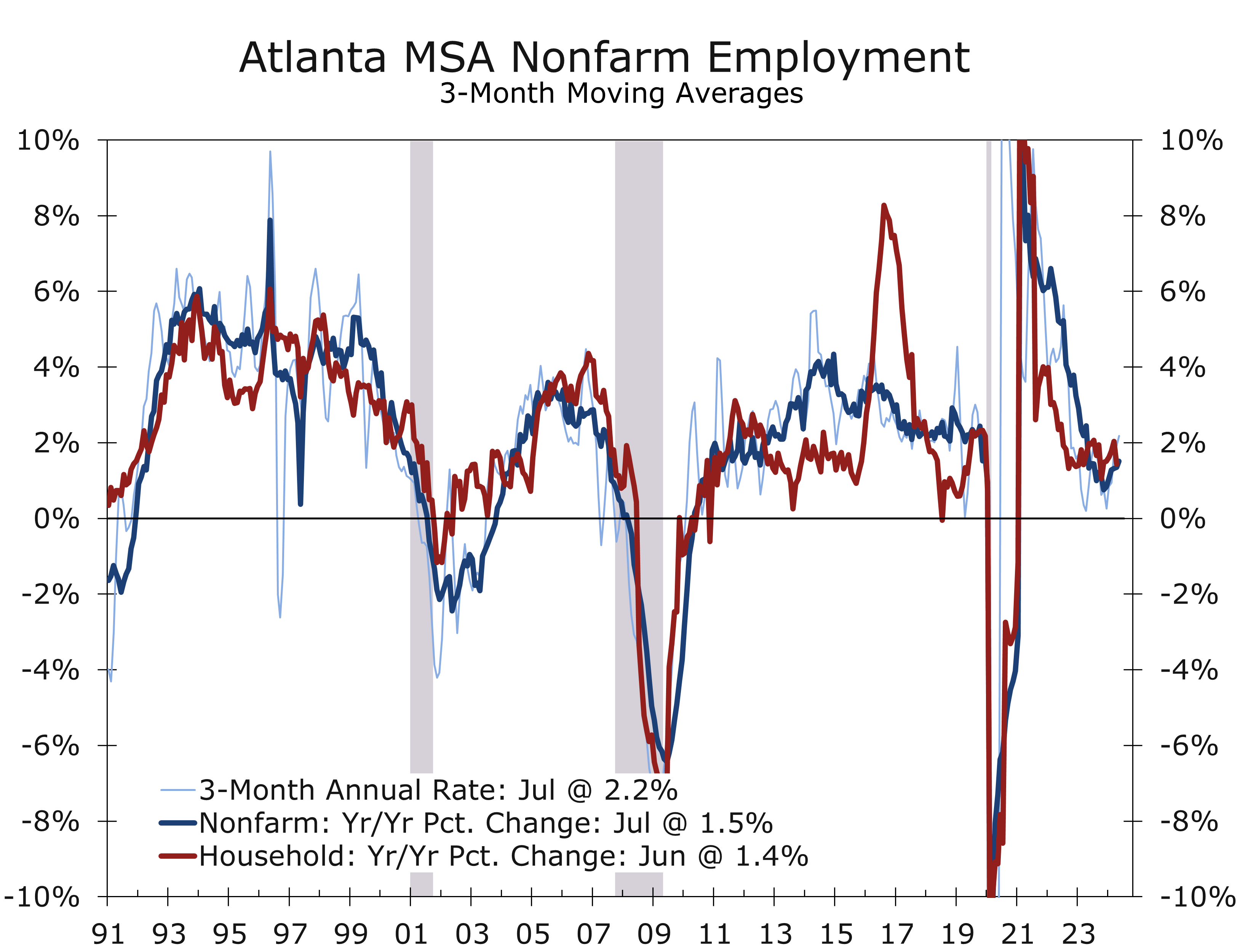
Nonfarm employment has risen just 1.5% over the past year, which slightly trails the state, and the unemployment rate has edged up to 3.9%. Atlanta has regained momentum more recently, as the headwinds impacting the goods sector and entertainment industry have abated somewhat. Atlanta remains a top choice for corporate expansions and relocations and is in the midst of a data center building boom. Several new studio complexes have also recently opened, presaging a rebound in film production.
FSU’s Relationship with the Seminole Tribe
Florida State University is situated on land historically inhabited by the Seminole Tribe and maintains a unique partnership with the tribe. Despite growing criticism regarding the use of Native American symbols in sports, Florida State remains committed to honoring the Seminole tradition. In 2005, when the NCAA reviewed its guidelines on the use of Native American nicknames, the Seminole tribal council unanimously approved FSU’s use of the Seminole name.
The Tribe is actively involved in decisions related to the use of the Seminole symbol. For example, the regalia worn by Osceola, the student who rides to midfield to plant the flaming spear, was designed with the tribe’s approval. The Tribe also provided input on the redesigned uniforms for the 2014 season.
Importantly, Florida State does not have a traditional mascot but rather uses a “symbol” to show respect and honor to the tribe. FSU continues to honor the Seminole Tribe with traditions like the War Chant and the Tomahawk Chop.
A Surprisingly Competitive Rivalry
Florida State holds an all-time record of 556-260-16, while Georgia Tech’s modern-era record stands at 750-519-40. In their head-to-head series, Florida State leads 15-11-1, with the Seminoles winning the most recent matchup in 2022, though Tech claimed victory in the two prior meetings.
Georgia Tech is one of college football’s most storied programs, with much of its success rooted in the early decades of the sport. The football program, which dates back to 1892, has accumulated an all-time record of 756-540-43. Tech claims four National Titles, the first of which was won in 1917 under the legendary coach John Heisman. Additional titles followed in 1928, 1952, and 1990, with unclaimed titles in 1916, 1951, and 1956.
Georgia Tech was a founding member of the Southeastern Conference (SEC) but left in 1963 due to frustrations with over-signing—the practice of recruiting more than the 25 allotted scholarship players, which often led to player cuts and transfers. This practice put Tech at a disadvantage and cast a poor light on Alabama. The Yellow Jackets, particularly head coach Bobby Dodd, accused Alabama of holding summer tryouts among these players to prepare for the season. After a rule proposing a ban on these tryout camps was voted down, Tech decided to leave the SEC. They played independently for almost three decades, navigating a tough schedule when there were still many independent programs.
Georgia Tech joined the ACC in 1992, enjoying remarkable success in their first decade in the conference. However, in recent years, they have faced challenges from cross-divisional rival Clemson and other conference powerhouses. Last year, the Yellow Jackets finished with a conference record of 5-3.
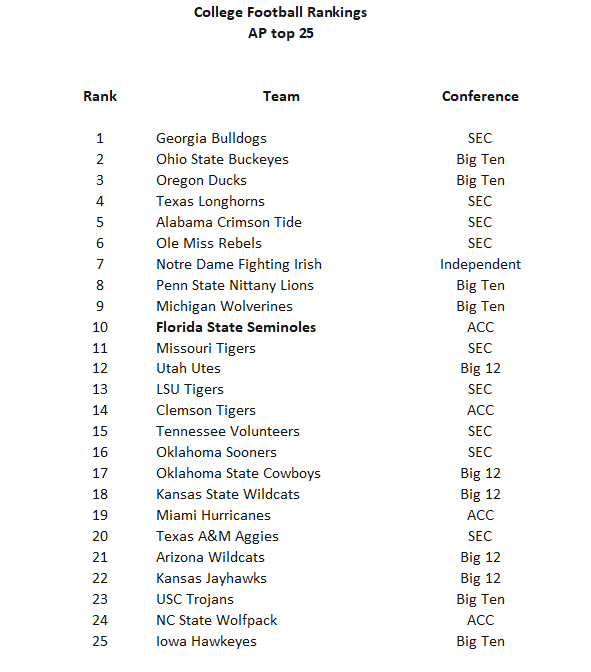
Florida State had a flawless 9-0 conference record last year and is ranked 10th in both the AP and Coaches pre-season polls. FSU has been a football juggernaut since the 1980s, never finishing a season ranked below fourth nationally between 1987 and 2000. The program also went forty years without a losing season, from 1977 to 2017. Although the Seminoles have not dominated since the introduction of the College Football Playoff, they remain one of college football’s most respected programs.
Florida State Football History
Florida State University’s athletic program began in 1902, when Florida State College, its former name, fielded a varsity football team called “The Eleven.” The team wore gold uniforms with a large purple “F” and had minimal protection, featuring lightly padded pants, leather helmets with ear guards, and metal nose guards. W.W. Hughes, a Latin professor and head of men’s sports, was the first coach. The team won their inaugural game against the Bainbridge Giants of Georgia, 5–0, and later split games with Florida Agricultural College.
In 1903, the team’s popularity grew, and “The Eleven” scheduled six games, including matches against Georgia Tech and Florida Agricultural College. They concluded the season competing for the Florida Times-Union Championship Cup. Jack Forsythe, who would later become the first head coach of the Florida Gators, took over as coach in 1904 and led the team to an unofficial state championship by defeating Stetson. However, the team disbanded after the 1904 season due to the Buckman Act of 1905, which reorganized Florida’s colleges by gender and race, renaming Florida State College to Florida Female College and later Florida State College for Women.
After World War II, the influx of veterans led to the renaming of Florida State College for Women to Florida State University, allowing men to enroll. Football resumed in 1947, with the Seminoles briefly competing in the Dixie Conference (1948-1950) before becoming an independent program from 1951 to 1991. The early years saw mixed success under coaches Ed Williamson, Don Veller, and Tom Nugent. Veller led the team to its first unbeaten season in 1950, while Nugent secured the Seminoles’ first win over an SEC opponent in 1958.
Head coach Bill Peterson, who arrived in 1960, began FSU’s rise to national prominence. Under Peterson, the Seminoles beat the Florida Gators for the first time in 1964 and earned their first major bowl bid. Peterson also gave Bobby Bowden his first major college coaching opportunity and led the Seminoles to their first top ten and number one ranking, according to the Dunkel College Football Index, in 1964.
Bobby Bowden, head coach from 1976, transformed FSU into a national powerhouse. The Seminoles played in five national championship games between 1993 and 2000, winning two. They set an NCAA record with 14 consecutive Top 5 finishes from 1987 to 2000. Bowden retired in 2009 with 377 career wins, though FSU later vacated 12 wins due to an academic scandal.
Jimbo Fisher succeeded Bowden in 2010 and led the Seminoles to a national championship in 2013. After a period of decline, Fisher resigned in 2017. Willie Taggart, hired as head coach, was fired after a disappointing 2019 season. Mike Norvell took over in 2019, leading the team to an undefeated regular season and a conference championship in 2023, though FSU was controversially excluded from the College Football Playoff.
Doak Campbell Stadium & Tallahassee
Doak Campbell Stadium, located on Florida State University’s campus in Tallahassee, opened in 1950 with a capacity of 15,000 and has since expanded to over 79,000 seats, reflecting FSU’s rise in college football under coach Bobby Bowden. Named after FSU’s first president, the stadium has seen multiple expansions and renovations, including the addition of the University Center in 2003 and modern amenities in the 2010s. The field was renamed “Bobby Bowden Field” in 2004. Major renovations are currently underway, which will reduce seating capacity by about 24,000 this season. Florida State’s will play its home opener against Boston College on Labor Day weekend.
Tallahassee’s economy is driven primarily by government and education, with the State of Florida and local governments, Florida State University, Tallahassee Community College, and Florida A&M University as top employers. Other key sectors include healthcare, with hospitals like Tallahassee Memorial Healthcare, and retail and wholesale trade. Professional services, especially in law, lobbying, and consulting, is another major employer. The city also serves as a regional trade and distribution hub, with growing tech and innovation sectors.
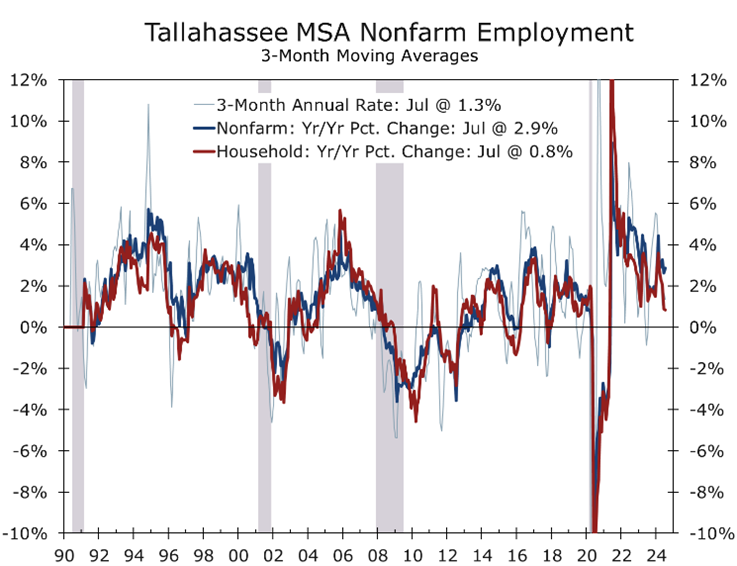
Over the past few years, Tallahassee has seen solid economic gains. Nonfarm employment rose by 3.0% this past year, driven by state and local government, transportation, warehousing, and education and healthcare. Despite its remote location, Tallahassee’s trade area, extending from South Georgia to the Gulf Coast, is expanding. The metro area is widely recognized as a top place to do business. Population growth averaged 0.5% over the past three years. Job growth is expected to moderate to 2.5% in the coming year, reflecting slower overall U.S. economic growth.
Florida State is Favored by 11.5 Points
Florida State enters Saturday’s game as an 11.5-point favorite. The Seminoles are likely still smarting from last year’s College Football Playoff snub and the 63-3 thrashing by Georgia in the Orange Bowl. On paper, they appear to be the superior team, bolstered by a wealth of talent, including several high-profile transfers like former Clemson QB DJ Uiagalelei. After starting 28 games for Clemson, Uiagalelei transferred to Oregon State, where he completed 57% of his passes and threw for 21 touchdowns. Florida State also brought in key defensive transfers to replace NFL-bound players, including standout defensive end Jared Verse.
Georgia Tech, returning eight starters on offense, led the ACC in rushing last season with 204 yards per game. Jamal Haynes spearheaded the attack with 1,059 yards on 174 carries, becoming Tech’s first 1,000-yard rusher since 2017. The offense is powered by dual-threat QB Haynes King, who passed for 2,842 yards and rushed for 737 more, completing 61.6% of his passes with 27 touchdowns and 16 interceptions. However, the defense, returning seven starters, remains a concern, particularly against the run, where they allowed over five yards per carry last season.
Florida State is somewhat of an unknown this year, starting the season ranked 10th largely due to their legacy of success and recent influx of transfers. A key question is how quickly the Seminoles can sync up. FSU will likely focus on establishing the run to keep Tech’s offense off the field.
Georgia Tech is also an unknown quantity, particularly with new defensive coordinator Tyler Santucci, who worked wonders at Duke last season. Tech will need to score early to prevent FSU from controlling the game with their ground attack. If Tech can get an early stop or turnover and capitalize with points, they might have a shot at the upset. However, if Florida State establishes their running game, Tech could struggle to keep pace with the deeper, more physical Seminoles.
Disclaimer: This publication has been prepared for informational purposes only and is not intended as a recommendation offer or solicitation with respect to the purchase or sale of any security or other financial product nor does it constitute investment advice.
August 21, 2024
Mark P. Vitner, Chief Economist
mark.vitner@piedmontcrescentcapital.com
Chief Economist (704) 458-4000
Ethan Jacobs
Economic Analyst Intern
Economic Analyst Intern