Small Businesses Remain Concerned About the Outlook
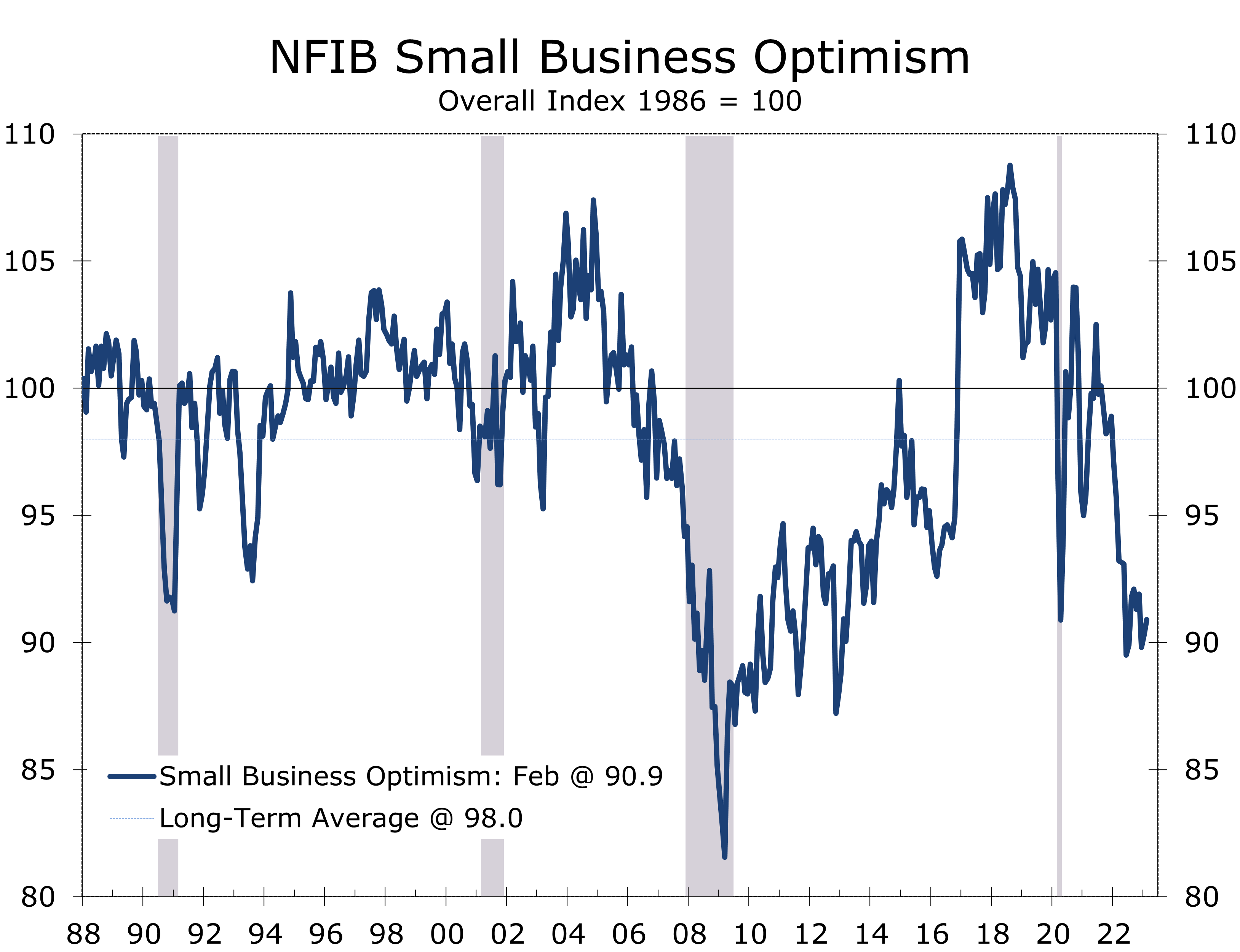
- The National Federation of Independent Business (NFIB) Small Business Optimism Survey rose 0.6 points to 90.9 in February.
- Business owners remain concerned about the economic outlook and continue to be challenged by higher input cost rising wages.
- The share of business owners expecting the economy to improve over the next six months fell 2 points to -47%.
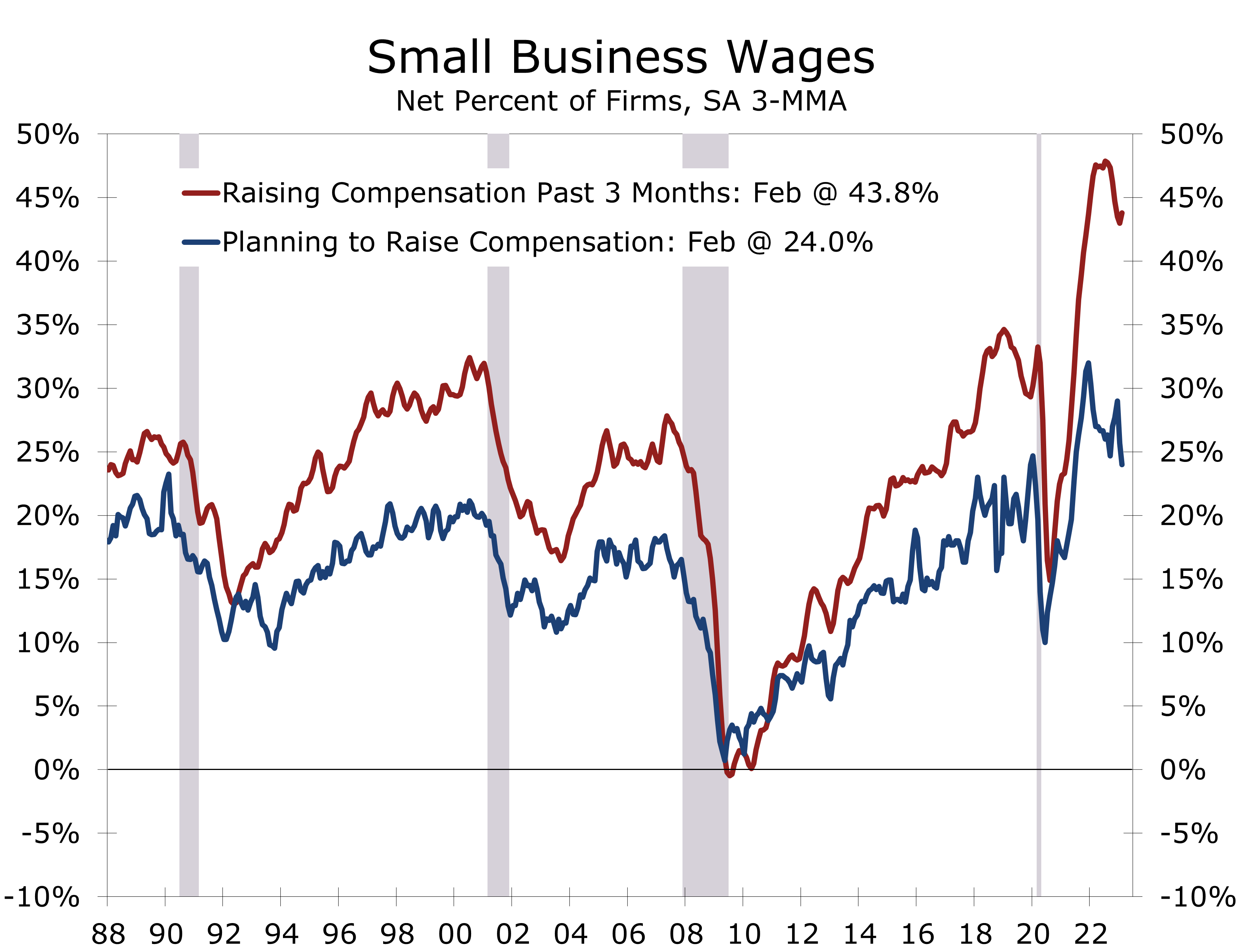
- The spread between the number of firms boosting compensation and those planning to boost compensation remains extremely wide, reflecting efforts to maintain margins.
- The share of firms raising prices fell 4 points to 38 – the lowest share since April 2021.
- Thirty percent of firms report they are borrowing regularly, the highest share since January 2000.
- With profit margins coming under pressure and credit set to tighten, we expect small businesses to curb hiring, reduce inventories and cut capital spending in coming months.
This morning’s update on Small Business Optimism is not likely to steal the headlines from the SVB banking crisis or the latest CPI data. The report shows another modest increase, with the headline index rising 0.6 points to 90.9. Small Business Optimism been below its long-term average for 14 consecutive months and remains at levels typically seen in a recession.
While 5 of the index’s 10 components increased, most rose from severely depressed levels. The share of businesses expecting sales to improve rose 5 points to -9%, indicating more firms still expect sales to fall than expect them to increase. Earnings trends also improved, rising 3 points to -23%, while the net share with job openings and share expecting credit conditions to improve both rose 2 points.
On the plus side, the net share of firms raising prices over the past 3 months fell 4 points to 38%, which is the lowest reading for this closely watched series since April 2021. Moreover, the share of firms planning to raise prices in the next 3 months fell 4 points to 25%.
The NFIB Index has consistently provided one of the earliest warnings of economic distress.
Small Businesses operate on the economy’s front lines and the pressures business owners face often precede those at larger firms. This is one reason why the NFIB index has consistently provided one of the earliest warnings of impending economic distress.
One of the more troubling aspects of the NFIB survey has been the historically large share of business owners expecting general business conditions to worsen. The net share has been in negative territory since December 2020 and steadily weakened as higher inflation drove interest rates higher. The index hit an all-time low of -61% in June 2022 and has averaged -48.7% over the past year.

Heightened concerns about the economy are likely impacting decisions on hiring, inventory levels and capital spending. The net share of small business owners planning to increase staff fell 2 points in February to 17% – the lowest since January 2021.
While hiring plans have fallen, small businesses still have plenty of job openings and a large share report difficultly remaining fully staffed. The share of small businesses with job openings rose 2 points to 47% in February. Of those firms hiring or trying to hire in February, 90% reported few or no qualified applicants for the positions they were trying to fill.
The net share of businesses reporting inventories increased fell 7 points in February to -1%. Moreover, the next share of business owners stating inventories were too low fell 3 points to -4%, meaning more firms feel inventories are too high than feel they are too low. Not surprisingly, a net -7% of business owners plan to increase inventories in coming months.
Businesses have also become more cautious about capital spending. The share of firms planning to increase capital outlays was unchanged at 21% in February. While that is still well into positive territory, it marks the smallest share of small businesses planning to increase capex since March 2021.
One of the key drivers for capital outlays are efforts to boost efficiency. Small businesses are price takers for labor and compensation costs have been sharply outpacing planned increases for quite some time. The gap between the share of firms raising compensation over the past 3 months and those planning to raise compensation has averaged a record 20 percentage points for the past year.
Small businesses are price takers for labor.
The persistent pressure on wages will make it difficult to bring inflation down to the Fed’s 2% target. Wages make up a large share of core services prices, a key metric the Fed has identified in determining how much higher they need to push up short-term interest rates. We still feel the Fed will follow through with a 25 basis point hike at next week’s FOMC meeting, provided fears about the banking system continue to subside.
Disclaimer: This publication has been prepared for informational purposes only and is not intended as a recommendation offer or solicitation with respect to the purchase or sale of any security or other financial product nor does it constitute investment advice.