
Maryland Visits Charlottesville for a Key Game
- Texas, which defeated Michigan 31-12 at the Big House; and Tennessee, which overwhelmed NC State 51-10 in Charlotte, have emerged as two of this early season’s stronger playoff contenders.
- Week 3 features notable nonconference games: #4 Alabama at Wisconsin, #24 Boston College at #6 Missouri, and #14 Kansas State hosting #20 Arizona.
- Virginia Cavaliers vs. Maryland Terrapins at Scott Stadium, marking the 80th meeting between the teams.
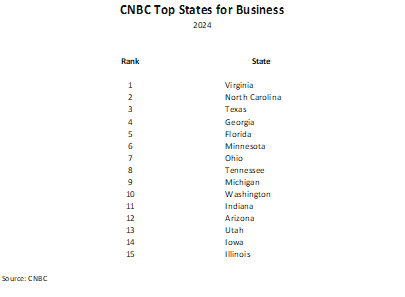
- Virginia’s economy has been on a roll recently, racking up big economic development wins and recently being named CNBC’s Top State for Business.
- Maryland remains a juggernaut in the biotech space and recently landed the new headquarters for the FBI.
- Rebuilding following 3-9 record last year, UVA has started this season 2-0 with wins over Wake Forest and Richmond.
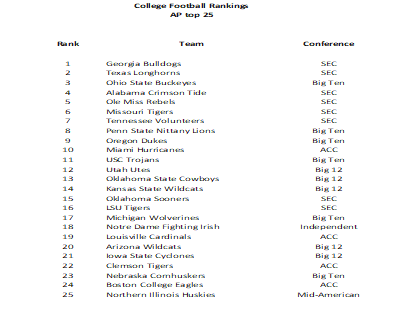
After just two full weeks of college football, we’ve learned a lot about the season ahead. Last week’s key games showed Texas and Tennessee as serious playoff contenders. Texas dominated Michigan at the Big House, 31-12, while Tennessee crushed a supposedly strong NC State team, 51-10. While questions remain about Michigan and NC State, the Longhorns and Volunteers earned their #2 and #7 rankings.
Tennessee faces Kent State this week, but we’ll learn more about the Vols in Week 4 when they travel to Norman for their SEC opener against #15 Oklahoma. The Sooners are coming off a narrow 14-12 win over Houston, while Tennessee is a 2.5-point favorite. Six of the top seven teams in the current AP poll are from the SEC. That certainly will not hold, as most will play each other when conference play moves into full swing.
Week 3 mostly features nonconference matchups, including #4 Alabama at Wisconsin, #24 Boston College at #6 Missouri, and #14 Kansas State hosting #20 Arizona.
Our spotlight game this week is Virginia vs. Maryland at Scott Stadium in Charlottesville, marking their 80th meeting. Maryland has faced Virginia more than any other opponent, leading the all-time series 44-32-2, though Virginia holds a 15-7 edge since 1991. Last season, Maryland rallied from a 14-point deficit to win 42-14 behind Taulia Tagovailoa’s 342 passing yards, their largest series win since 1986.
The Cavaliers are in the rebuilding process. Last year’s squad went 3-9. The team was better than their record suggests. One of their three wins was against 10th-ranked UNC team, another key rival. Moreover, five of Virginia’s other losses were one-possession games. Expectations for Virginia are also left lofty than they are for Maryland. Virginia started this season 2-0, with, defeating Wake Forest 31-30 last week and Richmond in their opener.
Maryland appears to have moved past its rebuilding phase under Coach Mike Locksley, securing a winning record for the past three years after breaking a six-year losing streak. However, despite this progress, the program has yet to secure a marquee win. Since Locksley took over, Maryland is 0-16 against ranked Big Ten opponents. While they’ve been competitive in many games, the pressure is building for a breakthrough, as fans, pleased with the overall improvement, are eager for more substantial success. The Terps come in the game stinging from a 27-24 loss to Michigan State, after leading 24-17 early in the fourth quarter.
The Virginia Cavaliers have a rich history of competitive success, beginning with their first game in Charlottesville in 1888 against Pantops Academy. The program started strong, achieving 28 consecutive winning seasons. In 1915, UVA became the first Southern team to defeat the 26-time national champions, Yale. It was during this era that the Cavaliers established long-standing rivalries with North Carolina and Virginia Tech.
However, the program faced challenges in the mid-20th century when UVA President Colgate Darden reduced funding, limiting scholarships and recruitment, which led to years of poor performance. The team’s fortunes changed under George Welsh, who revitalized the program in the 1980s. By 1990, the Cavaliers earned their first-ever AP No. 1 ranking. Welsh retired in 2000 as the winningest coach in ACC history (now second behind Bobby Bowden). Al Groh succeeded him but delivered inconsistent results. Though the team was ranked as high as sixth in 2004, Groh’s tenure ended in 2009 after a series of underwhelming seasons. Since then, the Cavaliers have struggled to return to their former glory, with Tony Elliott now the fourth head coach since Welsh retired.
Despite these challenges, UVA fans have maintained strong traditions. After each score and at the end of games, fans link arms to sing “The Good Old Song.” The “Guys in Ties, Girls in Pearls” tradition also emerged during a period of poor play, with fans dressing formally to games, ensuring that, if the team couldn’t impress on the field, the fans would still represent Cavalier pride with style.
The Maryland Terrapins football program began in 1892, representing the Maryland Agricultural College. In 1921, the school joined the Southern Conference, maintaining a respectable program. However, this era is most remembered for being coached by future legends such as Frank Dobson, Clark Shaughnessy, and Paul “Bear” Bryant. In 1953, Maryland helped found the Atlantic Coast Conference (ACC), where the team would go on to win nine ACC championships, including a perfect 11-0 season in 1974. Soon after, Bobby Ross became head coach, and the program earned the nickname “Quarterback U” by sending five quarterbacks to the NFL in just six years. However, after Ross resigned following disappointing bowl performances and the overall decline of Maryland athletics, the football program struggled. Recruiting became difficult, especially after the tragic death of Maryland basketball star Len Bias, which shook the entire athletic department.
Last year, the program showed signs of revival, starting the season 5-0 for the first time since 2001, including a Week 3 victory over Virginia. However, the momentum stalled after facing their first ranked opponent, Ohio State, and they finished the season at 8-5, losing two one-possession games to unranked teams and dropping every game against opponents with winning records. Despite the late-season slump, the Terrapins earned a spot in the Music City Bowl, where they secured a win over Auburn.
The University of Maryland, founded in 1856 in College Park as the Maryland Agricultural College, was established by Charles Benedict Calvert, a plantation owner and future congressman. A proponent of agricultural and technical education, Calvert also supported the telegraph and was a University of Virginia alumnus. The university started with about 40 students focused on agriculture. Its growth accelerated after the Morrill Land Grant Act, which provided federal funding for universities teaching agriculture, technical skills, and military training.
The Civil War significantly impacted the university, as it hosted both Union and Confederate soldiers. At one point, 6,000 Union soldiers used the campus to support General Ulysses S. Grant’s Virginia campaign, while a Confederate-sympathizing university president welcomed 400 Confederate troops that same year.
After the war, financial difficulties led to the sale of large portions of the university’s land, but the Maryland Legislature bailed out the institution, assuming partial ownership and initiating its transition into the University of Maryland system. A devastating fire on Thanksgiving Day in 1912 destroyed all but one building, but the university, with support from College Park and the state, rebuilt. By 1920, it had become the flagship undergraduate institution for Maryland.
During World War II, the university participated in the V-12 Navy program, providing training for future Navy officers. By 1951, enrollment had surpassed 10,000, and the university admitted its first African American students. In the post-war period, it raised academic standards and became a highly respected institution, eventually achieving R1 research status.
The University of Maryland has made significant investments in research and innovation, with 69 undergraduate and graduate programs ranked in the top 25 by U.S. News, including strengths in cybersecurity and artificial intelligence.
The University of Virginia (UVA) was founded in 1819, inspired by Thomas Jefferson’s vision of a prestigious university in his home state. In 1817, Jefferson, along with former Presidents James Monroe and James Madison, Chief Justice John Marshall, and others, met to plan the university. The UVA Board of Visitors bought land from Monroe to establish the campus in Charlottesville.
UVA’s early construction relied on slave labor, a dark chapter it shares with institutions like Emory, Dartmouth, William & Mary, and Harvard. The university has since acknowledged this history, including a $7 million memorial to enslaved laborers as a lasting reminder of Virginia’s past.
One of Jefferson’s primary goals for UVA was to separate education from religion, which he felt had become too intertwined at his alma mater, William & Mary. As a result, UVA was founded with eight schools: medicine, law, mathematics, chemistry, ancient and modern languages, natural philosophy, and moral philosophy. In 1836, it became the first comprehensive university to establish an engineering school.
College Park and Charlottesville are both small communities, each with fewer than 50,000 residents. The universities in both cities were founded by benefactors from rural backgrounds—Thomas Jefferson with Monticello and Charles Benedict Calvert with Riversdale Mansion—both large plantations. Due to their remote locations, the growth of these areas has been closely tied to the expansion of the universities. Today, UVA and UMD are the top employers in their respective cities, and much of their economic growth is directly or indirectly linked to the universities.
The University of Virginia has a $7 billion economic impact, including both its academic and health systems, and supports over 50,000 jobs in areas such as academia, healthcare, and sports facilities. UVA’s 22,000 students contribute $377 million annually to the Virginia economy, helping generate nearly $567 million in government revenue, with 38% of students coming from out of state.
The area around UVA is also a hub for venture capital and innovation. The UVA Licensing & Ventures Group has provided millions in seed funding for university-led innovations, such as the artificial pancreas and advanced medical imaging technologies.
In January 2025, UVA Northern Virginia (UVA|NOVA) will open in Rosslyn, VA, home to the largest concentration of UVA alumni. This new campus will offer expanded opportunities in business, data science, engineering, and more, strengthening ties with Washington, D.C. UVA alumni already contribute significantly to Virginia’s economy, with over 90,000 alumni working in the state and companies they’ve founded generating $395 billion in revenue.
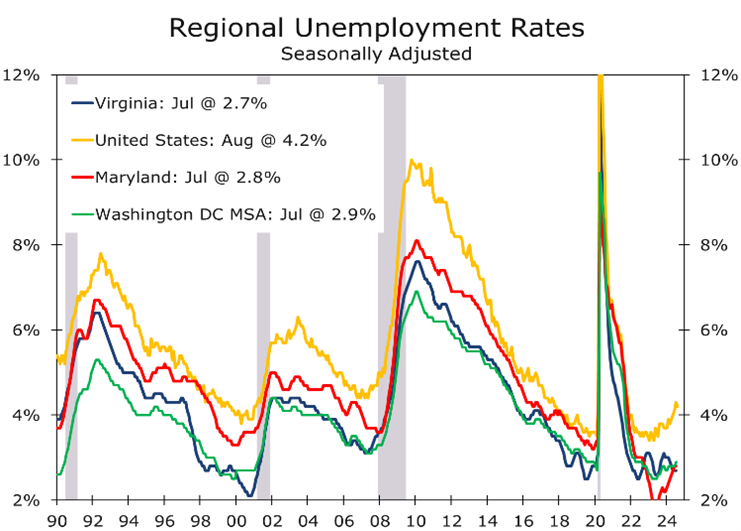
Virginia’s economy has been on a roll recently. CNBC ranked Virginia is Top State for business, just edging out North Carolina and Texas. Five of the top 10 states are in the South, with #4 Georgia, #5 Florida and #8 Tennessee rounding out the South’s top states in the CNBC ranking. Virginia’s economy is large and diverse. Real GDP topped $732 billion in 2023 and has risen 2.1% over the past year. Nonfarm employment is up 2.2% year-over-year and the state’s unemployment rate remains comfortably below the nation at just 2.7%.
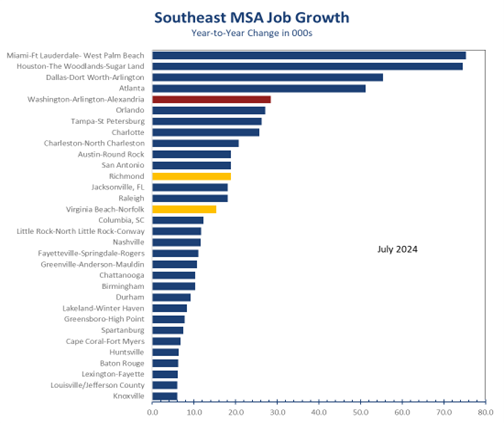
Virginia’s economic landscape is characterized by its impressive diversity and regional specialization, reflecting both its historical roots and modern advancements. The Commonwealth has achieved record job growth and attracted substantial capital investments, with major corporations such as Amazon Web Services, The LEGO Group, Raytheon, and Boeing committing over $74 billion in recent years. Governor Glenn Youngkin has put particular emphasis on recruiting new industries, particularly to the Commonwealth’s smaller metro and rural areas, to achieve more balanced economic development. This effort includes creating business-ready sites, enhancing workforce development, reducing regulatory burdens, investing in infrastructure, and expanding power solutions, which has earned Virginia the title of America’s Top State for Business.
Northern Virginia (NOVA), benefiting from its proximity to Washington, D.C., stands out as a major economic powerhouse. The region excels in technology, cybersecurity, and government contracting, supported by a robust presence of federal agencies and defense contractors. The Discovery District in NOVA, home to over 60 companies including Capital One, Raytheon, and Adobe, exemplifies the area’s vibrant tech sector and strong entrepreneurial ecosystem.
Richmond and Central Virginia showcase a diverse economy with significant contributions from finance, insurance, and manufacturing. Richmond, also the state capital, hosts Virginia Commonwealth University and the University of Richmond, driving both job growth and economic development.
The Hampton Roads region, including Virginia Beach and Norfolk, is heavily focused on maritime and defense industries. The Port of Virginia plays a crucial role in international trade, while the area maintains a strong military presence and a substantial shipbuilding sector, contributing to its economic stability.

In contrast, southern and western Virginia remain more rural, with economies centered around agriculture, mining, and manufacturing. Agriculture, including key products like poultry and soybeans, continues to be vital, while the western part of the state has a longstanding history of coal mining and related industries.
This economic diversity underscores Virginia’s blend of modern development and traditional industries. Northern Virginia and Richmond lead in technological and financial growth, while rural areas maintain their focus on agriculture and manufacturing. Governor Youngkin’s emphasis on
The University of Maryland is a vital economic engine for College Park, with a $3.16 billion impact on the state’s economy. It supports 57,500 jobs and drives nearly all the city’s growth through its operations and the spending of its 41,000 students. In the past three years alone, UMD has invested nearly $750 million into the local community.
UMD is a leader in technological innovation through MTech Ventures, which assists startups with seed funding and development resources. This program has generated $33.9 billion in revenue and created over 8,000 jobs, aiding 10,000 entrepreneurs. The university’s Discovery District, a research park on its eastern campus, houses over 60 companies, including major names like Capital One, Raytheon, and Adobe. This area is a key driver of local economic growth and attracts top-tier talent.
UMD’s commitment to innovation is reflected in its high rankings for artificial intelligence, cybersecurity, data analytics, and bioengineering, positioning it among the top ten public universities for these fields.
Maryland’s economy is remarkably diverse, benefiting from its unique position along the Eastern Seaboard. From the bustling urban hubs of Baltimore and the Washington, D.C. suburbs to its rural agricultural regions and the port city of Annapolis, the state’s economy thrives across various sectors. Key industries such as life sciences, biotechnology, defense, and cybersecurity are driving innovation, while sectors like agriculture, fishing, aquaculture, manufacturing, and logistics remain strong in many smaller metros and rural areas.
The life sciences and biotech sectors are among the fastest-growing components of Maryland’s economy, playing a vital role in driving job growth and innovation. The I-270 “Biotech Corridor” in Montgomery County has become a global hub, hosting over 400 biotech and pharmaceutical companies. Anchored by institutions like Johns Hopkins University, the National Institutes of Health (NIH), and the Food and Drug Administration (FDA), Maryland has established itself as a national leader in biotech research and development. The growth of the biotech sector is helping Maryland diversify its economy beyond federal government spending.
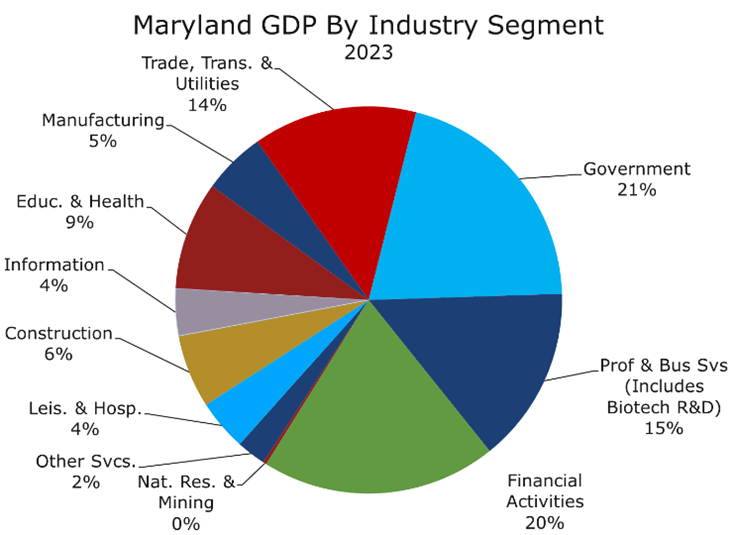
Notable companies such as Emergent BioSolutions and AstraZeneca have solidified the region’s prominence in vaccine development and biopharma innovation, particularly in the wake of the COVID-19 pandemic. This area’s strategic location near Washington, D.C., facilitates access to federal funding and regulatory agencies, creating significant comparative advantages.
While Montgomery County remains the epicenter of Maryland’s life sciences growth, biotech innovation is spreading to other areas of the state. Baltimore is rapidly developing as a biotech hotspot, driven by the presence of Johns Hopkins University and the University of Maryland, Baltimore. The University of Maryland BioPark fosters collaboration between academia and industry, creating a robust ecosystem for startups and established companies alike.
Prince George’s County is also experiencing growth in the life sciences sector, particularly around College Park and Greenbelt. The planned relocation of the FBI headquarters from Washington, D.C. to Greenbelt, which will bring 7,500 jobs and key improvements to transit links, along with the county’s expanding biotech infrastructure, is expected to attract further investment.
Outside of biotech, Maryland’s economy is supported by other key industries. Defense and Aerospace play a central role, with major military installations like Fort Meade, the U.S. Naval Academy, and Aberdeen Proving Ground contributing to the state’s economy through defense contracting and research. Major defense contractors such as Lockheed Martin and Northrop Grumman maintain significant operations in the state.
Cybersecurity is another major industry, driven by the National Security Agency (NSA) and other defense and intelligence agencies located at Fort Meade. The state’s cybersecurity ecosystem includes a strong network of private-sector firms and universities, making Maryland a national leader in this rapidly expanding sector.
Manufacturing remains an essential part of the state’s economy, with strengths in aerospace, electronics, and food production. The Port of Baltimore and its proximity to major markets along the I-95 corridor provide a logistical advantage for both domestic and international trade.
Agriculture and aquaculture continue to play vital roles in rural areas. Maryland’s agricultural output includes poultry, dairy, and vegetables, while the Chesapeake Bay supports a thriving seafood industry, known especially for its blue crabs and oysters.
After a challenging couple of years, the University of Virginia’s football program has emerged as an early feel-good story this season. The Cavaliers started strong with a win against Richmond and followed up with a dramatic 31-30 road victory over Wake Forest. Trailing 30-17 in the fourth quarter, UVA rallied for 14 unanswered points, including the game-winning touchdown with just over two minutes remaining.
This victory marked UVA’s first ACC opening win since 2020 and its first road ACC opener win since 2019. Malachi Fields set career highs with 11 receptions and 148 receiving yards, becoming one of only 13 UVA players to record 11 or more catches in a game. Fields leads the ACC in receiving yards, while quarterback Anthony Colandrea, named a Manning Award Star of the Week, threw for 357 yards and three touchdowns, setting a career high with 33 completions.
Now 2-0, Virginia is off to a promising start, and bowl eligibility looks attainable. A win against Maryland would further boost the program’s momentum.
Maryland, seeking to recover from a narrow 27-24 loss to Michigan State, needs a strong performance after a solid season opener against UConn. Saturday’s game at Scott Stadium is crucial for the Terps to regain their momentum.
Kickoff is at 8:00 PM ET, and the game will be broadcast on the ACC Network. Virginia is playing its third consecutive night game and second straight at home, with a 41-21-1 record in night games at Scott Stadium.
Virginia’s main challenge has been third-down conversions, succeeding only 24% of the time. Despite strong performances in crucial moments, their offense has been inconsistent, and the defense could falter if the offense fails to sustain drives. Maryland’s QB Billy Edwards Jr. will look to exploit UVA’s secondary, which allowed over 300 passing yards to Wake Forest’s Hank Bachmeier.
Maryland’s defense has struggled, particularly in the secondary, conceding 222 passing yards to UConn and 363 to Michigan State. Without a reliable pass rush, Virginia’s Anthony Colandrea, who has completed 76% of his passes for 654 yards and five touchdowns, may find opportunities to exploit the defense.
Colandrea, named Manning Award Star of the Week, threw for 357 yards and three touchdowns against Wake Forest, setting a career high with 33 completions. He needs another strong performance but must avoid turnovers. Maryland’s defense has forced six takeaways, including five interceptions, making mistakes potentially decisive. While Maryland is a 2.5-point favorite, Virginia’s energized home crowd might give the Cavaliers the spark they need to pull off an upset.
Disclaimer: This publication has been prepared for informational purposes only and is not intended as a recommendation offer or solicitation with respect to the purchase or sale of any security or other financial product nor does it constitute investment advice.
September 12, 2024
Mark P. Vitner, Chief Economist
mark.vitner@piedmontcrescentcapital.com
(704) 458-4000
Ethan Jacobs
Economic Analyst Intern
Benjamin Jacobs
Economic Analyst Intern