
Texas and Oklahoma Meet in Dallas
- The college football season is now nearly at the halfway mark and Week 7 brings a number of key clashes, headed by #2nd ranked Ohio State traveling to #3 Oregon.
- Our report focuses on one of college football’s most storied rivalries between the top ranked Texas Longhorns and 18th ranked Oklahoma Sooners.
- Both teams rank among the nation’s winningest programs and have competed for years in the Southwest Conference, Big-12 and now, for the first time, in the SEC.
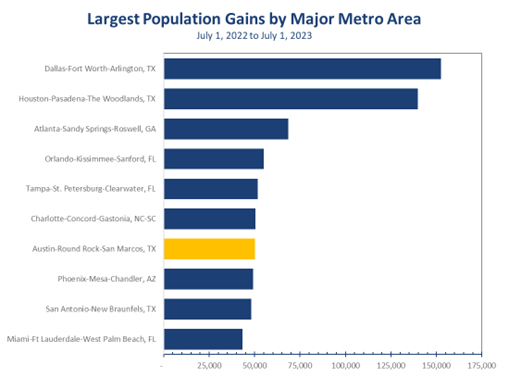
- Texas has been the fastest growing state since the pandemic. Most of the growth is in the Triangle between Dallas-Fort Worth, Houston and Austin and San Antonio.
- Austin has been one of the nation’s fastest growing major metro areas for the past decade and has capitalized on the outflow of tech firms from California.
- Texas is a 15.5-point favorite and comes into the game 5-0 and ranked #1.
- #18 Oklahoma (4-1) has been rebuilding since Lincoln Riley rode off to California.
The first week of October highlighted how conference realignment, Name, Image, and Likeness (NIL), and the transfer portal have forever transformed college football. There are now several competitive teams and fewer doormats. A prime example of this shift was Vanderbilt’s stunning 40-28 victory over Alabama. While the Crimson Tide may have underestimated Vanderbilt, the Commodores dominated the game from the outset, excelling at the line of scrimmage and controlling time of possession. Alabama appeared ill-prepared and undisciplined throughout the contest.
Arkansas also made headlines, scoring a late go-ahead touchdown for a 19-14 victory over then 4th-ranked Tennessee. Other top teams that faltered last week include Michigan, losing 27-17 on the road to Washington, and 11th-ranked Southern California, which fell to Minnesota 24-17, with the Golden Gophers scoring 14 unanswered points in the fourth quarter. Ninth-ranked Missouri was also overwhelmed by 25th-ranked Texas A&M, losing 41-10, propelling the Aggies up 13 spots to 12th in this week’s poll.
As we enter Week 7, we are right in the middle of the season, a crucial time to identify the real contenders. This weekend features a number of key matchups, with the headliner being a showdown between No. 2 Ohio State and No. 3 Oregon in Eugene. This marks the Ducks’ first major test since joining the Big Ten, as they host a perennial powerhouse expected to contend for the National Championship.
Other significant matchups this week include 5th-ranked Penn State traveling to face a Southern California team that is backed up against the wall, and 9th-ranked Ole Miss taking on 13th-ranked LSU.
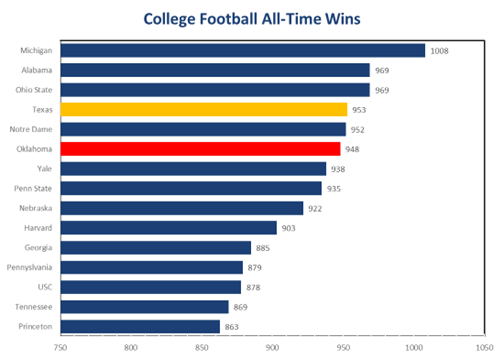
Our report will focus on the Red River Rivalry, featuring top-ranked Texas squaring off against 16th-ranked Oklahoma for the first time as SEC rivals. Both schools rank among the winningest programs of all time.
The Red River Rivalry
The Red River Rivalry is one of college football’s most storied and intense matchups. Held annually at the Cotton Bowl in Dallas, during the Texas State Fair, the game highlights both competition and cultural significance. The rivalry began in 1900, with Texas leading the all-time series 63-51-5. However, Oklahoma has dominated since World War II and has a 17-8 edge since 2000.
Both teams boast rich football traditions, including 7 modern-era National Championships, 4 for Texas and 3 for Oklahoma and 7 Heisman Trophy winners, all at Oklahoma. The neutral site in Dallas fosters an electric atmosphere with fans from both sides. Notable games include Oklahoma’s 55-48 comeback in 2021 and Texas’ 34-30 victory in 2023. This year, Texas (5-0) is ranked #1, while Oklahoma (4-1) comes in at #18.
The University of Texas
The University of Texas at Austin was founded in 1883 after the Texas Constitution of 1876 called for the establishment of a public university. The school opened with one building and 221 students, quickly growing in stature and laying the foundation for what would become a leading higher education institution.
In the early 20th century, UT expanded its academic programs, adding law, engineering, and medicine. By the 1930s, the university’s enrollment surged, surpassing 6,000 students. A landmark moment came in 1937 with the discovery of oil on university-owned land, creating the Permanent University Fund (PUF), which provided significant financial resources for growth and development.
After World War II, the university expanded dramatically. The GI Bill brought veterans to campus, swelling enrollment. The 1950s and 1960s saw the integration of African American students, with Heman Sweatt becoming the first Black student admitted to UT’s law school after the landmark Supreme Court ruling in Sweatt v. Painter (1950). UT’s reputation grew in research, particularly in fields like engineering and business, earning it national recognition.
In the 21st century, UT Austin has continued to grow in size and influence. In fall 2024, the university reached a record-breaking enrollment of 53,864 students, reflecting its continued appeal as a leading institution in higher education. UT became a member of the prestigious Association of American Universities (AAU), cementing its status as a top research institution. The university has also made significant strides in diversifying its student body and expanding its global impact.
UT Austin boasts a distinguished alumni network, including Michael Dell, founder of Dell Technologies; Rex Tillerson, former U.S. Secretary of State and ExxonMobil CEO; Matthew McConaughey, Academy Award-winning actor; Lady Bird Johnson, former First Lady of the U.S.; Neil deGrasse Tyson, renowned astrophysicist; and Walter Cronkite, legendary broadcast journalist.
Today, UT consistently ranks among the top public universities in the U.S., with particularly strong programs in engineering, business, law, and computer science. In 2024, UT Austin ranked 10th among U.S. public universities, with the McCombs School of Business and Cockrell School of Engineering being particularly well-regarded.
The university’s athletic program, particularly the Longhorns football team, is deeply embedded in the state’s identity. The Texas Longhorns began playing football in 1893 and has since become one of the most successful programs in college football history. The Longhorns have won four national championships (most recently in 2005 under coach Mack Brown) and 32 conference titles. Known for their iconic burnt orange uniforms and passionate fan base, the Longhorns have produced numerous All-Americans and NFL stars. The Long Horns have helped establish the UT brand and that success has extended to other areas of the University, including leading edge research, impact on public policy in Texas and around the world, and a passionate alumni base.
Austin
The Austin metropolitan area continues to experience rapid growth and has established itself as one of the most dynamic economies in the United States. Often referred to as “Silicon Hills,” due to its location in the Texas Hill Country, Austin has become a major technology hub, with global companies such as Dell, Apple, Tesla, Google, Meta, and Oracle expanding their operations in the region. Significant investments, including the Tesla Gigafactory and Samsung’s new semiconductor plant, have further solidified the city’s reputation as a tech powerhouse. In addition to technology, education and research play a vital role in Austin’s economy, with the University of Texas helping drive innovation in engineering, computer science, and business. This academic influence helps fuel Austin’s high-tech industry and contributes to a highly educated workforce.
While Austin is primarily known for its tech sector, the region’s economy is continuously broadening. Companies such as Whole Foods, YETI, and Dimensional Fund Advisors are based in Austin. The opening of the Dell Medical School in 2015 catalyzed the development of Austin’s growing biotech and pharmaceutical sectors, further diversifying the local economy. As a result, Austin has evolved into a hub for health care and life sciences.
Known as the “Live Music Capital of the World,” the city attracts global visitors through events like South by Southwest (SXSW) and Austin City Limits, which generate substantial revenue for the hospitality industry. Meanwhile, the surrounding cities of Pflugerville, Georgetown, and Cedar Park have also experienced rapid growth as rising housing costs and increased congestion in Austin push people outward. Suburbs like San Marcos, home to Texas State University, also now among the fastest-growing cities in the nation.
With a metropolitan population of approximately 2.4 million and the city of Austin’s population nearing 1 million, the region boasts a highly educated workforce, with nearly 50% of residents holding at least a bachelor’s degree. The local labor market remains robust, driven by the tech, healthcare, and professional services sectors. However, as Austin continues to expand, it faces challenges such as rising housing costs and increased traffic congestion. Housing affordability is a significant issue, with home prices and rents steadily climbing due to demand outpacing supply. Infrastructure upgrades, including improvements to Austin-Bergstrom International Airport and public transportation, are crucial to managing the region’s growing population and economic activity.
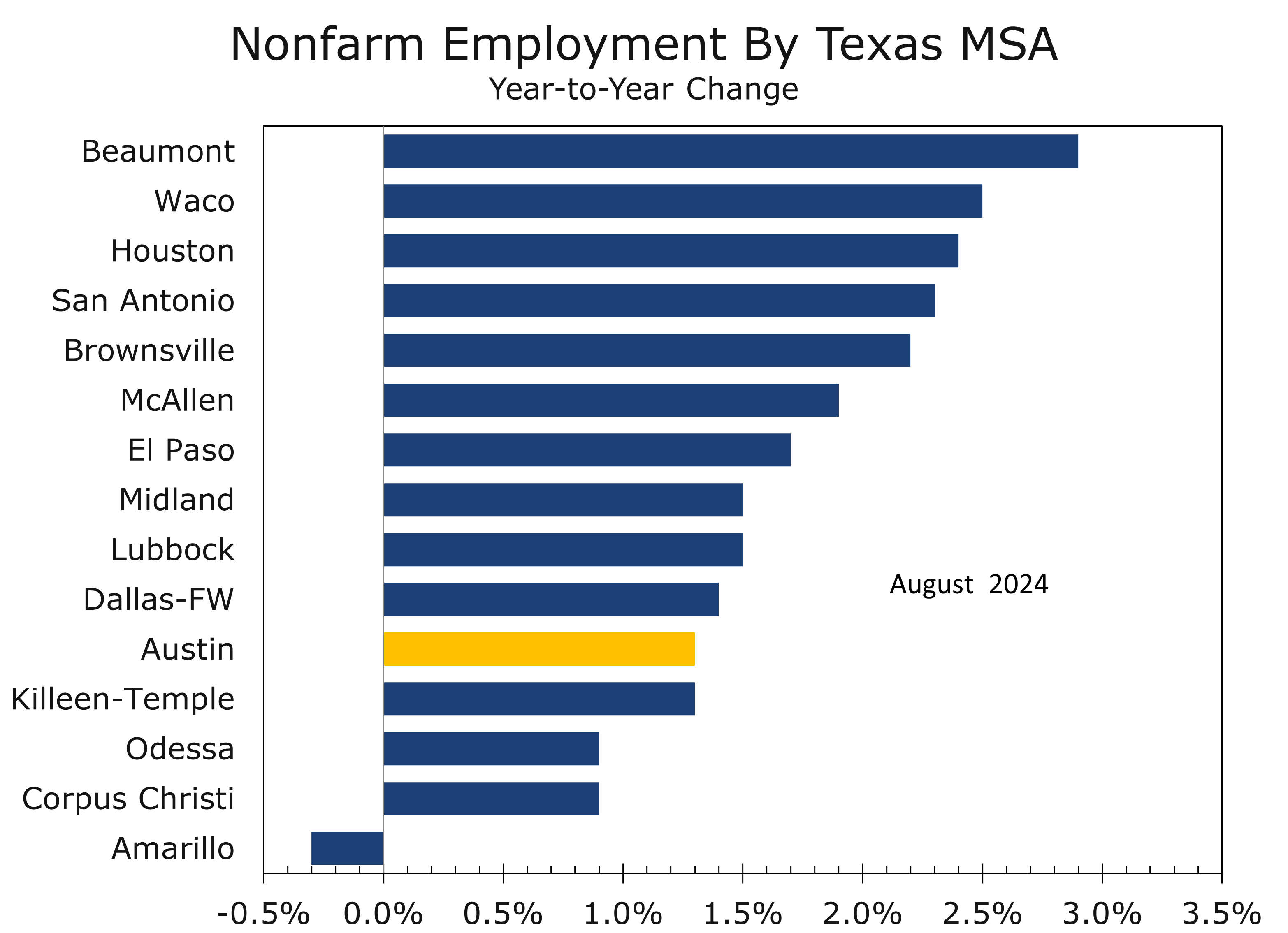
Population and employment growth has moderated in the past year, with nonfarm employment has slowed to just 1.3%. The slower pace has allowed rents and home prices, which had soared, to ease slightly. Austin remains a top destination for young professionals, despite losing its #1 status. Balancing rapid development while preserving the high quality of life that initially attracted residents is a key challenge for city planners, public officials and business leaders alike.
The University of Oklahoma
The University of Oklahoma (OU), founded in 1890 in Norman before Oklahoma became a state, began classes in 1892 with 119 students. Despite a fire that destroyed its main building in 1903, OU quickly rebuilt and expanded, demonstrating early resilience.
In the early 20th century, OU grew in size and academic stature. Under President William Bennett Bizzell in the 1920s and 1930s, the university bolstered its research focus and developed nationally recognized programs. New facilities built during this era helped solidify OU as a key regional academic institution.
After World War II, the GI Bill spurred a surge in enrollment. The university’s development continued under subsequent presidents, notably George Lynn Cross, who expanded graduate education and research. OU’s meteorology program, established in the 1960s, positioned the university at the forefront of severe weather research.
OU’s athletic prominence, particularly in football, began under coach Bud Wilkinson in the 1940s and 1950s, establishing a tradition of athletic excellence that continues today. OU has won three National Championships (1975, 1985, 2000) in the modern era and seven Heisman Trophy winners, the most recent of which are Kyler Murray (2018) and Baker Mayfield (2017).
Notable alumni include former U.S. House Speaker Carl Albert, broadcaster Jim Lehrer, astronaut Fred Haise (Apollo 13), NFL coach Barry Switzer, and actor James Garner.
Academically, OU is known for its strengths in meteorology, energy management, law, and aerospace engineering. Home to the National Weather Center, OU is a leader in meteorological research and is consistently ranked among top public research institutions, particularly for its contributions to STEM and public policy.
Today, with over 30,000 students, the University of Oklahoma is a major educational hub, balancing academic excellence with a storied athletics tradition and a strong alumni network.
Norman
Norman, Oklahoma, located about 20 miles south of Oklahoma City, was founded in 1889 during the Land Run, when settlers staked claims in the newly opened Unassigned Lands. Named after Abner Norman, a surveyor for the federal government, the city quickly grew as part of the early settlement boom in the Oklahoma Territory. Norman became home to the University of Oklahoma in 1890, a decision that significantly shaped the city’s future.
Throughout the 20th century, Norman expanded its economy beyond agriculture, driven largely by the growth of the university and its research programs. The city also played a key role in World War II, hosting the Naval Air Technical Training Center, which contributed to local economic growth and infrastructure development.
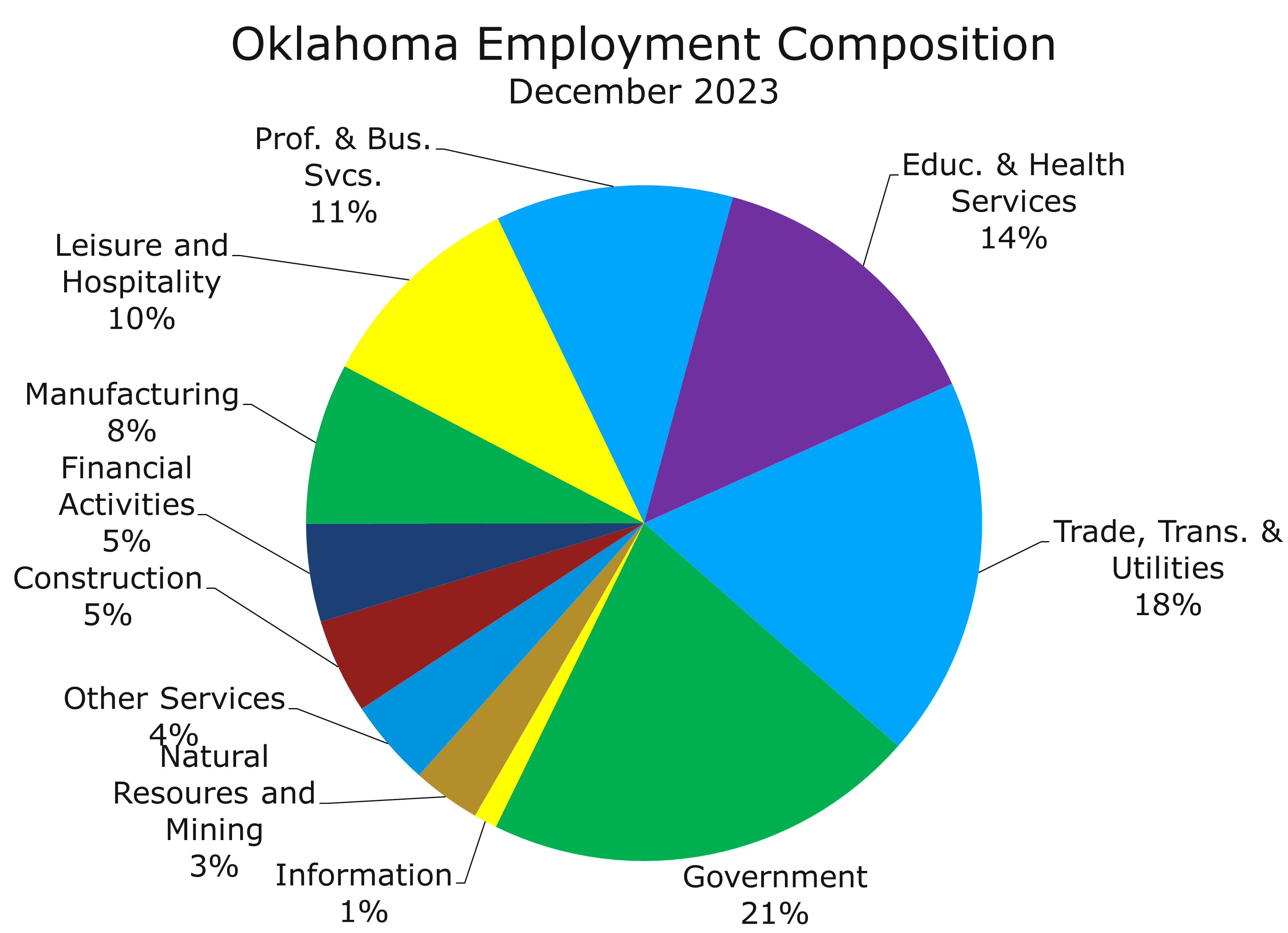
Today, Norman is the third-largest city in Oklahoma, with a population of around 130,000. It remains closely tied to the University of Oklahoma, which is a major economic driver and a central cultural institution. Norman has also developed a growing technology sector, while maintaining a reputation as a vibrant college town with a strong sense of community.
Looking Ahead to the Game
The Texas-Oklahoma matchup is always one of the most anticipated games of the year. Oklahoma has dominated the rivalry recently, winning four of the last five meetings, even when coming in as the lower-ranked team. Key to an Oklahoma upset will be special teams, red zone efficiency, and perhaps some well-timed trick plays. Oklahoma’s defense also has to show up big time. Not only must the Sooners contain quarterback Quinn Ewers and avoid big plays, but they must also get some three-and-outs and keep their offense on the field as much as possible.
Vanderbilt’s victory over Alabama provides a possible roadmap for Oklahoma. If you hold onto the ball for 42 minutes, then your opponent will have to execute nearly perfectly in the 18 minutes you allot them. That will be a tall order for Oklahoma but is what they will likely need to do to win.
For Texas, this is another opportunity to solidify their national title credentials ahead of a major test against Georgia next week. The Longhorns have been scoring lots of points and has not lost a step as Arch Manning subbed for injured Quinn Ewers the past few weeks. While focused on the Sooners, Texas knows they can’t afford any weaknesses being exposed in this classic rivalry. They also cannot let Oklahoma hang around, as they have in previous years because the Sooners have a way of coming back.
Disclaimer: This publication has been prepared for informational purposes only and is not intended as a recommendation offer or solicitation with respect to the purchase or sale of any security or other financial product nor does it constitute investment advice.
Mark Vitner, Chief Economist
mark.vitner@piedmontcrescentcapital.com
(704) 458-4000