
Are Quiet Talks a Sign of Real Progress?
- U.S. and Chinese officials convened in Geneva for intensive trade negotiations, marking the first in-person dialogue since the imposition of steep tariffs by both nations.
- The U.S. has implemented tariffs up to 145% on Chinese goods, with China retaliating at 125%, significantly impacting bilateral trade valued at $600 billion annually.
- Despite high tariffs, both nations recognize mutual dependencies, particularly in technology and manufacturing sectors.
- The U.S. is leveraging recent successful military actions in the Red Sea to underscore its role in securing global trade routes, indirectly pressuring China to engage constructively in trade discussions.
- Potential easing of trade tensions could benefit sectors like semiconductors, shipping, and multinational corporations with significant China exposure.
- The Geneva talks suggest a shift from confrontation to cautious cooperation, aiming to stabilize global economic relations.
Geneva Talks: A Potential Turning Point
U.S. Treasury Secretary Scott Bessent and Chinese Vice Premier He Lifeng engaged in over eight hours of trade discussions in Geneva on Saturday and are negotiating again on September 11. President Trump described the meeting as a “total reset,” indicating a possible thaw in relations. While no concrete agreements were announced, the commitment to continue negotiations signals a mutual interest in de-escalating tensions.
The current tariff regime has led to a near standstill in U.S.–China trade. The Trump administration has hinted at reducing tariffs to 80% contingent upon China’s commitments to fair trade practices and curbing fentanyl trafficking. Even at 80%, the tariff remains formidable, but President Trump’s negotiation tactics often involve pushing boundaries well beyond previous norms to secure more favorable outcomes.
Trump’s negotiating strategy often involves pushing boundaries well beyond prior norms.
Recent U.S. military actions targeting Houthi positions in the Red Sea region are not merely regional security measures but also strategic signals. By ensuring the security of vital maritime routes like the Strait of Hormuz and Bab el-Mandeb, the U.S. reinforces its role as a global trade guarantor. China, with its ties to Tehran and reliance on these shipping lanes, is indirectly prompted to support de-escalation efforts to maintain trade stability. In short, the U.S. is setting the chessboard—offering diplomacy on neutral ground, backed by hard power where it counts.
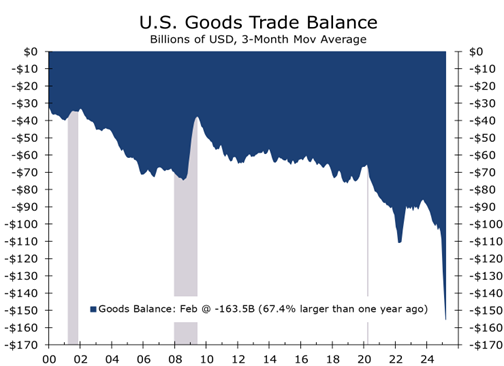
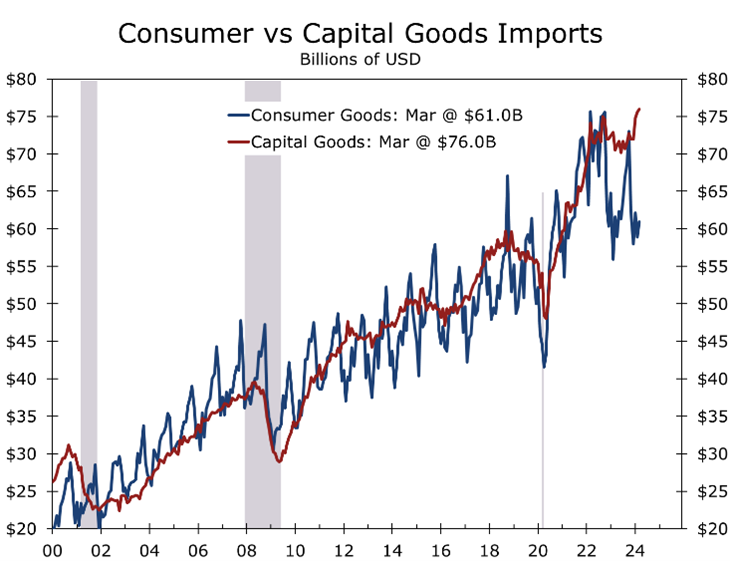
The ongoing U.S.–China trade negotiations are under close scrutiny by industries dependent on cross-border commerce. Key sectors such as semiconductors, shipping, and multinational corporations with significant exposure to China are particularly sensitive to developments in these talks.
Structured cooperation between the two nations, even if occasionally strained, can mitigate tail risks associated with global supply chains. Notably, any advancements in technological collaboration or trade stabilization are likely to precede formal announcements. One area to monitor is the potential easing of restrictions on rare earth elements, which are critical to various high-tech industries
Reducing trade tension is an important first step toward broader trade reforms.
The trade war’s impact extends beyond international relations, significantly affecting the U.S. economy. Small businesses, in particular, are struggling under the weight of increased tariffs, leading to layoffs and reduced operations. The manufacturing sector faces supply chain disruptions, while consumers encounter higher prices for goods. A resolution in the trade talks could alleviate these pressures, potentially stabilizing markets and fostering economic growth.
Budget Deal Prospects
President Trump’s ability to reach a budget deal is intertwined with the outcomes of these trade negotiations. A successful agreement with China could bolster economic confidence, providing the administration with leverage in budget discussions. Conversely, prolonged trade tensions may exacerbate fiscal challenges, complicating efforts to achieve a balanced budget.
Global Geopolitical Tensions
The Geneva talks occur against a backdrop of escalating global geopolitical tensions:
- India-Pakistan: A fragile ceasefire appears to be holding after recent hostilities over Kashmir, with the U.S. offering to increase trade with both nations to encourage stability.
- Iran: U.S. military actions targeting Houthi positions in the Red Sea region serve as strategic signals to Iran and its allies, emphasizing the U.S.’s role in securing vital maritime routes.
- South China Sea: China’s assertive activities in the region continue to raise concerns, with the U.S. reaffirming its commitment to freedom of navigation and regional security.
The Geneva trade talks represent a critical opportunity to reset U.S.–China relations and address broader economic and geopolitical challenges. While significant obstacles remain, continued dialogue and a commitment to cooperation could pave the way for a more stable and prosperous global economy. Stakeholders across sectors should closely monitor these developments, as their outcomes will shape the economic and political landscape in the months ahead. Closer to home, the U.S. economy has moved back from the edge of recession in recent days and successful trade talks will reinforce that shift.
Disclaimer: This publication has been prepared for informational purposes only and is not intended as a recommendation offer or solicitation with respect to the purchase or sale of any security or other financial product nor does it constitute investment advice.
May 11, 2025
Mark Vitner, Chief Economist
mark.vitner@piedmontcrescentcapital.com
(704) 458-4000