Politics, Perception, and the 2026 Economy

Executive takeaway

Markets price direction. Politics prices memory. By late 2026, the distance between the two may narrow meaningfully.
Source: Bureau of Labor Statistics (BLS)

This essay expands on themes from this week’s A View from the Piedmont

Political forecasting currently points toward a difficult midterm backdrop. Traditional handicappers and market-based indicators alike reflect persistent voter frustration around affordability and lingering economic anxiety. Inflation may be cooling, but for many households the economic experience still feels unsettled.

History, however, argues for caution.

A large body of research—from early work on political control of the economy to modern behavioral voting models—shows that voters respond far more to recent changes in inflation, employment, and real income than to abstract measures of growth. Direction matters more than level. Momentum matters more than memory.

In this context, affordability is not about the price level alone, but about the relationship between everyday, non-discretionary costs and household income. For consumers, the issue is whether wages and salaries comfortably cover essentials such as food, housing, healthcare, energy, and transportation without forcing uncomfortable tradeoffs or incurring additional debt.

Inflation’s political sting is not measured at the pump or in the bond market—it is felt most clearly in the grocery aisle, where prices are seen weekly and remembered vividly.

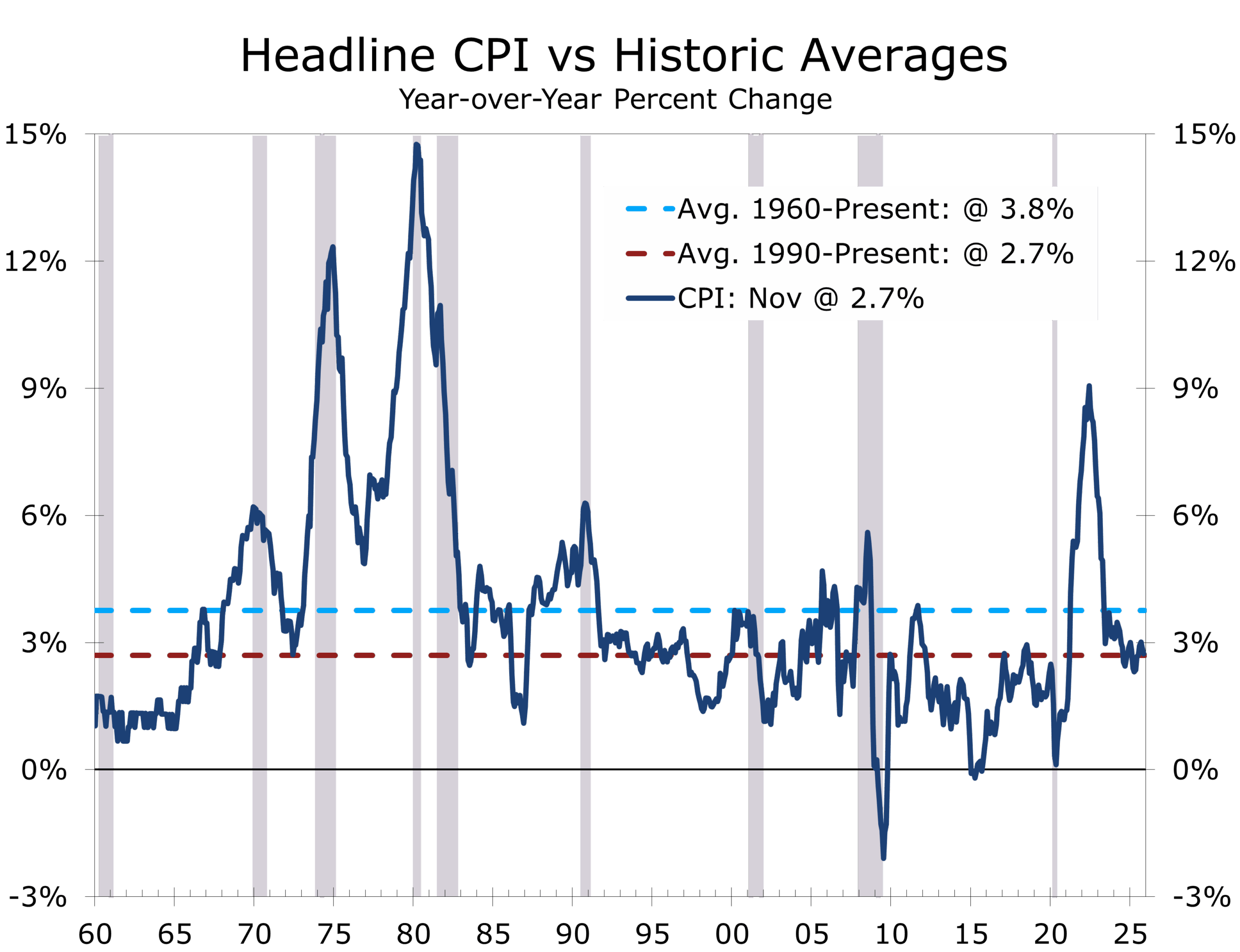
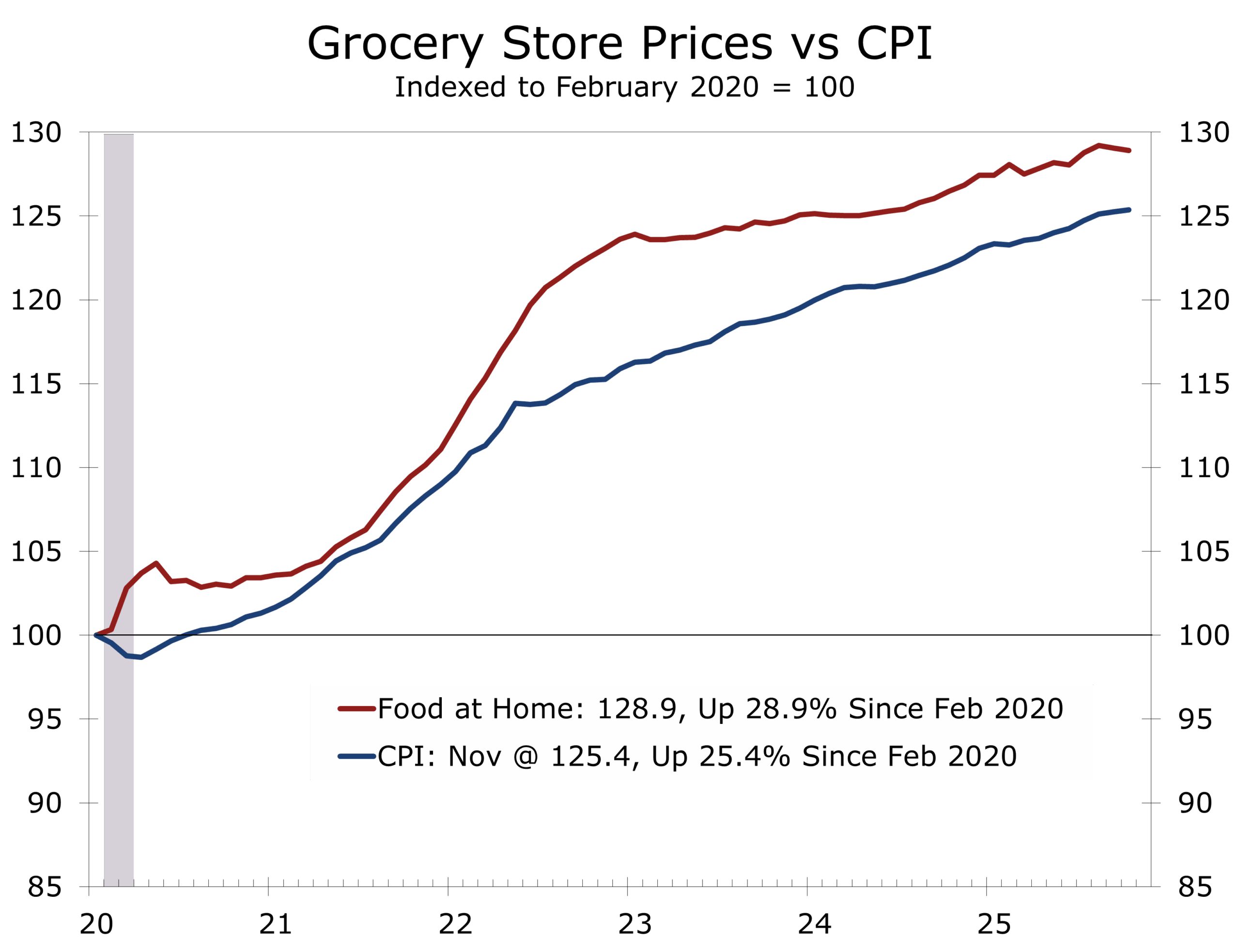
For many households, the frustration is not that inflation exists, but that prices remain elevated. That frustration is most acute at the grocery store, where prices have risen faster and by a wider margin than the overall CPI since the pandemic—turning routine, weekly purchases into a constant reminder of inflation even as headline measures improve. That dynamic was forged during the pandemic, when multiple rounds of fiscal transfers boosted demand while labor supply and production capacity returned only slowly. Supply chains strained, participation lagged, and monetary policy remained accommodative well past the point of necessity. The result was the most persistent inflation shock since the late 1970s and early 1980s.

Souce: Bureau of Labor Statistics (BLS) and Piedmont Crescent Capital

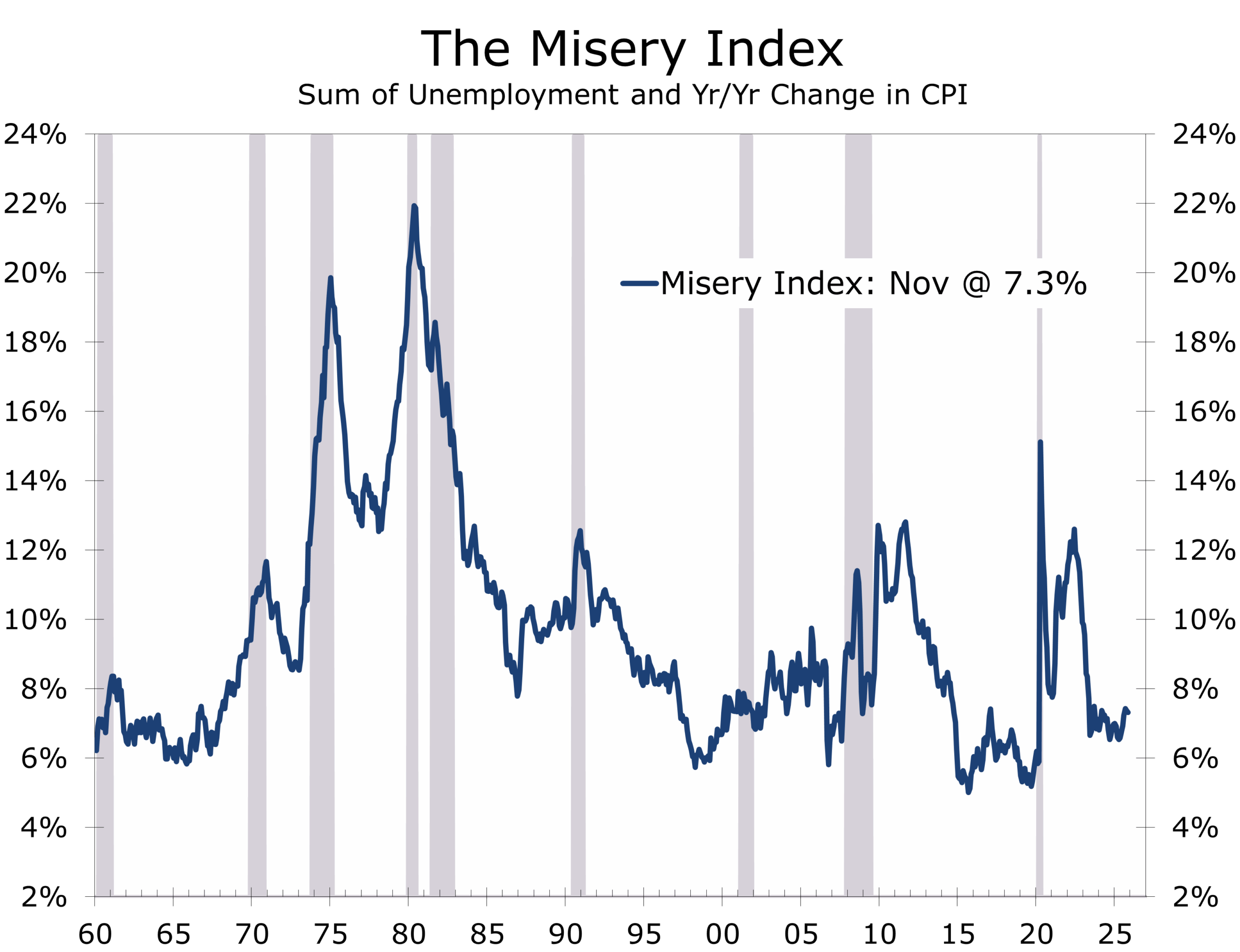
Looking ahead to late 2026, several voter-salient indicators are likely to look materially better. The Misery Index should trend lower as inflation cools faster than unemployment rises. Consumer sentiment, which historically rebounds with a lag, tends to improve once inflation pressure visibly fades. Real per capita disposable income should also strengthen as price growth slows while nominal incomes continue to advance.

These shifts matter because they change perception before they change politics. Voters rarely reward stabilization immediately, but they do respond once conditions stop deteriorating and begin to feel predictably better.

Both sides may be arguing from valid economic evidence—because perception lags reality, and affordability lags stabilization.

With Republicans currently controlling all three branches of government, messaging is likely to emphasize progress—cooler inflation, steadier growth, and gradual improvements in purchasing power. Democrats are likely to counter by highlighting unresolved affordability pressures, particularly grocery prices (notably beef), housing costs, and healthcare expenses.

Source: Bureau of Labor Statistics (BLS) and Piedmont Crescent Capital

Both narratives can coexist. The 2026 outcome may hinge less on whether the economy is “good” and more on whether voters believe it is improving. History suggests that belief often shifts late, sometimes uncomfortably close to Election Day.

For Republicans, the challenge will be to persuade voters that they are actively fixing the problem and delivering measurable progress on affordability, not merely benefiting from a favorable economic turn.

For Democrats, the challenge will be to convince voters that regardless of how the inflation surge began, Republicans now own the outcome—and that the affordability gap reflects mismanagement rather than momentum.

Final thought
In an era that feels like constant campaign season, economic fundamentals still matter. They simply arrive with a lag. By Election Day 2026, the economy voters experience may feel calmer, cooler, and more balanced than today’s rhetoric suggests—setting the stage for a contest less about blame and more about credibility—and reshaping political probabilities without requiring a dramatic economic upswing.

Disclaimer:  This publication has been prepared for informational purposes only and is not intended as a recommendation offer or solicitation with respect to the purchase or sale of any security or other financial product nor does it constitute investment advice.