
An Early Season High-Profile Matchup
- Duke, FSU, Colorado and the Pac-12 were the big positive surprises in week 1 of the college football season. Clemson, LSU, and TCU were the biggest disappointments.
- This week’s big matchup has 10h-ranked Texas at 3rd-ranked Alabama, in a rematch of last season’s early and classic.
- Alabama is one the most storied football programs in the nation, while Texas long dominated the Southwest Conference before its collapse and has consistently contended for the Big-12 crown.
- Both teams are coming off ‘disappointing’ seasons most schools would relish.
- The game could go a long way toward answering questions about whether Alabama’s program has lost a step and if the Texas Longhorns are set to join the handful of elite college football programs.
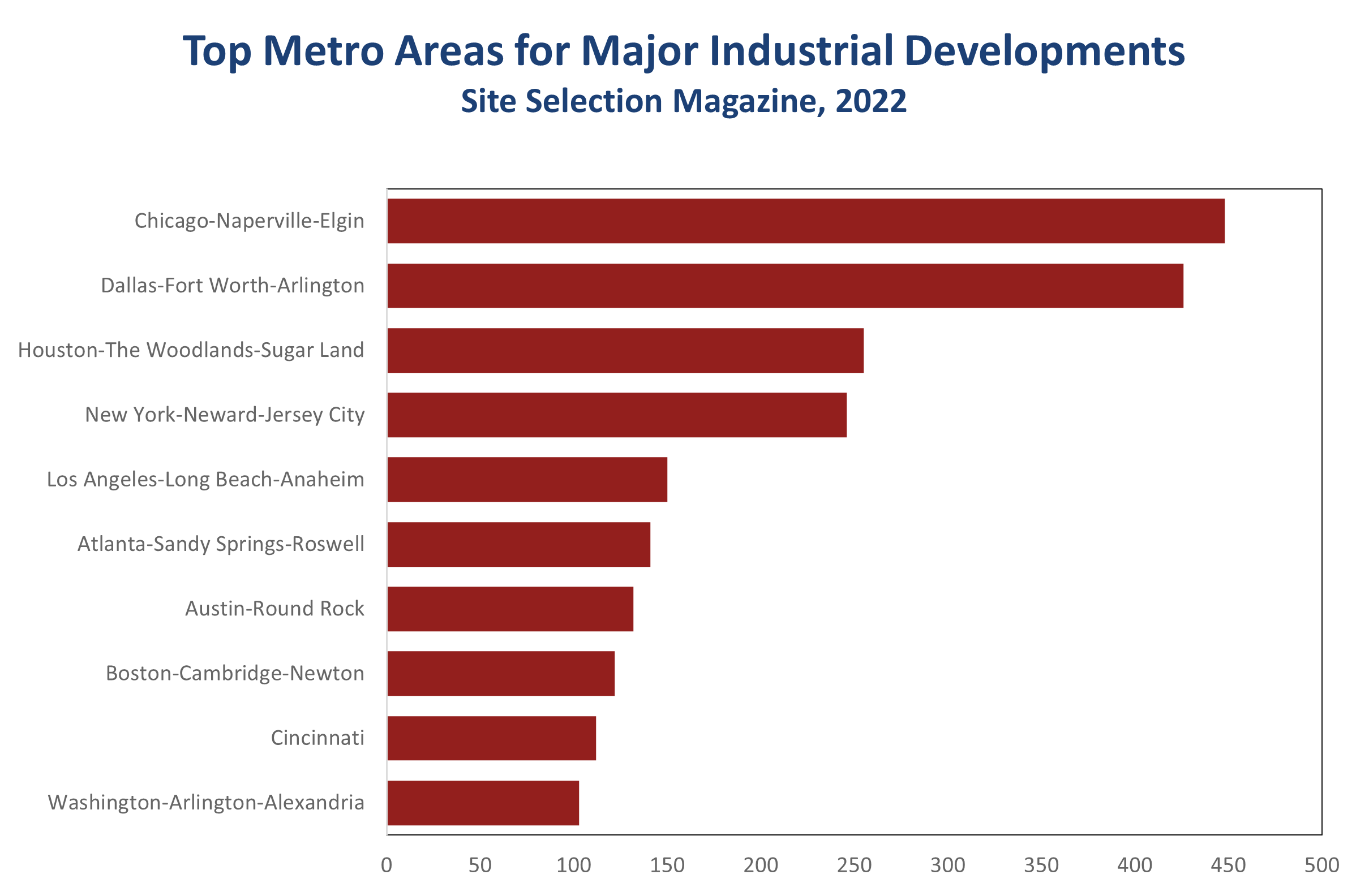
- The Texas economy has been as dominant as Alabama’s football program. Alabama is growing more modestly but enjoying a colossal wave of industrial development.
Week 1 of the 2023 College Football season brought plenty of surprises to go along with the usual early season blowouts. While most major programs schedule light opponents for opening week, there were a few notable exceptions. Colorado proved that even noon games could be ‘Prime Time’ with its surprisingly strong victory over a heavily favored TCU. The biggest surprises came later, with FSU dominating LSU Sunday night and Duke trouncing Clemson 28-7 on Monday night. Another surprise is that the Pac-12 began its last season with every team a winner, something that will certainly never be repeated.
This week’s key matchup features 10th-ranked Texas traveling to Tuscaloosa to face 3rd-ranked Alabama. The game is a rematch of last season’s early classic and will be televised by ESPN at 7 pm EST. Texas appeared to be on the verge of an upset, only to see Alabama battle back, following a controversial call on what appeared to be a safety by the Texas defense, to ultimately win 20-19.
The game will answer questions about both programs. Texas, coached by Steve Sarkisian, a former assistant coach for Nick Saban, has had a great deal of success with recruiting of late. The Longhorns have been trying to return to their former status as one of the nation’s elite college football programs. A win Saturday would further that goal.
Alabama has had to deal with talk that it has lost a step. The Crimson Tide finished 11-2 last year, including a decisive 45-20 victory over Big-12 Champion Kansas State in the Sugar Bowl. That was good enough to finish 5th in the final AP Poll. Moreover, both of Alabama’s losses were by razor thin margins to good teams (Tennessee and LSU), on the road and in overtime.
Nick Saban and Alabama fans were quick to make those points to the Playoff selection committee last season to no avail. While they had a strong argument, it was hard not to take 1-loss TCU, which narrowly lost the Big-!2 Championship game to Kansas State and then convincingly beat Michigan in the semi-final game before getting utterly getting trounced 65-7 by Georgia in the most lopsided championship game on record.
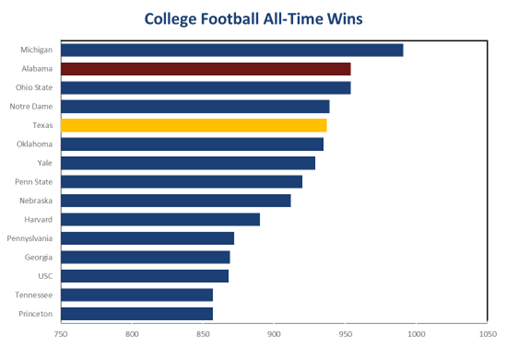
The Playoff committee may simply have had a bit of Alabama-fatigue. The Crimson Tide is one of the most storied football programs in the country. Since the team’s inaugural season in 1892, Bama has accumulated 968 wins, 18 national championships and a record 76 bowl appearances.
As hard as it is to believe, Alabama was not always the King of the Hill. College football originated at private schools, mostly in the Ivy league and then spread to the Midwest. Alabama did not gain national prominence until they defeated the then all-powerful Pennsylvania Quakers in 1922, coached by John Heisman.
The Pennsylvania victory marked a turning point for Alabama football and football in the South in general. Still for years, journalists would question the legitimacy of Alabama’s success because of a perception they played a ‘soft’ schedule. Schools in the Southwest, such as Arizona State, decades later would have to put up with the same skepticism.
Texas began playing football in 1893 and has an illustrious history dating back to the days it dominated the Southwest Conference. The SWC collapsed in 1985 following a series of recruiting scandals, the worst of which resulted in SMU’s program receiving the ‘death’ penalty. Texas won 27 Conference titles (19 outright) in the SWC’s 81 years. The Longhorns then moved to the Big-12, where they won 3 more Conference titles and their last National Championship in 2005.
Texas greatest consistent success came under legendary coach Darrell Royal, who was head coach from 1957 to 1976. Coach Royal won 3 National Championships during his 20-year tenure and finished ranked in the Top 5 in 7 other seasons. Texas never had a losing season under Royal’s tenure.
The Longhorn’s success continued under coach Fred Akers, who guided the team to an 11-0 regular season record his first year as head coach but lost to Notre Dame in the Cotton Bowl. Akers coached the Longhorns for 10 years and finished in the top 10 three times. His best season was 1981, when Texas finished 10-1-1 and ranked second. The 1984 team also went 11-0 and would have won the National title but lost to Georgia late in the Cotton Bowl 10-9. Under Akers the Longhorns went 2-8 in Bowl games and 5-6 in his last season (1976), the first losing season for Texas in 30 years and the end of their ‘elite’ program status.
The Texas economy has been as dominant over the past 25 years as the Alabama Crimson Tide has been in football. After being decimated by the collapse in oil prices in the mid-1980s, the Texas economy has reinvented itself with a diversified mix of industries ranging from information technology and advanced manufacturing to a reformulated energy business centered around cutting-edge technology, data science and the state’s diverse energy resources.
The renaissance of the Texas economy began organically, with the growth of home-grown tech giants Texas Instruments and Dell Computer. The state gained considerable momentum, however, with growing trade with Mexico following NAFTA and growing frustration with burdensome regulations and anti-business sentiment in other states, most notably California. Of companies leaving the Golden State, more moved their headquarters to Texas than any other state, including marquee firms Toyota, Hewlett Packard, Oracle, Tesla, Charles Schwab and CBRE.
Texas has led the nation in population growth in recent years, with the bulk of the growth occurring in the Golden Triangle between Dallas-Fort Worth, Houston, San Antonio, and Austin. These for metros consistently rank as the fastest growing economies in the country in terms of population and employment growth. The Lone Star state also ranks high in business startups and is a leader in manufacturing, logistics and technology.
Alabama’s economy has traveled a quieter road to economic success. While the Magnolia State has typically not ranked among the nation’s fastest growing, Alabama’s economic transition compares favorably with anyone. The state’s business and political leadership saw the writing on the wall, as their historic dependence on textiles and agriculture left them vulnerable to the inevitable move toward globalization. The state aggressively courted Mercedes Benz, which located its first US assembly plant between Tuscaloosa and Birmingham in 1993.
Mercedes paved the way for other auto producers. Honda soon followed, beginning production at its plant in Lincoln, 40 miles east of Birmingham, in 2001. Hyundai opened a plant near Montgomery in 2005. The most recent arrival is a joint Toyota-Mazda assembly plant which opened outside Huntsville in 2021. In addition to these major assembly plants, Alabama has landed numerous suppliers. The state’s steel industry has also been reinvigorated with an influx of investment and renewed national focus on infrastructure improvements.
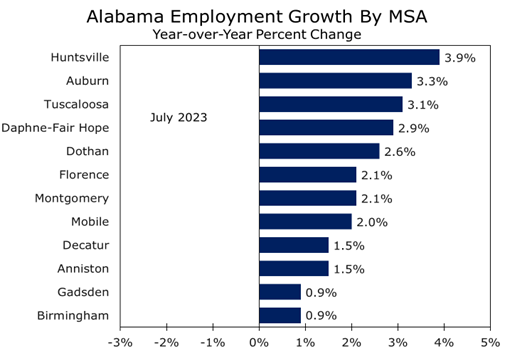
Aerospace and technology are another key source of growth, with Airbus opening its A320 assembly plant in Mobile back in 2015 and Huntsville leading the nation’s return to the moon project. Huntsville has landed scores of aerospace and technology firms and consistently ranks as one of the fastest growing MSAs.
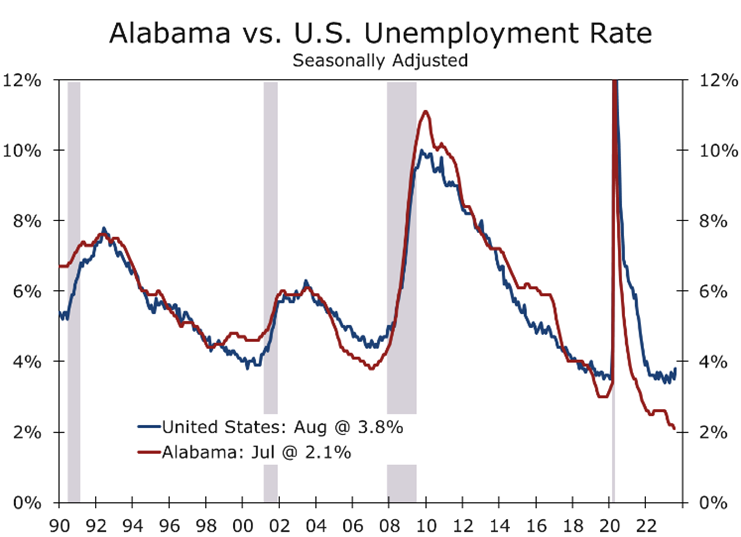
Alabama continues to attract scores of industrial projects. Auto producers are investing millions of dollars to upgrade plants to produce new models. The state is also landing manufacturers looking re-shore production of critical materials and products. Alabama did suffer a blow when the Biden Administration announced they would keep the Space Command in Colorado Springs rather than move it to Huntsville. Still the state’s unemployment rate plummeted to an all-time low 2.1% in July.
Alabama is well positioned to weather any slowdown in the national economy. The Magnolia state is less exposed to overbuilding in commercial real estate and its manufacturing base is weighted toward motor vehicles and aerospace, which should both weather any slowdown fairly well.
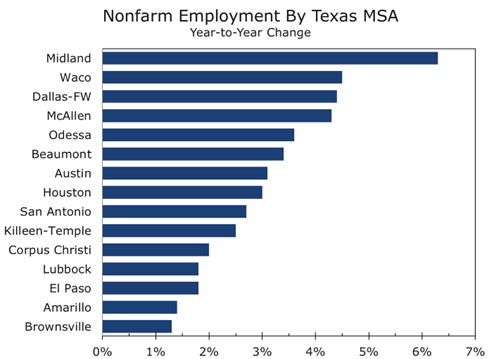
The Texas economy is rolling, with employers adding a nation’s best 448,200 jobs over the past year. Job growth remains broad based, with gains across every key industry and in all of the state’s metro areas. The unemployment rate remains low at just 2.9%.
Texas is also well positioned to weather a slowdown in the national economy. The state’s energy sector has already dealt with difficult times and is leaner and more efficient. The industry can remain profitable at lower price points and also employs a smaller proportion of the state’s workforce. The technology sector is going through a bit of a lull as well, although it is hard to get too concerned about the tech sector given all the investment going into semiconductor plants around the state.
Saturday’s football game will provide the Texas Longhorns a shot at redemption for last year’s loss in Austin. The Horns had Alabama on the ropes and looked like they were going to put the game away when their defense appeared to have pulled a safety. Instead, the referees ruled it was an incomplete pass. Alabama went on to win that game 20-19, but Texas fans felt they had been robbed.
Games like this are the things that rivalries are made off and an Alabama-Texas rivalry is possible with Texas joining the SEC next season. One player to watch is Adonai Mitchell, a transfer wide receiver from Georgia’s back-to-back National Championship teams. Mitchell knows what it takes to beat Alabama and could be a key asset in this game.
There is more than just redemption for last season on the line for Texas. Texas last National Championship was in 2005. The Longhorns played Alabama for the National title in 2010, after going 13-0 in the regular season and winning the Big-12 Championship. The Longhorns lost 37-21, however, and Texas has not really figured into the National Championship picture since.
A win over Alabama in Tuscaloosa Saturday night would go a long way toward re-establishing Texas as an elite program again. Alabama looks to be as good as ever and is riding a 21-game winning streak at home. So, beating Alabama and joining the ranks of elite college football programs is possible but the Longhorns will clearly have to earn it.
Disclaimer: This publication has been prepared for informational purposes only and is not intended as a recommendation offer or solicitation with respect to the purchase or sale of any security or other financial product nor does it constitute investment advice.