
Return to Office Revives Urban Growth
- Large cities from New York to Los Angeles saw population growth in 2024, reversing multi-year declines amid a stronger return to the workplace and a surge in immigration from mid-2023 to mid-2024.
- The South and Mountain West continue to grow fastest, led by Princeton, TX (+30.6%) and major gains in Fort Worth, Jacksonville, and Charlotte.
- Like the inflationary late ’70s, the nation’s population is reorienting toward the Sun Belt—but this time, California is losing residents rather than gaining them.
- Office-adjacent sectors like restaurants and retail are rebounding, while business travel is steadily reviving in major markets, including NYC, LA, Houston, Atlanta, Miami, and Charlotte.
- The U.S. added 1.4 million new housing units (+1.0% YoY), but construction still lags population growth in key migration corridors.
- The urban rebound is increasingly broad-based and signals renewed opportunity in multifamily, infrastructure, and urban retail across both high-growth Sun Belt metros and stabilizing legacy cities.
Sun Belt Momentum Accelerates Amid Nationwide Urban Area Turnaround
The U.S. Census Bureau’s “Vintage 2024” estimates confirm the reversal: after years of decline or stagnation, American cities—large and small—are growing again. While metros like New York, Los Angeles, and Houston led in numeric population gains, Princeton, Texas secured the title as the fastest growing city, surging +30.6% in one year.
This rebound is being driven by three key trends: the return to the office, rising immigration, and the continued affordability migration—primarily toward the Sun Belt. Cities across all regions saw improved growth from 2023 levels, except for a handful of small Southern towns, which essentially held steady. There has been significant movement within the South, with residents pushing further out into suburban areas in search of more affordable housing. Economic development and retirees are also boosting growth, particularly around Savannah and the Carolinas.
The Return-to-the-Office is helping revive population growth in major cities.
Large urban centers are benefitting from a fuller return to office work. Cities like New York, Chicago, Washington D.C., and Los Angeles, once written off, are seeing a demographic comeback. Business travel is also picking up—particularly in major business hubs like NYC, LA, Miami, Houston, Charlotte, and Atlanta—reviving hospitality, events, and urban mobility.
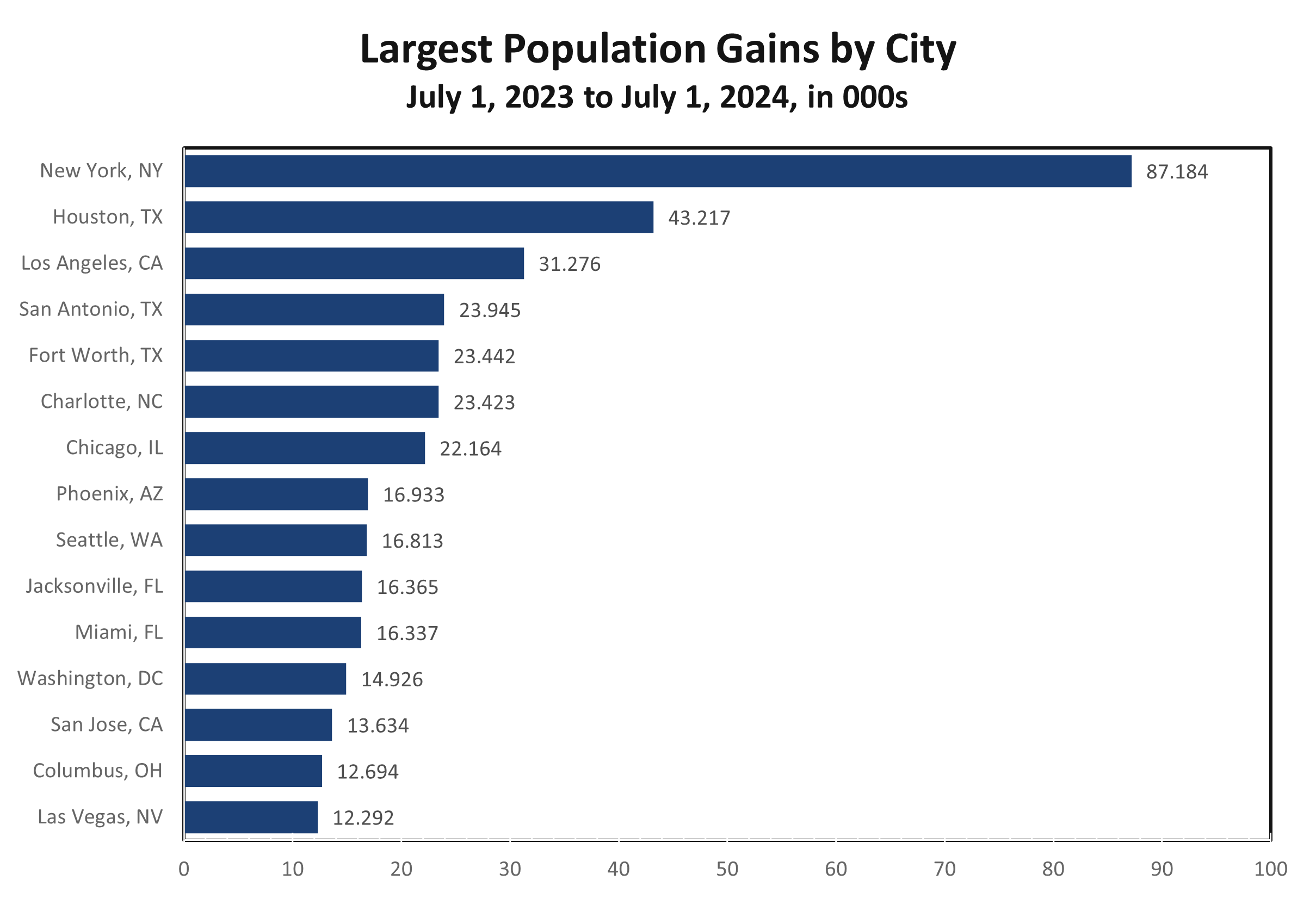
Surging immigration has added fuel to the rebound, especially in traditional gateway cities. The influx of foreign-born residents helped stabilize the labor force, replenish school enrollment, and reenergize urban corridors. Meanwhile, office-adjacent sectors—retail, restaurants, dry cleaners, barbershops—are finally climbing out of the post-pandemic doldrums, adding jobs and pulling job seekers back into the city.
The migration wave into the Sun Belt echoes the late 1970s and early ’80s, when inflation and lifestyle preferences pulled households away from the Northeast and Midwest. The twist today? Back then, California was the haven for many fleeing the Rust Belt and Northeast. Now, it is the launching point for outbound migration. Moreover, parts of the Midwest are enjoying a rebound, as they are now relatively more affordable than major markets elsewhere.
Inflation is a major drive of migration trends, similar as it was in the late 1970s.
Texas metros—Dallas, Fort Worth, Austin, Houston—along with Carolinas’ standouts like Charlotte and Raleigh, and relatively affordable Florida major cities like Jacksonville, Lakeland and the outer reaches of Tampa are absorbing tens of thousands of new residents annually. These areas also now dominate lists of the best places to live, start a business, and raise a family.
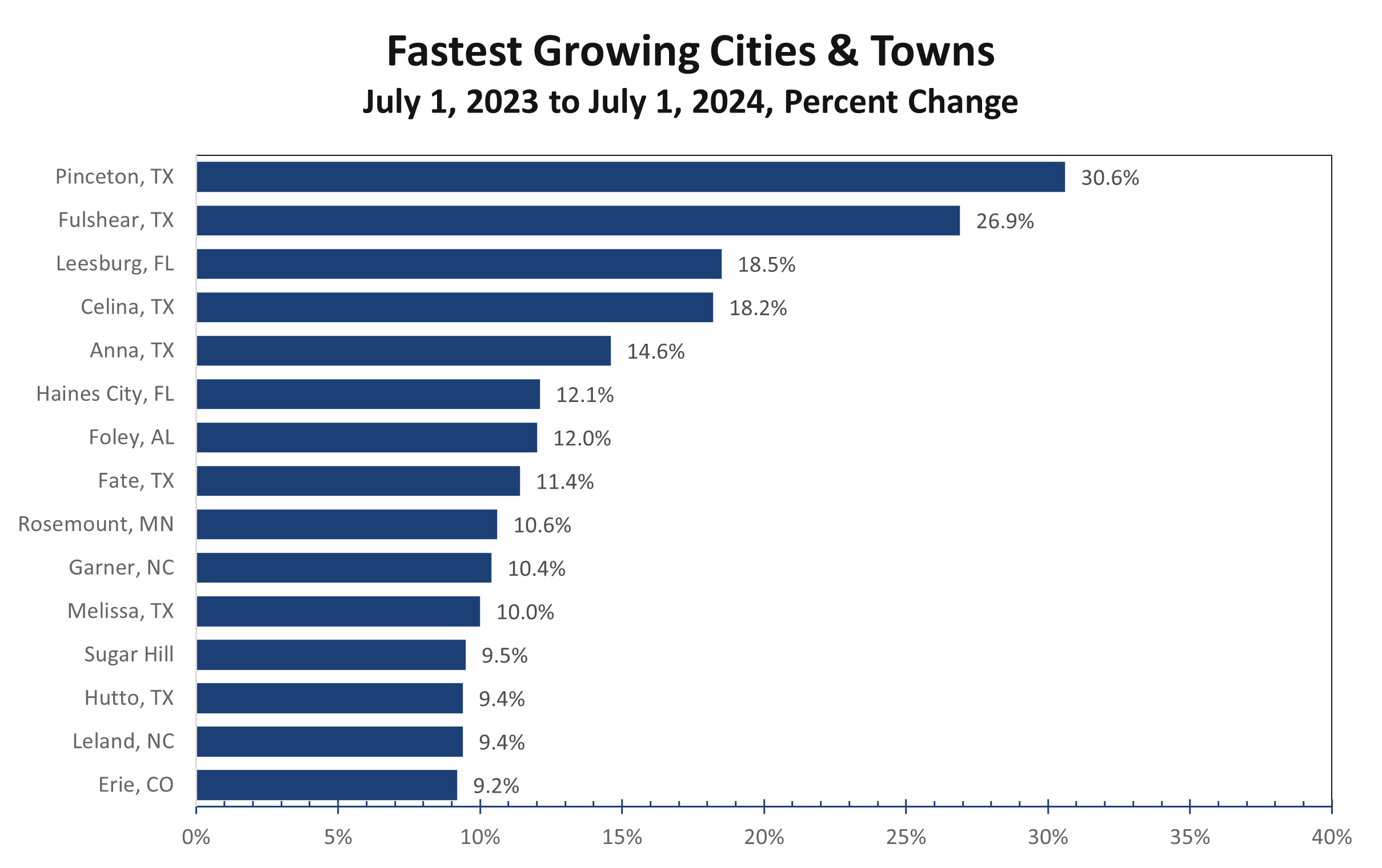
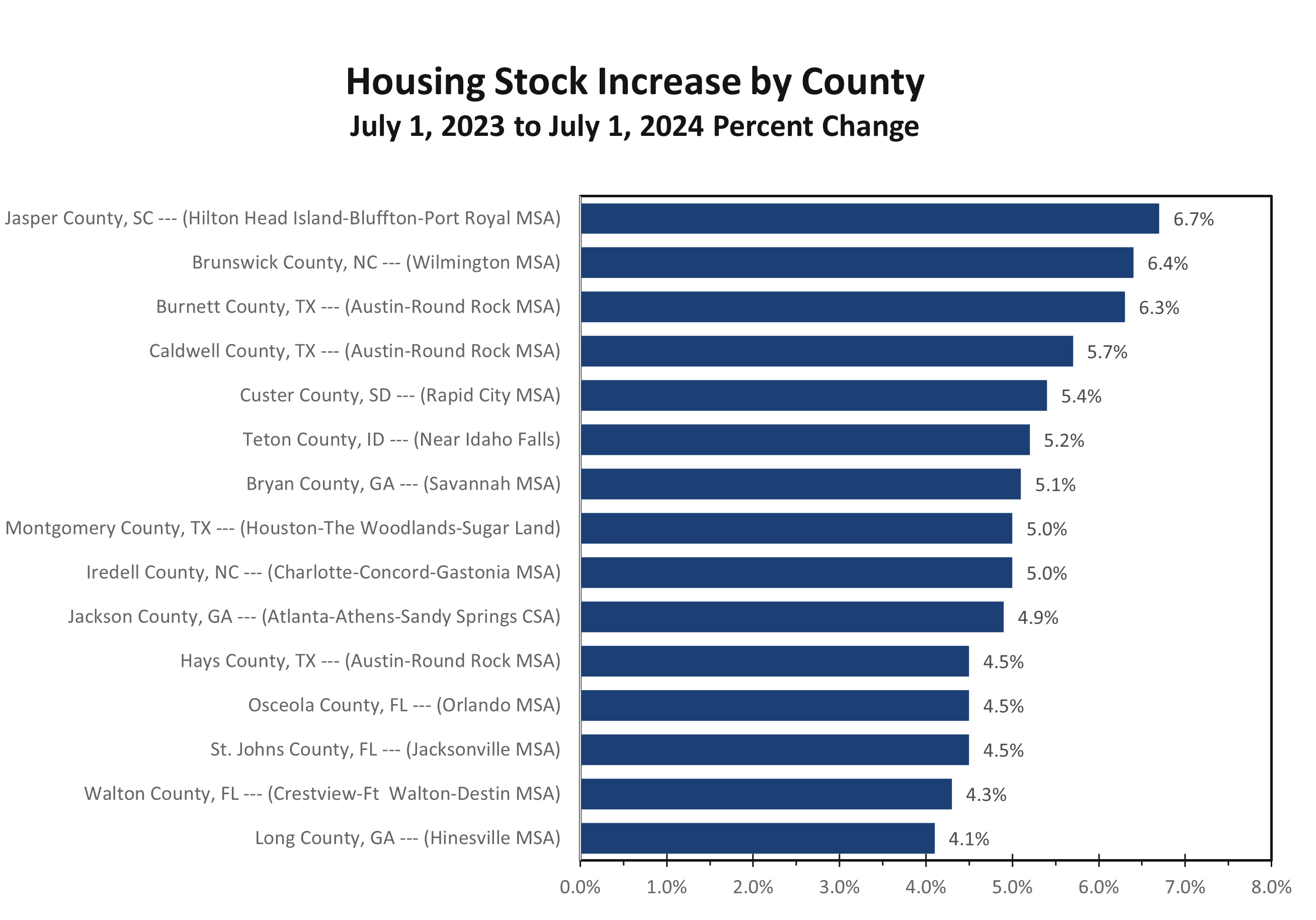
Cities outside larger cities are also getting larger, reflecting an affordability migration within metro areas. Deltona, located between Daytona Beach and Orlando; and Sunrise and Plantation, both located South of Fort Lauderdale, all surpassed the 100,000 mark, underscoring the breadth of migration trends across metro tiers. Atlanta’s growth continues to stretch further up I-85, driving growth in Jackson County, which is also benefitting from growth spilling over from neighboring Gainesville and Athens. Texas continues to punch above its weight, with five counties among the top 10 for new housing units added.
Overall, the U.S. added 1.4 million housing units between 2023 and 2024, a 1.0% increase. Idaho (+2.2%), Utah (+2.0%), and North Carolina (+1.9%) led the way. Jasper County, SC, located between Hilton Head Island, SC and Savannah, GA; topped the list of fastest-growing counties by housing stock (+8.4%). Still, supply remains behind the curve in the most in-demand metros, supporting continued rent growth and development. LA County, Maricopa County (AZ), home to Phoenix, and Harris County (TX), home to Houston, drove the largest numeric additions, but builders in these counties are still not fully catching up with underlying demand.
Disclaimer: This publication has been prepared for informational purposes only and is not intended as a recommendation offer or solicitation with respect to the purchase or sale of any security or other financial product nor does it constitute investment advice.
May 16, 2025
Mark Vitner, Chief Economist
(704) 458-4000