High Operating Costs Squeeze Small Businesses
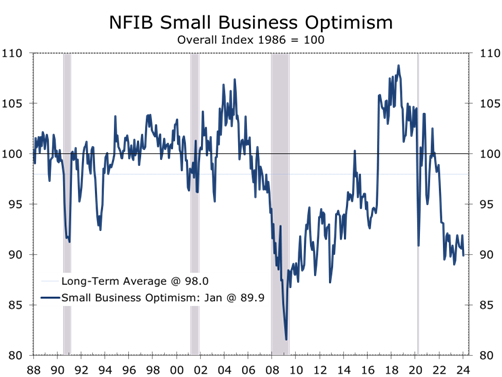
- The NFIB Small Business Optimism Index declined by 2 points to 89.9 in January, marking the 25th consecutive month it has remained below its 50-year average of 98.
- ix of the 10 components fell in January, while 2 remained unchanged, and 2 rose.
- Sales expectations tumbled 12 points, and now show a net -16% expect sales to increase over the next three months.
- Rising operating costs, including compensation, combined with slowing sales and diminishing pricing power continue to squeeze profit margins.
- Earnings trends also fell 5 points and now show a net -30% believe their earning have improved over the past 3 months.
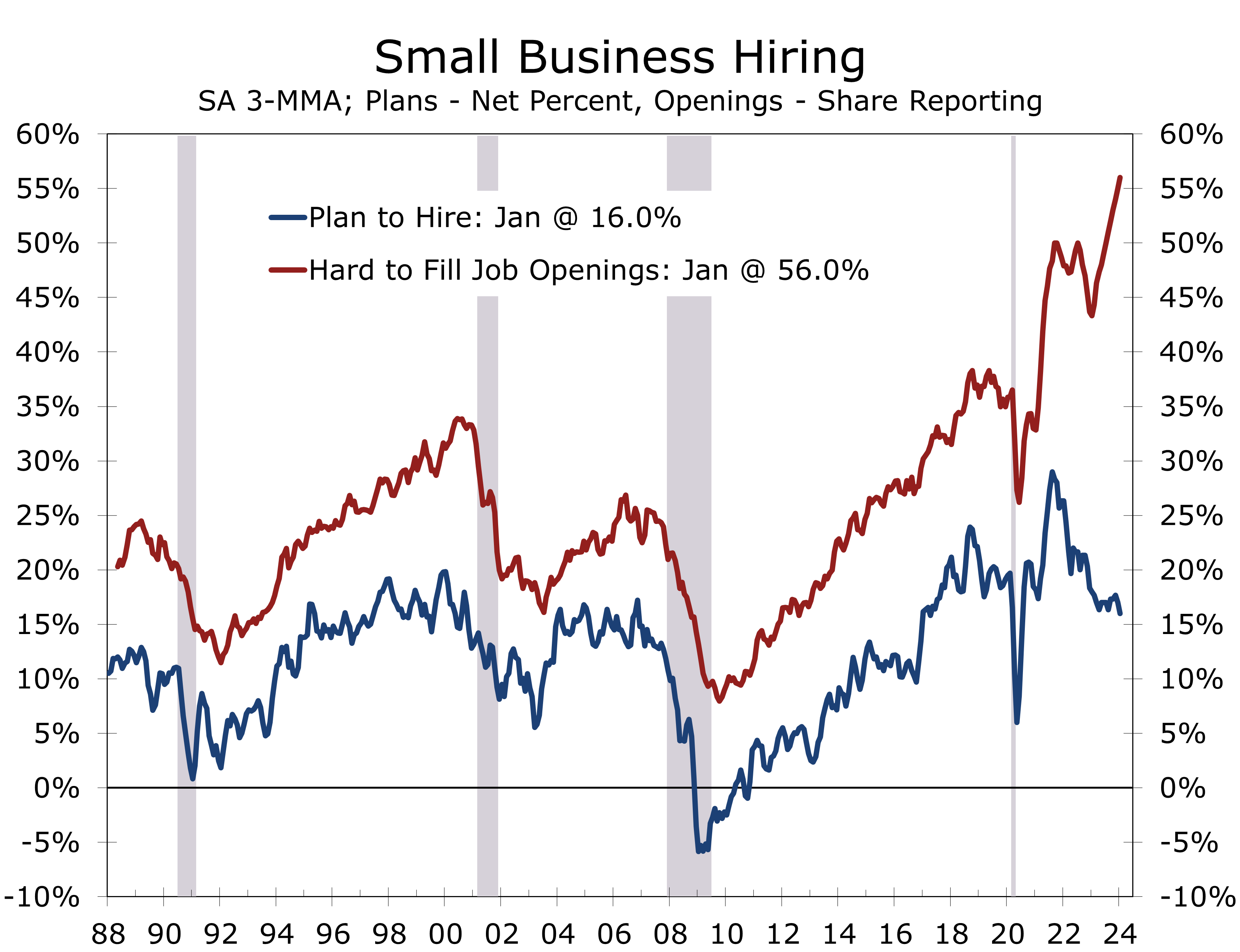
- While job openings remain historically high and businesses continue to have a hard time filling open positions, fewer firms plan to increase staff over the next 3 months.
- Small businesses continue to get squeezed by higher operating costs, which they are increasingly unable to pass along to their customers. Business owners also remain concerned about higher interest rates and geopolitical uncertainty.
Small business owners remain cautious amidst continuing uncertainties surrounding inflation, interest rates and geopolitics. The NFIB Small Business Optimism Index fell 2 points in January and has now remained below its 50-year average of 98 for 25 consecutive months. Six of the indexes 10 components fell in January, while just 2 increased.
Sales remain lackluster, with a net -11% stating sales had increased over the past 3 months. Expectations for future sales weakened even more, with the proportion of business owners expecting sales to rise over the next 3 months tumbling 12 points to a net -16%, the lowest since May of last year.
With sales under pressure, business owners are paying even closer attention to reducing expenses. Fewer firms are planning to add staff, with the share planning to create new jobs over the next 3 months falling 2 points to 14% and hitting its lowest level since May 2020. Small businesses are also maintaining minimal inventories, even at the risk of losing sales.
Small Businesses are getting squeezed by higher operating costs and are holding off hiring staff.
Given the weakness and sales and persistence of costs pressures, just 8% of small businesses feel now is a good time to expand. When asked why they feel that way, 33% cite weak economic conditions and 10% blame the pollical climate. An additional 7% cite financial conditions and higher interest rates.
The weaker Small Business Optimism report runs somewhat counter to some of the hard data reported for January. Nonfarm employment growth surprised to the upside in January, with employers creating 353,000 net new jobs. Our sense is the NFIB data may be more telling, particularly since January’s weaker NFIB data continue a long running trend. Small business owners are increasingly less likely to add staff, even though job openings remain historically high, and they continue to have a hard time filling many positions.
Weaker hiring plans add some fuel to the notion that January’s job gains were overstated.
Thirty-nine percent of small business owners reported they had a job opening they could not fill, down 1 point from December and the lowest level since January 2021. Open positions are particularly challenging to fill in construction, manufacturing, and non-professional services. Construction job openings declined 11 points in January, but almost half of construction firms have a job opening they cannot fill. Professional services and finance have the fewest openings.
While job openings are inching lower, the proportion of firms struggling to fill them continues to climb, rising 1 point in January to a record 57%. The continuing rise likely stems from the growing number of retirees, particularly in construction and manufacturing.
Weaker sales and higher operating costs continue to squeeze profit margins. Reports of positive profit trends fell 5 points in January to a net -30%, a very weak number. Among owners reporting lower profits, 32 percent attributed it to weaker sales, 15 percent to increased material costs, another 15 percent to seasonal changes, and 11 percent to labor costs.
Weaker sales and higher operating costs continue to squeeze profit margins.
Weaker sales are hindering business owners’ ability to offset higher operating costs. The percentage of firms raising prices in the past 3 months fell 3 points to 22%, the lowest since January 2021, while those raising compensation rose by 3 points to 39% in January. While compensation costs have been sticky, January’s rise was likely bolstered by rising minimum wages in several jurisdictions throughout the country.
January’s weaker NFIB small business confidence report takes some of the shine off January’s spike in nonfarm payrolls and suggests inflation is moderating less than the financial markets have been counting on. We continue to look for three quarter-point cuts in the federal funds rate this year, beginning in June.

Disclaimer: This publication has been prepared for informational purposes only and is not intended as a recommendation offer or solicitation with respect to the purchase or sale of any security or other financial product nor does it constitute investment advice.
February 13, 2024
mark.vitner@piedmontcrescentcapital.com
Chief Economist (704) 458-4000