
Home Builders Are Fighting Off Higher Rates
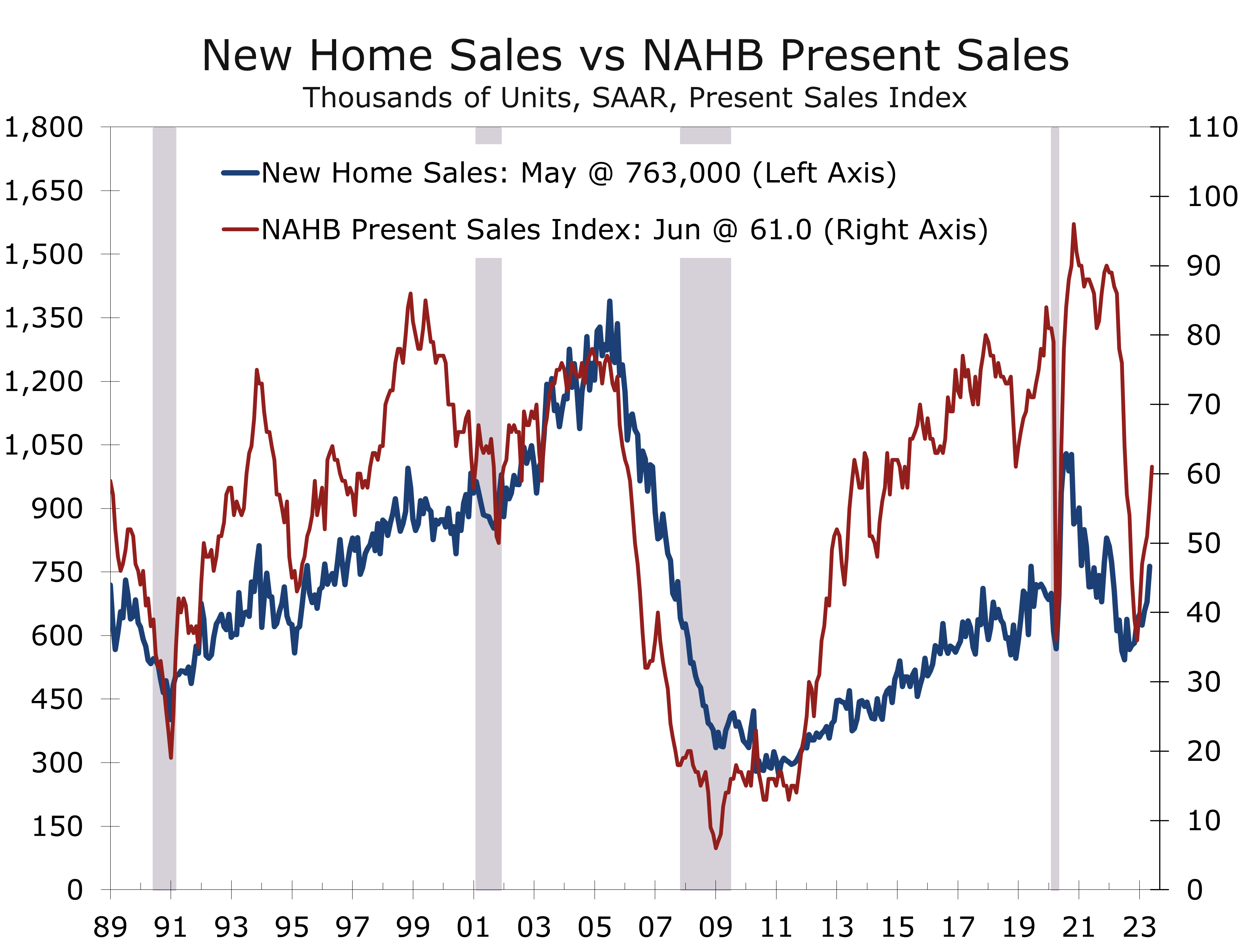
- New home sales surged 12.2% in May to a 783,000-unit pace, which is the highest pace since February 2022.
- While sales for the prior 3 months were revised slightly lower, sales are now 20% higher than they were last May.
- Demand for new homes continues to benefit from unusually low inventories of existing homes and generous builder incentives used to offset higher mortgage rates.
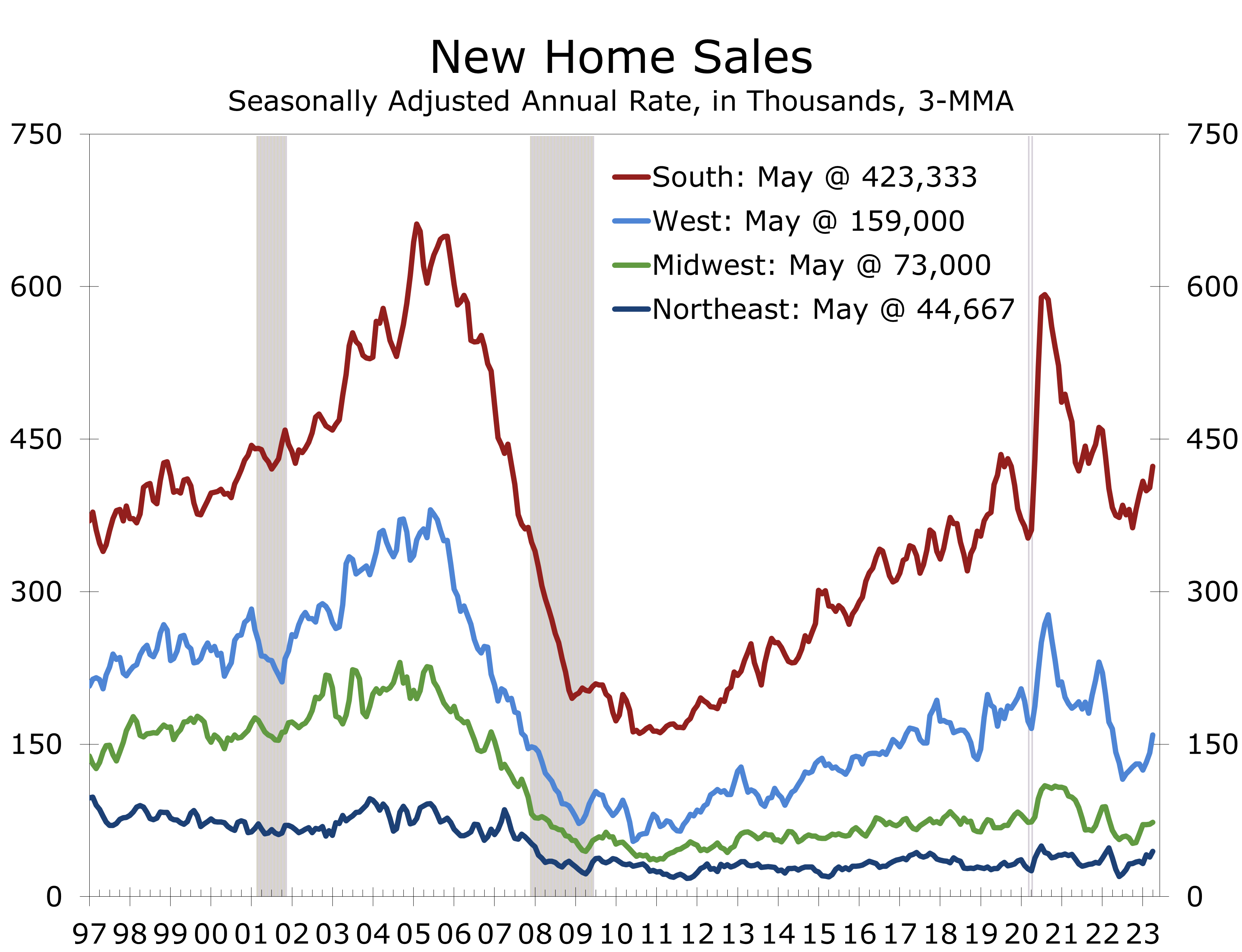
- Sales rose in all four regions of the country, led by large percentage gains in the Northeast and West.
- New home sales are the strongest part of the housing market today. Sales are benefitting from low inventories of existing homes and generous builder incentives made possible by builders’ wider than usual margins. Builder confidence and sales improved further in June, even though mortgage rates remained just under 7% throughout the entire month.
New home sales surged 12.2% in May to a seasonally adjusted 763,000-unit annual rate. While sales for the prior three months were revised slightly lower, sales are up 20% year-to-year. The housing market is in an odd place today. Sales of existing homes are being constrained by exceptionally low inventories, as fewer homeowners are interested in selling their homes today because they have locked in generational low mortgage rates on their current home.
With fewer existing homes to choose from, more buyers are opting to purchase new homes. Builders have taken note of the shift in buyer preferences. Many have offered generous incentives to effectively buy down mortgage rates, which has reduced the sting of rising interest rates.
Home builders may have been the only ones that were not surprised by May’s blowout new home sales number. The NAHB/Wells Fargo Home Builders’ Index jumped 5 points to 55 in June and builders’ assessment of present sales jumped 5 points to 61, while the expected sales index jumped 6 points to 62.
May’s surge in new home sales closely follows the earlier rebound in builder confidence.
Builders have been exceptionally busy since the pandemic. The resurgence in demand following the economy’s reopening led to widespread shortages that led to a historic buildup of homes under construction. When mortgage rates spiked in November, many buyers canceled their purchase contracts and many builders shifted part of their production to the rental market. Buyers came back to the market as mortgage rates pulled back earlier this year and builders skillfully implemented targeted incentives.
Sales rose in all four regions of the country, led by a 17.6% increase in the Northeast to a 40,000-unit annual rate and rose 17.4% rise in the West to a 175,000-unit pace. Both regions saw sales decline in April. The bulk of the increase in sales, however, occurred in the South, where sales increased by 48,000 units to a 471,000-unit annual rate. Sales in the Midwest rose 4.1% in May to a 77,000-unit pace.
The strength in sales in the South and West likely reflects the continued affordability migration to more affordable suburbs in the Northeast and West and the more affordable housing markets in the Mountain West, South and parts of the Midwest. Recent population breakouts for urban and suburban areas show strong growth in the suburbs this past year and still muted growth in most urban areas. The outer suburbs around persistently high costs metro areas are seeing particularly strong growth.
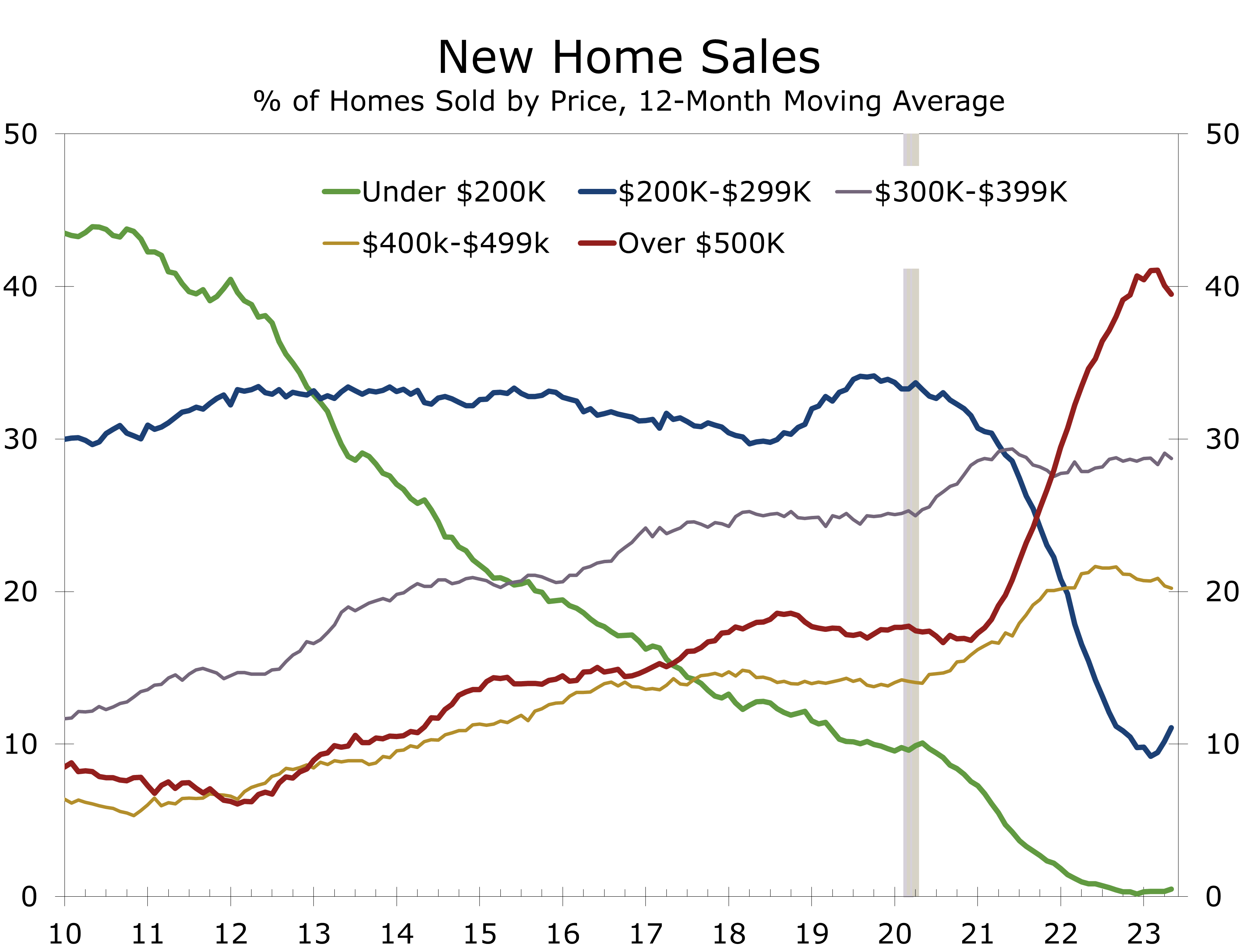
The bulk of the affordability migration is headed to the Texas and Southeast, particularly Florida, Georgia, the Carolinas, and Central Tennessee. There are relatively few homes currently on the market in the South and the region has more land actively under development than other parts of the country. Much of the land under development is in the outer suburbs, where costs are lower, and is one reason why sales of homes priced between $200,000 and $300,000 have revived a bit over the past couple of months.
The inventory of new homes available for sale fell slightly in May, with overall inventories slipping by 4,000 units to 428,000 units. The number of homes for sale that are under construction declined by 7,000 to 259,000 homes. May marks the 10th consecutive drop in homes under construction, reflecting an easing of supply shortages and more aggressive sales incentives. The inventory of completed homes fell by 1,000 to 69,000 homes, which is about double the year ago level but still close to normal from a long-term perspective.
The number of homes for sale, where construction has not yet started, rose by 4,000 to 100,000 homes. That is still a low level relative to overall inventories and sales. The number of new homes sold in May, where construction has not yet started, nearly doubled to 195,000 units. We believe the surge in sales of homes that have not yet started reflects the growing propensity of buyers to push further out into more affordable suburbs as well as some underreporting of sales in the Census data. The sudden reversal in contact cancelations likely means new home sales have been understated this past spring, which likely means there are few completed homes and homes under construction for buyers to choose from.
Key Takeaways: While the headline-grabbing 12.2% surge in new home sales would suggest higher interest rates are having little impact on home sales, the truth is quite the opposite. Higher interest rates mean fewer homeowners are willing to put their homes on the market today, which is pushing more buyers into the smaller and more expensive new home market. While new homes add considerably to economic growth, some of that benefit is lost through less commission income on existing home sales and less spending for renovations and repairs, which tend to coincided with existing home sales.
Disclaimer: This publication has been prepared for informational purposes only and is not intended as a recommendation offer or solicitation with respect to the purchase or sale of any security or other financial product nor does it constitute investment advice.