
New Home Sales Rose in April, But Mortgage Rates Have Risen Sharply More Recently
- New home sales rose 4.1% in April to a 683,000-unit annual rate.
- Historically low inventories of existing homes have made new home sales a more attractive option for home buyers.
- The median price of a new home fell to $420,800 in April and is 8.2% below its year ago level.
- Sales rose in the South and Midwest, while declining in the higher-priced West and Northeast.
- Homes not yet started accounted for all of April’s increase in new home sales. The bulk of new home sales, however, continue to be under construction or completed homes.
- The number of new homes available for sale rose slightly in April, with all the increase coming among homes not yet started.
New home sales rose 4.1% in April to a 683,000-unit annual rate. The increase reflects efforts by home buyers to stay ahead of anticipated hikes in interest rates, as well as historically low levels of existing home inventories which pulled more home buyers into the new home market. Home prices moderated in April, at least partially reflecting regional shifts in home sales.
Housing is the most cyclical part of the economy and April’s increase in sales may seem counterintuitive given the recent rise in mortgage rates. Demand for housing is proving resilient, however, particularly in parts of the country that are seeing strong population and employment growth. The rise in sales also occurred before rates shot back up this past week.
Home builders are generally upbeat, with the most recent NAHB/Wells Fargo Home Builder Index rising to 50 in May and the present sales index rebounding to a solid 56. Unfortunately, mortgage rates have risen sharply since that report, with the rate for a 30-year fixed rate mortgage climbing to 6.95%. Mortgage rates were a good bit lower than that in April, when the rate on a 30-year fixed-rate mortgage averaged 6.34%, which is close to its average for the past 35 years.
Residential investment is poised to add slightly to second quarter real GDP growth.
Downward revisions to the March data also make the April data look better. New home sales for March were revised down by 27,000 units, while sales for February were revised up by 8,000 units. The upshot is new home sales were about as strong in April as we had thought they were in March. The revisions also show new home sales are beginning the second quarter about 5.8% above their first quarter average, which raises the prospect residential investment will add slightly to second-quarter GDP growth.
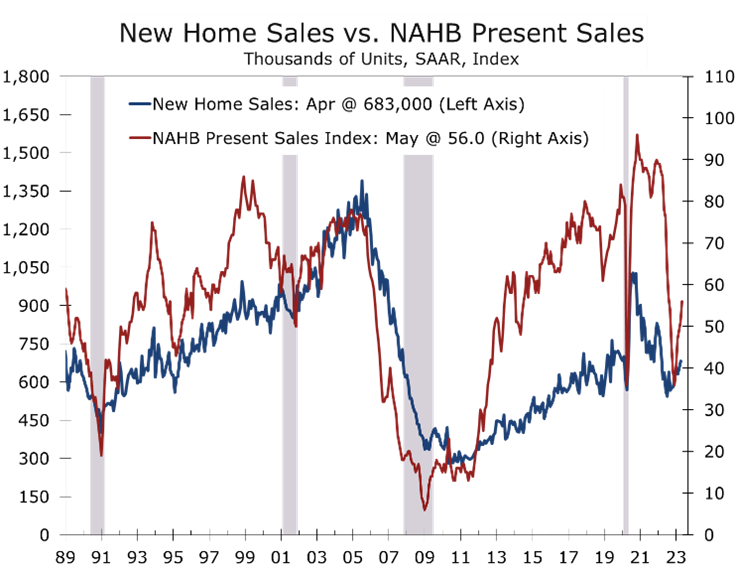
Demand for new homes is clearly being bolstered by the paucity of existing homes currently available for sale. Many existing homeowners have locked in interest rates of 4% or are less likely to move, as their mortgage payment would likely rise even if they purchased a smaller or less expensive home. With fewer existing homes on the market, buyers are increasingly looking at purchasing a new home.
Another trend that is favoring new home sales is the ongoing shift away from higher priced housing markets to more affordable markets in the South and, to a lesser extent, the Midwest. The South, which accounted for over 60% of new home sales this past year, saw new home sales rise 17.8% in April and sales are up 23.4% on a year-to-year basis. Sales also rose solidly in the Midwest, climbing 11.8% in April and rising 20.6% over the past year. The Midwest, however, accounted for just 10% of the nation’s new home sales this past year.
New home sales fell in both the Northeast and West, where home prices are among the highest in the nation. The Northeast saw new home sales tumble 58.6% in April and sales are down 46.7% year-to-year. The Northeast enjoyed seasonably mild weather through most of this past winter, which helped pull new home sales higher earlier this year. That said, sales through the first four months of 2023 are still down 19.2% from the first four months of last year.
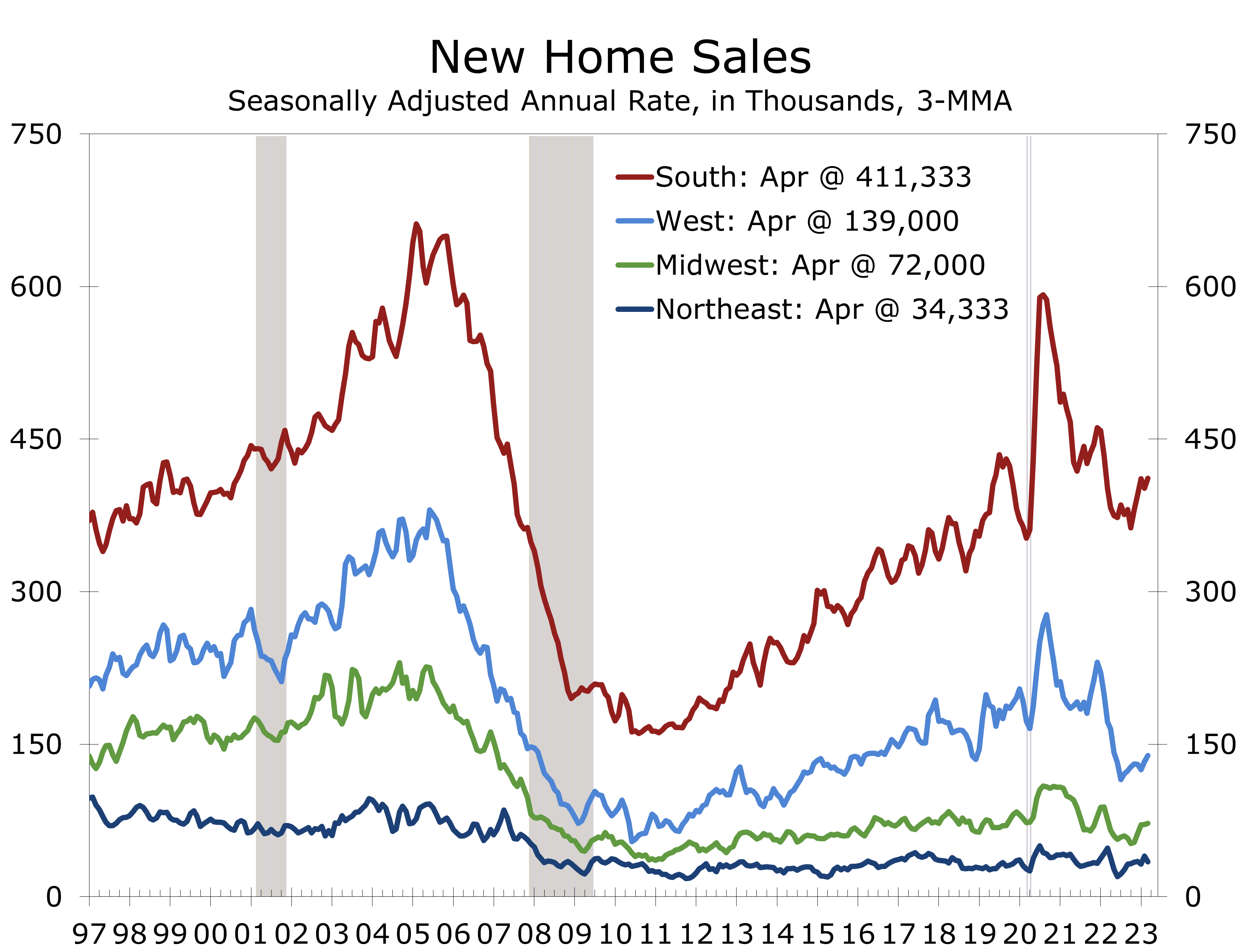
Sales fell 9.1% in the West during April. While California dealt with incessant rain throughout much of the winter, weather in other parts of the West was not much different from historic norms. The biggest problem in the West continues to be the lack of affordability, which is fueling an out-migration primarily to Texas and other parts of the South.
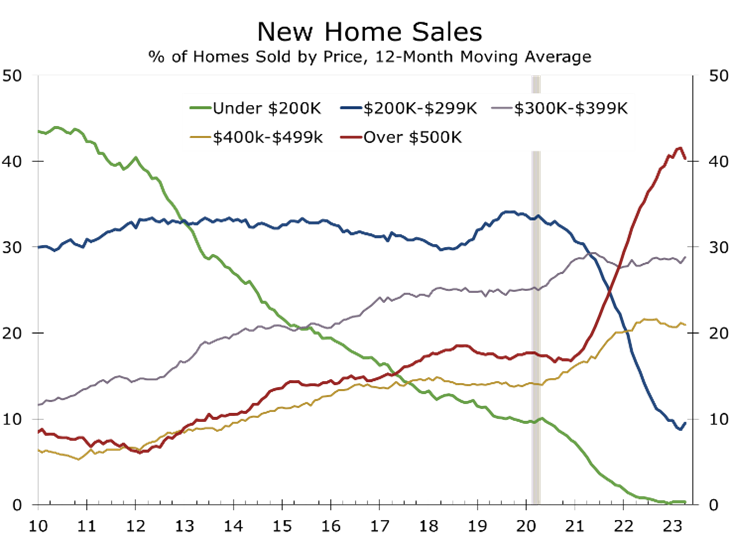
With sales down in the two highest priced regions of the country, the median price of a new home fell 7.7% on a month-to-month basis, non-seasonally adjusted. With the drop, the median price of a new home is now 8.2% lower than it was last April, marking the first year-to-year drop since August 2020.
The median price of a new home fell 8.2% over the past year, the first drop since August 2020.
Sales of homes priced over $500k fell 9 percentage points to 30% in April. By contrast, there was a 5 percentage point uptick in sales of homes priced between $200k and $300k (15%) and a 4-percentage point rise in the share of new homes sold between $300k and $500k (55%). The share moves around quite a bit from month-to-month. Our chart shows the share by price range using a 12-month moving average.
Disclaimer: This publication has been prepared for informational purposes only and is not intended as a recommendation offer or solicitation with respect to the purchase or sale of any security or other financial product nor does it constitute investment advice.