
Miami vs Florida in the Swamp
- Florida will host Miami in the Swamp this Saturday afternoon, rekindling a rivalry that has become more intermittent due to conference expansion.
- The University of Miami, located in Coral Gables, has been one of college football’s most successful programs in the modern era, though they have struggled to regain their former dominance in recent years.
- The University of Florida, located in North Central Florida, in a region that still reflects ‘Old Florida,’ is a key economic driver for the state and hosts a top-tier healthcare program.
- The game will be broadcast on ABC at 3:30 pm as part of a triple-header kicking off the network’s SEC coverage.
- Miami enters the game as a 2.5-point favorite with a deeper and more talented roster on paper. However, the Swamp is a notoriously tough venue, and Florida is more formidable than they may appear. An upset could set the stage for a strong start to Florida’s season before the schedule intensifies in the second half.
Week Zero kicked off the 2024 college football season with a major surprise as unranked Georgia Tech defeated then-10th ranked Florida State University in Dublin, a game we previewed last week. This weekend marks the traditional start of the college football season, with over 130 games scheduled from Thursday through Monday night.
Key matchups this week include #14 Clemson vs. #1 Georgia at Mercedes-Benz Stadium in Atlanta, #7 Notre Dame at #20 Texas A&M, #23 USC vs. #13 LSU in Las Vegas, and #19 Miami at Florida.
The Clemson-Georgia game is the weekend’s marquee matchup. A Clemson victory over Georgia, combined with FSU’s loss to Georgia Tech, could help the ACC move past its recent struggles. Georgia, despite some concerns at running back, boasts a deep and talented team that is the consensus #1 pick of nearly every ranking service. This game will kick off ABC’s SEC coverage at noon.
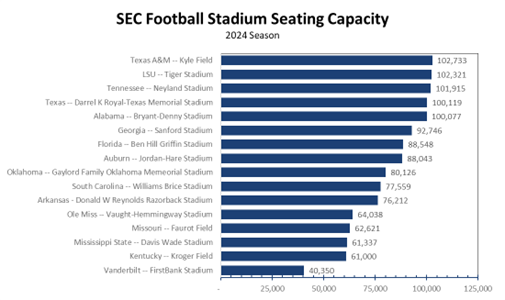
Our weekly football report highlights the return of the intrastate rivalry between the University of Miami and the University of Florida. The game is set for 3:30 p.m. at Ben Hill Griffin Stadium in Gainesville, likely under hot and steamy conditions. This rivalry, part of the Florida Cup that also includes Florida State, was a fixture each year until 1988.
Despite conference expansion limiting non-conference games, the teams have met frequently, most recently in Orlando in 2019, where Florida won 20-16. This year marks the start of a home-and-home series, with Miami leading the rivalry 29-27. Both teams, under relatively new coaches, are aiming to rebound from disappointing seasons with strong recruiting classes.
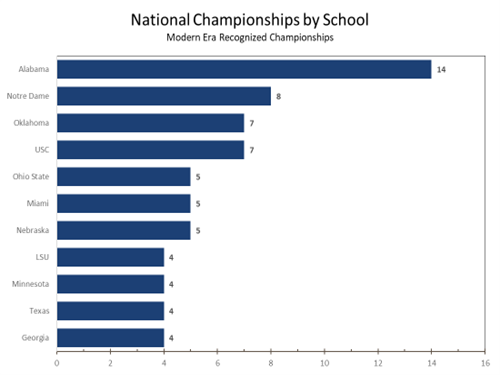
The University of Miami and the University of Florida are two of the most successful college football programs since the AP poll began, benefiting from Florida’s rich talent pool. Miami, which began football in 1926, has won five national championships (1983, 1987, 1989, 1991, 2001), tying Ohio State and USC for the fourth-highest total, behind Alabama, Notre Dame, and Oklahoma.
Florida, a founding SEC member in 1933, won its first conference title in 1991 and secured four consecutive SEC titles from 1993 to 1996, along with three national championships (1995, 2005, 2010). This matchup, featuring a triple-header as part of ABC’s SEC coverage debut, highlights the eight national titles between the two programs and promises a compelling start to the season.
The rivalry has produced numerous classic games, with 27 of the 56 matchups decided by a touchdown or less. The last meeting was in 2019, with Florida winning 20-16. Two of the greatest games were in 1983 and 1984. In 1983, Miami, a 3.5-point underdog, lost 28-3 to Florida but went on to win their first national championship that season after a historic comeback
against what had previously been thought to be an unbeatable University of Nebraska in the Orange Bowl.
The following year, in a game marking ESPN’s first primetime college football broadcast, Miami defeated Florida 32-20 after a dramatic last-minute drive led by Bernie Kosar. A last second pick-6 padded the score. Florida, ranked #17 at the time, went on to finish #3, their best-ever ranking, but had their SEC title (their first ever) vacated due to NCAA sanctions. This year promises another intense showdown as both teams aim to return to their former prominence.
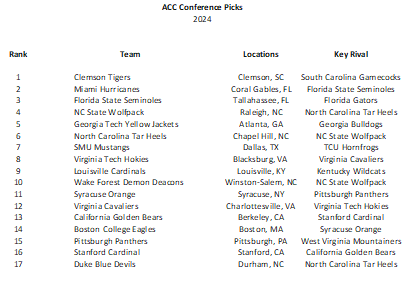
Miami appears to be slightly ahead on that front and is widely expected to compete with Florida State, Clemson and NC State for the ACC Tittle. The Florida Gators have had a disappointing past few seasons and are a younger and less experienced team, expected to finish near the middle of the pack in the expanded SEC. The Gators have one of college football’s toughest schedules, particularly in the second half of the season. Florida will play the state’s two other major programs, hosting Central Florida on October 5th and ending the regular season against Florida State in Tallahassee.
University of Miami and South Florida
The University of Miami is located seven miles south of downtown Miami in Coral Gables. Established in 1925 during South Florida’s land boom, UMiami has significantly contributed to the region’s development, weathering challenges like hurricanes, the Great Depression, and World War II. Post-war, enrollment surged, mirroring South Florida’s development and the university has evolved both academically and culturally with the greater Miami area.
Today, UMiami is recognized as a top private university, offering a wide range of undergraduate, graduate, and professional programs. It has strong research initiatives, particularly in areas like medicine, marine science, and engineering. The University is Coral Gables’s largest employer and Miami-Dade’s second largest and helps further diversify the region’s economy, especially in tech and e-commerce.
Miami Economy
Miami, founded in 1896 and named after the Miami River, which itself was named after the Mayaimi Native American tribe, was initially a small settlement, known as Fort Dallas and was an important outpost during the second Seminole War. The city’s growth accelerated with Henry Flagler’s railroad investment along Florida’s East Coast and the development of Miami Beach in 1913. Despite setbacks during the Great Depression and numerous natural disasters, Miami’s post-World War II boom saw it become a key business hub.

The 1959 Cuban Revolution and subsequent Caribbean migrations accelerated Miami’s growth, establishing it as a hub for Latin American culture and commerce. In recent decades, Miami has experienced significant “Manhattanization,” with a rise in high-rise developments and an influx of financial firms, earning it the nickname “Wall Street of the South.” With over 440,000 residents in just 36 square miles, Miami is the fourth-densest major city in the U.S. Business-friendly policies and its role as the financial and technology capital of Latin America have cemented Miami’s status as a key financial hub.
The term “Miami” can be ambiguous, as it often refers to much of South Florida. Miami-Dade County, which includes the City of Miami, comprises 19 cities, six towns, and nine villages, ten of which have “Miami” in their names. Other notable Miami-Dade cities include Hialeah, Homestead, Coral Gables, and Doral. The Miami Metropolitan Statistical Area (MSA) encompasses Miami, Fort Lauderdale, and West Palm Beach.
The broader Combined Statistical Area, often referred to as South Florida, has over 7 million residents and includes Stuart, Port St. Lucie, Vero Beach, the Florida Keys, and Okeechobee County. The Gulf Coast from Naples to Tampa is known as Southwest Florida. Miami has a history of booms and busts, with the latest boom beginning when Florida reopened from the pandemic earlier than other states, triggering a wave of relocations and expansions.

The economy in South Florida has slowed along with national trends. While the region experienced a resurgence in tourism and a rapid recovery in international trade post-pandemic, job growth has moderated recently, with nonfarm payrolls increasing by just 2.6% over the past year. The unemployment rate has risen by 0.8 percentage points to 3.4%.
Construction remains a bright spot, with numerous tower cranes dotting the landscape and construction firms expanding payrolls by 8.7% over the past year. Tourism continues to thrive, with record cruise traffic through the Port of Miami.
The University of Florida & Gainesville
The University of Florida (UF) was established in 1906 following the Buckman Act, which consolidated various agricultural and theological schools across Florida. Initially focused on agriculture, UF’s growth was significantly boosted by the GI Bill and the admission of female students. Today, UF is a leading public university known for academic excellence, a top-tier medical school, and a successful athletics program.
Located in Gainesville, approximately two hours north of Orlando and 90 minutes southwest of Jacksonville, UF is situated in the heart of “Old Florida.” The surrounding areas were historically agrarian, producing Sea Island cotton before the boll weevil infestation of 1916-18 devastated the industry. The region’s citrus industry had also been affected by the Great Freeze two decades earlier. Today, local agriculture focuses on vegetables and cattle.
Gainesville’s economic shift began in 1905 with the consolidation of four institutions into what is now UF. The university has since become the cornerstone of Gainesville’s economy, particularly after World War II. The establishment of the J. Hillis Miller Health Science Center in 1956, followed by Shands Hospital and the UF Medical School in 1958, further transformed the region.
The University of Florida’s healthcare complex is a major economic driver, with its six health-focused colleges contributing roughly half of UF’s record $1.25 billion in research funding for Fiscal 2023. The UF College of Medicine led with $378 million, while the Herbert Wertheim UF Scripps Institute added $97.6 million. UF’s research spending has surged nearly 80% since 2012, driven by federal and state funding.
The UF Health Cancer Center recently achieved National Cancer Institute (NCI) designation, becoming the only public university in Florida with this status. This recognition reflects the center’s excellence in research, leadership, and outreach. Since receiving the designation, the center has increased cancer research funding by 43%, recruited new researchers, and expanded programs, including collaborations with the Scripps Institute. It has also improved infrastructure for clinical trials and boosted participation among underrepresented groups. Significant investments in data science and early detection, along with enhanced training opportunities for future researchers, have further strengthened the center’s impact.
The healthcare sector’s growth has advanced Gainesville’s development beyond its traditional college town status. Major private employers in the area include AavantiBio, AxoGen, RTI Surgical, Exactech, and Invivo Diagnostics. This thriving sector has established an ecosystem that attracts and retains other industries, reinforcing Gainesville’s economic foundation.
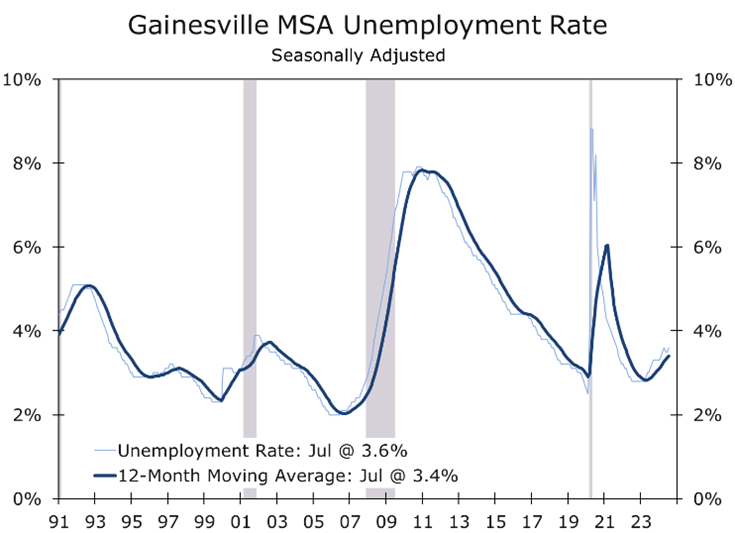
Job growth in Gainesville is modest, with government, healthcare, and leisure sectors comprising most of the employment base. Recent data show employment up 2.4% over the past year and the unemployment rate rising slightly to 3.6%. The region’s population grows modestly compared to Florida, with the three-county metro area housing 350,000 residents and the broader Combined Statistical Area, including Lake City and Columbia County, reaching just over 425,000.
Miami Hurricanes vs. Florida Gators
Miami enters the rivalry with a stronger roster, enhanced by Mario Cristobal’s successful recruiting and transfer efforts. Washington State transfer Cam Ward and former Oregon State running back Damien Martinez could make Miami’s offense one of the ACC’s strongest. On defense, Miami benefits from coordinator Lance Guidry and new additions like Tyler Baron, Simeon Barrow, and Jaylin Alderman.
Miami’s secondary has some gaps, which Florida quarterback Graham Mertz might exploit. Florida’s ground game, led by Montrell Johnson, could challenge Miami’s untested defensive front. Despite struggling in 2023, Florida’s new leadership and key transfers offer hope for improvement.
Miami, despite a 7-6 record last season, was statistically superior to Florida, which finished 5-7. Both teams have added significant talent from the transfer portal, with Miami bringing in 15 players and Florida 16, including key contributors.
Early-season results can be unpredictable, as shown by Florida State’s loss to Georgia Tech. While Miami appears stronger on paper, Florida’s home-field advantage in the Swamp and the extreme heat and humidity could level the playing field, making this a closely contested game. The outcome will influence perceptions of both programs and impact the critical third seasons for head coaches Billy Napier and Mario Cristobal.
Disclaimer: This publication has been prepared for informational purposes only and is not intended as a recommendation offer or solicitation with respect to the purchase or sale of any security or other financial product nor does it constitute investment advice.