
Payrolls Are Not as Fragile as Previously Feared
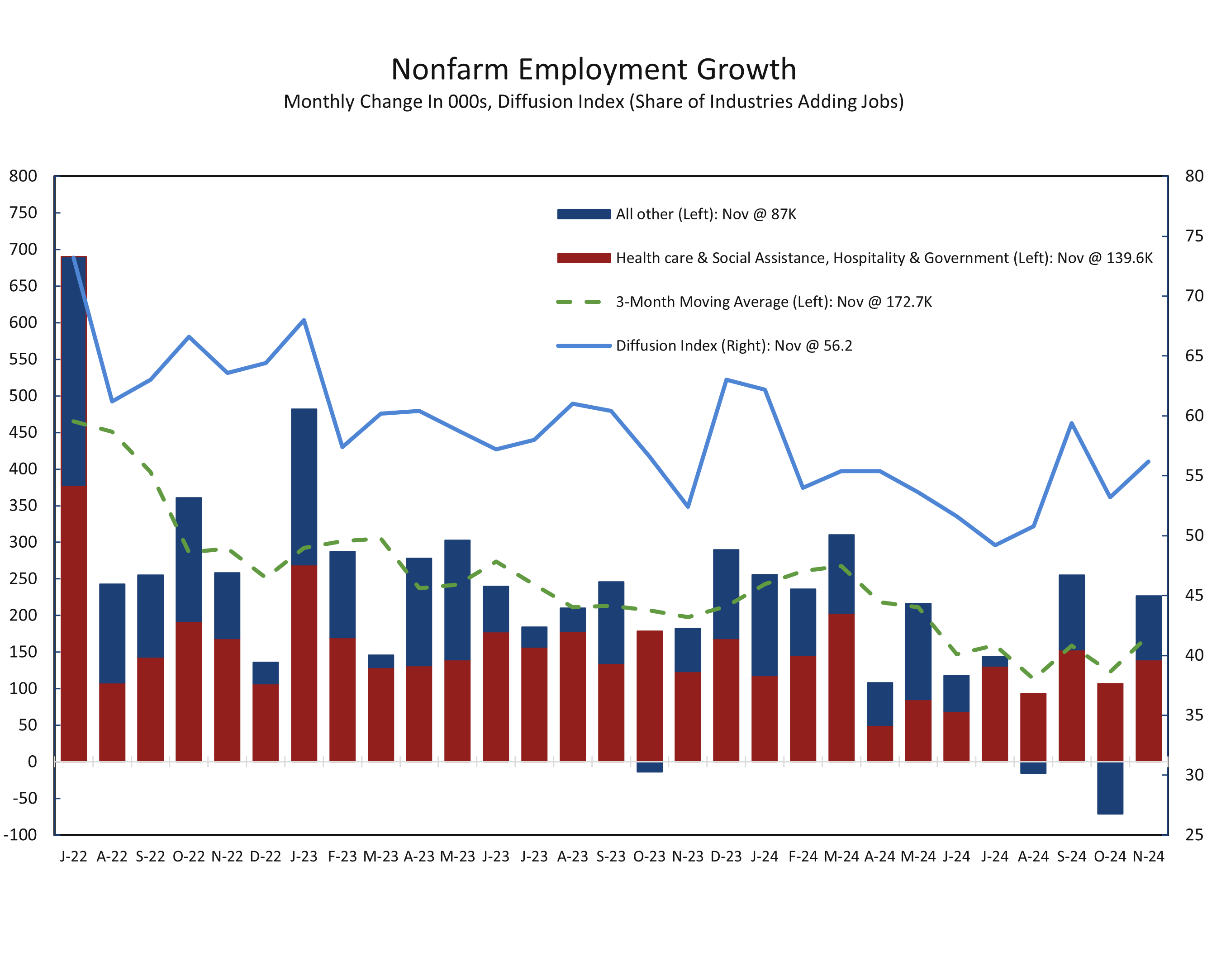
- Nonfarm payrolls increased by 227,000 in November, reflecting broad-based hiring across industries.
- While hiring improved broadly health care, social assistance, leisure and hospitality, and government sectors led job creation.
- Restaurants and bars, impacted by Hurricane Helene in October, showed signs of recovery. Hiring in hard hit areas, such as fall-tourism mecca Asheville, with take longer to get back on track.
- Retail hiring was subdued due to the later-than-usual Thanksgiving, with more holiday hiring expected to appear in December.
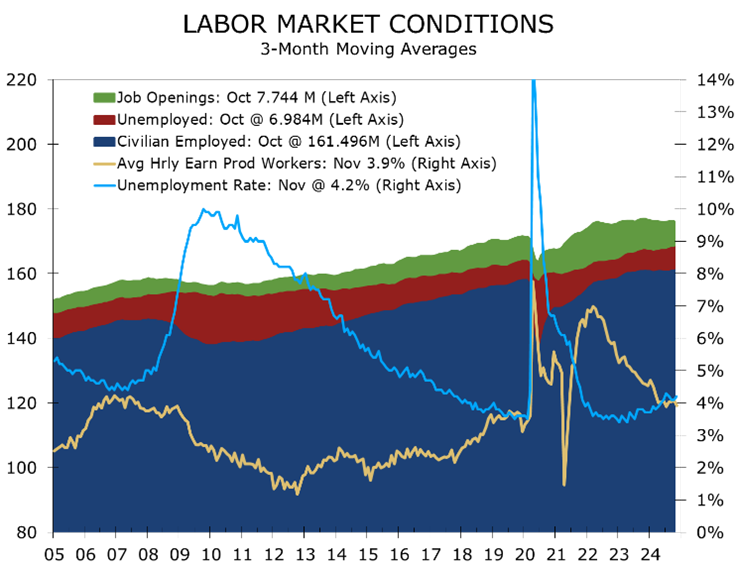
- The unemployment rate edged higher to 4.2%, up from 3.7% a year earlier. The jobless rate in Asheville surged to 7.3%, up from 2.9% one year earlier.
- The labor market remains surprising resilient. Employers added 237,000 jobs November, and job growth was revised higher for the prior two months. While health care and social services, leisure and hospitality, and government accounted for the bulk of net new hires, hiring rose more broadly. The unemployment rate did edge higher to 4.2%.
November’s employment looks strong on the surface but also reveals some underlying challenges. Nonfarm payrolls rose by 227,000 and more complete data shows that job growth in the prior two months was notably stronger. Specifically, October’s payroll growth were revised up by 24,000 to 36,000 jobs, and September’s was boosted by 32,000 to 255,000 jobs. These revisions show the economy is not nearly fragile as earlier feared. The three-month average job growth is now at 173,000, up from the previous 123,000 jobs per month reported last month.
The return of striking workers and recovery from October’s hurricanes bolstered hiring.
Service-producing industries led job creation in November, adding 160,000 jobs. Health care and education, leisure and hospitality, and professional and business services accounted for 158,000 of those new jobs. Government payrolls increased by 33,000, while private payrolls jumped by 194,000, reversing a slight decline of 2,000 in October. The diffusion index, which measures the share of private industries adding jobs, rose 3 points to 56.2, the highest since January.
Although job gains were more broadly distributed, the bulk of growth continues to come from health care and social services, leisure and hospitality, and government, which together accounted for 80% of the jobs added over the past three months.
Manufacturing employment rose 22,000 in November, boosted by the return of 38,000 striking workers. This recovery is likely to be reflected in the upcoming industrial production data. However, the rebound does not signify the end of challenges for the factory sector. Goods producers have faced a prolonged slump over the past year, driven by a shift in consumer spending from goods to services and experiences.
Construction payroll growth looks set to slow as the pipeline of projects begins to dwindle.
Construction firms added 10,000 jobs following a modest increase of 2,000 in October. The bulk of this growth came from nonresidential specialty contractors, which added 7,000 jobs. However, both commercial and residential building activity has slowed recently. Much of the recent job growth has been driven by specialty contractors completing projects initiated a year or more ago. With the pipeline of ongoing projects shrinking, payroll growth in this sector is likely to decelerate in the coming months.
Leisure and hospitality also saw a significant rebound, adding 53,000 jobs following a minimal 2,000-job increase in October. The sector was heavily impacted by hurricanes Helene and Milton, which temporarily disrupted employment at restaurants and bars. Hiring has not fully recovered, especially in Asheville, where the unemployment rate surged to 7.3% in October.
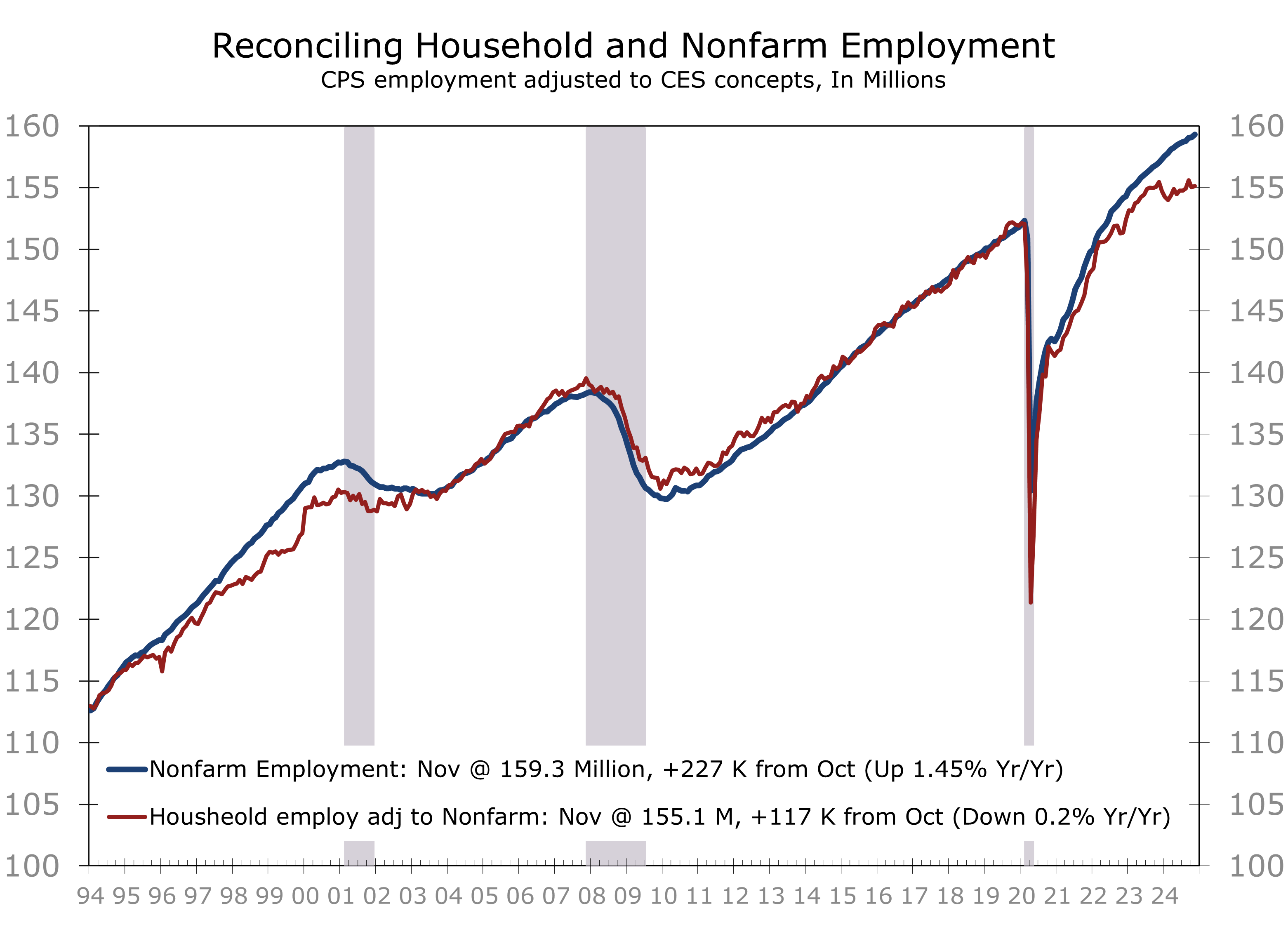
The unemployment rate increased slightly, rising from 4.145% to 4.246%. This uptick reflects a combination of factors, including a 193,000 decline in the labor force and a 355,000 drop in household employment.
The unemployment rate edged higher and household employment data remain weak.
A key concern is the rise in permanent job losses, which reached a three-year high in November. This trend has been accompanied by a lengthening duration of unemployment, with the median number of weeks increasing from 10 in October to 10.5 in November—the longest since December 2021. Although layoffs remain limited, those who lose their jobs appear to face greater challenges in finding new employment.
Wage growth remained modest in November, with average hourly earnings rising 0.4%. Year-over-year, wages increased by 4%, consistent with the Fed’s 2% inflation target when incorporating recent productivity gains. We anticipate the Fed will reduce the federal funds rate by a quarter point in December and signal that only a limited number of additional cuts—likely just two, spread across the first half of 2025—remain in the pipeline.
Disclaimer: This publication has been prepared for informational purposes only and is not intended as a recommendation offer or solicitation with respect to the purchase or sale of any security or other financial product nor does it constitute investment advice.
December 6, 2024
Mark Vitner, Chief Economist
704-458-4000