Small Business Optimism Declines in December
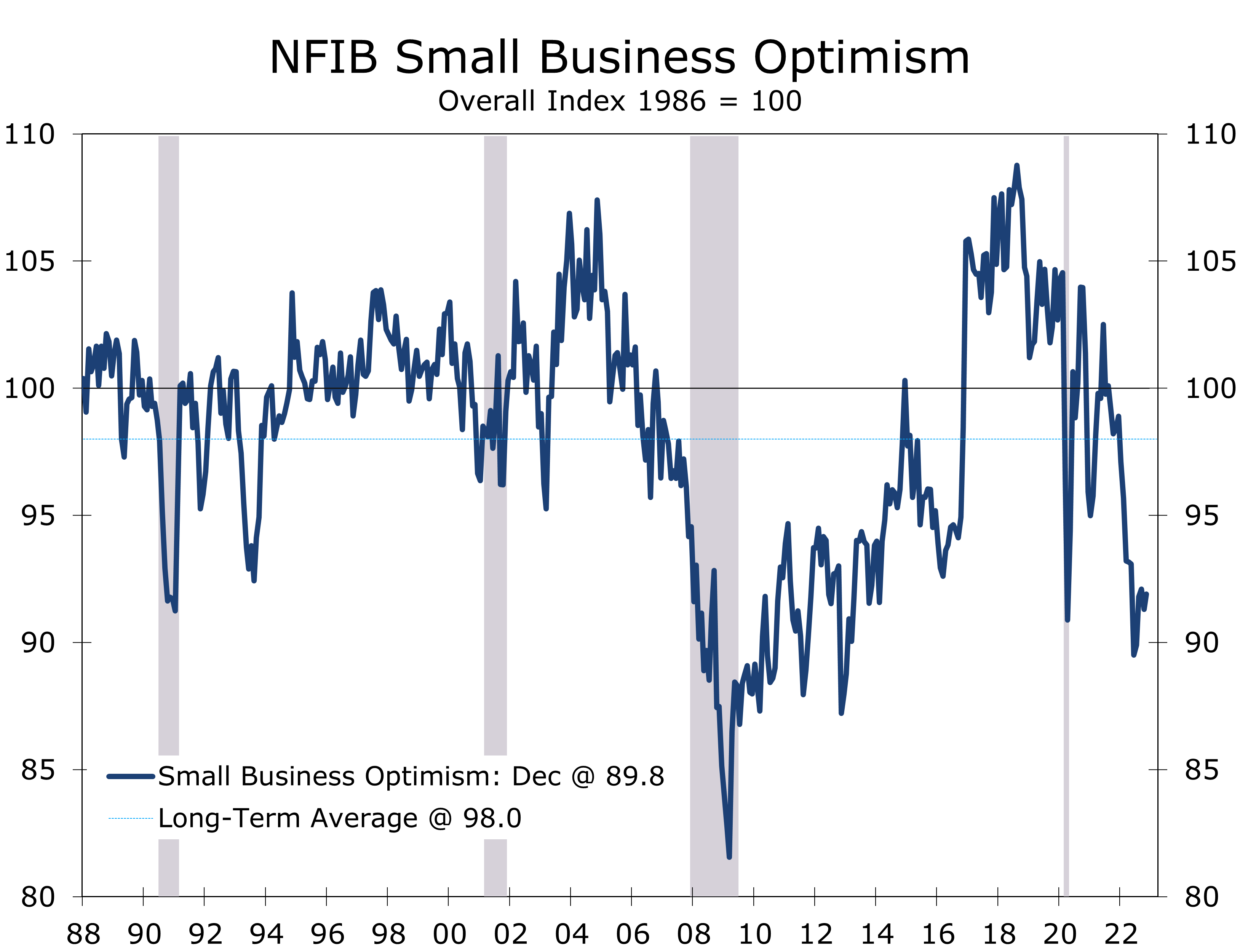
- NFIB Small Business Optimism fell 2.1 points to 89.8 in December and has been below its long-term average for the past 12 months.
- The share of businesses raising prices and the share planning to raise prices declined further in December, which is a positive step in the fight to contain inflation.
- Inflation remains the top concern for business owners, however, as operating margins continue to be squeezed by rising input and higher labor costs.
- Businesses are still looking to add staff but are scrutinizing their capital spending budgets much more conservatively.
- While the improvement in the inflation readings is encouraging, the share of business owners raising prices remains exceptionally high and remains consistent with inflation well above the Fed’s target
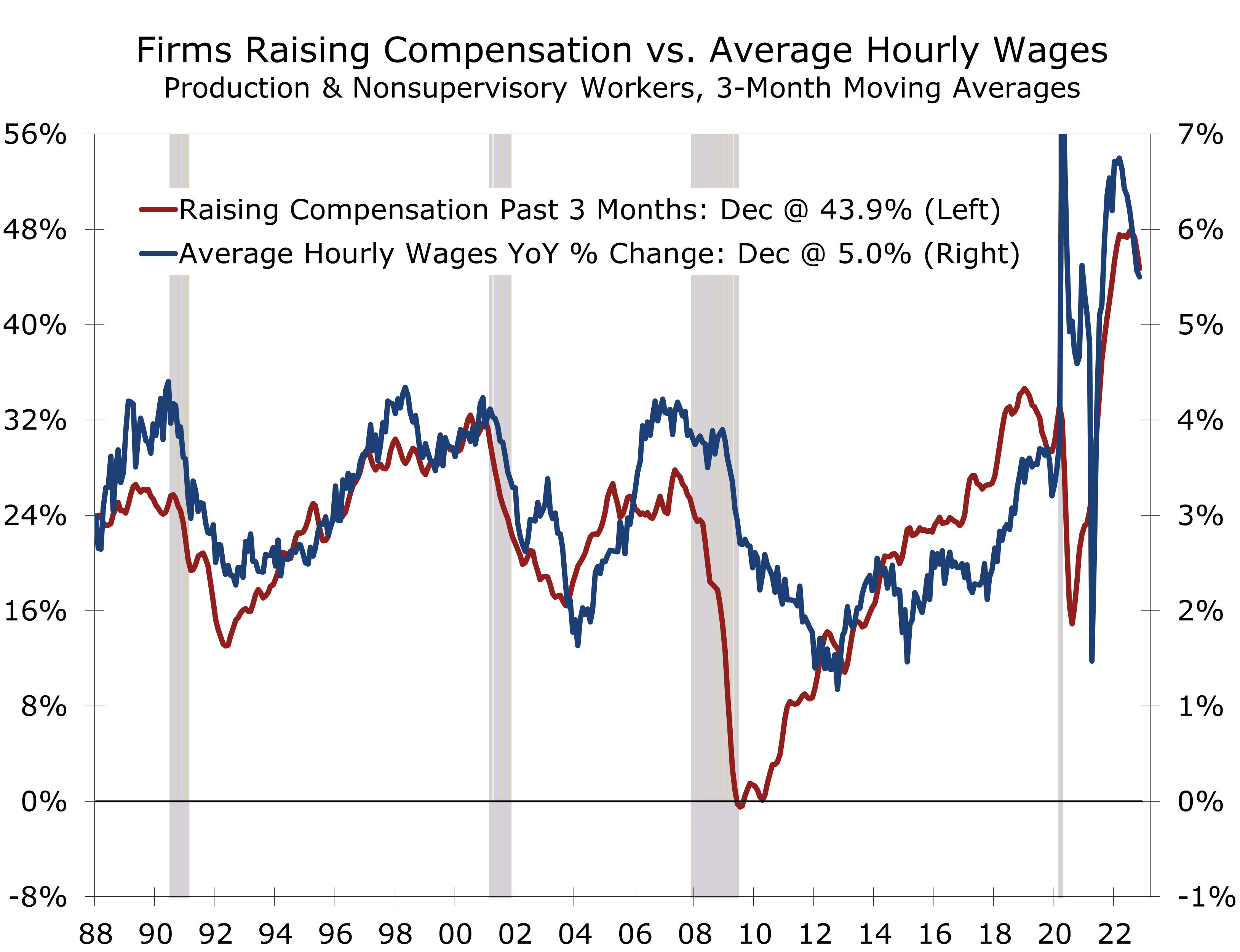
- The persistence of higher wage costs will likely carry more weight regarding impending Fed policy decisions.
The National Federation of Independent Business (NFIB) Small Business Optimism Index fell 2.1 points to 89.8 in December. The drop follows a 0.6-point rise in November. Small business owners tend to pay close attention to the political environment. The modest post-election rise likely reflects some relief there will be a divided congress over the next two years, which suggests there will be few major policy changes.
Small business confidence has been trending lower since mid-2021 and has been below its long-term average for the past year. Higher inflation remains the top concern for business owners, as it is squeezing profit margins, weakening final demand, and pushing interest rates higher.
Eight of the 10 components in the NFIB survey fell in December, led by declines in earnings trends and the share expecting the economy to improve. Both fell by 8 points and remain deep in negative territory, with the share expecting the economy to improve slumping to a net -51%, and the share expecting earnings trends to improve tumbling to -30%.

Small business owners’ pessimism on the economic outlook vastly exceeds every other component of the NFIB survey and may be a bit overdone. We suspect business owners’ extreme pessimism reflects the near universal expectation of a recession in 2023 along with some frustration about the political environment.
We suspect business owners’ extreme pessimism reflects the near universal expectation of a recession in 2023.
While our forecast also calls for a recession this year, we continue to stress a downturn is not a foregone conclusion. We put the odds of recession at about 60%. The next most likely outcome is a continuation of the rolling recessions in technology, housing, and commercial real estate, which slows overall growth but does not produce a significant enough decline in the overall economy to qualify as a recession.
One thing that would increase the odds of a soft landing is an easing of inflationary pressures. The share of business owners reporting they raised their selling prices fell 8 points to 43% in December, while the share planning to raise prices, fell 10 points to 24%.
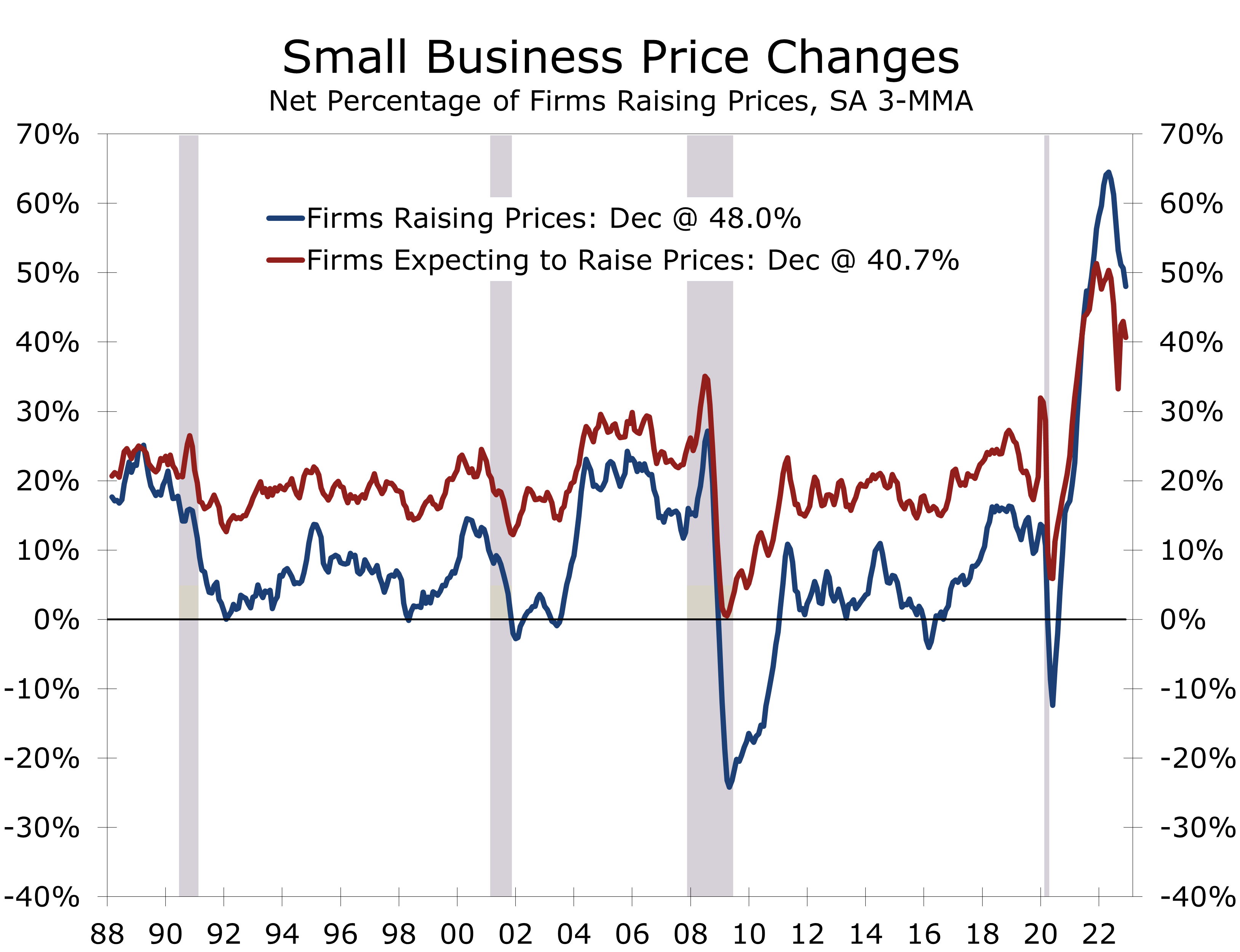
While the improvement in price trends is encouraging, business owners still rate inflation as their top business problem. Slower economic growth has made it more difficult for business owners to pass along higher input cost, which is squeezing operating margins. The net share of small businesses reporting higher earnings over the past three months fell 8 points in December to -30%, which is in line with previous months.
The squeeze on operating margins, along with the rising interest rates and uncertainty about the economic outlook explain why capital spending plans remain under pressure. The share of business owners expecting to make capital outlays fell 1 point to 23%. Actual capital outlays over the past 6 months, however, remain more positive at 55%.
There has been less success at containing labor cost. A net 44% of business owners report raising compensation in December, up 4 points from the prior month. The share of firms boosting compensation has rolled over, however, as has average hourly earnings. As with price hikes, the share of businesses boosting compensation still remains historically high, which means the Fed still has more work to do.
Small businesses are bearing the brunt of the burden from slower economic growth, as they have less leverage to deal with higher input costs and rising wages. Operating margins are getting squeezed, as it is has gotten harder to pass along their higher costs.
Disclaimer: This publication has been prepared for informational purposes only and is not intended as a recommendation offer or solicitation with respect to the purchase or sale of any security or other financial product nor does it constitute investment advice.