Consumer Prices Ease on a Year-to-Year Basis
- Both the headline and core CPI rose 0.4% in April, which pulled the year-to-year change for both slightly lower.
- A good inflation figure is a matter of perception. April’s increase was in line with expectations but less than the market feared. A 0.4% increase still translate into a 4.9% annual rate, nearly two-and-a-half times the Fed’s target.
- Prices for food and energy items, other than gasoline, continue to ease, which has helped pull the year-to-year change in the headline CPI to 4.9%.
- Grocery store prices fell 0.2% in April, marking the first back-to-back decline since August 2019, as pandemic-driven shortages continue to wind down.
- Prices for food consumed away from home rose 0.4%, reflecting continued strength in restaurant dining.
- Shelter costs rose just 0.4% in April, which is the smallest rise since January of last year.
- Core services prices excluding shelter continue to moderate, albeit at a slower rate than either the core or headline figures.
The Consumer Price Index rose 0.4% in April, as supply bottlenecks and shortages continue to ease throughout many key industries. Both the headline and core CPI rose 0.4%, which was close to consensus expectations but less than the markets had feared.
The runup in inflation that followed the reopening of the economy has focused considerable attention on the monthly CPI report and several forecasts are now released leading up to the report. The Federal Reserve Bank of Cleveland CPI Nowcast had projected the year-to-year rise in the CPI would rise back to 5.2 % in April and financial market participants were bracing for some payback from the prior month’s better than expected CPI report. When those fears proved unwarranted the markets briefly rallied.
Two key sources of inflation relief – oil and used car prices – have now been largely played out.
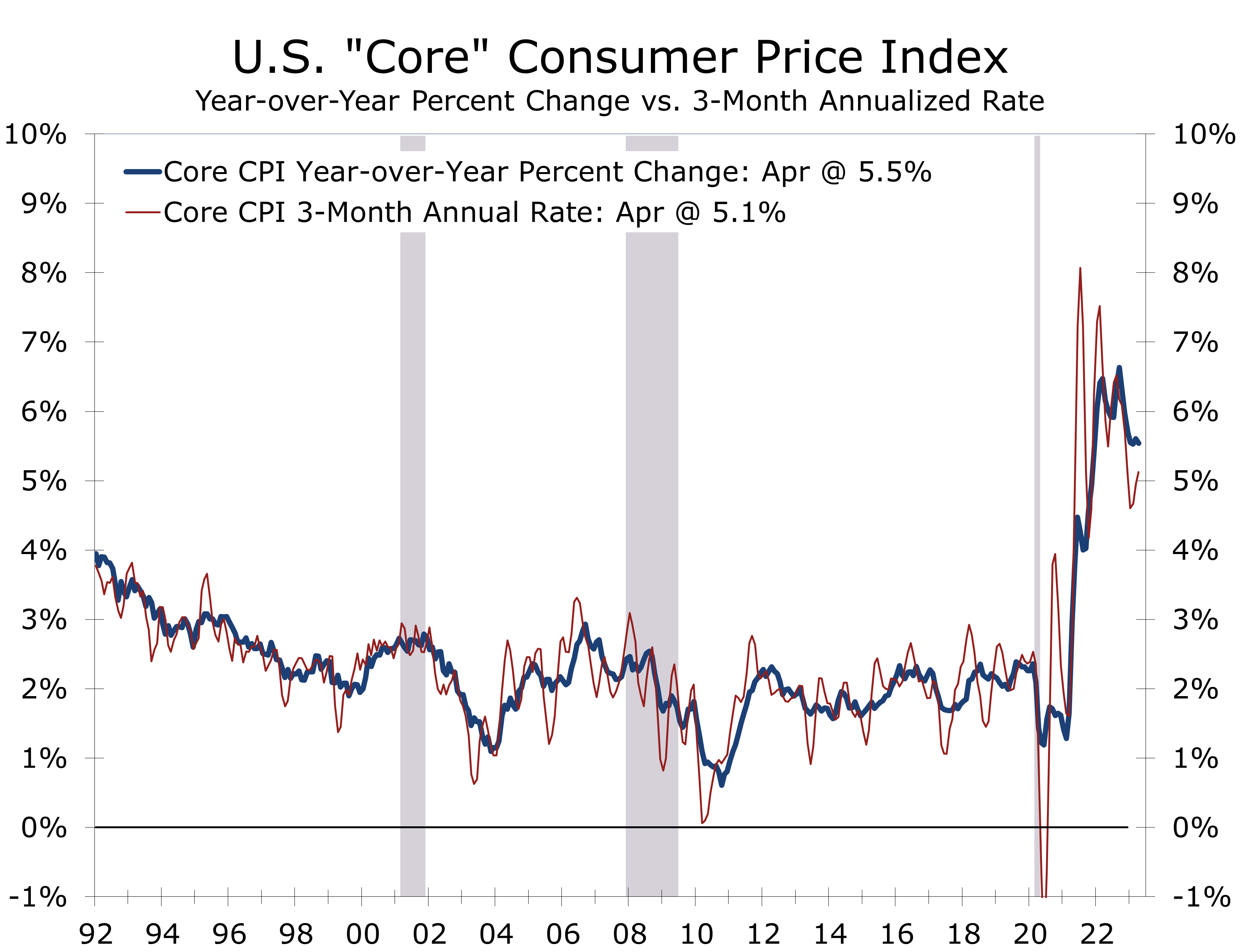
A good inflation report is a matter of perspective. Even with the recent moderation, the CPI remains up 4.9% year-to-year and the core CPI is up 5.5%. Moreover, most of the improvement this past year has come from lower energy prices, most of which result from the drawdown of the Strategic Petroleum Reserve and a pullback in used car prices. Those two sources of relief now appear to be behind us. Gasoline prices rose 3.0% in April and used prices rose 4.4%. Those gains were offset by large declines in prices for natural gas, fuel oil, and groceries. Shelter costs also rose less, thanks to lower lodging costs.

The unwinding of pandemic-drive shortages, multiple waves of stimulus payments, and the uneven reopening of the economy wreaked havoc with the seasonal adjustment process. This often leads to considerable frustration among folks who closely follow the CPI. One of the greatest frustrations has been that the BLS measure of rent considerably lags changes in market rents, which initially caused inflation to be understated and may now be overstating the inflation threat.
Residential rent provides a keen insight into why wage pressures are proving stubborn.
We have consistently downplayed the criticism of the BLS rent measure. Residential rent captures the cost of renting an apartment for all renters, not simply renters renewing their lease during a given month. As such, the BLS measure lags market rents. We do not see this as a shortcoming but rather a keen insight into why wage pressures are proving so stubborn. With rent of primary residence up 8.8% over the past year, renters are making greater wage demands out of necessity or are switching to higher paying jobs.
Prices for used cars have been another source of angst. The BLS data do not always follow market based measures of used car prices. Demand for used cars surged as commuters shunned mass transit during the pandemic and migration from transit-oriented cities to more car-dependent metro areas accelerated.
Grocery store prices fell 0.2% in April, marking a second consecutive drop. Prices for meat, poultry, fish, and eggs fell 0.8% and prices for fresh fruit and vegetables fell 0.5%. Egg prices continue to fall back from their recent highs, declining 1.5% in April following a 10.9% drop the prior month. Egg prices remain 21.4% higher than they were a year ago. Grocery store prices are up 7.1% over the past year. Prices for food away from home rose 0.4% in April and are up 8.6% year-to-year, with the largest gains coming at quick services restaurants.
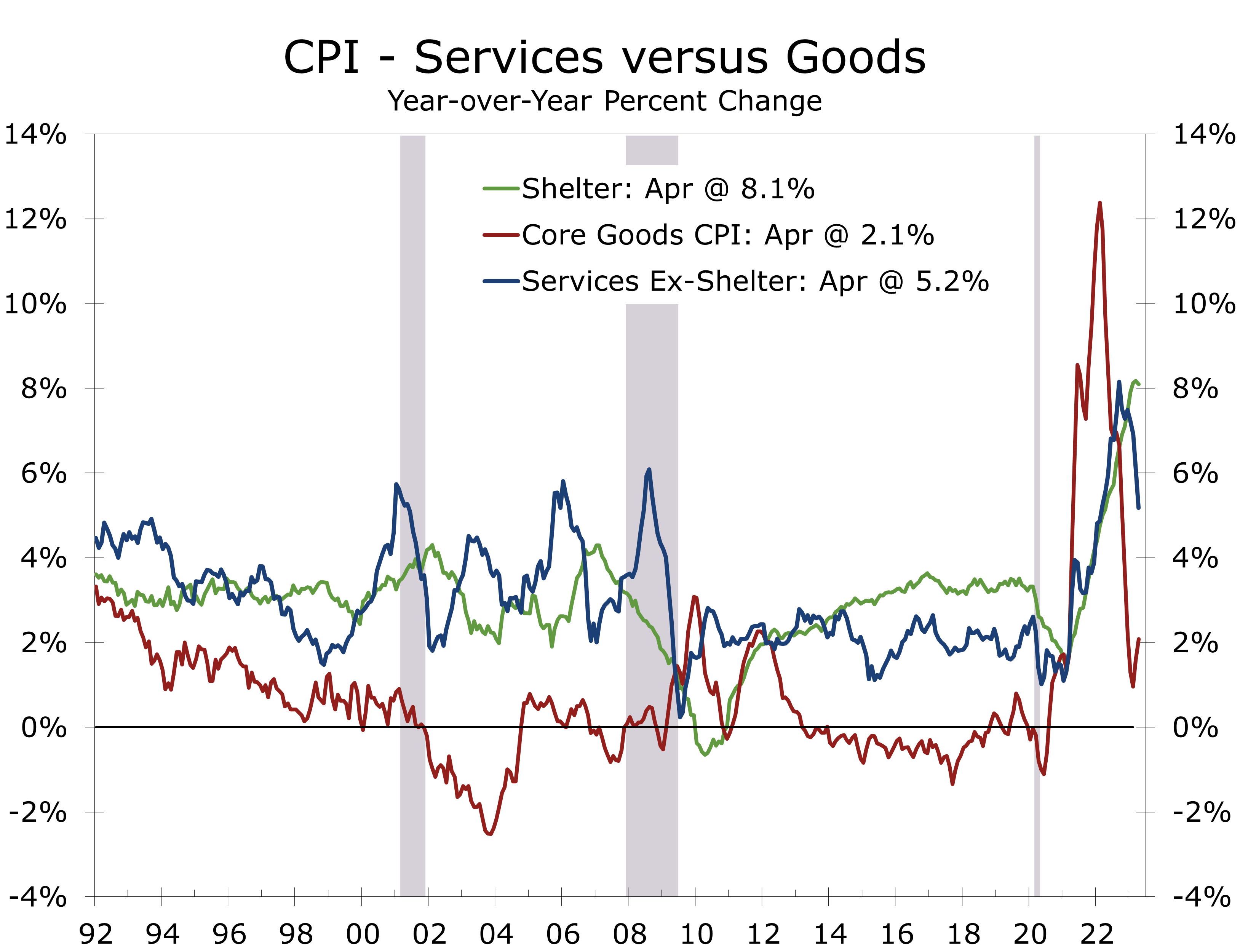
Shelter accounts for around 60% of the increase in the core CPI over the past year.
Core inflation has moderated less than the headline data, with prices still up 5.5% year-to-year. Moreover, the core CPI has risen at a 5.1% annual rate over the past three months. Shelter costs account for about 60% of the increase in the core CPI over the past year. Core goods prices have slowed to just 2.0% over the past year, reflecting the easing of supply-chain issues. Aside from shelter costs, the primary challenge to even lower inflation is coming from labor intensive parts of the service sector, including such items as hospital services, daycare, pet care and tax preparation.
Disclaimer: This publication has been prepared for informational purposes only and is not intended as a recommendation offer or solicitation with respect to the purchase or sale of any security or other financial product nor does it constitute investment advice.