Unexpectedly Large Downward Revisions
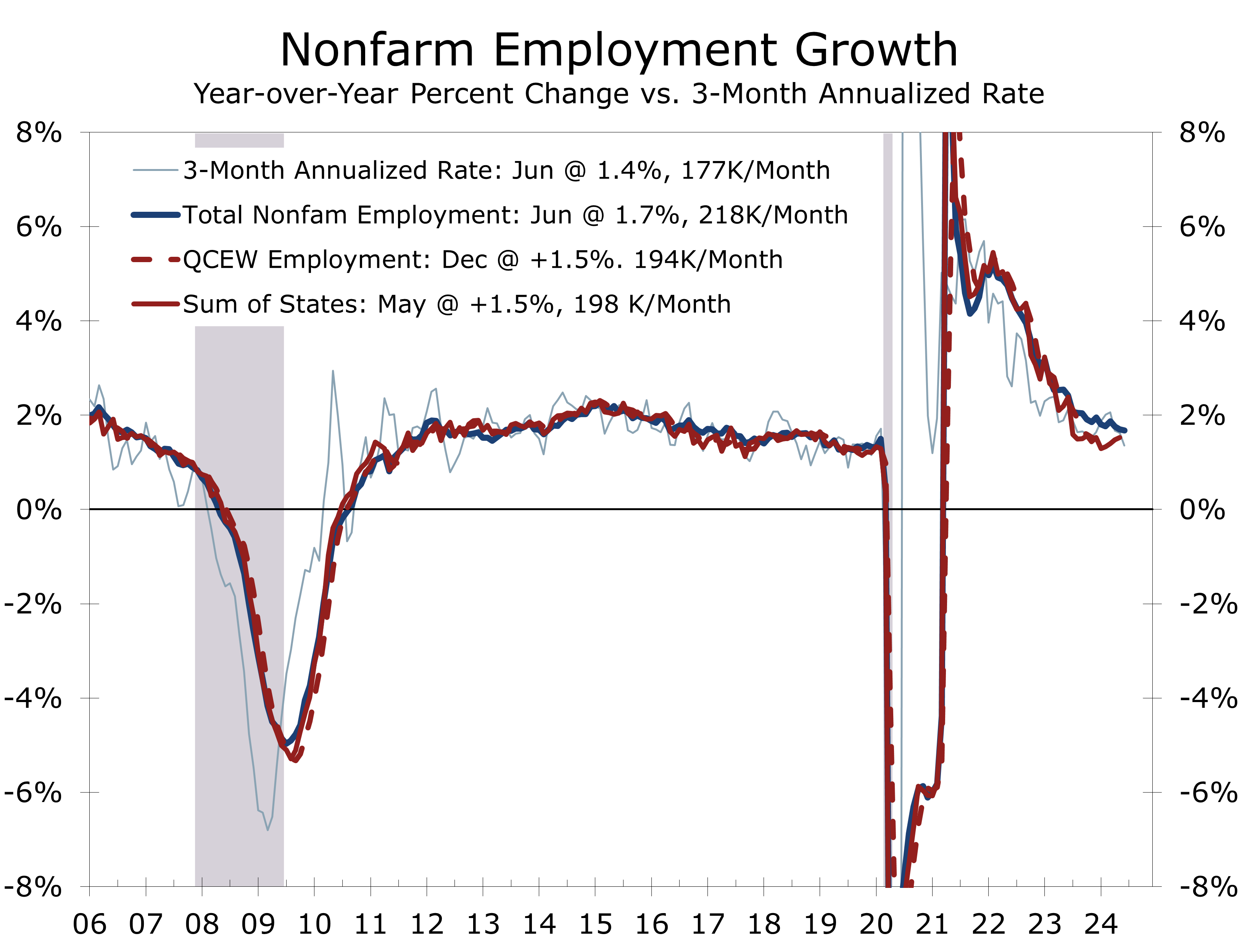
- Employers added 206,000 jobs in June, but payrolls for the prior two months were revised lower by a combined 111,000 jobs. Private employers added just 136,000 jobs in June and an average of just 146,000 jobs per month over the past 3 months.
- While hiring has slowed, job gains remain broad based. The one-month diffusion index rose 3.2 points to 59.6 in June.
- The bulk of net new jobs continue to come from just a handful of industries, including government (+70K), health care (+49K), and social assistance (+34K).
- Construction firms added 27,000 jobs in June, while manufacturers cut 8,000 jobs.
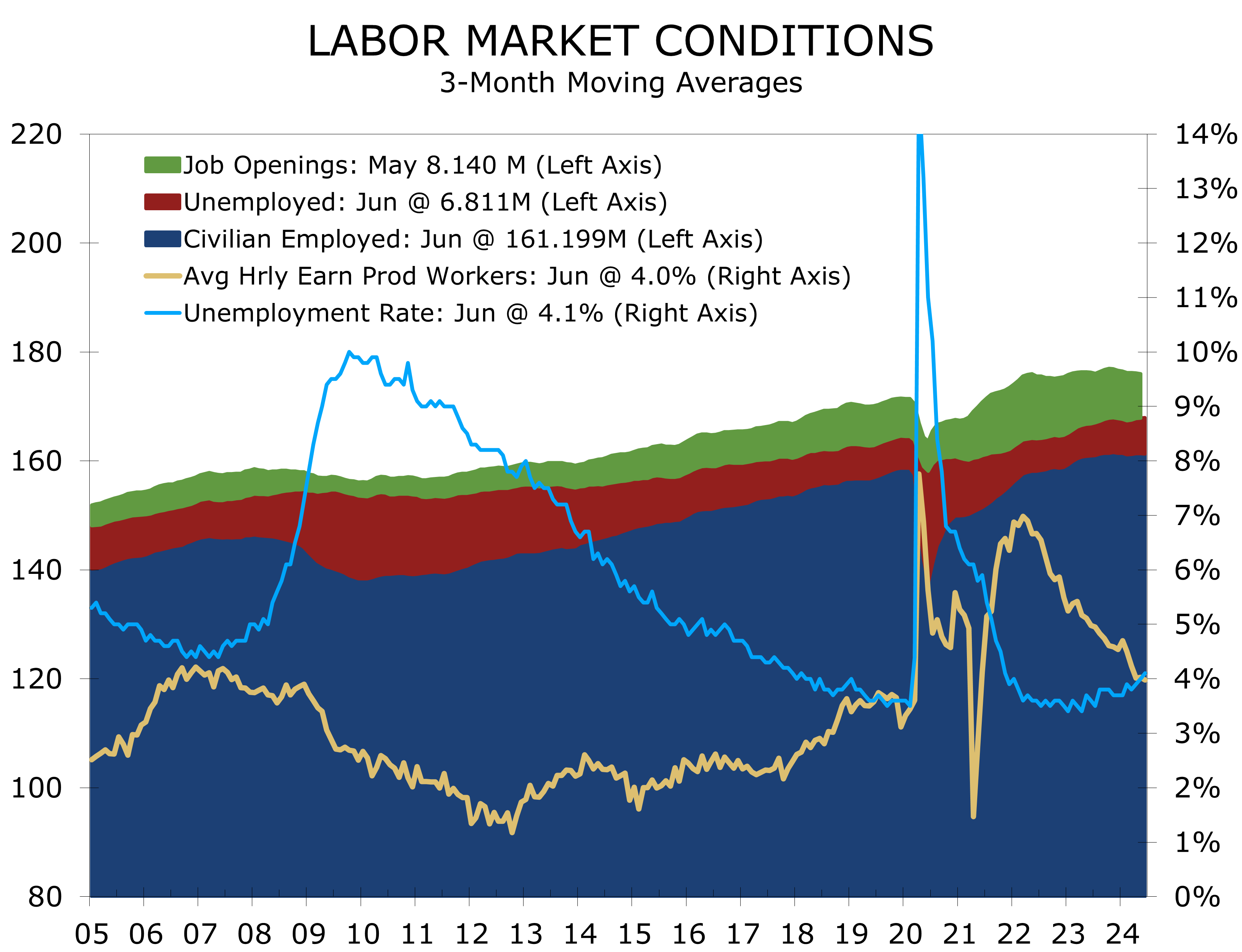
- Average hourly earnings for production workers rose 10 cents, or 0.3%, to $35.05, and are just under 4.0% year-to-year.
- The unemployment rate inched another 0.1 percentage point higher, to 4.1%, up from 3.6% one year ago. The number of unemployed has risen by 814,000 persons since last June to 6.8 million.
- Nonfarm payrolls topped expectations in June but downward revisions to the prior two months show that hiring has clearly lost momentum. We look for job growth to moderate further in coming months.
Nonfarm employment once again topped expectations, which had been lowered on indications that seasonal factors and calendar effects had boosted job growth in May. The big surprise in the June data was the sharp downward revisions to the prior data.
The previously reported 272,000-job gain for May was revised lower by a whopping 57,000 jobs and April’s job growth was reduced by 54,000 jobs. Over the past three months, job growth has averaged just 177,000, the slowest 3-month pace since January 2021. Prior to the revisions, nonfarm payrolls had risen by an average of 249,000 jobs for the three months ended in May.
Hiring slowed markedly over the past 3 months and is more closely in line with the QCEW data.
The slowdown matches up well with our forecast, which had called for payroll growth to slow to around 180,000 jobs per month by June. We based this outlook on the Quarterly Census of Employment and Wages, which is the source data for annual revisions.
Job gains remain broad based. The 1- month diffusion index rose 3.2 points to 59.6. The bulk of job gains, however, are still coming from a handful of industries, including government (70K), health care (49K) and social assistance (34K). Many of the jobs added in these sectors are relatively low paying jobs that were hard to refill after being lost during the pandemic.
Government payrolls were the big outlier in June, with local governments adding 39,000 jobs and state governments adding 26,000 jobs. Most of these new jobs were added outside of public education. Competition from the private sector has made it tough for local governments to rehire line and administrative jobs lost during the pandemic. Maintenance jobs, public utility workers, bus drivers, public safety and sanitation jobs have been particularly tough to rehire.
The labor market is moving back into balance, with hiring rising in hard to fill positions.
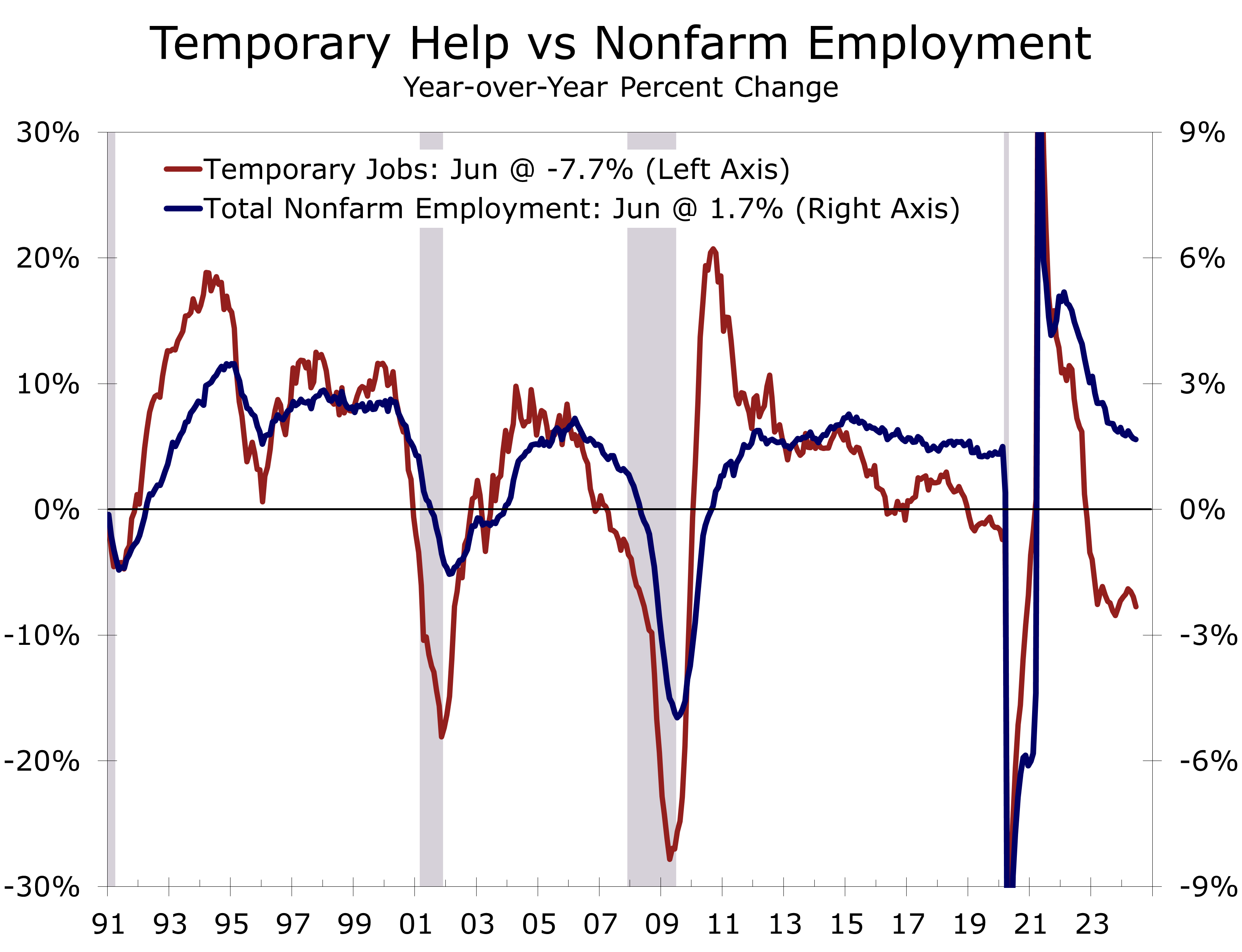
The recent strength in government payrolls is another sign the labor market is moving back into balance. The mad rush for goods following the pandemic led to a surge in hiring in transportation and warehousing. Temporary staffing jobs also took off, as pay tended to move up more closely with the surge in demand. As the economy has cooled, employment at warehouses and temporary staffing firms has steadily receded. The slower pace has allowed employers to rehire hard-to-fill positions vacated during the pandemic.
The huge swings within the labor market are one big reason why the huge drop in temporary staffing jobs does not have the same implications that it did in past business cycles, when it proved to be a reliable predictor of recessions.
The cooling in the goods sector is helping further moderate wage gains. Average hourly earnings for productions workers rose 0.3% in June and are up just under 4.0% year-to-year, the smallest rise since March 2020. Some of the moderation reflects a slowing in high paying industries, particularly in manufacturing and distribution. The rapid increase in wages in lower paying sectors has also slowed hiring at restaurants.
The unemployment rate continues to edge higher, rising 0.1 percentage point in June to 4.1%. The jobless rate has risen 0.5 percentage points over the past year and is consistent with the recent uptick in continued unemployment claims and long-term unemployment, the latter of which has risen by 1.1 million over the past year. The unemployment rate was just 3.5% before the pandemic and averaged 3.7% in 2019.
The labor market appears to be moving back into balance, with hiring moderating.
With the labor market now more clearly moving back into balance, we are even more confident the Fed will move forward with the two quarter-point rate cuts we are expecting. Look for the Fed to make its intentions clear at the July FOMC meeting and make its first quarter point cut to the federal funds in September.
Disclaimer: This publication has been prepared for informational purposes only and is not intended as a recommendation offer or solicitation with respect to the purchase or sale of any security or other financial product nor does it constitute investment advice.
Mark Vitner, Chief Economist
mark.vitner@piedmontcrescentcapital.com
704-458-4000
July 5, 2024