
October Surprises – Let the Chaos Begin
- October began with 4 major upsets among top 11 teams, including Vanderbilt’s shocking 40-28 victory of #1-ranked Alabama.
- Miami, Texas A&M, Indiana along with Army and Navy are some of this season’s early surprises.
- Our focus this week is on the Mississippi-South Carolina game, which turned out to be a much more lopsided affair.
- Ole Miss began the season with high hopes but stumbled at home against a very good Kentucky team.
- South Carolina beat Kentucky earlier this year but has struggled since essentially giving away what would have been a signature victory against LSU.
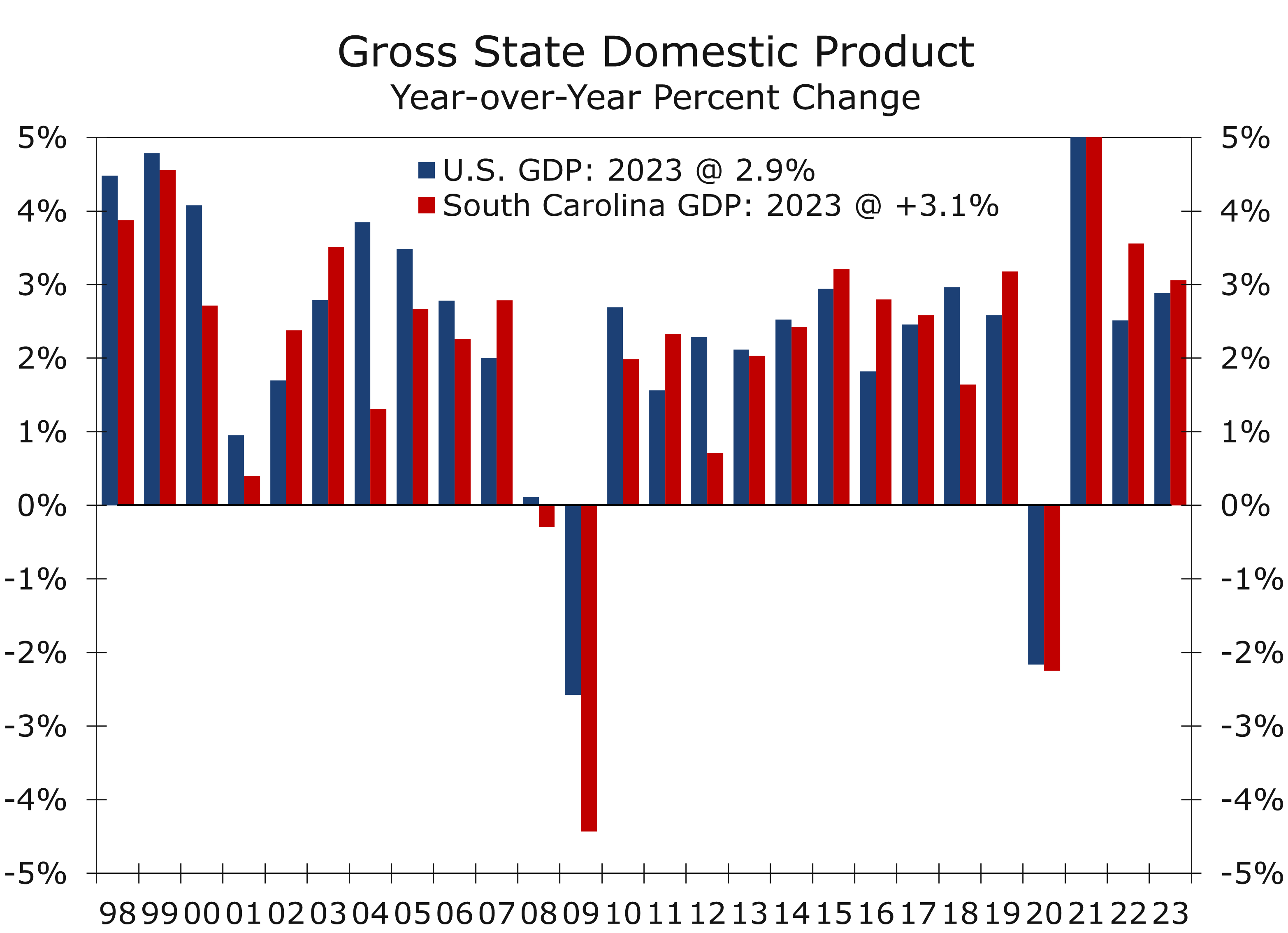
- South Carolina’s economy continues to transition toward higher value-added manufacturing and R&D.
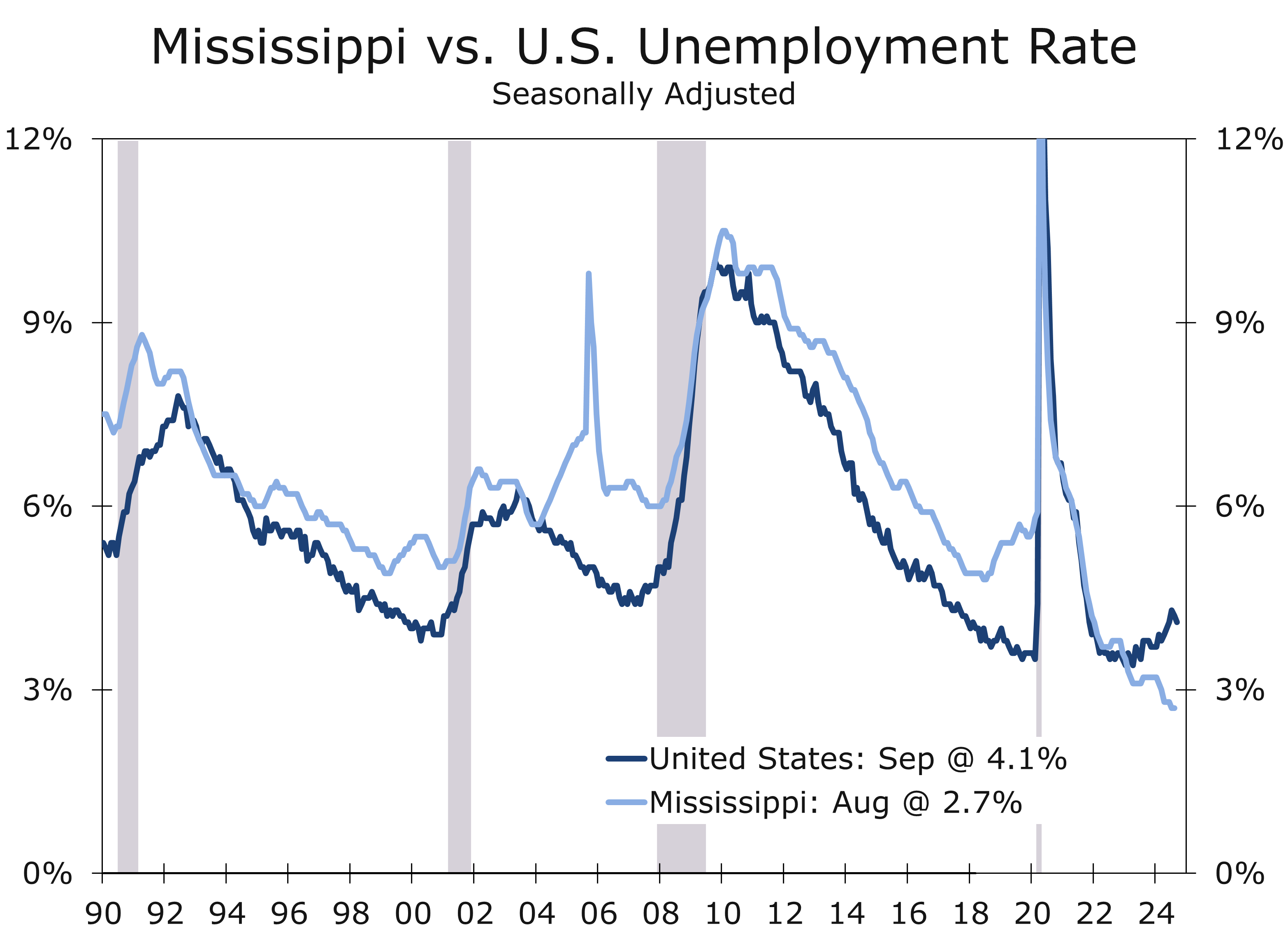
- Mississippi’s economy has also made great strides at attracting high-wage industry.
October kicked off with one of the wildest weekends in recent memory. Week 6 saw unranked teams upset four of the top 11 teams in the AP Poll, a phenomenon not seen since November 2016.
Vanderbilt’s victory over Alabama earned top billing. The Commodores controlled the game from the start, dominating time of possession and limiting Alabama’s explosive offense, ultimately winning 40-28. This upset comes just weeks after former Alabama coach Nick Saban remarked that Vanderbilt was one of the safest places to play on the road, often filled with Alabama fans. The win marked Vanderbilt’s first-ever triumph over a top-ranked team, leading to a rush onto the field and the tearing down of the goalposts, which were later paraded down Broadway in Nashville.
Week 6 thrusts the college football hierarchy into chaos, with 4 of the AP top 11 teams losing.
The chaos continued beyond Nashville as Arkansas, which has been in a constant state of rebuilding, contained 4th-ranked Tennessee’s high-powered offense and scored a late go-ahead touchdown for a 19-14 victory. Tenth-ranked Michigan lost 27-17 on the road to Washington, while 11th-ranked Southern California fell to Minnesota 24-17, with the Golden Gophers scoring 14 unanswered fourth quarter points. Ninth-ranked Missouri was also throttled by 25th-ranked Texas A&M 41-10, propelling the Aggies up 13 spots to 12th in this week’s poll.
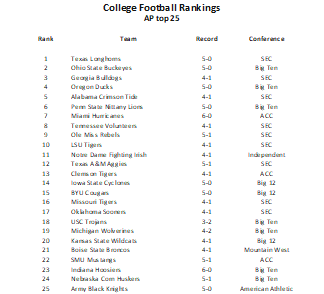
East Coast fans who stayed up late on Saturday witnessed one of the greatest comebacks of the season, as Miami overcame a 25-point deficit at California to secure a last-minute victory. Despite the heroics, it was not a good week for ranked teams playing on the road.
Texas A&M is one of the early surprises of the college football season through Week 6. The Aggies are now 5-1 and tied with Texas for the lead in the SEC. Other early surprises include 6th-ranked Miami and 19th-ranked Indiana, both 6-0. Both Army and Navy are undefeated, marking the first time both have done simultaneously this long since 1945.
Our weekly football report looks at key games throughout the South, which is home to the Piedmont. This past week’s focus was on the Ole Miss-South Carolina game, which turned out to be much more one-sided than expected. South Carolina had shown promise earlier in the season, with a road victory at Kentucky and a narrow home loss to LSU. Ole Miss had been ranked in the top 10 all season before losing to Kentucky at home in Week 5.
Ole Miss dominated South Carolina on Saturday, cruising to a 27-3 victory. The Rebels excelled on both sides of the ball, with a stifling defense that recorded six sacks and ten tackles for loss while holding the Gamecocks to just 4.1 yards per play. Offensively, they capitalized on numerous South Carolina mistakes, including several untimely penalties—eight for 90 yards—and a few questionable coaching decisions that would have appeared brilliant had they worked.
History of the University of South Carolina
The University of South Carolina (USC) was established in 1801 as South Carolina College by the state’s General Assembly, with the goal of bridging the cultural divide between the Lowcountry and Backcountry regions. Located in Columbia, near the state capital, the college quickly gained a reputation as one of the premier institutions in the South. However, the Civil War disrupted its operations, with many students joining the Confederate Army. The campus was eventually repurposed as a hospital for Confederate troops. After the war, the college was re-established as the University of South Carolina in 1865. During Reconstruction, USC became the first Southern state university to admit Black students, though this period of integration ended with the withdrawal of federal troops in 1877.
In 1880, USC reopened as an all-white agricultural college, reflecting the political climate of the time. Significant progress came in 1895 when women were first admitted, and by the early 20th century, USC began expanding beyond its agricultural roots. The institution regained full university status in 1906 and earned accreditation in 1917. The Great Depression brought financial hardship, but World War II revitalized the university. Military training programs and the influx of students through the G.I. Bill dramatically increased enrollment, prompting the university to expand its physical infrastructure and academic offerings.
The 1960s were a transformative era for USC, marked by the Civil Rights Movement and desegregation. After years of resistance, the university was forced to integrate in 1963 following a legal battle. Henrie Monteith, Robert Anderson, and James Solomon became the first Black students to enroll at USC since Reconstruction, ending segregation at the last Southern flagship university to do so. The Baby Boomer generation fueled massive growth, with student enrollment rising from 5,500 in 1960 to over 26,000 by 1980. In 1981, women outnumbered men in the student body for the first time, reflecting broader social changes.
Today, USC is renowned for several academic programs, particularly in International Business, which ranks among the top in the world, and Nursing, considered one of the best in the country. The university also excels in law, public health, and engineering. Its research capabilities have grown significantly, especially in areas like health sciences, nanotechnology, and cybersecurity. USC’s partnerships with South Carolina’s aerospace and manufacturing industries have bolstered the College of Engineering and Computing, making it a key player in the state’s economic development.
USC’s athletics, particularly its football team, have also brought national attention to the university. The Gamecocks have competed in the Southeastern Conference since 1992, and Williams-Brice Stadium is one of the hottest, toughest, and loudest venues in the league.
Prominent alumni include musician Darius Rucker, baseball player Mookie Wilson, U.S. Senator Lindsey Graham, and Fox News television host Ainsley Earhardt. Today, USC continues to expand, boasting a student population exceeding 34,000 and offering more than 300 academic programs, blending a rich historical legacy with forward-looking initiatives in research, innovation, and diversity.
South Carolina Gamecocks
The University of South Carolina fielded its first football team on December 24, 1892, against Furman, though the team was not officially sanctioned by the university at the time. They were initially nicknamed the “College Boys” and wore garnet and black. The program formally adopted the “Gamecocks” nickname in 1900, inspired by the school’s fighting spirit and competitive nature.
The University of South Carolina fielded its first football team on December 24, 1892, against Furman, though the team was not officially sanctioned by the university. Initially nicknamed the “College Boys,” they wore garnet and black. The program formally adopted the “Gamecocks” nickname in 1900, inspired by the school’s fighting spirit and competitive nature.
The term “Gamecock” reflects a rich local heritage, with historical roots in the Carolinas where cockfighting was popular in pre-revolutionary times. Gamecocks were prized for their fighting spirit. The university officially adopted the nickname in 1901, in honor of Francis Marion, a military officer in the American Revolutionary War, known for his guerrilla warfare tactics against the British. Marion was often called the “Carolina Gamecock,” and his legacy of resilience and bravery became a symbol for the university’s athletes. Today, the Gamecocks represent not only the university’s sports teams but also the pride and tenacity of the South Carolina community.
The Gamecocks won their first game in 1895 and hired their first head coach, W. H. “Dixie” Whaley, the following year. They faced their arch-rival Clemson for the first time in 1896, winning 12–6. Under coach Bob Williams in 1903, the team achieved its first 8-win season (8–2) before the rivalry with Clemson was paused until 1909 due to a notable incident/riot.
From 1953 to 1970, the Gamecocks were part of the Atlantic Coast Conference (ACC), achieving a No. 14 ranking in the 1958 final AP poll and winning the 1969 ACC Championship. Between 1971 and 1991, they operated as a major independent, producing Heisman Trophy winner George Rogers in 1980 and finishing in the final AP top 25 in 1984 and 1987, ranked No. 11 and No. 15, respectively. Since joining the SEC in 1992, the Gamecocks won the SEC East Division in 2010 and secured seven final top-25 rankings, including three top-10 finishes and one top-5 finish.
The program has produced a National Coach of the Year (Joe Morrison, 1984), three SEC Coaches of the Year (Lou Holtz in 2000, Steve Spurrier in 2005 and 2010), and one ACC Coach of the Year (Paul Dietzel, 1969). Additionally, they have had two overall No. 1 NFL Draft picks (George Rogers in 1981 and Jadeveon Clowney in 2014) and five members in the College Football Hall of Fame, including players George Rogers and Sterling Sharpe, and coaches Holtz and Spurrier, along with former Athletic Director Mike McGee.
South Carolina has struggled in recent years. Last season, the Gamecocks finished 5-7, a disappointing result following an 8-5 season the previous year, which ended with a top-20 ranking.
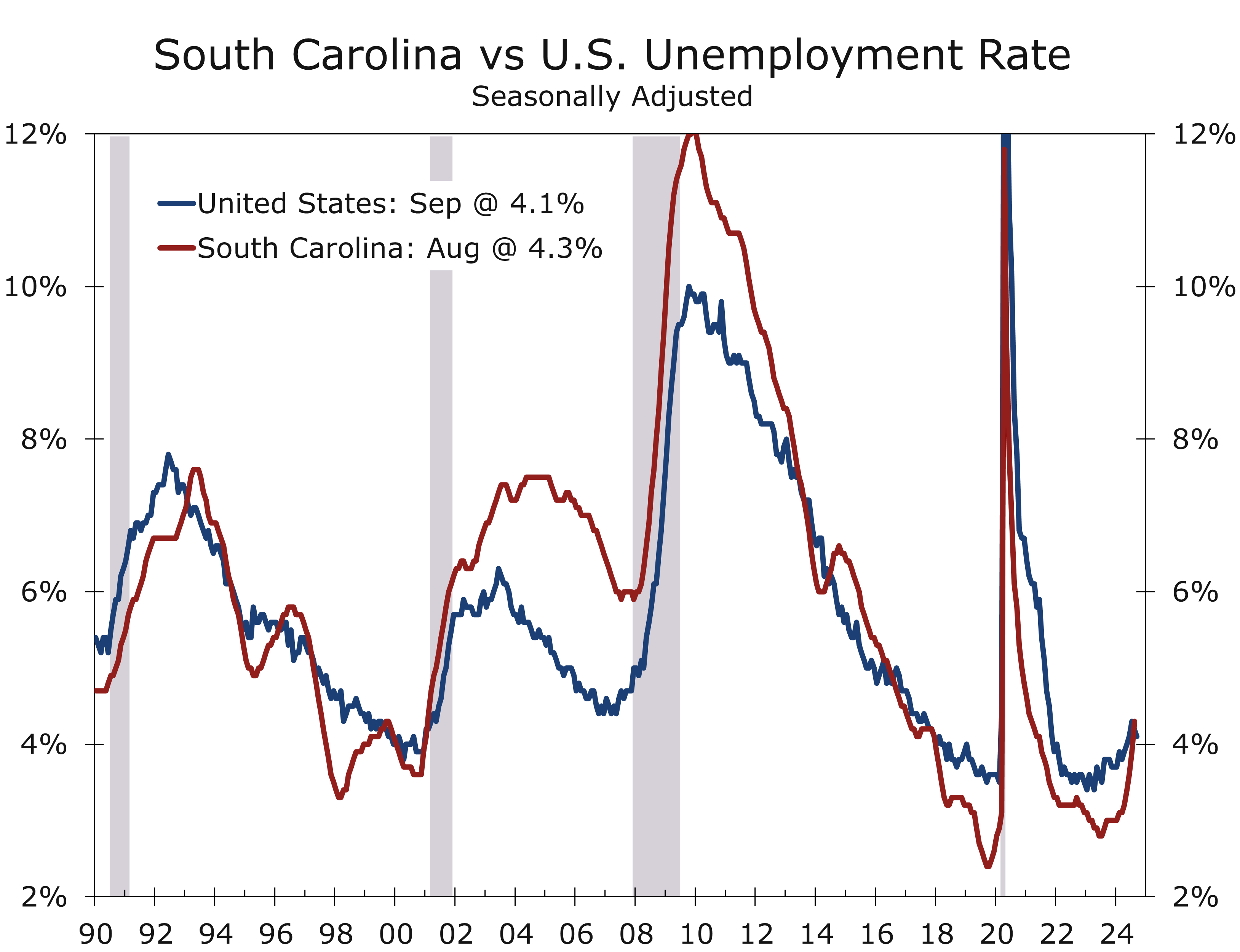
Economic development in Columbia remains robust, highlighted by a $2 billion investment from Scout Motors, a subsidiary of Volkswagen. This new manufacturing plant will produce electric trucks and SUVs, positioning Columbia as a key player in the emerging “Battery Belt.”
Mississippi’s Economy
Mississippi’s economy has evolved from its historic reliance on agriculture—particularly cotton and textiles—into a more diversified mix of manufacturing, energy production, and services. Technological advancements, industrialization, and policy changes have propelled Mississippi’s shift, enabling it to capitalize on the expanding automotive, aerospace, and defense sectors in the South.
In the 19th century, Mississippi was a leading cotton producer, thanks to the cotton gin and fertile land. This prosperity, built on enslaved labor, was shattered by the Civil War, leading to economic struggles during Reconstruction. Cotton remained dominant, but price fluctuations, the boll weevil infestation, and the Great Depression hurt the agricultural sector. Mechanization further reduced the need for manual labor, exacerbating rural poverty.
To counter these challenges, Mississippi pursued new industries in the early 20th century, with textile mills becoming a key economic driver. New Deal programs modernized infrastructure, and World War II spurred industrial growth, particularly in military production. Post-war, the state diversified further, gaining manufacturing strength in automotive parts, chemicals, and energy, supported by infrastructure improvements like the Interstate Highway System.
By the late 20th century, manufacturing had grown significantly, with companies like Nissan and Ingalls Shipbuilding becoming major employers. The Gulf Coast became a hub for shipbuilding and energy. In the 1990s, riverboat casinos transformed cities like Biloxi and Gulfport into tourism and gambling centers.
In the 21st century, Mississippi continues to expand its advanced manufacturing sector, particularly in automotive, shipbuilding, aerospace, and alternative energy. While these industries have driven job growth, challenges persist in education, poverty, and healthcare. Despite these obstacles, the state is working to attract foreign investment, improve workforce training, and leverage its central location in the growing Southern economy.
Agriculture, particularly soybeans, catfish farming, and poultry, remains important. However, the state’s economy now includes a mix of traditional industries like furniture manufacturing and newer sectors like tourism, casinos, and aerospace.
The University of Mississippi (Ole Miss)
Founded in 1844 in Oxford, the University of Mississippi (Ole Miss) is the state’s first public institution of higher education. Unlike many universities of its time, which focused on agriculture and technical skills, Ole Miss adopted a broad curriculum, establishing early programs in engineering and law. During the Civil War, the entire student body enlisted in the Confederate Army as the “University Greys,” suffering significant casualties. The campus became a wartime hospital and burial ground. After the war, former Confederate General A.P. Stewart served as the first chancellor.
Despite its Confederate ties, Ole Miss has been a leader in progressivism. The university admitted women in 1882 and became the first in the Southeast to hire a female faculty member in 1885. The G.I. Bill and state investment, including the establishment of a medical school in Jackson in 1950, helped the university grow in the 20th century.
The university’s most pivotal moment came in 1962 when James Meredith became the first African American to enroll, sparking violent protests that required federal intervention. This marked a turning point for Ole Miss in its efforts toward inclusivity, which continue today with the removal of Confederate symbols.
Today, Ole Miss is a comprehensive institution with an R1 research designation and over 200 programs. Its medical center and research initiatives contribute significantly to Mississippi’s economy. The university also has a storied athletic history, with its football program driving school spirit and national recognition.
Prominent alumni include Nobel Prize-winning author William Faulkner, U.S. Senators Roger Wicker and Trent Lott, and football icon Archie Manning. These alumni reflect the university’s wide-reaching influence in literature, politics, and sports. Ole Miss continues to evolve while maintaining its position as a flagship educational institution in Mississippi.
Oxford, Mississippi
Oxford has evolved from the agrarian town in Northern Mississippi its was founded as in 1837 into a lively cultural hub. The establishment of the University of Mississippi in 1844 anchored its economic development. Despite the disruption and destruction caused by the Civil War, including the burning of Oxford in 1864, the university served as a stabilizing force in the town’s post-war recovery.
In the 20th century, Oxford diversified beyond agriculture. The G.I. Bill after World War II increased enrollment at Ole Miss, sparking growth in housing, retail, and hospitality. The integration of Ole Miss in 1962 brought national attention and federal investment, further solidifying Oxford’s economic base.
By the late 20th century, Oxford had become a cultural destination, largely due to its association with Nobel laureate William Faulkner. The university continued to drive growth in sectors like real estate, retail, healthcare, and research. Today, Oxford offers a blend of Southern charm, academic influence, and cultural richness, making it an attractive place for both residents and visitors.
The town’s downtown area, known as The Square, is the heart of the community, offering a mix of boutiques, restaurants, and cafes. The historic courthouse stands as a focal point. The dining scene is diverse, with a blend of Southern and contemporary cuisine. Famous establishments like City Grocery and Ajax Diner add to Oxford’s culinary reputation.
The Grove, a 10-acre area on the Ole Miss campus, is renowned as one of the most iconic tailgating spots in college football. Game-day tailgating at Ole Miss is a cultural event, with fans setting up elaborate tents featuring fine dining, chandeliers, and the school’s red and blue colors. Southern dishes like fried chicken, deviled eggs, and barbecue are popular, adding to the festive atmosphere. The Grove’s tailgating experience is widely recognized as one of the best in the country.
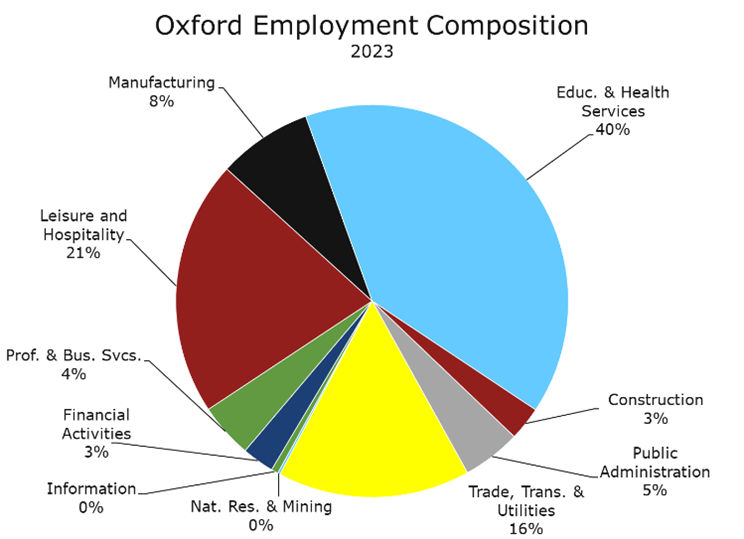
Oxford, located in central Lafayette County about 75 miles south of Memphis, Tennessee, has a population of around 28,000. Its Micropolitan area, including Lafayette County, is home to just under 60,000 people. The city’s hilly terrain and grid-patterned streets reflect its unique geographical position compared to the nearby Mississippi Delta.
Ole Miss Football
The University of Mississippi, known as Ole Miss, has a rich football history that began in 1893. Nicknamed the Rebels, the program quickly established itself in the Southern Intercollegiate Athletic Association before becoming a founding member of the Southeastern Conference (SEC) in 1933, where it remains today.
Initially facing challenges, Ole Miss gained traction in the 1930s, culminating in its first SEC championship in 1947. Under coach John Vaught, who took over that same year, the Rebels became a national powerhouse, winning three national championships (1959, 1960, and 1962) and six SEC titles. Vaught’s tenure fostered significant rivalries, especially with Alabama and LSU, and cultivated a strong, loyal fan base.
Mississippi’s population and economy were on par with its Southern neighbors in the 1930s, 40s, and 50s but steadily lost ground in subsequent decades. According to the Census, Mississippi’s 1960 population was slightly below its 1950 population, as residents relocated to more vibrant economies in the South and Midwest. That outflow made it more difficult for Mississippi to compete for top-notch talent.
Following Vaught’s retirement in 1973, Ole Miss struggled to maintain its success. However, under coaches like Billy Brewer and Tommy Tuberville in the 1990s, the Rebels experienced a resurgence, highlighted by a 13-0 victory over Air Force in the 1992 Liberty Bowl.
The 2000s were marked by further volatility. In 2008, Coach Houston Nutt led Ole Miss to a key victory over Florida and a Cotton Bowl win over Texas Tech. Nutt took the Rebels to another Cotton Bowl victory the following year but then struggled and was replaced by Hugh Freeze in 2012. Freeze led the Rebels to four straight bowl games, including their first New Year’s Six, the 2015 Sugar Bowl, where they defeated Oklahoma State 16-13 and finished 12th in the AP Poll.
After enduring NCAA sanctions that vacated much of Hugh Freeze’s success, head coach Lane Kiffin helped reinvigorate the program in the 2020s. In 2023, the Rebels achieved their first-ever 11-win season, capped off by winning the Chick-fil-A Peach Bowl. Ole Miss aggressively pursued players in the transfer portal and was a popular outsider pick to challenge Georgia, Alabama, and Texas for the SEC title. After rising to fifth in the nation, hopes dimmed following a 20-17 loss to Kentucky in the SEC opener in Week 5.
Despite the disappointing loss, Ole Miss remains in contention for the SEC title. The Rebels rebounded with a solid road victory over South Carolina and were one of the few ranked teams to perform well on the road last week. Alabama’s loss and Georgia’s earlier defeat mean the conference championship is still up for grabs. Texas and Texas A&M are the only remaining unbeatens in the SEC, and they will face off against one another the Saturday after Thanksgiving.
Ole Miss travels to 13th-ranked LSU this weekend and then has a bye before hosting 18th-ranked Oklahoma later this month. After that, they face road games at Arkansas and Georgia. Their path to the SEC Championship is challenging but not significantly more difficult than that of any other contender.
South Carolina’s road will not get easier. This week, they travel to Alabama, likely facing a determined and angry Crimson Tide team. That said, Vanderbilt showed that it is possible to run the ball against Alabama and limit their quick-strike offense.
Disclaimer: This publication has been prepared for informational purposes only and is not intended as a recommendation offer or solicitation with respect to the purchase or sale of any security or other financial product nor does it constitute investment advice.
October 7, 2024
Mark P. Vitner, Chief Economist
mark.vitner@piedmontcrescentcapital.com
(704) 458-4000
Ethan Jacobs
Economic Analyst Intern
Benjamin Jacobs
Economic Analyst Intern