
Winter Weather Restrained Home Building
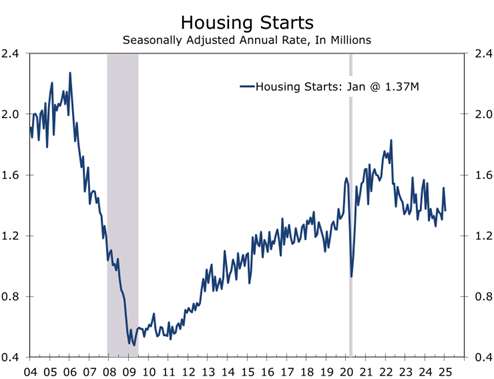
- Housing starts fell 9.8% in January to a 1.37 million unit annual rate.
- Single-family starts fell falling 8.4% to a 993,000-unit pace and multifamily starts tumbling 13.5% to 373,000-unit pace.
- Building permits, which are less impacted by the weather, edged up by 0.1% to a 1.48 million-unit pace.
- Housing completions surged by 7.6% for January, with multifamily completions up 11% year-over-year, reflecting efforts to finish projects ahead of competing projects.
- Builder sentiment, as per the NAHB/Wells Fargo HMI, fell to 42 in February, its lowest level in 5 months, reflecting concerns about high construction costs, elevated interest rates, and reduced housing affordability.
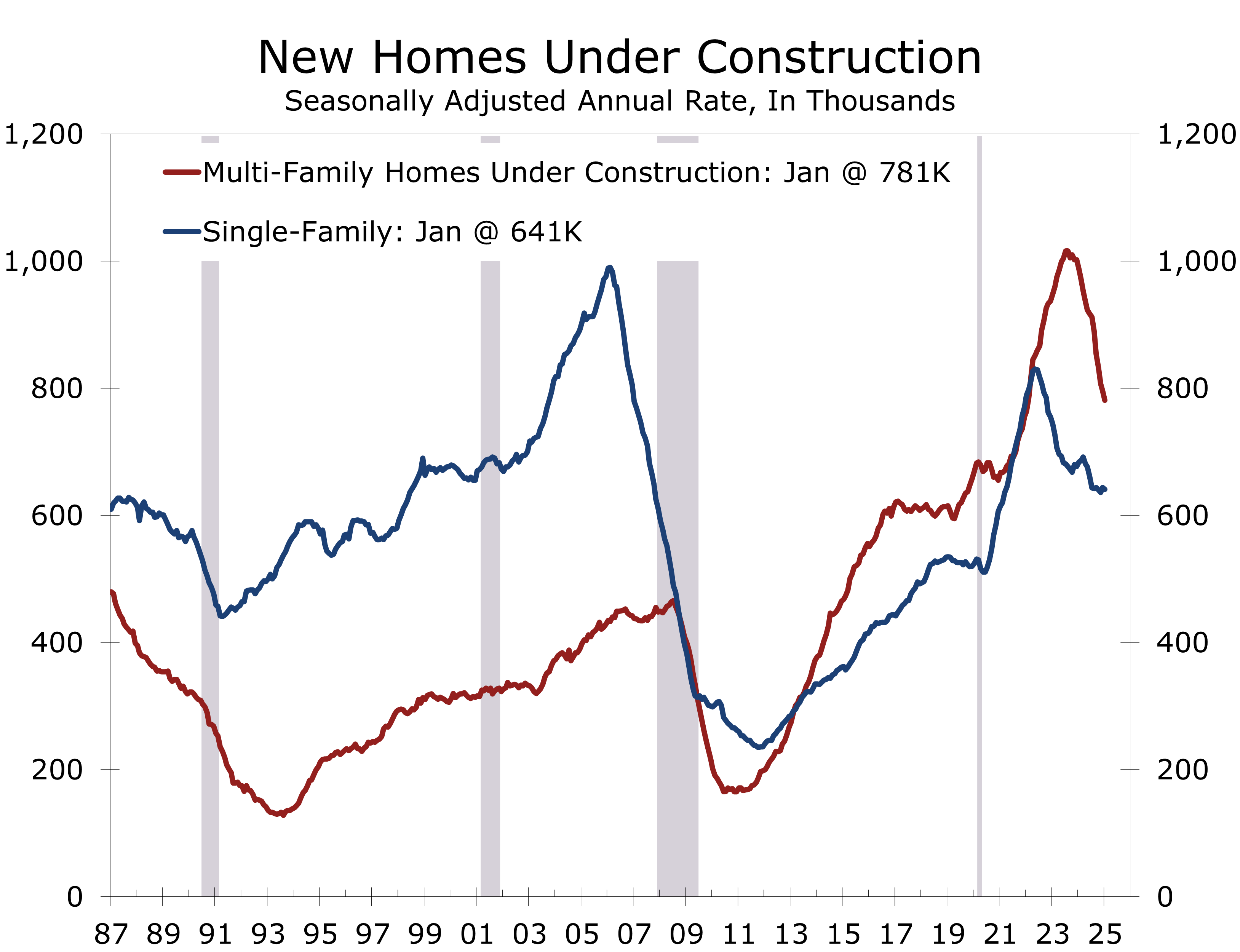
- The number of homes under construction continues to decline from its recent highs, with single-family down 6.3% from last year and multifamily down a whopping 21%.
- Homebuilding faces a challenging year. High home prices, elevated mortgage rates and a weakening labor market are weighing on buyer traffic and sales. Declining consumer, small business, and homebuilder confidence, coupled with persistent inflation and policy uncertainty, further dampen the outlook.
Home builders are beginning the year cautiously, as many would-be buyers remain on the sidelines due to persistent affordability concerns. Housing starts declined 9.8% to a 1.37 million unit pace in January, with single-family starts falling 8.4% to 993,000 units, 1.8% below their year ago pace. Multifamily starts plunged 13.5% to a 373,000 unit pace, reflecting rising vacancies, softening rents and tight credit conditions. Builder confidence also declined, and builders have scaled back sales expectations for this year.
Harsh winter weather impacted much of the country during January, which likely exaggerated the extent of the pullback. The Northeast and South saw starts tumble 27.6% and 23.3% respectively, while the Midwest endured a 10.4% drop. The supply starved West bucked the trend with a 42.3% increase, more than reversing weakness from a month earlier.
Harsh winter weather likely exaggerated January’s pullback in housing starts.
Building permits, which are less impacted by the weather, edged 0.1% higher in January to a 1.48 million unit pace, suggesting more resilience. Single-family permits remained unchanged, while multifamily edged up 0.2%. This regional variation was evident with permits decreasing 6.1% in the Northeast and slightly in the South but increasing in the Midwest and West.
The 7.6% rise in completions for January suggests builders may be accelerating projects to avoid potential cost increases from looming tariffs on lumber and other materials. Multifamily completions rebounded from last month’s decline, now running 11.1% above year-ago levels. Apartment developers appear to be rushing to finish projects before material and appliance costs rise. With nearly two apartments completed for every new start, the focus has shifted from breaking ground to finishing existing projects, easing supply shortages.
Nearly two apartments were completed in January for every apartment start.
The number of homes under construction continues to decline, with single-family units down 6.3% over the past year and permits for projects with five or more units plunging 22.5%. This slowdown in new construction will likely impact employment and Q1 GDP growth. Housing has significant ripple effects, driving demand for furniture, appliances, and services, making this decline a potential warning sign for broader economic weakness.
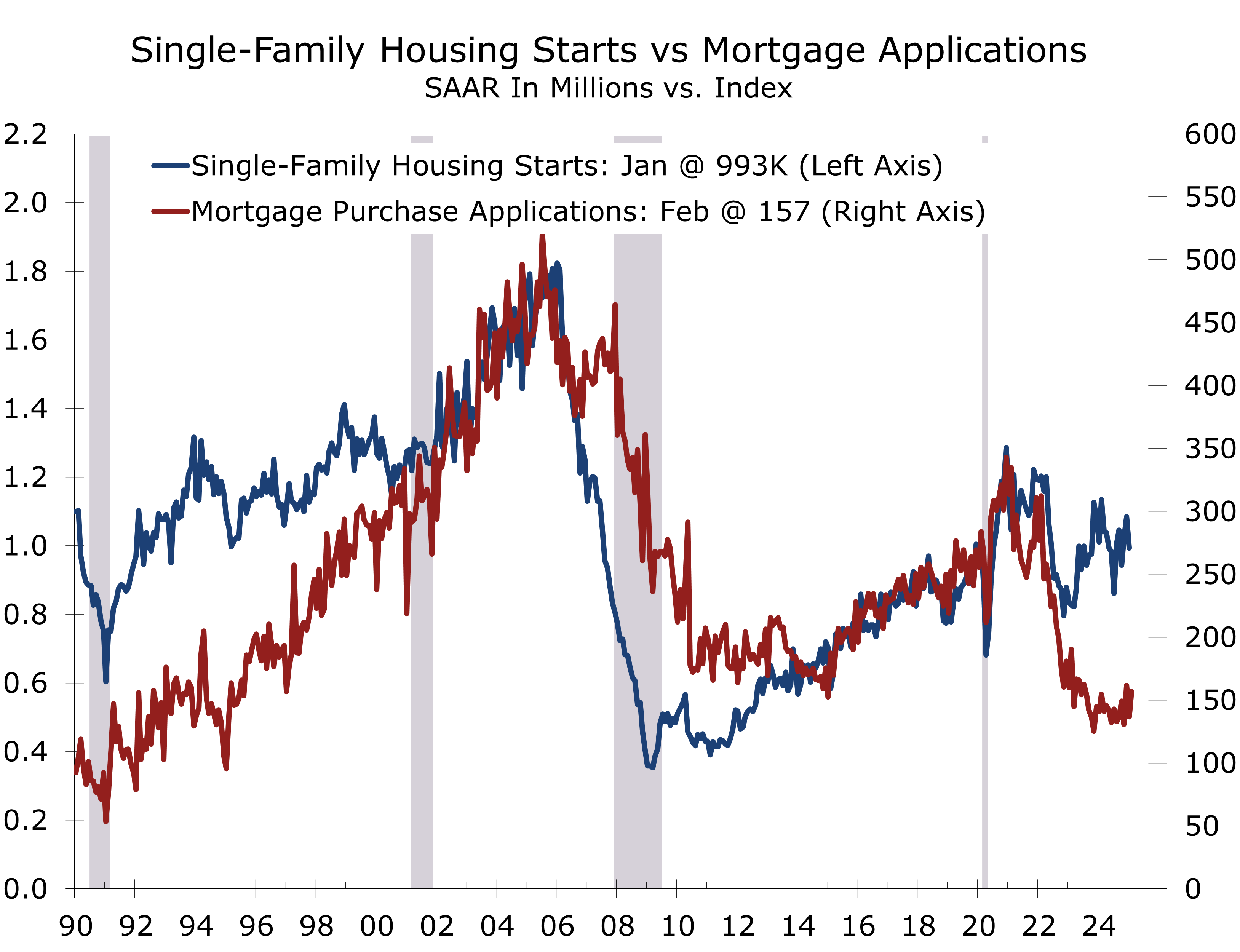
Meanwhile, home builders are increasingly focusing on single-family rentals, which accounted for 9.5% of starts last year. This trend helps explain the divergence between mortgage purchase applications and starts.
Builder sentiment, as measured by the NAHB/Wells Fargo Housing Market Index (HMI), fell to 42 in February, the lowest in five months. This decline reflects builders’ frustration with high construction costs and disappointment over the Fed’s reluctance to cut rates before the second half of the year. Persistently high mortgage rates and affordability challenges further weigh on confidence.
All three HMI components declined: current sales fell 4 points to 46, future sales expectations dropped 13 points to 46, and buyer traffic slipped 3 points to 29. While housing starts should rebound in line with permits, weakening builder confidence and harsh winter weather pose downside risks to homebuilding and construction employment this spring.
The ongoing decline in sentiment points to a slowdown in new construction, which could weigh on economic growth. While weaker growth may push bond yields lower and reduce mortgage rates, it would also likely dampen job and income growth, further restraining homebuying. Single-family starts for the rental market are also set to slow, facing the same pressures—rising vacancy rates and weakening rents—that are curbing traditional apartment construction.
Disclaimer: This publication has been prepared for informational purposes only and is not intended as a recommendation offer or solicitation with respect to the purchase or sale of any security or other financial product nor does it constitute investment advice.
February 19, 2025
Mark Vitner, Chief Economist
Piedmont Crescent Capital
(704) 458-4000