Small Business Sentiment Rises Modestly
-
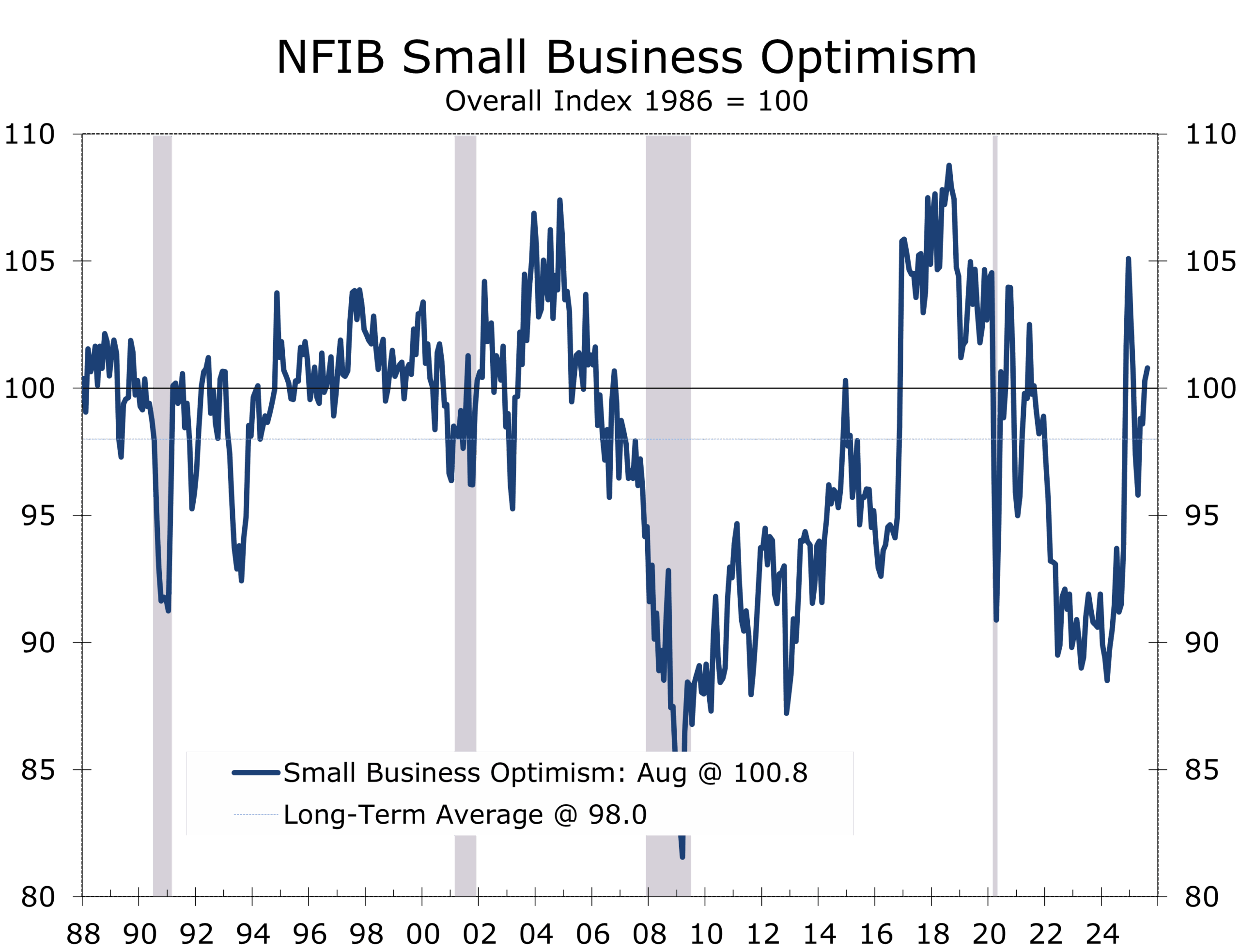
- Optimism Edges Higher: NFIB Small Business Optimism Index rose 0.5 points to 100.8, nearly 3 points above its 52-year average (98).
- Sales Outlook Improves: A net 12% of owners expect higher real sales, the strongest since early 2023 and the main driver of August’s increase.
- Tax Cuts & Trade Clarity: Sentiment boosted by the Republican tax bill and progress on bilateral trade agreements, which reduced policy uncertainty.
- Labor Still a Hurdle: 21% of owners cite labor quality as their top issue, unchanged and still the leading challenge on Main Street.
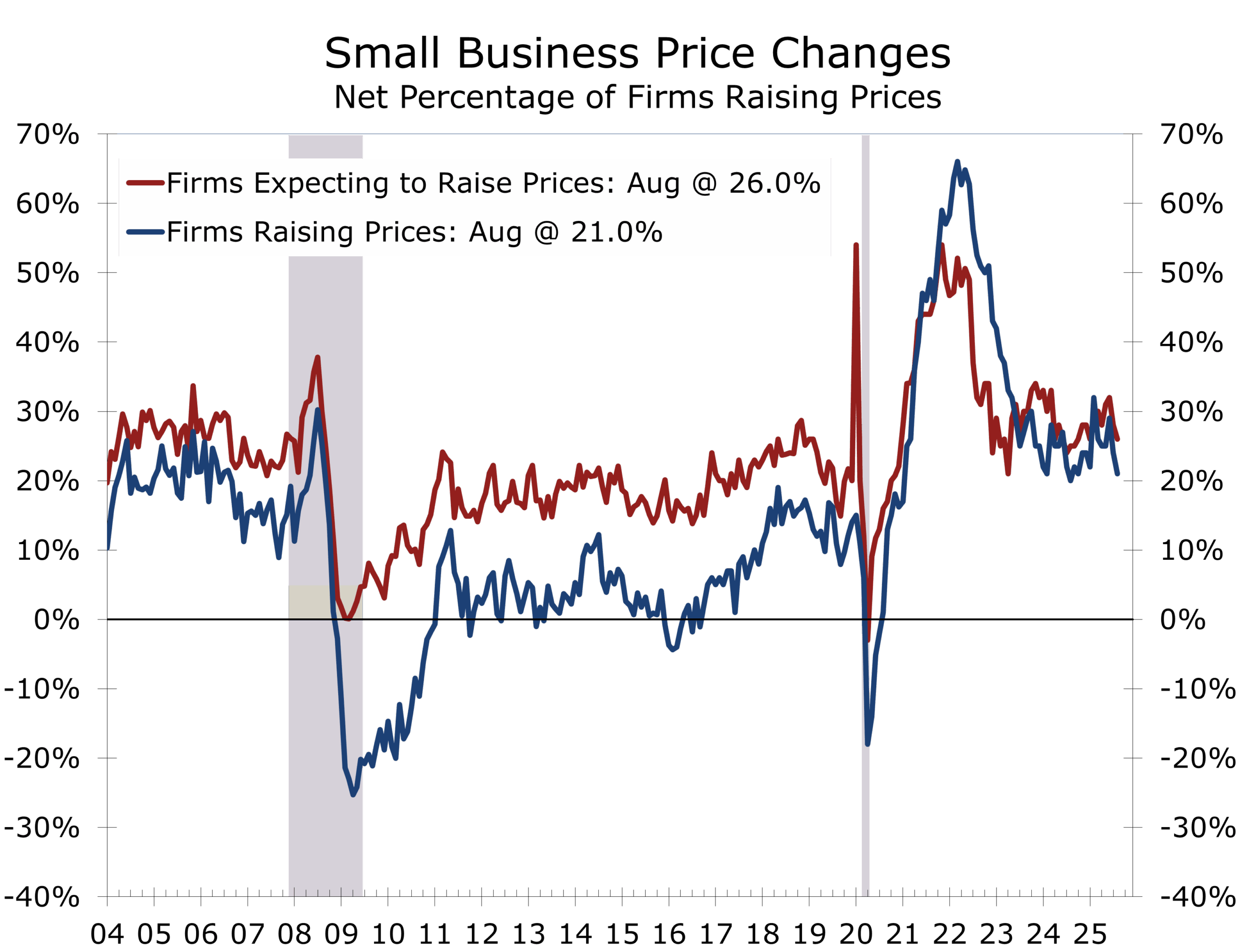
- Pricing Pressures Ease for Now: Firms raising prices dropped to 21%, the lowest level of 2025, though tariff-related costs might still resurface later.
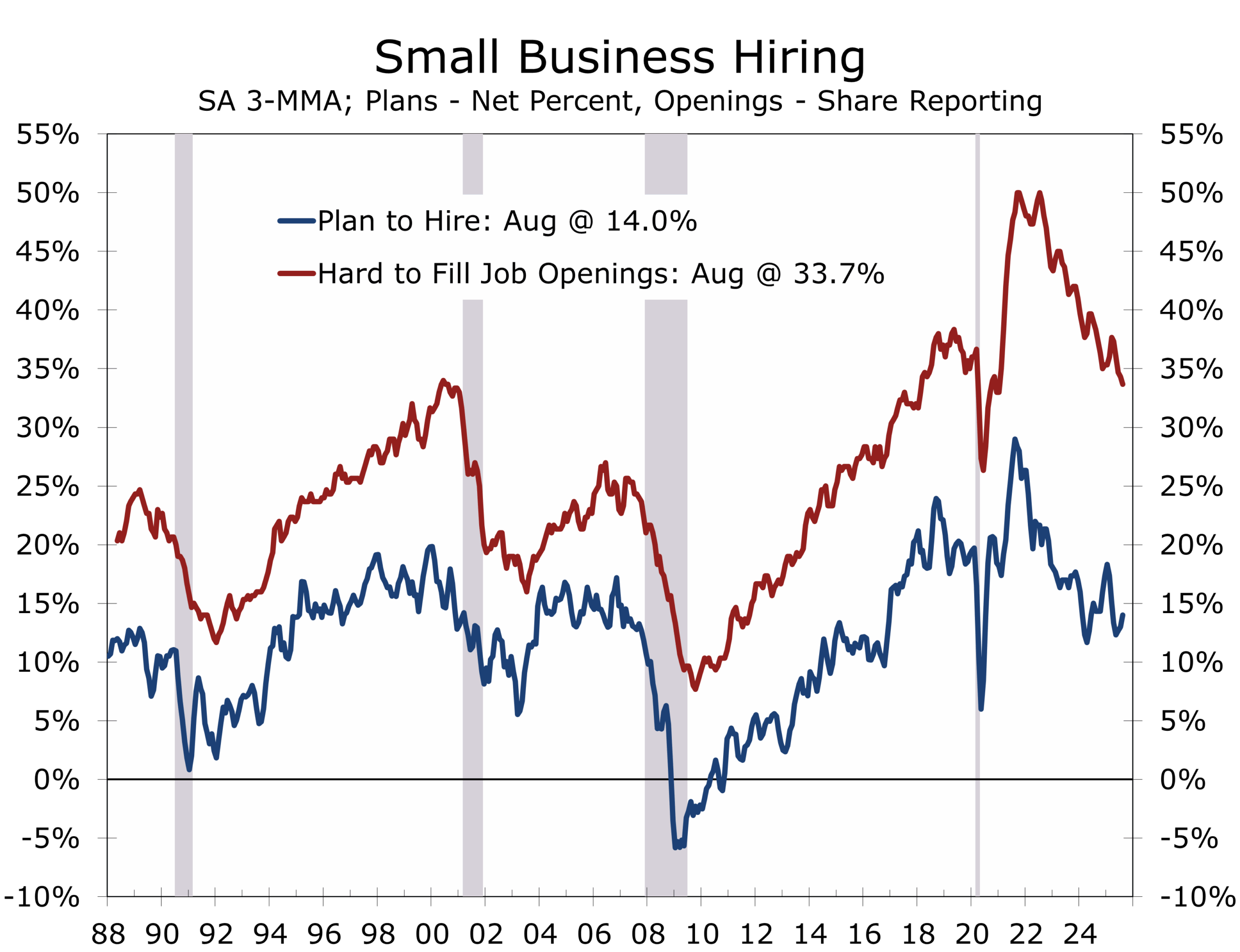
- Job Openings Signal Softening: 32% reported unfilled positions, the lowest since July 2020, hinting at cooling labor demand.
- Borrowing Costs Down: Average short-term loan rate fell to 8.1%, the lowest since May 2023.
- The August NFIB survey depicts a Main Street economy finding its footing. Rising sales expectations and reduced uncertainty point to a more stable backdrop, while softer labor pressures and easing prices suggest gradual normalization.
- Yet beneath the surface, structural challenges remain. A persistent expectations gap between business owners and workers is constraining hiring, while tariff-related cost risks threaten to re-ignite inflation later this year.
Sentiment Improves as Sales Expectations Strengthen
The August NFIB survey showed modest but meaningful improvement in small business sentiment. The Optimism Index rose to 100.8, its highest reading of the year and almost three points above its long-term average of 98. The biggest boost came from rising sales expectations: a net 12% of owners now expect higher real sales volumes, up six points from July and the strongest reading since early 2023.
Much of the improvement in the overall index was driven by “soft” components—expectations about future conditions—bolstered by the Republican tax-and-spending bill, which provided clarity around the tax treatment of business investment. Small businesses also gained confidence from progress on bilateral trade agreements with key trading partners, which eased tariff-related uncertainty. Both reflect a lessening of headwinds rather than an increase in optimism. Anticipation of near-term Fed rate cuts is also likely boosting sentiment.
Optimism reaches its highest level of 2025, supported by rising sales expectations and policy clarity
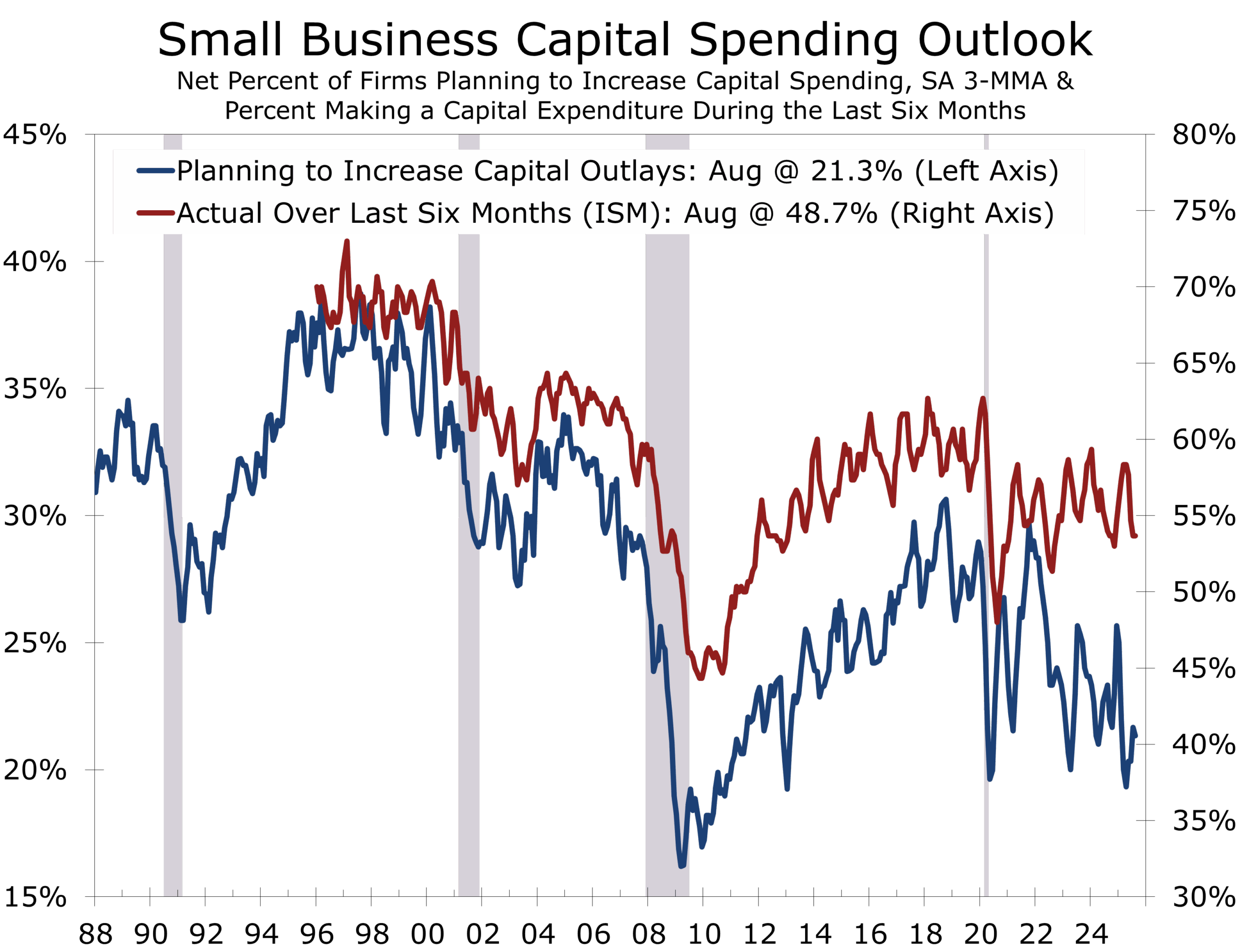
The NFIB Uncertainty Index fell by four points to 93, reflecting reduced concern about public policy and trade, which should lift capital spending. This signals that Main Street is moving past the peak of policy anxiety that followed earlier tariff and regulatory swings.
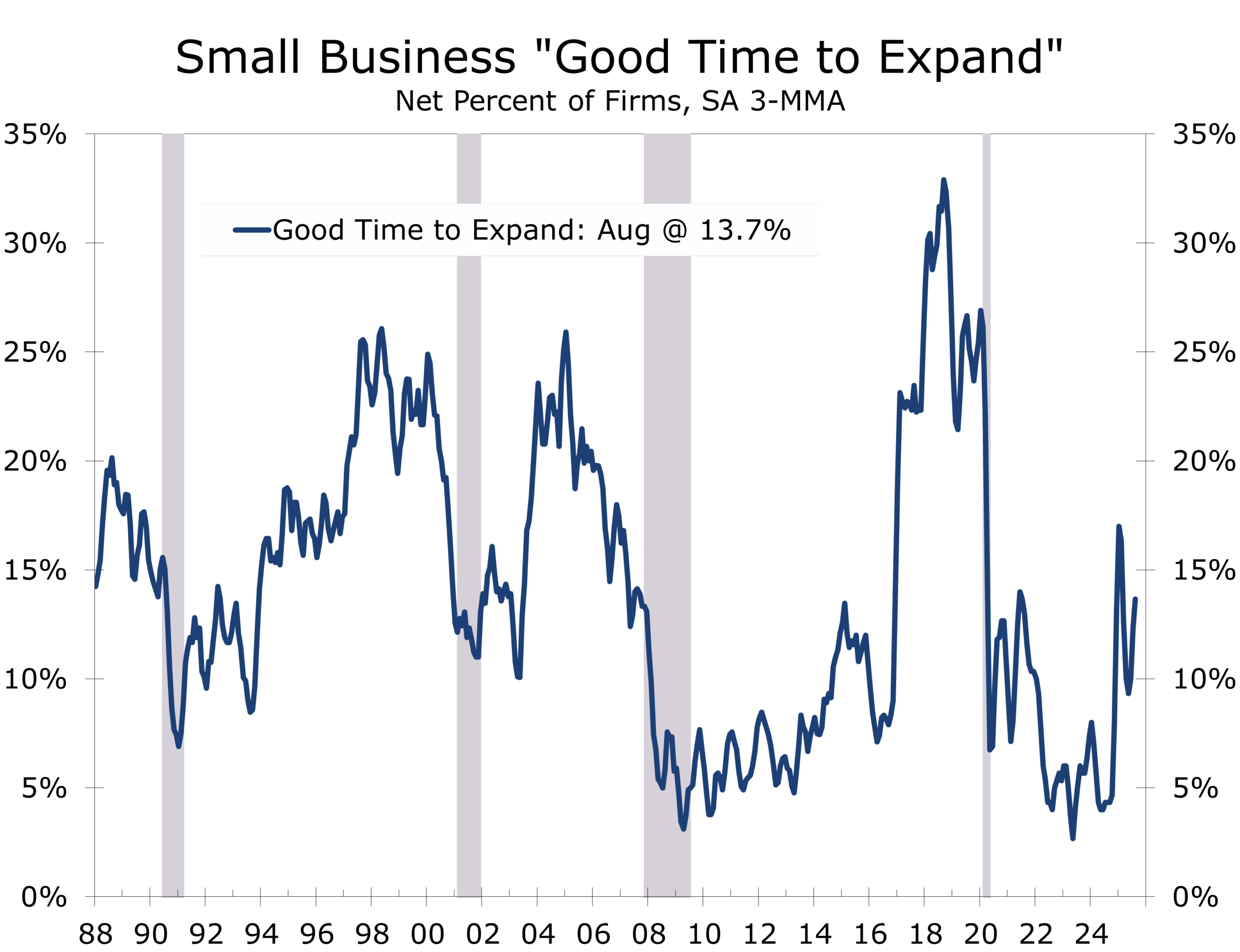
Still, only 14% of owners said now is a good time to expand, down two points from July. Taxes (17%) and regulatory burdens (9%) remain significant growth headwinds.
Rising sales expectations are encouraging, but business expansion remains limited. Optimism is being fueled by expectations of policy relief, not by actual improvements in day-to-day operating conditions.
Labor Market Cooling, but Skills Gap Persists
Small businesses continue to face labor challenges, though conditions are slowly easing. In August, 32% of owners reported job openings they could not fill, down one point from July and the lowest share since July 2020. This decline suggests a softening in labor demand, especially in construction, where unfilled openings fell sharply to 49%—down 11 points from last year’s level.
Job openings fall to their lowest since 2020, signaling cooling yet resilient labor conditions
Hiring plans ticked higher, with a net 15% planning to create new jobs over the next three months. While historically low, this marks the third consecutive monthly increase. The rise is a rare bit of good news on the employment front. Pessimism may be a bit overdone. Wage growth is slowing but not collapsing, and there has been a gradual increase in labor market slack, not the sudden surge typically seen going into a downturn.
Among firms trying to hire, 81% reported few or no qualified applicants, underscoring a challenge that extends beyond skill shortages.
The Expectations Gap:
Many small business owners view a “qualified” applicant as more than just technically skilled. Owners have poured their heart, soul, and personal capital into building their businesses, expecting employees to act as partners in growth.
Workers, however, increasingly seek defined roles, predictable hours, and competitive pay, norms shaped by corporate workplaces and post-pandemic labor trends. This mismatch has been magnified by cultural shifts toward work-life balance and the rise of remote and gig work.
The result: many workers see small business jobs as high stress for limited reward, while owners see applicants as lacking dedication. This misalignment of expectations, rather than a pure skills gap, explains why labor quality has remained the top concern in NFIB surveys even as job openings decline.
Wage pressures reflect this tension:
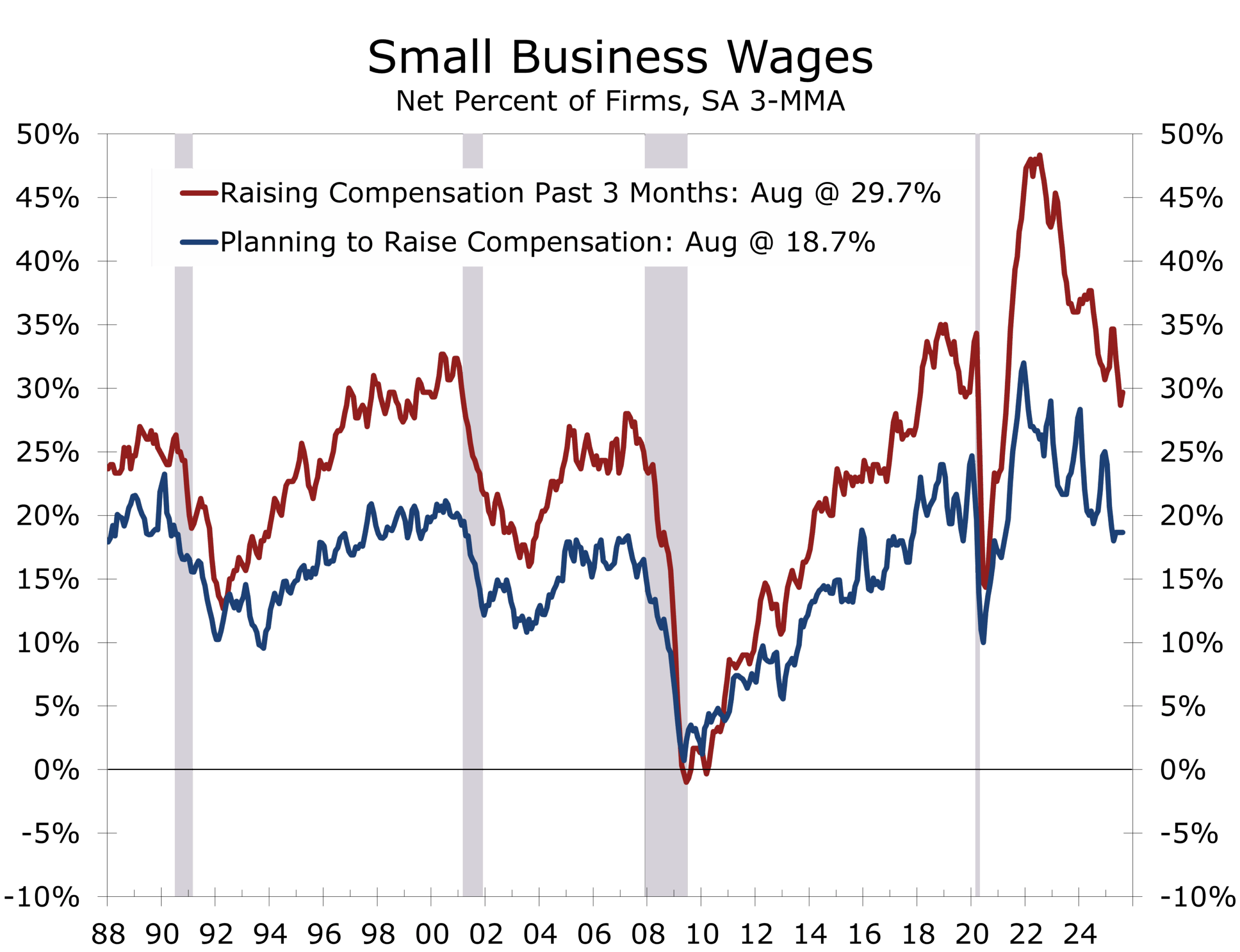
- 29% reported raising wages, up two points.
- 20% plan further wage increases, up three points, showing steady but not accelerating pay growth.
The labor market is gradually loosening, but the deeper challenge is cultural, not simply cyclical or economic. Until entrepreneurs and workers realign expectations, hiring will remain a structural constraint on small business growth, limiting how quickly Main Street can expand even as broader conditions improve.
Price Pressures and Financing Easing
Small business price pressures cooled further in August. The net share of firms raising selling prices fell to 21%, the lowest level of 2025, indicating that inflationary pressures are stabilizing. Forward-looking price plans also softened, with 26% planning to raise prices in the next three months, down two points from July. Inflation remains a concern for 11% of respondents, unchanged for the past three months.
Price hikes slow to their lowest pace of 2025, though tariff-related costs loom
Pricing behavior bears watching, as early-year inventory stockpiles built ahead of tariffs are drawn down. With tariffs in place and a weaker dollar, import prices are rising. Small businesses may face renewed upward pressure on input costs later this year.
Sales and profit performance showed modest improvement:
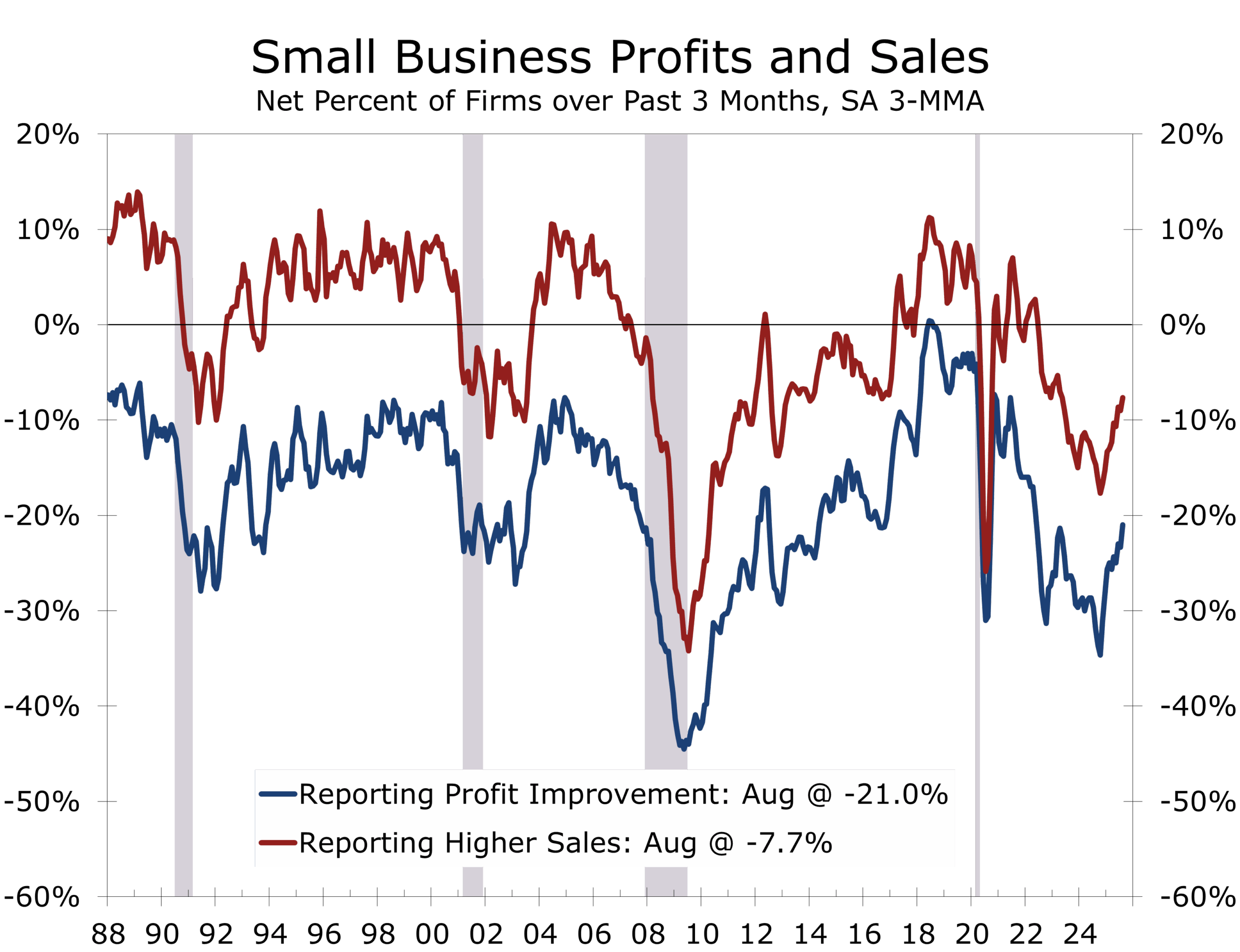
- Net negative 9% reported higher nominal sales, unchanged from July.
- Profit trends rose three points, the best reading since March 2023.
Borrowing conditions are improving:
- Average short-term loan rate fell 0.6 points to 8.1%, the lowest since May 2023.
- Only 23% reported borrowing regularly, the lowest since late 2021.
- Just 4% cited financing as their top problem, indicating limited credit stress.
We expect at least two quarter-point cuts from the Fed this year—one in September and another in December—with an additional cut possible in 2026, taking the fed funds rate to 3.50%. This easing cycle should help brake the economy’s recent downward momentum and produce a modest tailwind for small businesses in 2026.
Supply chain disruptions also continued to improve, with 54% of firms reporting some impact, down sharply from 64% in July. This easing should help stabilize margins heading into year-end.
Fewer firms hiking prices and falling borrowing costs suggest small businesses finally have some breathing room. However, renewed tariff pressures could reverse this progress, making the Fed’s upcoming rate cuts critical to sustaining growth.
The August NFIB survey depicts a Main Street economy finding its footing. Rising sales expectations and reduced uncertainty point to a more stable backdrop, while softer labor pressures and easing prices suggest gradual normalization.
Yet beneath the surface, structural challenges remain. A persistent expectations gap between business owners and workers is constraining hiring, while tariff-related cost risks threaten to re-ignite inflation later this year. With Fed rate cuts and tax reforms providing relief, small businesses are likely to hold steady through year-end, ready to seize opportunities if broader economic momentum improves.
Disclaimer: This publication has been prepared for informational purposes only and is not intended as a recommendation offer or solicitation with respect to the purchase or sale of any security or other financial product nor does it constitute investment advice.
September 9, 2025
Mark Vitner, Chief Economist
(704) 458-4000