
NC State vs Tennessee in Duke’s Mayo Classic
- Most top-ranked teams performed as expected, with #1 Georgia beating Clemson, and notable wins from Notre Dame, Southern Cal, and Alabama.
- The key matchup this week is #3 Texas vs. #10 Michigan in Ann Arbor, where Texas is favored by 7 points.
- Our spotlight game is #14 Tennessee vs. #24 NC State at the Duke’s Mayo Classic in Charlotte, with Tennessee currently favored by 9.5 points.
- Charlotte is becoming a more popular location for neutral site games, with its Uptown stadium providing walkable access to a host of hotels, bars and restaurants.
- Tennessee and NC State come from regions with strong engineering and research backgrounds. The University of Tennessee in Knoxville is near Oak Ridge National Laboratory, while NC State in Raleigh is part of the Research Triangle, home to numerous government and private research facilities.
- Both teams enter the game 1-0, although Tennessee looked impressive in their opener, while NC State struggled in theirs.
With Week 1 complete, college football is back in full swing. Florida State has been the biggest disappointment so far, losing to Georgia Tech in the final seconds in Week 0 and then falling to Boston College at home in Week 1. With Clemson, Notre Dame, and Miami still on their schedule, FSU needs to improve quickly. On the flip side, Miami looks like a breakout team after dominating Florida in Gainesville last week and is the current top pick to win the ACC.
Most top ranked teams performed as expected. #1 Georgia beat 14th-ranked Clemson 34-3, pulling away in the second half. Notre Dame narrowly defeated Texas A&M, and Southern Cal looked impressive with a 23-13 win over LSU in Las Vegas. Alabama, Ohio State, Ole Miss, and Texas all cruised against weaker opponents.
Week two’s key matchup has #3 Texas traveling to face #10 Michigan in Ann Arbor. ESPN College Gameday will be there, and Texas is favored by 7 points in the noon game on Fox.
Our spotlight game features #14 Tennessee (1-0) taking on #24 NC State (1-0) in a neutral site game at the Duke’s Mayo Classic at Charlotte’s Bank of America Stadium. Both teams are making their second appearance in the Classic and are looking for their first win there. The game kicks off at 7:30 PM and will air on ABC, with Tennessee currently a 9.5-point favorite.
While Charlotte lacks prominent powerhouse college football programs, it boasts a long and rich history in the sport. The city hosted its first college football game in the late 19th century at Latta Park, in what is now Dilworth/South End about a mile south of Uptown. North Carolina defeated Virginia Tech 32-5 in that first game in 1895. Since then, more than 160 neutral-site college football games have been played in Charlotte. Davidson University, located 19 miles north of downtown, frequently played key matchups at Latta Park, including games against South Carolina, North Carolina, and Clemson. Davidson also hosted an annual Thanksgiving rivalry game against Wake Forest during the early days of college football.
College football has become increasingly important in recent years. The city has hosted the ACC Championship game since 2010 and is also home to the Duke’s Mayo Bowl. The games are seen as a way to boost tourism during what is usually a seasonally slow period for business travel, around Labor Day, Thanksgiving and Christmas.
College football is also playing a more important everyday role. UNC Charlotte, located 8 miles north of Uptown, started a football program about 11 years ago and now competes in the American Athletic Conference, bringing teams such as Tulane, Rice, and Navy to town. Moreover, Johnson C. Smith University (JCSU) competes in the Central Intercollegiate Athletic Association (CIAA). The historically Black university is located on the edge of Uptown and played a pioneering role in HBCU football. Biddle University—JCSU’s predecessor—defeated Livingstone College in the first intercollegiate game between two HBCUs in 1892. Davidson also continues to compete at the FCS level in the Pioneer League, which includes schools such as Drake, Butler and St. Thomas (MN).
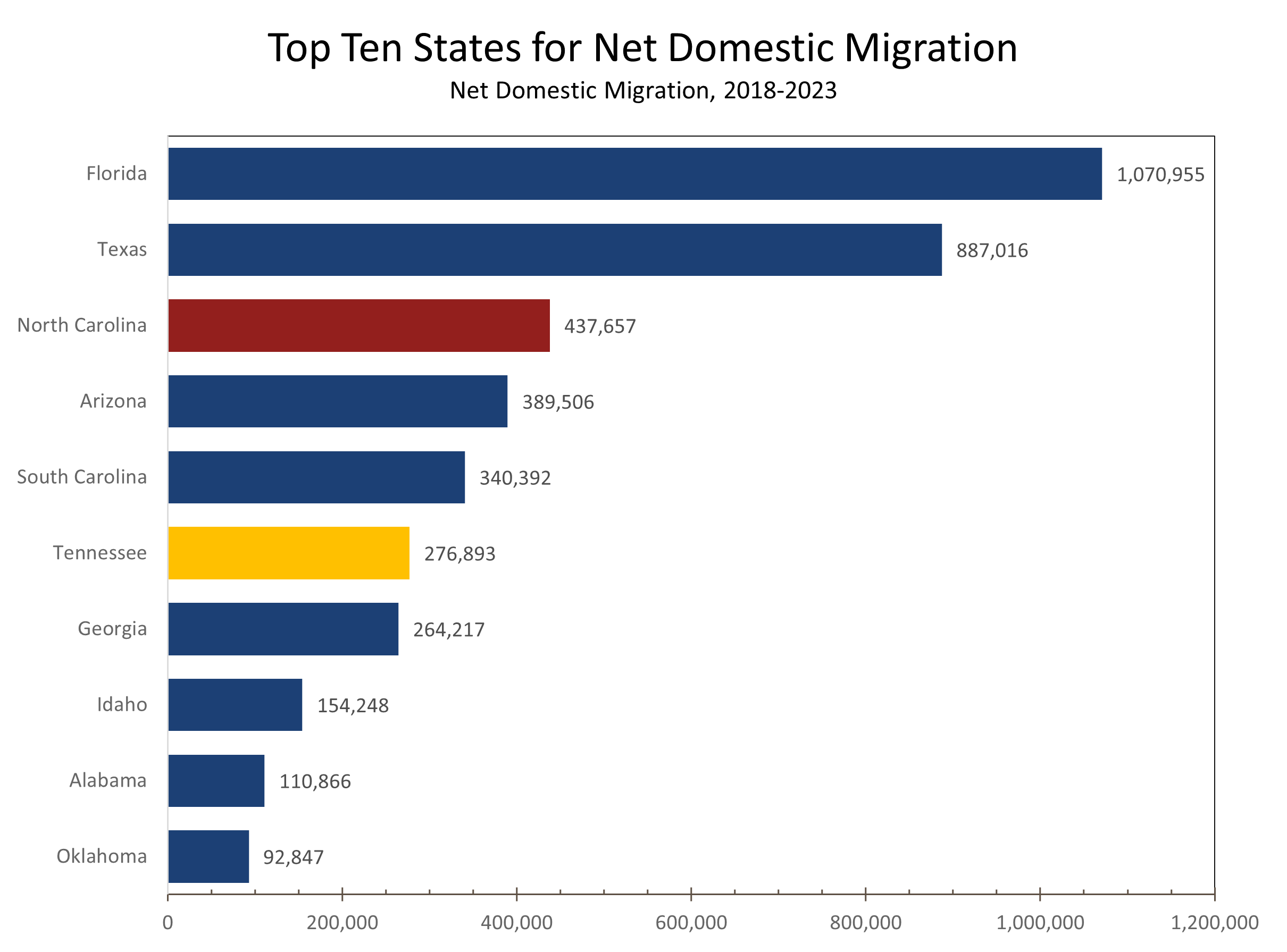
Charlotte has become one of the fastest-growing cities in the nation. Charlotte is home to 8 Fortune 500 headquarters, including Bank of America, Lowe’s, Honeywell, Nucor and Truist. The Charlotte area adds 117 new residents each day and is currently home to 2.8 million residents. The broader CSA population is closer to 3.4 million. The influx is largely driven by opportunities in the tech and financial sectors.
The region’s economy shows little sign of slowing. In addition to its financial sector, Charlotte is diversifying, with $4 billion in development projects, including the 2024 completion of the Wake Forest University School of Medicine – Charlotte. This school will anchor the $1.5 billion Pearl District, a hub for health sciences and technology, located on the southern edge of Uptown.
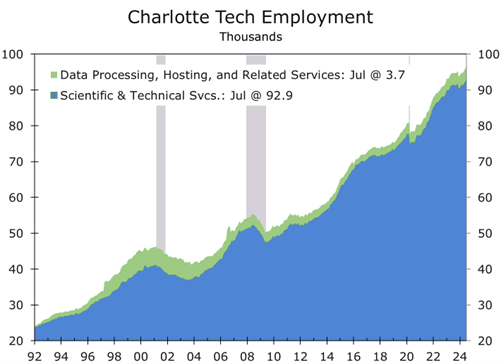
The Charlotte region is also landing a great deal of industrial development. Eli Lilly is nearing completion of a new $2 billion pharmaceutical plant, that will make medicines to combat obesity and diabetes. The plant will employ more than 600 workers and should begin shipping product early next year. Siemens is also expanding its presence in Charlotte, investing more than $100 million to repurpose and expand a plant in Charlotte to produce Large Power Transformers, a critical element in the nation’s power grid.
The city’s sports and media landscape is also evolving. The SEC Network operates out of ESPN’s Charlotte studios, and in 2023, the Atlantic Coast Conference (ACC) relocated its headquarters to the city after 70 years in Greensboro. The ACC’s move, supported by $15 million in incentives, commits to hosting major championships in the region, including the ACC football title game through 2030 and five basketball championships by 2032.
The economic impact of college football in Charlotte is substantial, with the Duke’s Mayo Classic alone contributing $50 million annually. This year’s sold-out game between NC State and Tennessee is expected to drive further economic activity, filling hotel rooms and boosting local businesses. Overall, college sports generate around $100 million annually for the city, and even more when Charlotte hosts the ACC or NCAA tournaments, solidifying its position as a top destination for major sporting events.
The University of Tennessee & Knoxville
The University of Tennessee, Knoxville, founded in 1794 as Blount College, has been pivotal in shaping Knoxville and its region. Initially a seminary led by Rev. Samuel Carrick, it faced financial struggles and closed after his death in 1807. Reopening in 1820 as East Tennessee College, it expanded with 40 acres of new land. After the Morrill Act of 1862, the college received federal funding to bolster its science and engineering programs, and in 1879, it was renamed the University of Tennessee, reflecting its growing stature.
In the 20th century, the University grew rapidly, particularly under President Brown Ayres, who added medical and dental colleges. In the 1960s, President Andy Holt further advanced the university’s research capabilities by partnering with Oak Ridge National Laboratory, fostering collaboration in nuclear science, space exploration, and advanced manufacturing. Holt also established the UT Space Institute and fully integrated Black students, enhancing diversity. The latter part of the century saw continued growth, including the expansion of veterinary and nursing schools, and deeper ties with Oak Ridge.
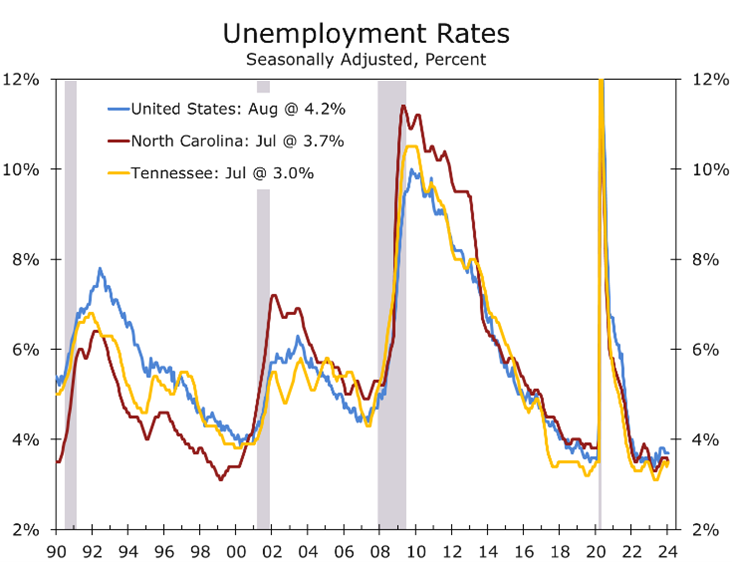
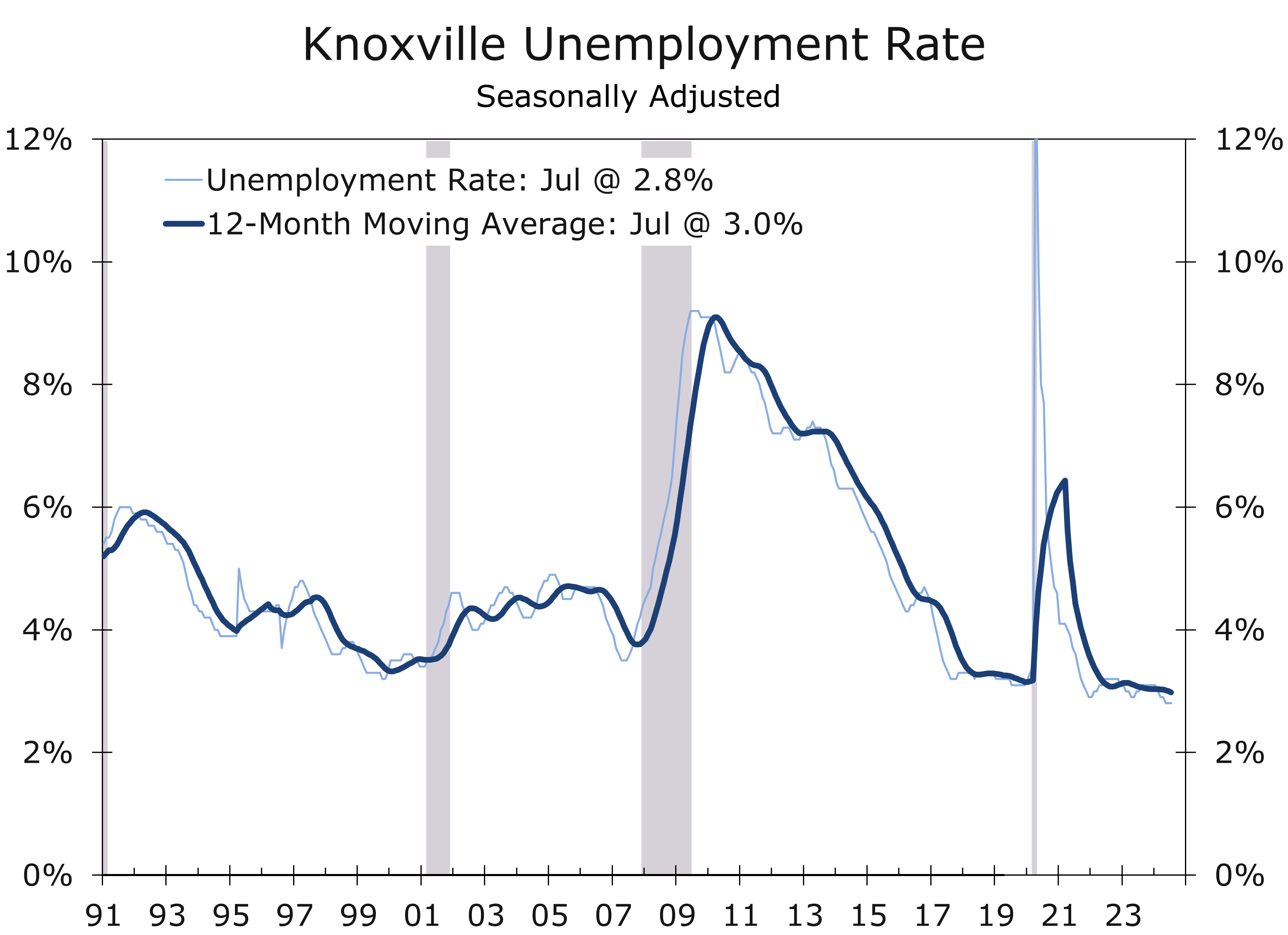
The University’s success has fueled Knoxville’s economic growth, initially driven by its location on the Tennessee River and railroad access, making it a key distribution hub. After the Civil War, Northern businessmen established thriving iron and textile industries, making Knoxville the third-largest wholesale center in the South. Though political turmoil slowed revitalization efforts, the University provided stability by attracting students, researchers, and businesses. Its partnership with Oak Ridge and leadership in healthcare, agriculture, and technology have kept Knoxville resilient. The city’s unemployment rate consistently remains below the national average, and job growth has averaged 1.7% annually over the past decade.
Today, Knoxville’s economy is diverse, with major contributions from education, research, healthcare, and manufacturing. The metropolitan area is home to around 950,000 residents and the broader CSA population tops 1.2 million. The University of Tennessee remains central to the city’s economic identity, fostering a culture of innovation and providing a steady pipeline of talent to support local industries. Additionally, major employers such as Pilot Flying J, Clayton Homes, The Discovery Channel, and Tennessee Valley Authority (TVA), along with the tourism draw of the Great Smoky Mountains National Park and Tennessee athletics anchor Knoxville’s economic landscape. This balance of education, industry, and tourism positions Knoxville as a vibrant and growing city, with the University of Tennessee continuing to play a pivotal role in its development.
The University of Tennessee football program began in 1891, playing its first game against Sewanee. Over time, Tennessee developed into a powerhouse, particularly under head coach Robert Neyland, who led the team to its first national title in 1938. Neyland’s influence helped establish Tennessee as a football force, with Neyland Stadium named in his honor.
The team adopted the nickname “Volunteers” from Tennessee’s moniker as “The Volunteer State,” which dates back to the War of 1812, when Tennesseans earned a reputation for answering the call to serve in large numbers. This spirit of volunteerism has been central to the university’s identity and tradition, symbolized by the football team’s nickname and ethos.
Tennessee was a founding member of the Southeastern Conference in 1932 and has won 13 SEC championships ranking third behind Alabama and Georgia. The Vols also claim 6 national titles, including 2 of in the AP Poll era, with notable players like Peyton Manning and Reggie White contributing to the program’s storied history.
Recent years have seen the Vols regain some of their previous swagger. Josh Heupel enters his fourth season as head coach with high expectations, even though 2024 is somewhat of a rebuilding year. Heupel’s 27 wins in his first three seasons mark the best stretch since Phil Fulmer’s early 2000s teams. The 2024 squad faces challenges with a new quarterback, running back, and a host of new faces on defense. Offensively, the Vols will maintain their fast-paced attack, led by promising QB Nico Iamaleava, who looked solid this past week, along with key returning players like Squirrel White and Bru McCoy. Defensively, they will rely on a strong pass rush.
To contend for the SEC Championship, the Vols need to be more consistent and disciplined, as penalties have been an issue in recent years. Tennessee looked strong in their 69-3 win against Chattanooga, and NC State will provide a good test ahead of the Vols’ conference opener at Oklahoma on September 21. The Vols have a difficult but manageable schedule, hosting Alabama at home on October 19 and traveling to Athens to battle Georgia on November 16.
NC State & Raleigh
North Carolina State University (NC State) is located in Raleigh, North Carolina, and is a key contributor to both the local and state economies. Established on March 7, 1887, as the North Carolina College of Agriculture and Mechanic Arts, the university was renamed North Carolina State University at Raleigh in 1965, although most people just call it NC State. The University is a key pillar of the Research Triangle, alongside Duke University and the University of North Carolina at Chapel Hill and is a major hub for research and innovation.
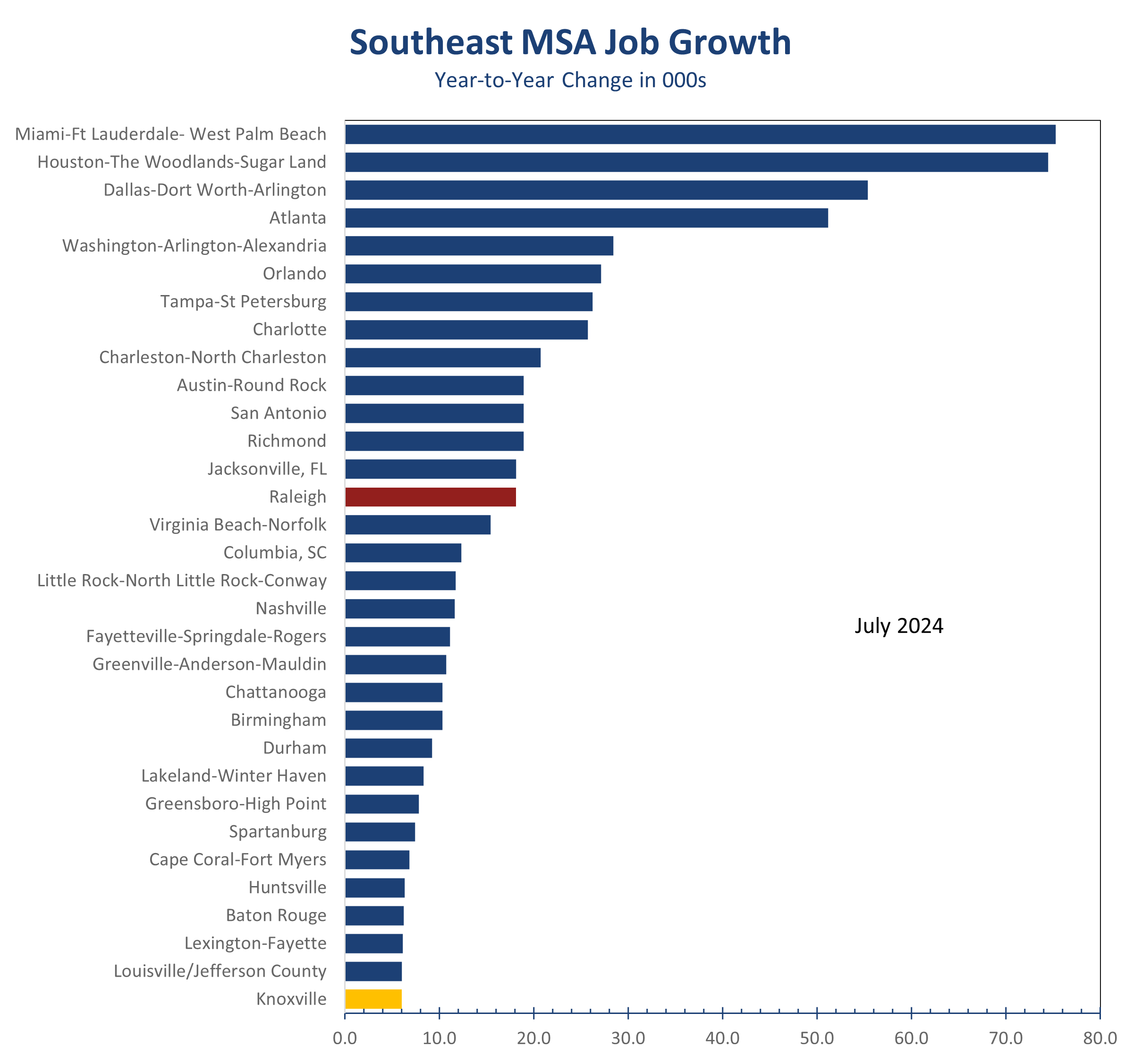
Raleigh consistently ranks as one of the nation’s fastest growing metropolitan areas, bolstered by its status as a prominent tech hub and research center. The city has seen robust expansion in its technology and life sciences sectors, with several high-profile companies and startups establishing or expanding their presence in the area. The metro areas is home to 1.5 million residents and adds about 80 residents a day. The Raleigh-Durham-Cary CSA population is closer to 2.4 million. The influx of talent and investment has helped propel job growth and drive demand for new homes and apartments.
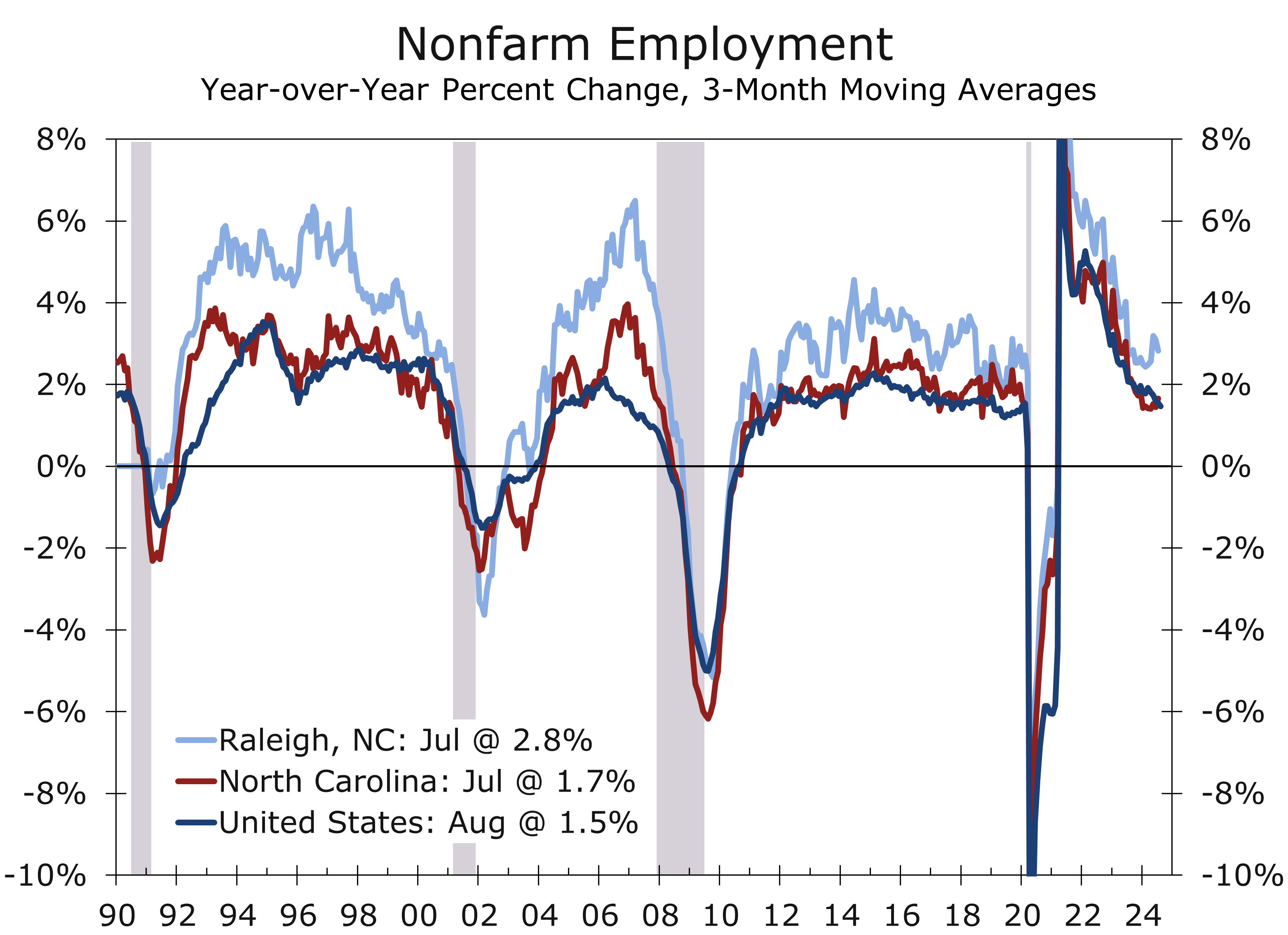
Notable projects announced this past year include Novo Nordisk’s $4.1 billion investment in Clayton, adding 1,000 jobs. The new facility, one of the company’s largest manufacturing investments, will span 25 football fields and produce medications for obesity and chronic illnesses. Fujifilm Diosynth also announced a $2.7 billion biomanufacturing facility in Holly Springs, expected to create 1,300 jobs. Other notable industrial projects include a massive new $5 semiconductor plant for Wolfspeed in nearby Siler City. Raleigh’s economy remains strong, with nonfarm payrolls rising 2.5% over the past year, and the unemployment rate remaining low at just 3.8 %.
With over 35,000 students, NC State is the largest university in the Carolinas and is classified as an “R1: Doctoral Universities – Very High Research Activity,” and ranks as one of the nation’s top research universities. NC State is strong in numerous fields, including engineering, statistics, agriculture, life sciences, and textiles and it offers a wide range of undergraduate and graduate programs.
One of the university’s most successful recent initiatives is Centennial Campus, a sprawling 1,334-acre research and development area right next to the main campus. This campus is home to over 75 companies and government agencies, including National Institute of Environmental Health Sciences (NIEHS), the Environmental Protection Agency EPA, and the National Security Agency (NSA). The campus supports more than 200 startups and spinoffs. All this activity contributes about $6.5 billion a year to North Carolina’s economy.
NC State is a founding member of the Atlantic Coast Conference (ACC), dating back to 1953, and has racked up seven conference championships (1957, 1963, 1964, 1965, 1973, and 1979). Their all-time record stands at 614-579-46. Since 1966, the team has played its home games at Carter–Finley Stadium, the largest college football stadium in North Carolina.
The Wolfpack has a rich history, starting with their first intercollegiate game against the University of Tennessee in 1893 and their first televised game against Maryland in 1950. Earle Edwards became the head coach in 1954 and is still remembered as the longest-tenured coach in Wolfpack history. Under his leadership, the team won five ACC championships and Edwards was named ACC Coach of the Year four times.
The team continued to shine under Lou Holtz, who left for the NFL after four seasons, and Bo Rein, who led the Wolfpack to its last ACC championship before his tragic death in a plane crash in 1979. After a rough patch, the team bounced back in the late 1980s and has remained competitive, especially under Dave Doeren, who is now in his 12th season.
Last season, the Wolfpack ended with a solid 9-4 record, including six wins and two losses in conference play. While their defense was impressive, the offense struggled in some crucial games. To fix this, NC State has brought in some exciting new talent through the transfer portal, including quarterback Grayson McCall (Coastal Carolina), wide receiver Noah Rogers (Ohio State), and running back Jordan Waters (Duke). The influx of new talent might explain the slow start in their opener, when the Wolfpack struggled against Western Carolina. NC State trailed slightly going into the fourth quarter, before scoring 21 points to win 38-21.
The key question for this Saturday is whether NC State can slow down Tennessee’s high-powered offence. The line on the game has widened as clips from last Saturday’s games have circulated. Our sense is this game will be relatively close, but we give Tennessee the edge because of their more potent offense and NC State’s less impressive week 1 showing against Western Carolina.
Disclaimer: This publication has been prepared for informational purposes only and is not intended as a recommendation offer or solicitation with respect to the purchase or sale of any security or other financial product nor does it constitute investment advice.
September 6, 2024
Mark P. Vitner, Chief Economist
mark.vitner@piedmontcrescentcapital.com
(704) 458-4000
Ethan Jacobs
Economic Analyst Intern
Benjamin Jacobs
Economic Analyst Intern