
How Much Softer Will Georgia’s Economy Get?
- Higher interest rates weighed on the economy’s most cyclical sectors during the first half of 2024.
- Hiring has slowed overall, with the bulk of growth now coming from less cyclical sectors, such as health care, social services, leisure, hospitality, and government.
- The weakness in the goods sector has weighed on Georgia’s manufacturing and logistics sectors. The state’s large motion picture industry is also working through a lull following the writers’ and actors’ strikes.
- Large numbers of people and new industry continue to move to the state, helping sustain strong momentum in residential, commercial, and industrial development.
- The Fed is poised to cut interest rates, which should lift home sales and housing-related industries. Georgia also continues to invest for its future, with extensive investments in infrastructure and higher education.
- The recent lull in Georgia’s economy should continue into the second half of this year. The buildout of EV plants, data centers and key infrastructure is providing a huge lift to construction. Hiring should strengthen by early 2025, as lower interest rates spur home buying and lift housing-related industries.
Higher interest rates cooled off Georgia’s economy during the first half of 2024, proving once again how monetary policy works with a lag. The Federal Reserve began to raise interest rates in March 2022 and the full impact of those rate hikes became evident this spring.
Nationally, real GDP growth slowed from a torrid 4.2% pace in the second half of 2023 to just a 2.1% pace in the first half of 2024. Job growth slowed from 250,000 net new jobs a month in 2023 to just 170,000 per month during the second quarter, while the nation’s unemployment has risen 0.6 percentage points since the start of the year to 4.3%.
After rebounding from the pandemic, Georgia’s economy has cooled along with the nation.
Georgia’s economy cooled off during the first half of 2024. Job growth slowed to just 1.3% on a year-over-year basis from 2.9% a year ago. Job growth is roughly in line with other states but slightly trails the nation. The state’s unemployment rate rose slightly to 3.2%.
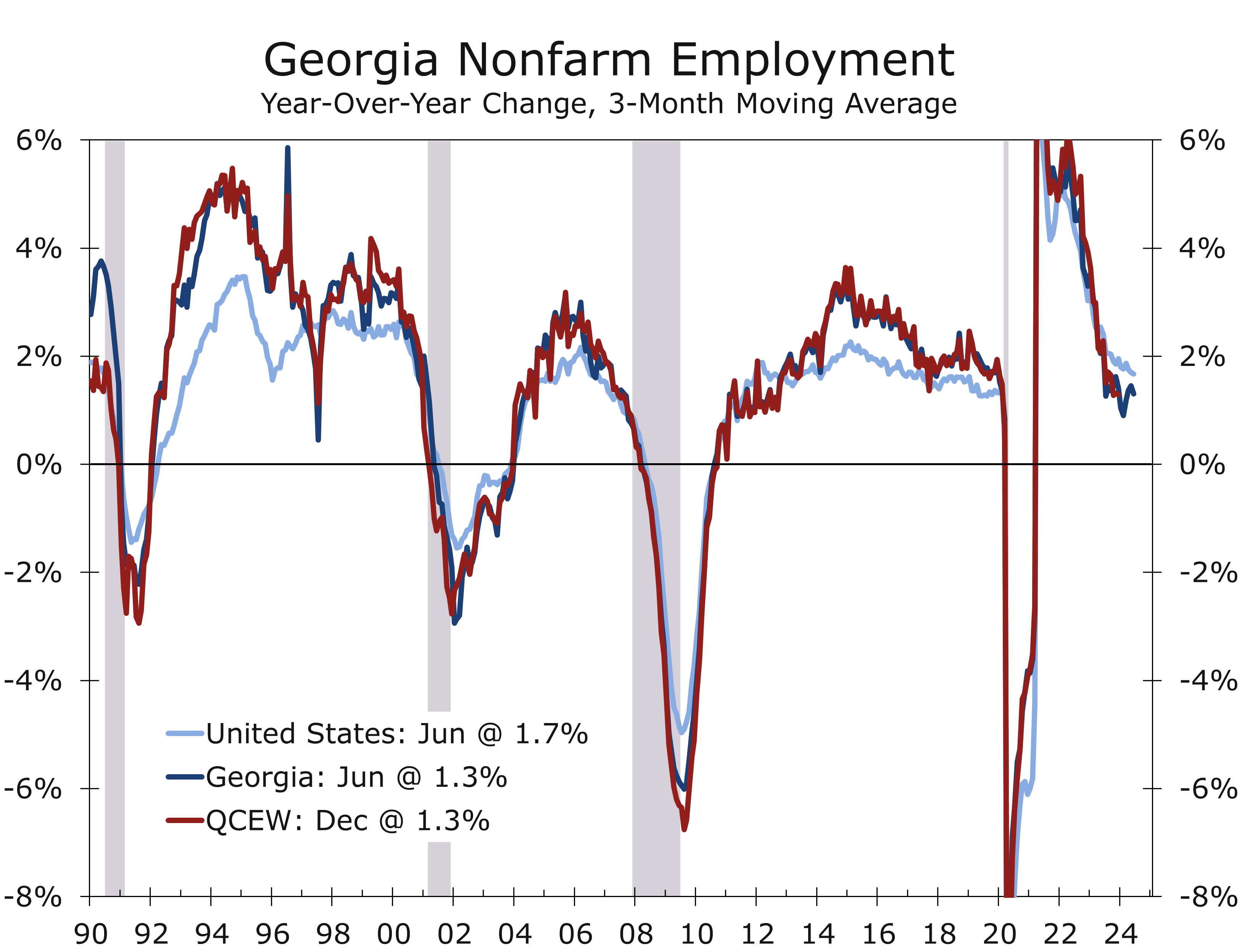
Businesses created 41,600 net new jobs this past year, driven by hiring at hotels, restaurants, and healthcare providers. The public sector also grew, with federal, state, and local governments adding 22,600 jobs. Georgia’s manufacturing and logistics sectors have slowed, however, as consumer spending shifted towards services. The long-running slump in existing home sales and weakening residential construction are also weighing on Georgia’s large floor coverings, home improvement and building products sectors.
While overall job growth remains robust, most new jobs are being added in occupations where workers must physically be at work and pay relatively low wages. Some of the largest gains have been at restaurants and bars, doctors’ and dentists’ offices, social services agencies and home healthcare providers. Government jobs are also heavily weighted toward jobs that require physical tasks such as sanitation and maintenance workers, and bus drivers.
The split in job growth is striking. Leisure and hospitality, education and healthcare, and government collectively comprise 39% of Georgia’s employment base but have accounted for virtually all the new jobs created over the past year. Other industries have lost a combined 3,200 jobs over this period and this split has been evident for the past year. The same trend has persisted nationally, albeit to a slightly lesser degree.
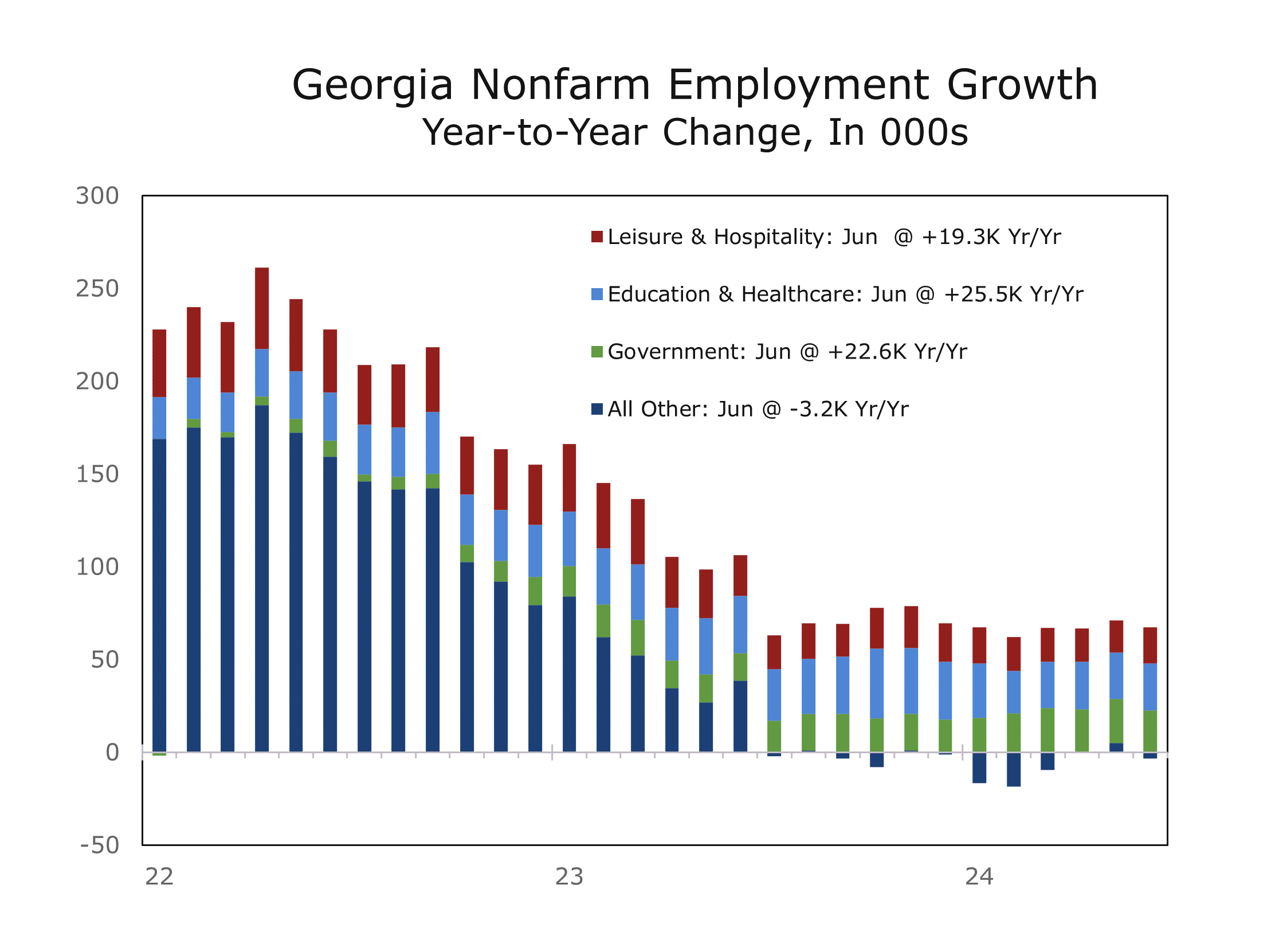
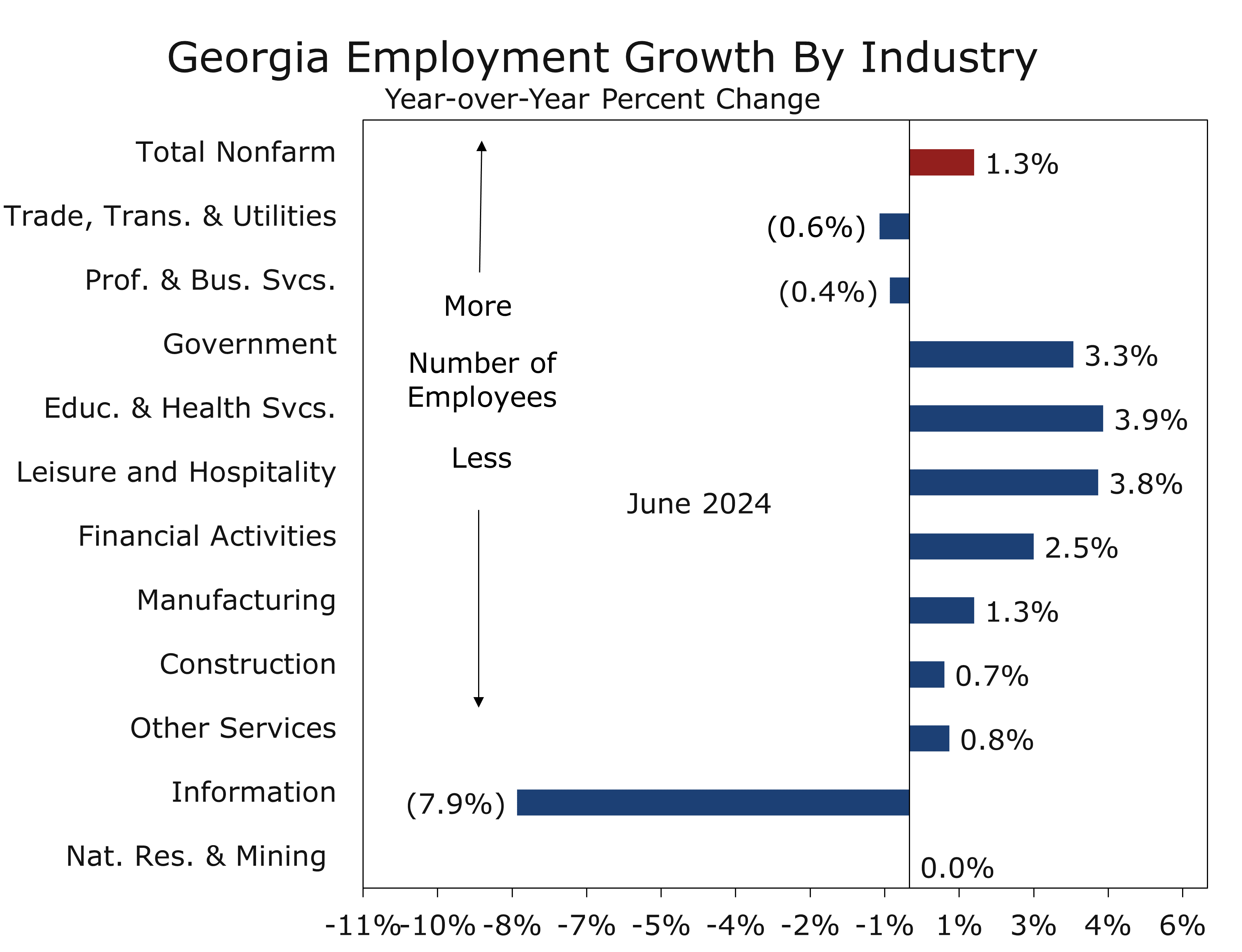
While statistically, employment in leisure & hospitality, education and healthcare, and government has accounted for all of Georgia’s job growth this past year, the underlying details show most industries still added staff last year. The split in overall job creation results from outsized losses in a handful of Georgia’s largest industry employment supersectors.
Georgia’s job gains and job losses are highly concentrated in a handful of industries.
Trade, Transportation and Utilities is Georgia’s largest employment supersector, including everything jobs at Walmart, Publix, Sysco Foods, Delta Airlines and Georgia Power, as well as myriads of warehouses and distribution centers lining the highways leading into and out of Atlanta and near the Port of Savannah. This supersector accounts for 21% of all jobs in Georgia.
Retail trade accounts for about half the jobs in the supersector and has seen hiring slow significantly this past year, as spending has shifted from goods purchases to experiences such as travel, concerts, sporting events, and services like healthcare. Transportation and warehousing account for just over a quarter of the supersector’s employment base and have seen employment fall by 2.5% this past year, reflecting the global goods recession. Employment at utilities has remained essentially flat.
Professional and business services are another large employment supersector that have lost jobs over the past year. This sector includes a broad range of categories, from professional, scientific, and technical services—encompassing everything from lawyers, architects, and accountants to software engineers, researchers, and IT consultants—to the management of corporate enterprises, primarily involving jobs at corporate and regional headquarters. Additionally, it includes administrative, maintenance, and support services, which cover a variety of roles such as office administration, human resources, security services, and cleaning and waste disposal.
Georgia’s large professional services sector has slowed, as employers have tightened their belts.
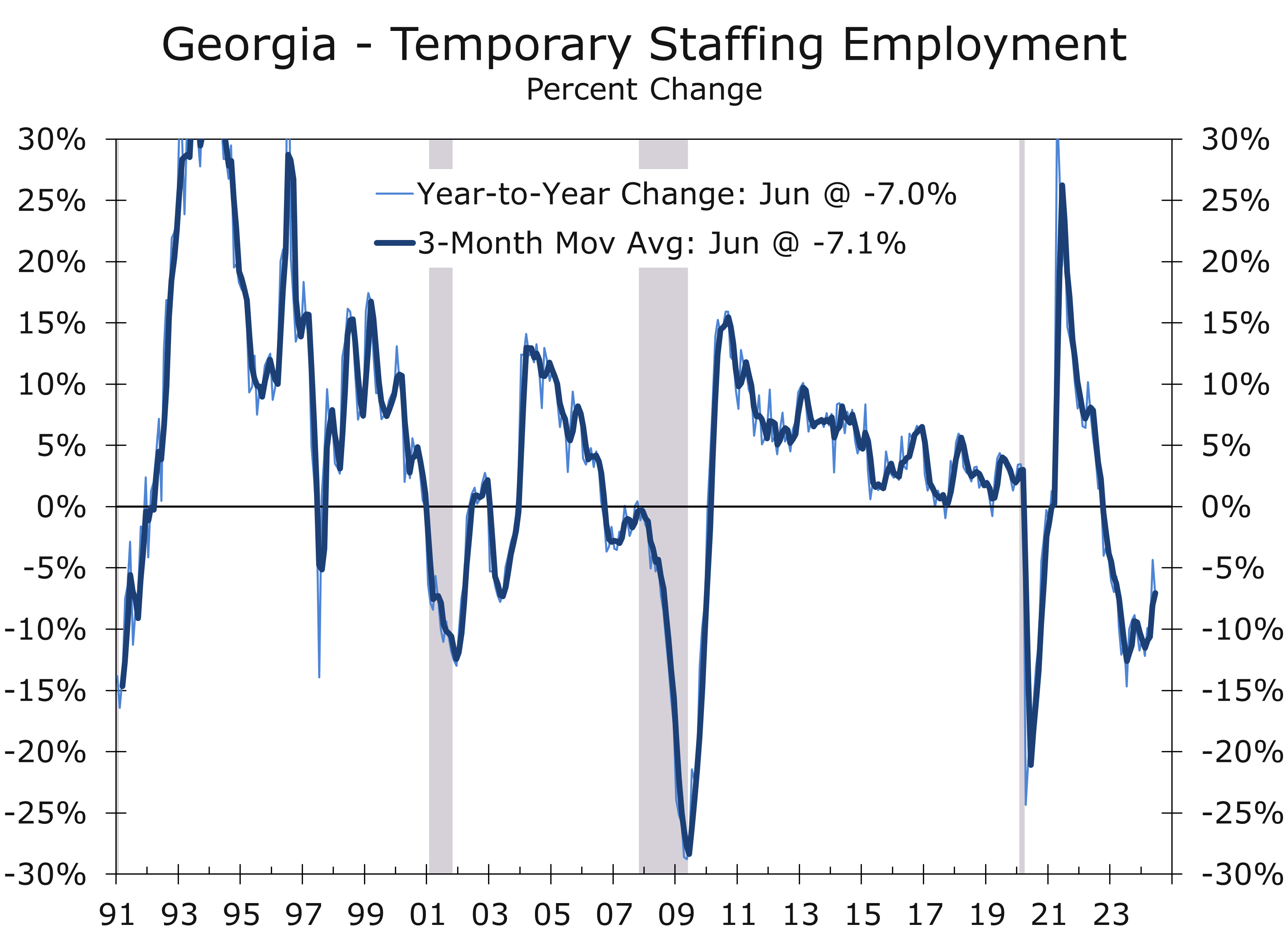
Among the three major subgroups, employment in professional, scientific, and technical services has fared the best, with employers adding 9,000 jobs over the past year, primarily driven by growth in Atlanta’s tech sector. However, employment at regional headquarters has slowed, with major employers like NCR Voyix, UPS, Intuit, and Home Depot reducing staffing. The most significant shift has been in administrative positions, which lost 14,700 jobs due to decreased demand for temporary workers at warehouses, distribution centers, manufacturers, and corporate offices.
Georgia’s information sector experienced the steepest job loss this past year, with payrolls plunging 7.9% and resulting in 9,500 fewer jobs. Despite being the state’s smallest employment supersector, it carries significant challenges and a high profile.
Though often associated with tech workers, the information sector also includes telephone and cable companies, newspapers, TV and radio broadcasters, and publishing. These industries, particularly in Atlanta, have faced sluggish growth and layoffs due to intense competition from digital streaming.
Conversely, data processing and hosting are continuing to grow. A surge in data center construction, driven by increasing AI demands, underscores Atlanta’s strategic position as one of the nation’s key internet hubs.
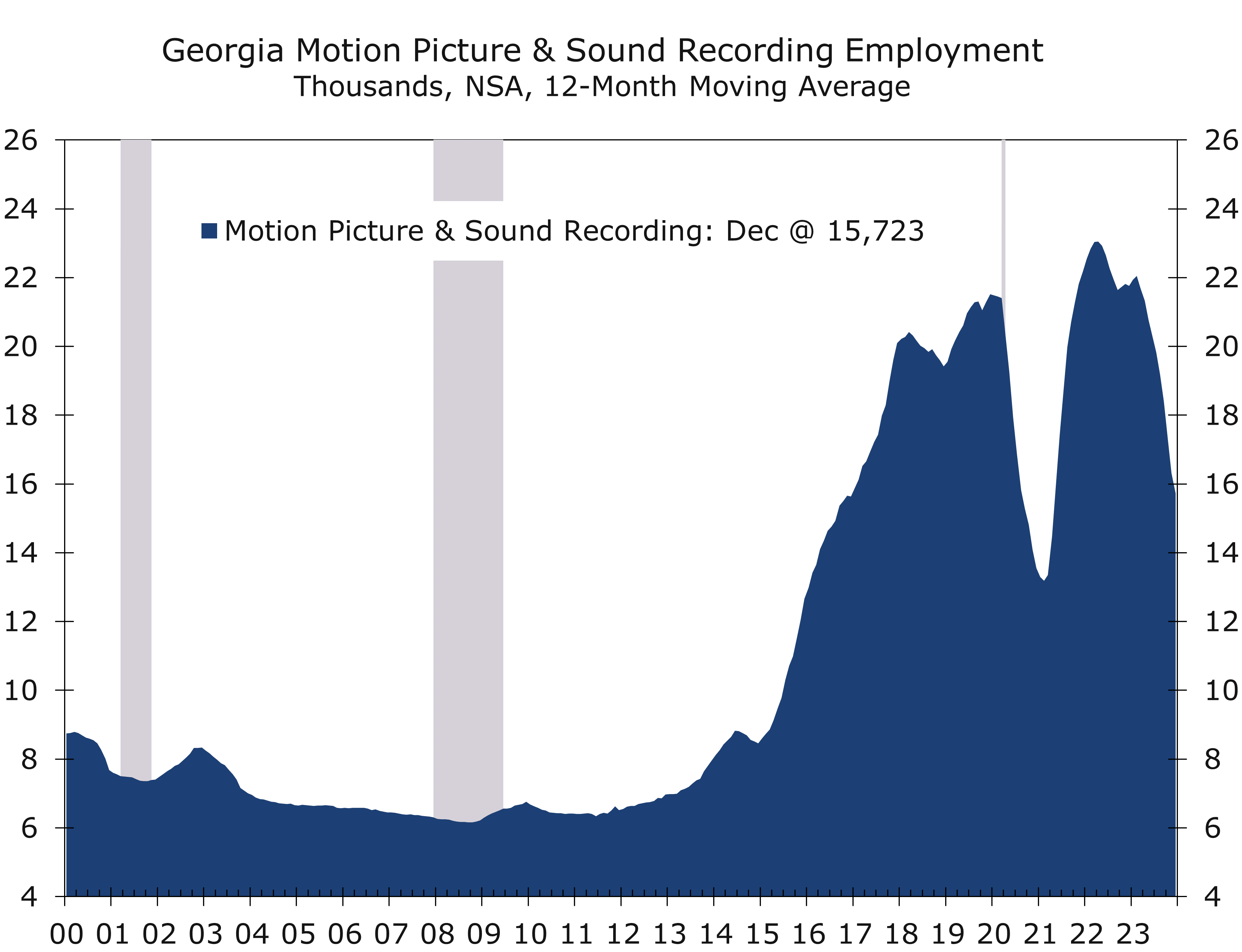
Georgia’s motion picture industry surged post-pandemic but has struggled more recently.
The most significant shift in information services employment has been in the motion picture industry. Georgia’s motion picture sector surged as the economy emerged from the pandemic, with studios reopening much earlier than those in California. However, last year’s actors’ and writers’ strikes caused a slowdown in production, which has been exacerbated by cost-cutting measures at major studios. California has also won back some business.
Georgia’s large manufacturing and logistics sectors are currently experiencing a slowdown. The goods sector has faced significant pressure since consumer spending shifted toward travel and services in 2022. The state’s manufacturing workforce, comprising 435,000 employees, is almost evenly split between durable and nondurable goods producers.
Major manufactured products in Georgia include carpets, engineered flooring, building materials, food processing items, military and corporate aircraft, motor vehicles, and various industrial products. Over the past year, manufacturing employment increased by 1.3%, with notable growth in the automotive and aerospace sectors. However, the production of consumer products and building materials has lagged.
The global goods recession has slowed Georgia’s sizable manufacturing and logistics sectors.
The Atlanta area encompasses 770 million square feet of industrial space, making it the nation’s fourth-largest distribution hub. Savannah and Middle Georgia also serve as key distribution centers. The rapid growth at the Port of Savannah has driven strong demand for industrial space. The logistics sector, which includes transportation, warehousing, and wholesale trade, employs just under 500,000 workers in Georgia, down approximately 1.2% from the previous year.
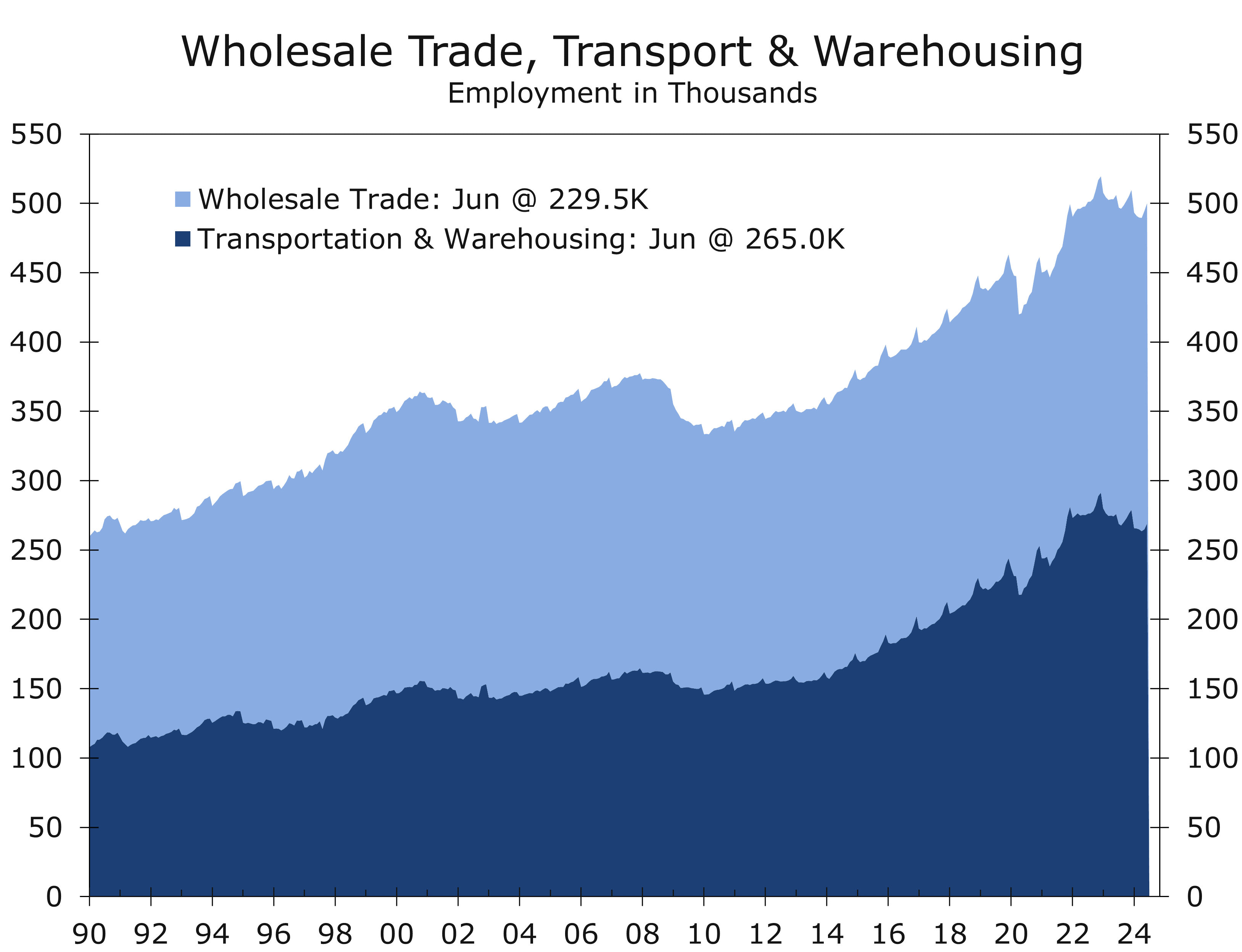
The modest decline in Georgia’s logistics sector was likely concentrated in the Atlanta area, where most trucking and warehouse workers are based. In addition to layoffs at warehouses and distribution centers, UPS, headquartered in Sandy Springs, also implemented layoffs this past spring. Other notable reductions occurred among logistics firms in Savannah and Middle Georgia.
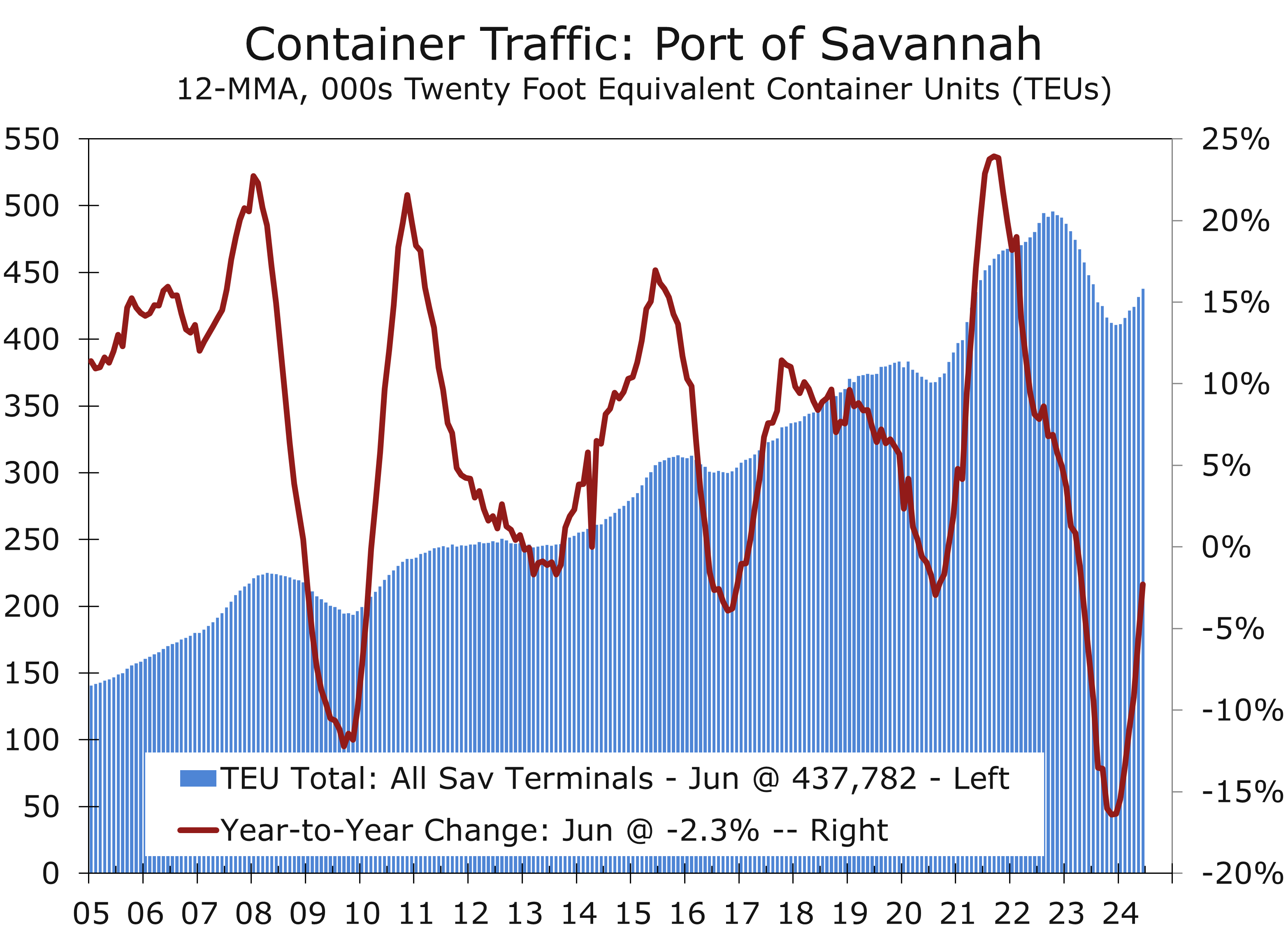
Despite these challenges, the Port of Savannah remains a vital economic engine for Georgia and continues to expand. As the nation’s third-largest container port, it recently completed the new Garden City Terminal West facility. The Port is adding more ship-to-shore cranes and rubber-tired gantry cranes and has extensive rail connections that facilitate quick transfer of containers to trains for shipment across the South and Midwest.
Container traffic saw a modest 2.3% decline for the fiscal year ending June 30, with the Port handling 5.25 million twenty-foot equivalent units. This drop reflects a return of some traffic that had been diverted from the West Coast and a slowdown in shipments amid the global goods recession. Traffic has been improving more recently. Additionally, the Port of Brunswick had a record year in Roll-on/Roll-off cargo, handling 876,000 units of autos and heavy machinery in FY2024, a 21% increase from the previous year.
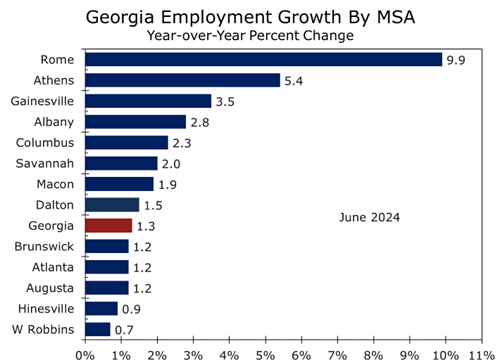
Atlanta, typically responsible for two-thirds of Georgia’s job growth, has underperformed this year. The metro area has been disproportionately impacted by weaknesses in the logistics sector, significant cuts in information and motion picture jobs, and stagnation in professional and business services. Consequently, Atlanta’s payroll growth slightly lags behind the state’s overall 1.3% gain.
Georgia’s classic metros, Rome and Athens, led the state in job growth this past year.
Strong gains in health care and education drove nonfarm payrolls up by 9.9% in Rome and 5.4% in Athens. Gainesville, just outside the Atlanta metro area, has also prospered due to new industry and population growth, as has Jefferson, located along I-85 between Gainesville and Athens.
Albany, Columbus, and Savannah have shown resilience, supported by strong economic development. In Albany, agriculture, downtown redevelopment, and infrastructure upgrades have all boosted growth. The completion of Plant Vogtle reduced construction jobs in Augusta; without this, payrolls would have risen 1.7% year-over-year. Columbus has attracted several new industrial projects, and Middle Georgia, particularly Macon, remains resilient with payrolls up 1.9%, primarily due to growth in health care and private education.
Despite a recent slowdown in job growth and an uncertain national economic outlook, Georgia’s economy remains well-positioned. The stability of its large manufacturing and construction sectors, the most cyclical parts of the economy, highlights the state’s success in attracting billions in new industrial projects and thousands of new residents each year.
Georgia’s manufacturing sector stands out for its size and diversity, ranking as a leading producer of carpets, floor coverings, poultry products, pulp and paper, and building materials. Recent years have seen a surge in investment, particularly in the automotive sector, with parts suppliers flocking to support the growing number of assembly plants in Georgia and neighboring states.
Northwest Georgia remains the nation’s primary hub for the floor covering industry, expanding beyond its traditional dominance in carpets. The region has further diversified, with substantial growth in the automotive sector and green energy. A notable example is Qcells, which has significantly expanded its Dalton solar panel plant—now the largest in the Western Hemisphere—and also operates a facility in Cartersville.
Strategic investments in EV manufacturing, clean technology, data centers, and the motion picture industry span the entire state. Additionally, substantial infrastructure improvements underscore Georgia’s commitment to maintaining its competitive edge.
Infrastructure remains a cornerstone of Georgia’s economic success. Governor Brian Kemp recently announced a $1.5 billion investment from surplus funds to enhance the state’s transportation infrastructure. The move is a testament to Georgia’s commitment to maintaining its competitive edge while continuing sound governance.
This additional funding will increase the Georgia Department of Transportation’s capital construction budget by 58%, double state aid to local governments for transportation improvements, and support critical projects such as the expansion of Interstate 16 and upgrades to Georgia 365 in Northeast Georgia.
Georgia’s proactive approach to infrastructure is evident in its top national rankings, including having the best-maintained bridges in the country. The state’s focus on expanding roadway capacity is vital to accommodate its growing population and rising freight demands. Georgia leads the nation in clean tech project announcements since the Inflation Reduction Act of 2022, attracting approximately $22 billion in investments expected to create 24,000 jobs in the EV and battery sectors.
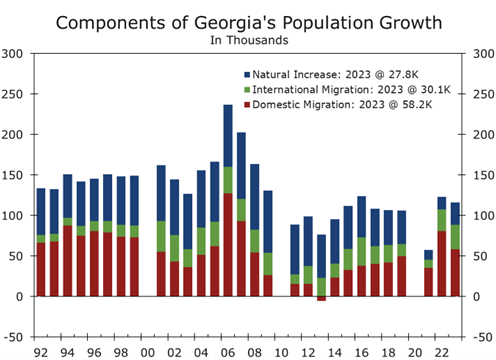
Other key infrastructure investments enhancing Georgia’s competitiveness include the recently completed expansion of the Plant Vogtle Nuclear Complex near Augusta. With the completion of Units 3 and 4 last year—the first new reactors built in the U.S. in over 30 years—Vogtle has become the nation’s largest clean energy provider. The facility now generates approximately 30 million megawatt-hours of electricity annually, meeting the increasing power demands from new industries, a growing network of data centers, and a state population that grows by over 100,000 residents each year.
Georgia has emerged as a major hub for electric vehicle (EV) and battery manufacturing. Hyundai’s $7.6 billion investment in its Metaplant America facility in Ellabell, just south of Savannah, will generate up to 8,500 permanent jobs and produce 300,000 EVs annually. The plant has attracted numerous suppliers to the greater Savannah area and along the I-16 corridor toward Macon, further solidifying Georgia’s position as a leader in the evolving clean energy economy. The first vehicles—a 2025 Hyundai IONIQ 5—will roll off the assembly line this fall.
Georgia’s growing role in the rapidly evolving EV sector presents significant opportunities but also carries risks. Rivian, a key player, announced plans for a $5 billion manufacturing facility at Stanton Springs North, east of Atlanta, expected to create 7,500 jobs. However, construction has been paused due to Rivian’s short-term financial challenges and a broader slowdown in EV sales. Despite these setbacks, Rivian remains committed to resuming construction and fulfilling its contractual obligations by 2030, supported by a recent major financial commitment from Volkswagen.
Georgia’s classic metros, Rome and Athens, led the state in job growth this past year.
A significant trend in Georgia’s recent growth is the expansion beyond the Atlanta core. In fiscal 2023, Georgia attracted over $24 billion in new and expanded facilities, creating 38,400 jobs across 426 projects. According to the Georgia Department of Economic Development (GDEcD), 82% of these new jobs and over $20 billion in investments were directed to communities outside the 10-county Atlanta region. This pattern continues into 2024, reflecting a diverse mix of industries across the entire state.
Significant expansions in Georgia this past year include Certified Flooring Installers, which established its headquarters in Dalton, focusing on professional training and certification. Other key developments include First Quality Baby Products’ $418 million investment to expand its diaper and sanitary products plant in Macon, creating 600 new jobs; medical-device maker Gerresheimer’s $88 million expansion of its manufacturing operations in Peachtree City, adding over 200 jobs; and Doowon Climate Control America’s new plant in Metter, which will produce climate-control systems for Hyundai and Kia, creating 200 jobs.
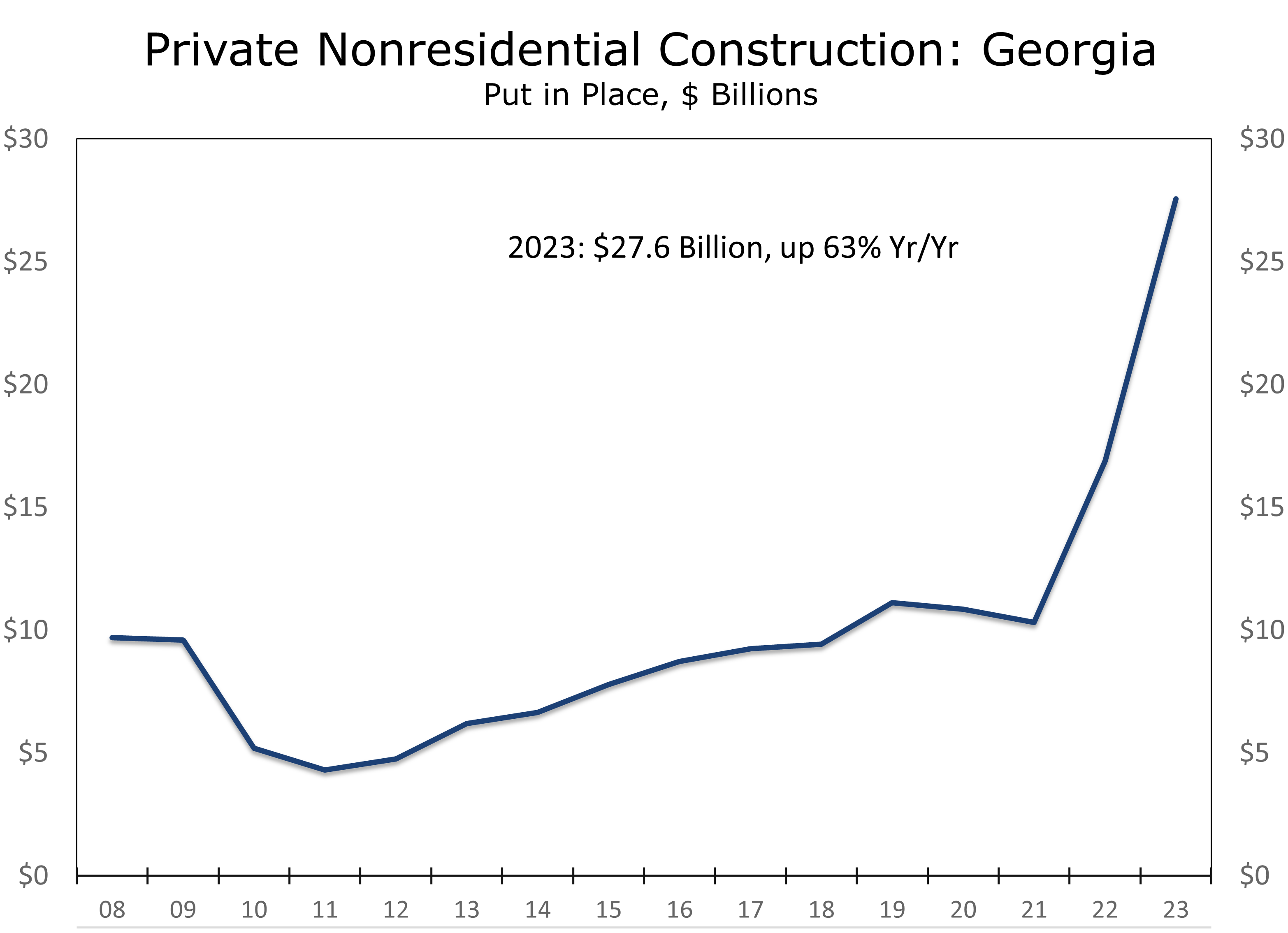
Georgia is seeing strong growth in data center construction, driven by its extensive fiber optic network, particularly in Atlanta, a major hub for fiber connectivity. High-speed connectivity, crucial for low latency and reliable internet access, makes Atlanta a prime location for data centers, bolstered by the intersection of several fiber networks and a large concentration of payments processing firms. These capital-intensive facilities, along with EV and other major capital projects, contributed to a 63% surge in private nonresidential construction this past year.
Atlanta is the third-most popular U.S. market for data center investments over the past three years. Despite concerns over rising power demands, the building boom persists. Major firms like Digital Realty, CoreSite, Switch, Google, Microsoft, Flexential, H5, QTS, and Stack Infrastructure are developing data centers in the Atlanta area, particularly around Lithia Springs, Forest Park, and Fairburn. Microsoft is advancing two significant projects: a $1 billion campus near Rome and a 2.1 million-square-foot facility in Union City.
While the number of productions is off, Georgia’s film industry continues to build key infrastructure. Five new studio complexes have opened in the past 18 months, including Gray Television’s Assembly Studios in Doraville, which continues to build out its studio complex on a former GM assembly plant site. Lionsgate Studios also opened earlier this year in Douglasville, adding 8 state-of-the-art sound stages.
Trilith Studios, located in Fayetteville just south of Atlanta, is Georgia’s most prolific movie studio. As one of the largest and most advanced production facilities in the U.S., Trilith has played a key role in establishing Georgia as a major film production hub, especially for big-budget Hollywood films like Avengers: Endgame, Black Panther, and Spider-Man: No Way Home.
Georgia’s film industry is expanding beyond Atlanta, with new studios opening in Athens and other locations. A $200 million studio complex is also underway in St. Marys, near the Georgia-Florida border. Pigmental Studios, known for Despicable Me and Household Pests, plans to transform the former St. Marys Airport into a film campus featuring 18 sound stages, an animation studio, and support services.
Georgia’s strategic investments in diversified industries, including electric vehicles, clean technology, and film, reflect years of effort to attract new business, enhance infrastructure, and maintain a low tax and regulatory burden. The state’s proactive approach to growth and resilience, even amid challenges such as Rivian’s construction delay, has solidified its reputation as a top place to live and do business, both nationally and globally.
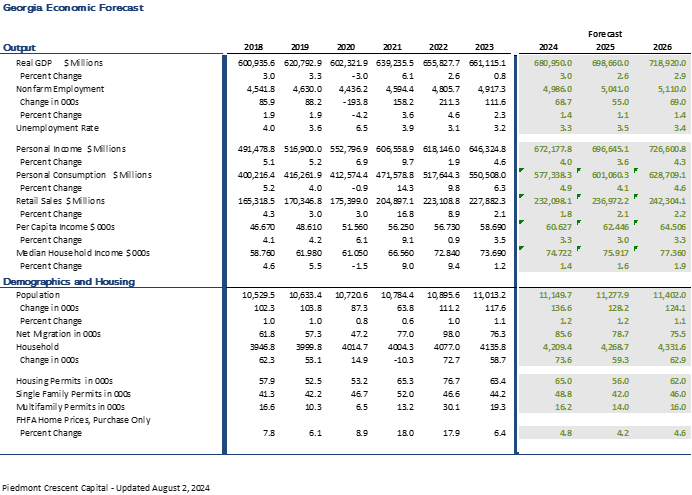
Georgia’s economy continues to outpace the nation, with real GDP growing at a 2.3% annual rate in the first quarter, compared to the national rate of 1.4%. Nonfarm employment has slowed in line with national trends, with the health care, leisure & hospitality, and government sectors driving most job growth.
We expect modest economic expansion, with Georgia’s real GDP projected to grow by 3.0% this year and 2.6% in 2024. Employers are expected to add 68,700 jobs this year and 55,000 in 2024, while the unemployment rate is forecast to rise slightly to 3.5% by the end of next year. The recent shift towards lower-paying jobs is likely to slow income growth further and curb consumer spending.
Disclaimer: This publication has been prepared for informational purposes only and is not intended as a recommendation offer or solicitation with respect to the purchase or sale of any security or other financial product nor does it constitute investment advice.
August 9, 2024
Mark Vitner, Chief Economist
mark.vitner@piedmontcrescentcapital.com
(704) 458-4000
Ethan Jacobs
Economic Analyst Intern
Benjamin Jacobs
Economic Analyst Intern