
Moldova Holds Geopolitical Importance
- Moldova holds geopolitical significance as it is situated between Ukraine and Romania, bridging Russian and Western influences.
- Tensions have increased, with Russia accusing Moldova of trying to destabilize Transnistria, a breakaway region bordering Ukraine.
- Moldova has shifted towards Atlanticism, with the pro-European Party of Action and Solidarity (PAS) currently in control.
- The timeline for Moldova joining the EU remains uncertain, despite being granted candidate status.
- Ongoing reforms in Moldova have substantially increased transparency and reduced corruption. Incomes rank among the lowest in Europe, however.
- The upcoming October presidential election in Moldova includes a referendum on EU membership, strongly supported by incumbent President Maia Sandu. Sandu’s re-election bid aligns with her pro-EU stance and anti-corruption measures supported by PAS’s majority in parliament. A Sandu reelection and a vote in favor of EU membership would be significant amidst rising Euroscepticism.
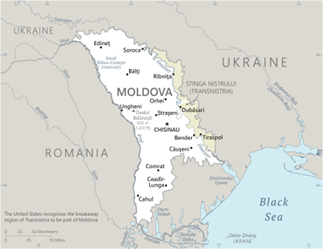
In a year marked by a heated presidential election in the United States, escalating tensions in the Middle East and most recently threats by Vladimir Putin to test the West’s resolve with a “mini operation” against a NATO nation, Moldova is largely overlooked. The lack of attention is unsurprising considering Moldova is one of the least visited countries in Europe. Few people would likely be able to find it on a map. However, Moldova holds geopolitical importance. Positioned between Romania and Ukraine, it’s internally divided between influences from Russia and the West.
Formerly the Moldovan SSR, and before that part of Romania, Moldova received its independence upon the collapse of the USSR in 1991. Shortly after, Moldova fought a war with Russia and was forced to cede its northernmost territory to the pro-Russia breakaway government of Transnistria. The conflict remains frozen to this day, and there is still a Russian military presence in Transnistria, although the breakaway state has no international recognition.
Since independence, Moldova has seen a gradual shift toward Atlanticism. Both the presidency and parliament are currently controlled by the pro-European Party of Action and Solidarity (PAS).
Support for Russophile parties, often economically leftist and socially conservative in nature, has eroded in favor of pro-European social democratic parties. The mayor of Chisinau, Ion Ceban, was the latest notable figure to break with the established Party of Socialists and form his own party, citing disagreements over its Russophile platform.
This year will likely prove pivotal for the future of Moldova. On October 20, Moldovans will hold their presidential election. A referendum on European Union membership, strongly supported by incumbent President Maia Sandu, will be held concurrently. These will be the first national elections held in Moldova since the Russian invasion of Ukraine.
Moldova is bordered by Ukraine in three directions and has been a recipient of thousands of refugees since the outbreak of the war. Tensions with Transnistria have increased with several supposed attacks on the breakaway state reported to have been false flag operations by the Moldovan government. President Sandu has repeatedly accused Russia of trying to destabilize Moldova and even accused Russia of orchestrating a coup attempt in 2023.
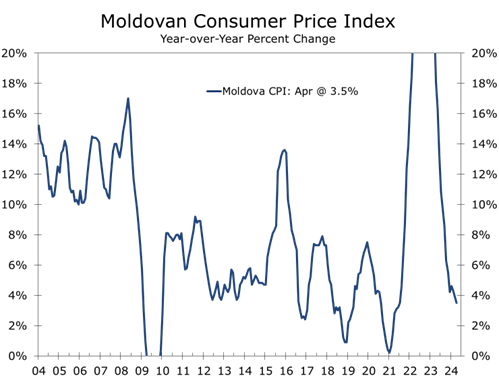
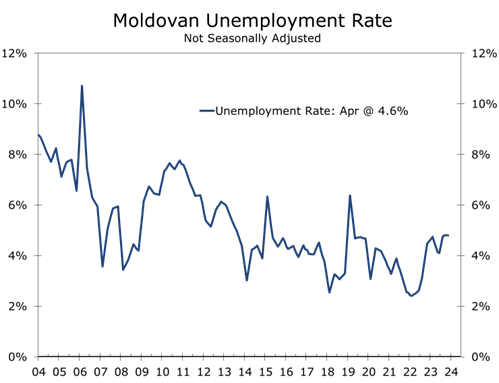
With elections several months out, the candidate list is not yet finalized. President Sandu is running for a second term, and she will likely face a myriad of primarily Russophile opposition candidates. Polling indicates Sandu leads with a healthy plurality of the vote, although she will need a majority to avoid a runoff. Economic conditions in Moldova are generally positive for an incumbent, with inflation moderating and the unemployment rate remaining low.
President Sandu has repeatedly accused Russia of meddling in Moldova.
The President of Moldova is a largely ceremonial position. Like many European countries, Moldova has a parliamentary system of government, meaning most power is vested in parliament and the prime minister. As head of state, however, the president represents Moldova on an international level and has sway over the country’s foreign policy. This puts matters such as Transnistria, the Russian invasion of Ukraine, and relations with the west at the forefront of the election.
Maia Sandu has been very vocal during her tenure as president in her support for Ukraine and for European accession. With PAS having won a majority of seats in parliament during the 2021 election, Sandu has a mandate thus far to press forward with policies of reform and liberalization.
Anti-corruption measures are one of the biggest priorities of the current government. Widespread crackdowns on pro-Russia oligarchs and government officials, including Sandu’s predecessor Igor Dodon, have taken place over the past several years and will likely continue.
Moldova has made great strides at eliminating corruption and increasing transparency.
The policies implemented under the PAS government are yielding some positive results. Moldova’s Corruption Perceptions Index score remains low, ranked #76 globally, but it has risen each year since Sandu took office.[1] Likewise, Moldova’s Press Freedom Index ranking climbed from #80 in 2020 to #28 in 2023, placing it far ahead of the rest of eastern Europe and even ahead of the United States.[2]
Should Moldova’s referendum on the European Union pass, the timeline for their accession is still unclear. Moldova was granted EU candidate status in mid-2022, having applied to join in the wake of Russia’s invasion of Ukraine. In turn, EU President Ursula von der Leyen spoke favorably of Moldovan membership.
[1] https://www.transparency.org/en/cpi/2023/index/mda
[2]https://rsf.org/en/country/moldova
The decision from the EU to open accession dialogue was clearly made with geopolitical rather than economic incentives in mind, and Moldova nonetheless has to make several internal reforms before formal admittance.
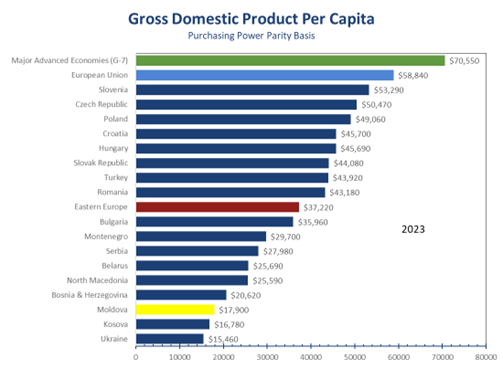
Moldova is notoriously one of the poorest countries in Europe and is notably poorer than nearly all of its Eastern European and Black Sea neighbors. Its GDP per capita in 2023 was reported by the IMF to be $17,930, ahead of only Ukraine and Kosovo. To put this in perspective, Bulgaria, the poorest EU member state, has a GDP per capita of $35,960, about twice as high.
Moldova set 2030 as its goal for full accession to the European Union. In the meantime, it must complete the required criteria as outlined by the European Commission which entails reforms to the labor market, boosting economic efficiency, and tackling corruption.
A Sandu reelection coupled with a favorable vote on EU membership would be a welcome development for pro-European observers after a series of Euroskeptic and populist victories across Europe, most recently in the Slovak, Dutch, and Portuguese elections. The entire European Parliament is up for election in June, and Euroskeptic parties are poised to win an unprecedented number of seats according to polling.
Disclaimer: This publication has been prepared for informational purposes only and is not intended as a recommendation offer or solicitation with respect to the purchase or sale of any security or other financial product nor does it constitute investment advice.
May 12, 2024
mark.vitner@piedmontcrescentcapital.com
Chief Economist (704) 458-4000
saul.vitner@piedmontcrescentcapital.com
Policy Analyst (704) 458-8570