Inflation Rises Slightly Faster in January
- The Consumer Price Index rose 0.3% in January, a touch above the consensus estimate of 0.2%.
- Prices excluding food and energy items rose 0.4%, also 0.1 percentage point above expectations.
- The slightly larger price gains reflect larger than usual start-of-the-year price hikes in many labor-intensive categories.
- Price increases for several health care services categories posted outsized gains relative to recent months.
- Shelter costs were another problem area, rising 0.6% in January. Owners’ equivalent rent rose 0.6%, while rent of shelter rose 0.4% and lodging costs jumped 2.4%.
- Price increases also picked up at the grocery store, rising 0.4%, while prices at restaurants rose 0.5%. Used care prices continued their retreat, falling 3.4%.
- January’s CPI data are a wake-up call for those that believed the Fed had the all-clear signal to cut rates. Last year’s deceleration in inflation was likely overstated due to pandemic-related price swings. We are now seeing a bit of catch up, which supports our view that the Fed will remain cautious.
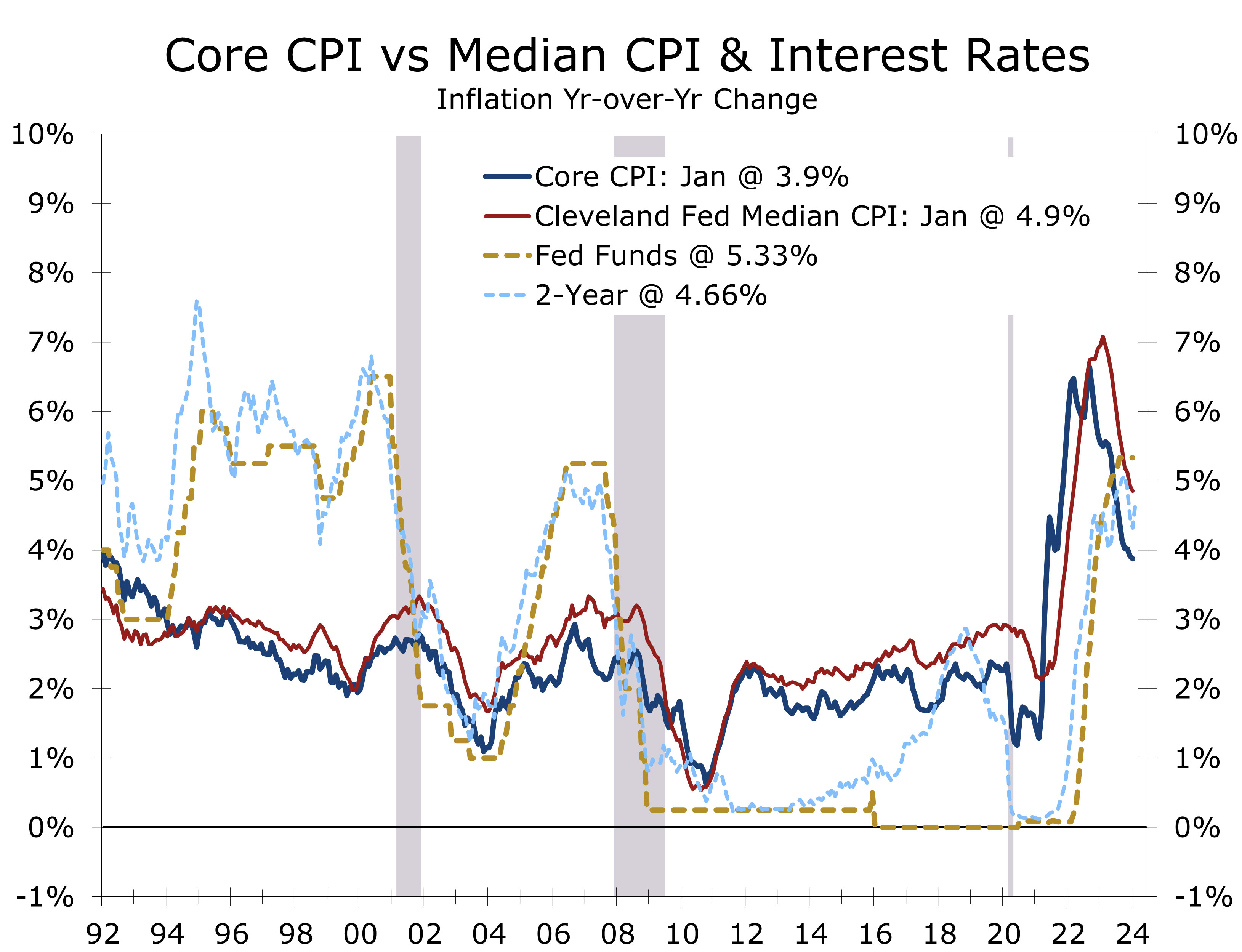
Inflation came in slightly higher than expected in January, with the headline CPI rising 0.3% and the closely watched core CPI rising 0.4%. Both were 0.1 percentage point above consensus expectations, which disappointed the financial market. Year-to-year, the CPI is now up 3.1%, while the core is up 3.9%.
Food prices picked back up in January, with prices rising 0.4% at the grocery store and climbing 0.5% at restaurants. Grocery store price increases had largely moderated during the second half of the year, rising at just a 1.8% pace form June to December. Prices for sugar and sweets, fats and oils, other foods each rose 0.6%. Prices for fresh vegetables also increased, rising 0.4%, and prices for eggs jumped 3.4%.
Restaurant prices, influenced more by labor costs, moderated less than grocery prices last year. Minimum wage increases in many areas, effective in January, partly contributed to this past month’s outsized rise.
Labor-intensive services saw significant price increases, partly due to a higher minimum wage.
Energy prices fell 0.9% in January, which is one reason why inflation expectations were so low. Gasoline prices did fall sharply, declining 3.3%, while fuel oil prices fell 4.5%. Electricity prices rose 1.2%, however, and natural gas prices rose 2.0%. Those large price hike likely reflect earlier enacted regulatory approvals that kicked into effect at the start of the year.

Grocery store prices are up a surprisingly modest 1.2% over the past year. The modest increase follows colossal gains in prior years, however. Grocery store prices are up a collective 21.1% over the past three years, which is roughly four times as much as they rose in the prior three years. The increase over the past three years is roughly equivalent to the cumulative rise in grocery store prices from 2008 to 2021.
Shrinkflation? Grocery store prices are up a collective 21.1% over the past three years.
Shelter costs rose 0.6% in January and accounted for over two thirds of the increase in the core CPI. Owners’ equivalent rent, which is the index that attempts to capture the cost of homeownership, rose 0.6% in January and is up 6.2% over the past year. Rent of shelter, which captures the cost of rental apartments and single-family rentals, rose 0.4% and is up 6.1% over the past year.
Shelter costs account for roughly 36.2% of the overall CPI and a whopping 45.4% of the core CPI. The BLS rental measure lags behind market rates, which currently show minimal changes for new leases and about a 2.5% increase for renewals. There is a tidal wave of apartments slated to be completed to be completed this year, which should put additional downward pressure on rents and consumer prices.

Prices for certain pandemic-impacted items, like used cars and trucks, declined by 3.4% in January and fell 3.5% over the past year. In contrast, these prices had surged by 24.2% over the previous two years. Gasoline prices have also fallen sharply, plunging 14.2% this past year.
Still other prices remain highly problematic. The cost of motor vehicle insurance has surged 20.6% over the past year. Prices for tickets to sporting events are up 13.5% and prices for hospital services, home health services, nursing homes and day care are all up sharply as well.
Inflation is decelerating more slowly than widely thought, which will push rate cuts further out.
We maintain a cautious view on inflation. Unusually wide pandemic-induced price hikes for key items, such as used cars and apartments, likely distorted seasonal adjustment and understated inflation as prices eased in 2023. The Cleveland Fed’s Median CPI mitigates the impact of these swings. While higher, prices by this measure are still moderating, which should allow the Fed to start cutting the federal funds rate by a quarter point in June, followed by further cuts in September and December — a path is consistent with the 2-Year Treasury, which leads changes in the funds rate.
Disclaimer: This publication has been prepared for informational purposes only and is not intended as a recommendation offer or solicitation with respect to the purchase or sale of any security or other financial product nor does it constitute investment advice.
February 13, 2024
mark.vitner@piedmontcrescentcapital.com
Chief Economist (704) 458-4000