A Santa Claus Rally for Consumer Confidence
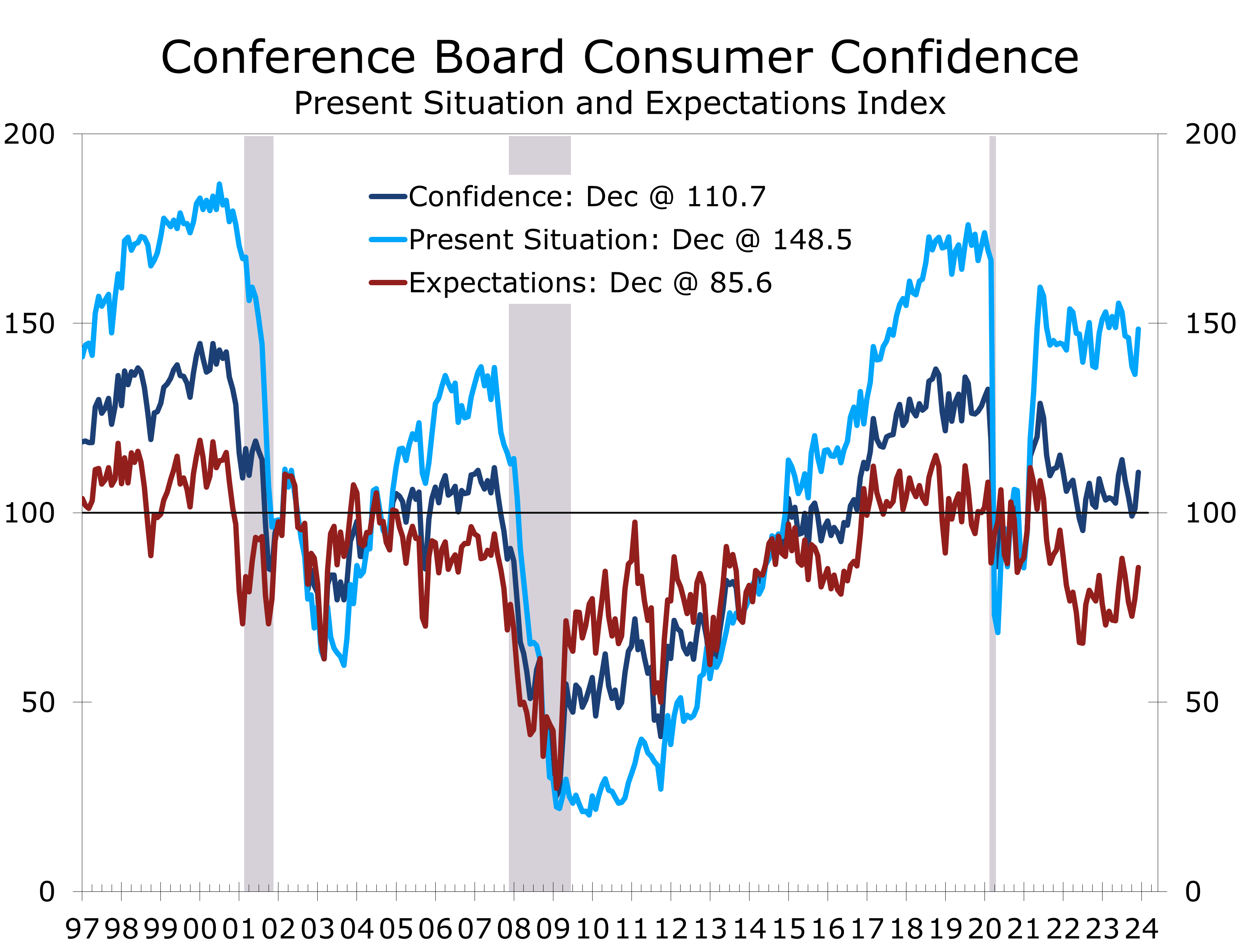
- Consumer Confidence surged ahead of the holiday season, with the overall index rising 9.7 points to 110.7. The data from the prior month was slightly revised downward.
- Present conditions rose 12 points to 148.5, while expectations rose by 8.2 points to 85.6. Both hit their highest levels since July.
- Consumers’ assessment of current labor conditions improved significantly. The share stating jobs are ‘plentiful’ rose 2.1 percentage points to 40.7%, and the share stating jobs are ‘hard to get’ fell 2.4 points to 15.4%.
- Consumers appear to be buying into the soft landing narrative. The expectation for conditions to improve over the next 6 months rose 1.5 percentage points to 18.7%, while the share expecting conditions to weaken fell 2.9 percentage points to 20.1%.
- Consumer Confidence rose alongside the stock market in early December. Recession fears have subsided as lower gas prices and falling interest rates bolster hopes for a soft landing. Gains were particularly notable among lower-income households.
The Consumer Confidence Index surprised to the upside in December, leaping by 9.7 points to 110.7, its highest level since July. Both the present conditions and expectations indices saw robust gains, signaling a retreat from the brink of recession. Inflation expectations also eased, thanks to lower gasoline prices, which bolstered purchasing power for middle and lower-income households.
Consumers’ assessment of current economic conditions rose by 12 points to 148.5, and expectations for the next six months increased by 8.2 points to 85.6, hitting their highest level since July. Falling gasoline prices and the apparent conclusion of the Fed’s interest rate hikes drove this improvement.
The improvement in the expectations series is particularly notable, as it had been flirting with recession levels for most of this year. More consumers now anticipate business conditions improving over the next 6 months (+1.5 pp to 18.7%), while fewer foresee conditions worsening (-4.1 pp to 16.0%).
Consumers see the economy taking a step back from the edge of recession.
Consumers are also slightly more upbeat about their personal finances. The share expecting their income to increase over the next 6 months rose by 1 percentage point to 18.7% in December, while the share anticipating a decline in income fell by 0.1 percentage points to 12.6%.
Consumers’ perceptions of both current and future labor market conditions have improved, with the share stating jobs are ‘plentiful’ rising by 2.1 points to 40.7%, and the share characterizing jobs as ‘hard to get’ decreasing by 2.4 points to 13.2%. The labor market differential, representing the difference between these two measures, increased by 4.5 points to 27.5, marking the most substantial monthly improvement since February 2022.
Expectations for labor market improvement in the next six months also saw a notable uptick. The proportion of consumers anticipating more available jobs rose by 1.1 points to 17.8%, while those expecting fewer jobs declined by 2.9 points to 17.2%.
Lower gasoline prices have reduced inflation fears and bolstered purchasing power.
Consumer confidence improved across income brackets, with the most significant gains observed at both the higher and lower ends. Households earning $125,000 or more saw the largest surge, jumping by 18.3 points in December to 128.8. In the $15,000 to $30,000 income range, confidence rose by 17.1 points to 102.1. The increase among higher-income households is likely due to lower interest rates and rising stock prices, while lower gasoline prices likely fueled the gain among lower-income households.
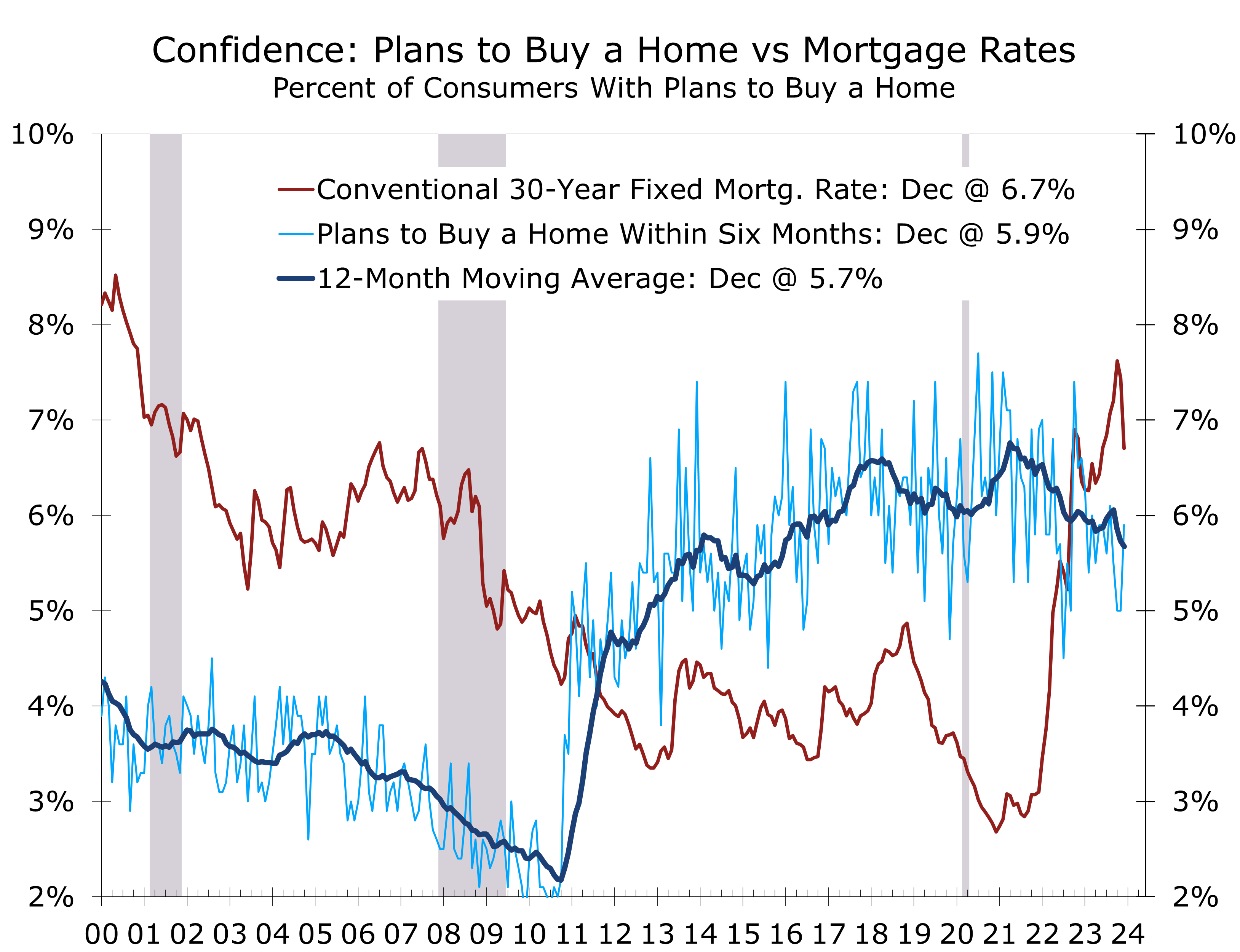
Interest rate expectations have undergone a significant shift recently, with the percentage of households anticipating a rise in interest rates over the next year dropping by 7 points in the last two months to 52.4%, the lowest since January 2021. Conversely, the share expecting rates to fall has increased 6.6 points over the same period to 18.5%, reaching the highest level since October 2020.
The pullback in mortgage rates should further bolter home buying plans in coming months.
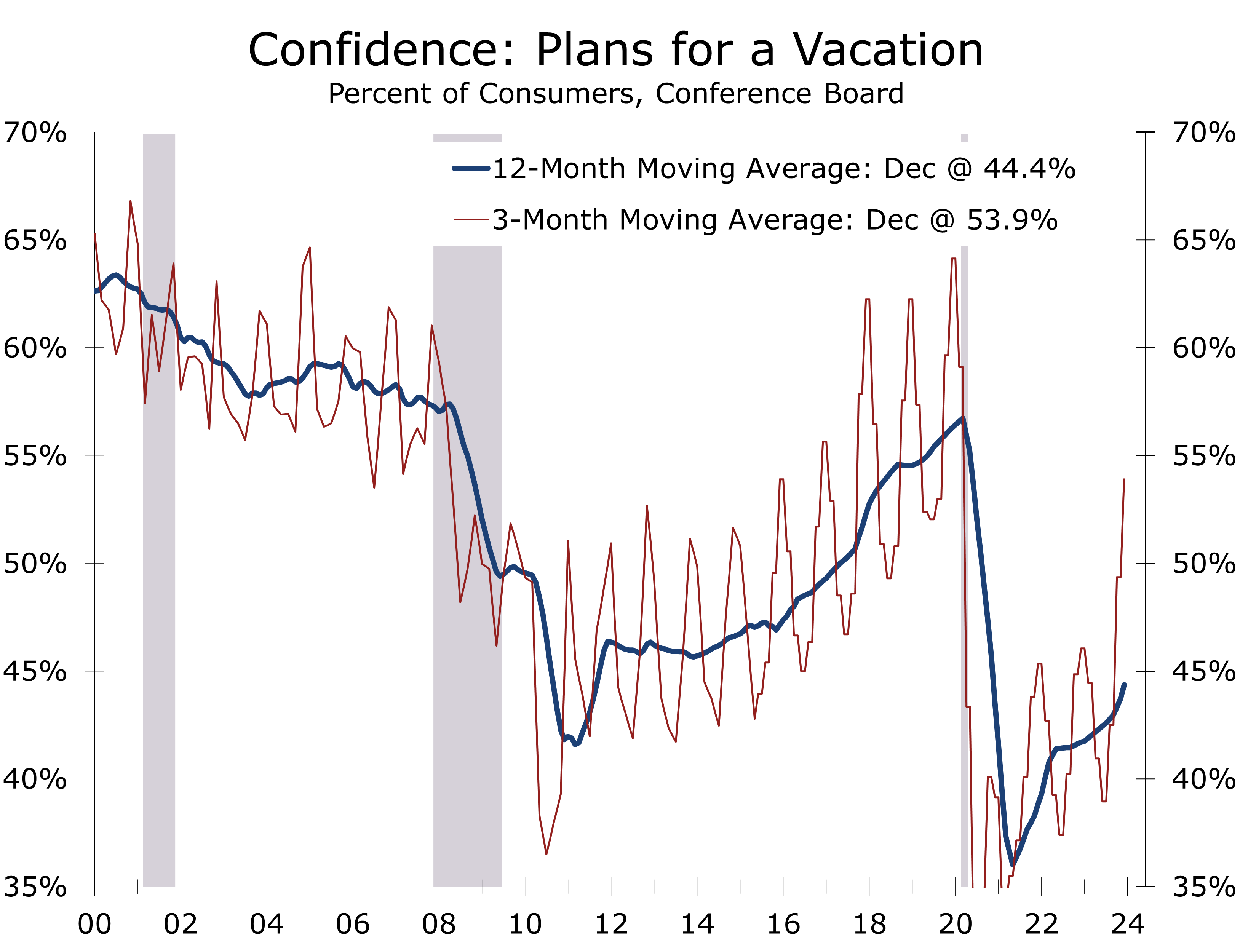
With improved consumer confidence, more individuals are planning vacations. Intentions to travel within the next six months have risen 3.8 points over the past two months and a whopping 17.5 points over the past six months. This improvement is predominantly among consumers planning domestic travel, as intentions to travel overseas have slightly decreased.
December’s strong consumer confidence numbers are another key piece of data supporting the notion a soft landing is taking hold. Concerns about inflation are easing, thanks largely to falling energy prices. Interest rates also appear to have peaked, which should help bolster home sales and spending for big-ticket items.
Disclaimer: This publication has been prepared for informational purposes only and is not intended as a recommendation offer or solicitation with respect to the purchase or sale of any security or other financial product nor does it constitute investment advice.