
Home Building Tops Expectations
- Housing starts spiked 14.8% to a 1.56 million-unit pace in October. Starts for the prior month were revised slightly lower.
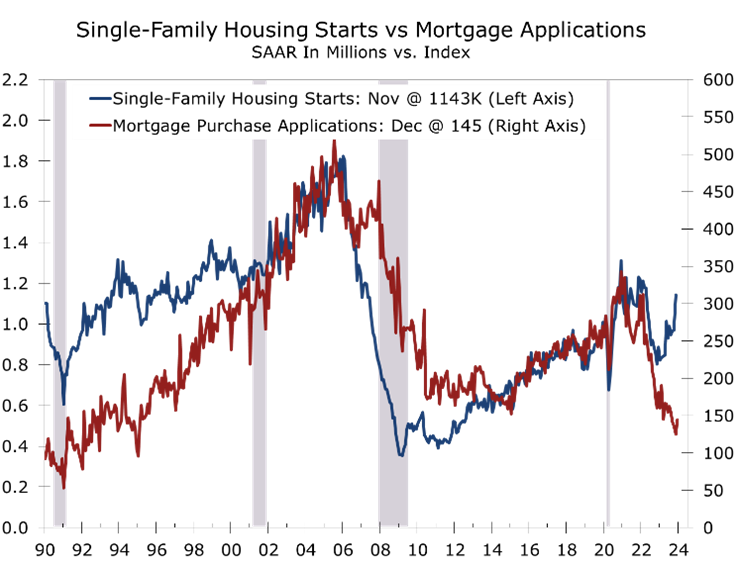
- Single-family starts leaped 18.0% to a 1.143 million-unit pace, rising to their highest level since April 2022. Multi-family starts rose 6.9% to a 417,000-unit pace.
- Permits fell 2.5% to a 1.468-million-unit pace. Single-family permits rose 0.7% to a 976,000-unit pace, while multi-family permits fell 8.5% to 484,000-unit pace.
- Housing starts rose across the country, doubling in the Northeast and rising 16.3% in the South. Starts rose more modestly in the West (2.1%) and Midwest (1.4%).
- Home builder confidence rose 3 points to a still very low 37 in December. Buyer traffic remained low at just 24 but expected sales jumped 6 points to 45.
- Home builders are making an aggressive bet that inventories of existing homes will remain tight and mortgage rates will remain below the highs hit last fall. November’s starts were also helped by unseasonably mild weather.
Housing starts surpassed expectations in November, surging 14.8% to a robust 1.56-million-unit pace. We suspect that unseasonably mild weather contributed to this increase, with warmer and drier weather allowing more construction to commence. Seasonally adjusted housing starts doubled in the Northeast, rising from a 72,000-unit pace in October to a 144,000 unit pace in November.
Even after factoring in warmer-than-usual weather, home building remains surprisingly strong, with single-family starts surging 18% to a 1.143 million unit pace in November. Starts averaged a 1.026 million unit pace over the past three months, which may not be sustainable given slowing job and income growth.
Home Builders expect demand for new homes to remain strong as existing home sales founder.
Building permits, which are less impacted by weather, fell 2.5% to a 1.468-million unit pace. Permits for single family homes rose 0.7% to a 976,000-unit pace, marking the 10th consecutive increase and highest level for single-family permits in 18 months.
Home builder confidence rose 3 points in December to 37 but expected sales over the next six months leapt 6 points to much more healthier 45. Builders are clearly more upbeat about the sales outlook and expect sales to benefit from the recent slide in mortgage rates. New home sales will also continue to benefit from less competition from existing homes.
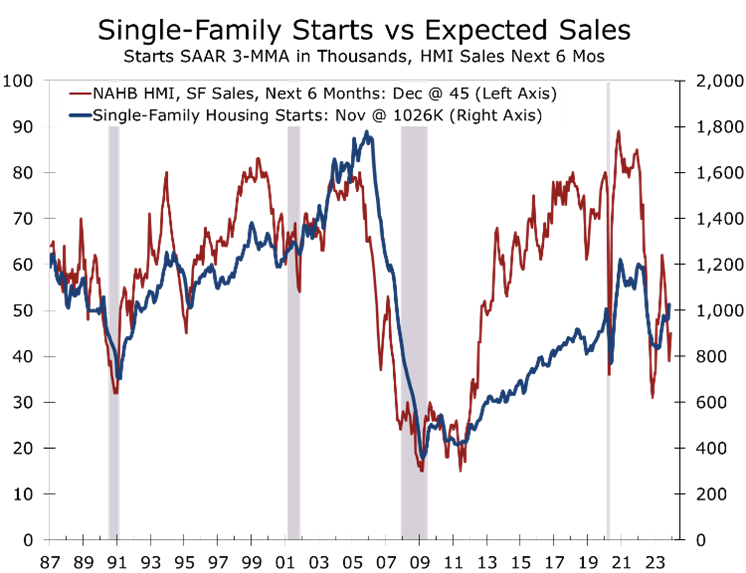
Home builders appear to be betting interest rates will remain lower and existing homeowners will continue to be reluctant to put their homes on the market. Single-family housing starts have typically closely followed mortgage purchase applications. The two have diverged more recently, however. This discrepancy may be due to sampling issues, as many home builders now provide financing through affiliates and then sell those mortgages into the secondary market. These mortgages might not be fully reflected in the weekly MBA survey.
Builders are banking on interest rates remaining low and existing homeowners remain in place.
Builders may also simply be striving to have inventory in place ahead of the spring selling season. New home sales have been steadily gaining market share from existing sales, inventories of which remain near historic lows. Mortgage rates are currently 140 basis points below their fall highs and will likely remain around 6.5% this spring. That should be low enough to bring out buyers but not so low to entice a torrent of existing homes back on the market.
The strength in single-family starts is good news for Q4 GDP growth, and housing will also be less of a drag on economic growth in 2024. The stronger numbers present some upside risk to our forecast for 1.6% real GDP growth in Q4 and 1.1% growth in 2024.
Multi-family starts rose a stronger than expected 6.9% to a 417,000-unit pace, the highest level since July. The rise, however, does not signal a reversal in the correction in apartment building currently underway. Multi-family permits fell 8.5% to a 484,000-unit pace. After a 15% decline in 2023 to 417,000 units, we expect multi-family starts to fall 25% in 2024 to 340,000 units.
A record 1.04 million multi-family units are currently under construction. The pipeline is improving as shortages and bottlenecks have eased. On a 12-month moving average basis, multi-family starts peaked last November at 555,000 units and have since declined 14.4%. The decline is more pronounced on a 3-month moving average basis, with starts down 32.5% to 399,000 unit. Permits have decreased even more significantly, while completions continue to rise.
Apartment construction has peaked but starts are showing a surprising degree of resilience.
With historically low housing affordability, strong demand for apartments is bolstering developer confidence in proceeding with planned projects. Banks remain cautious about lending for new apartment developments, which will continue to weigh on starts.

Disclaimer: This publication has been prepared for informational purposes only and is not intended as a recommendation offer or solicitation with respect to the purchase or sale of any security or other financial product nor does it constitute investment advice.