
New Home Sales Weaken in October
- New home sales declined 5.6% to a 679,000 unit pace. Sales for the prior month were also revised significantly lower.
- Sales rose in the Northeast (+13.2%) and the South (+2.1%) during October but fell sharply in the West (-23.3%) and Midwest (-16.4%).
- The inventory of new homes rose slightly to 439,000, which translates into a 7.8-months’ supply at October’s slower sales pace.
- The median price of a new home fell 3.1% to $409,300 in October and is a whopping 17.6% below its year ago level.
- The sharp decline in home prices over the past year reflects both increased discounting by home builders and an increased focus on building lower-priced homes.
- New home sales continue to benefit from the paucity of existing homes for sale. New home sales are up 17.7% year-to-year, while existing home sales have fallen 14.6%.
- Mortgage rates spiked to their highest level in 23 years during mid-October, which likely priced out many would-be buyers. Mortgage rates have since fallen back to below 7.5% in the past month, which might bring some of those buyers back in November.
New home sales fell 5.6% to a 679,000-unit pace in October and sales for the prior two months were also revised lower. The slower sales pace is not surprising given the spike in mortgage rates, which saw rates peak just under 8% in late October. We suspect that spike in rates was too much for many buyers and likely led to some contract cancellations as well. Rates have since fallen about a half percentage point to just under 7.5%, which should bring some buyers back to the market in the normally seasonally slow months of November and December.
The pullback in new home sales has allowed inventories to increase, with overall inventories climbing by 6,000 to 439,000 homes at the end of October. That translates into a 7.8-months’ supply of homes at October’s sales rate, which is a bit high from a historic standpoint but not all that concerning given the historically low levels of existing home inventories.
New home buyers stepped back from the market as mortgage rates approached 8%.
Home builders continue to benefit from the lack of existing homes, which has sent more buyers to the new home market. New homes accounted for 16.7% of overall single-family home sales in October, compared to 12.7% a year ago. New home sales are also proving more resilient to rising mortgage rates, as home builders are able to buy down mortgage rates to help reduce the sting of rising interest rates.

The median price of a new home fell 3.1% to $409,300 in October and has fallen 17.6% over the past year. That marks one of the sharpest pullbacks in the median price of a new home on record. Part of the drop reflects the increased use of discounts and incentives. Builders are also shifting their mix of offering to smaller and more affordable homes, many of which are aimed at first-time home buyers.
The use of incentives has become commonplace. The latest NAHB survey shows that 60% of builders offered incentives in November, which was down from 62% in October. Mortgage rate buydowns are the most commonly offered incentive, which makes homes more affordable and also protects community home values. Price discounts are also becoming more prevalent, however, with 36% of builders reducing price in November, which marks a high for the cycle.
Home prices have fallen sharply, reflecting price cuts and a shift toward lower priced homes.
Builders have some room to offer discounts because building material prices have stabilized somewhat. Most incentives, however, come out of an existing incentives budget. Buyers are simply choosing to use incentives to reduce their mortgage rate or reduce their purchase price rather than upgrade their countertops or appliances.
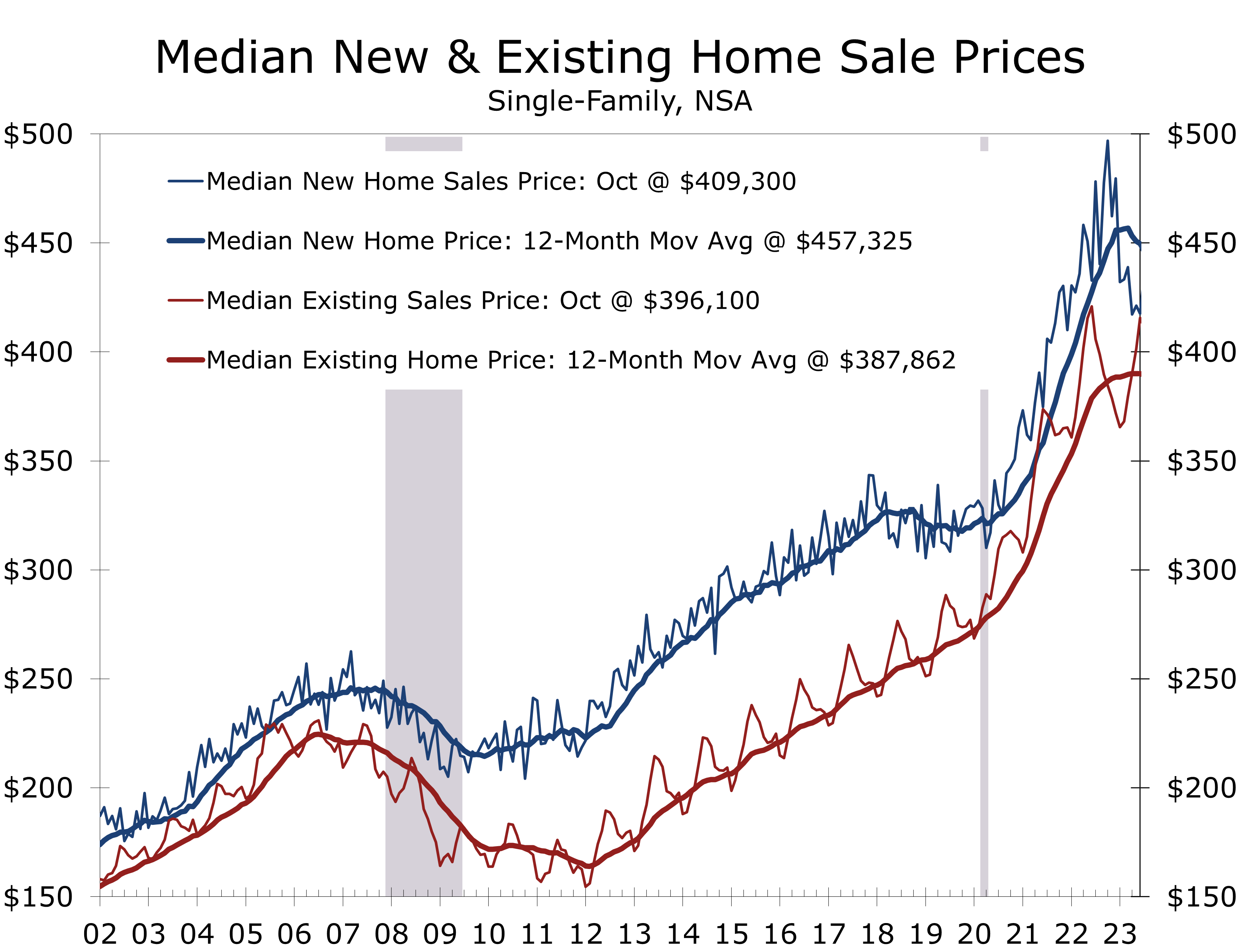
The sharp decline in the median price of a new home has significantly narrowed the gap between the median price of new and existing single-family homes. New homes have typically sold a premium to existing homes. The gap, which averaged $68,216 in the five years prior to the pandemic, has now narrowed to just $13,200 or 3.2%. The narrower premium for new homes means more home buyers are likely to opt for a new home versus an existing home, particularly if the builder can provide below market financing.
The narrower new home price premium means more home buyers will likely opt for new homes.
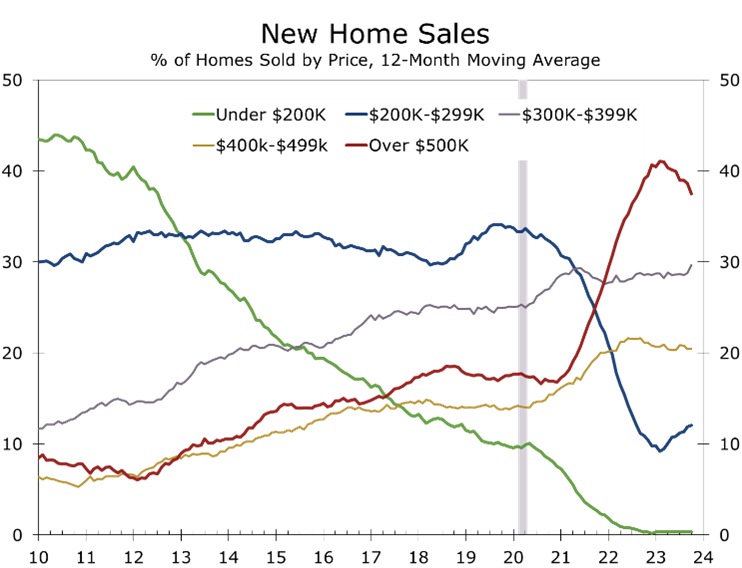
The improved market position new homes have relative to existing homes is likely to continue, as more than half of existing homeowners that have a mortgage have one locked in at a rate of 5% or less. With existing inventories remaining lean, home builders are responding by building smaller and more affordable homes. The share of new homes sold at prices below $300,000 has risen over the past year, while the proportion of new homes sold at more than $500,000 has fallen slightly.
Disclaimer: This publication has been prepared for informational purposes only and is not intended as a recommendation offer or solicitation with respect to the purchase or sale of any security or other financial product nor does it constitute investment advice.