
Hurricane Hillary Undermined Starts in August
- Housing starts declined 11.3% in August to a 1.283-million-unit pace, which is the slowest pace since June 2020.
- Starts fell sharply in every region except the Northeast and were led by a 28.9% plunge in the West – likely due to the impact of Hurricane Hillary.
- Multi-family starts accounted for the bulk of the decline, plunging 26.3% to a 342K pace.
- Higher interest rates, tightening credit and a mountain of projects under construction are cutting into multi-family starts.
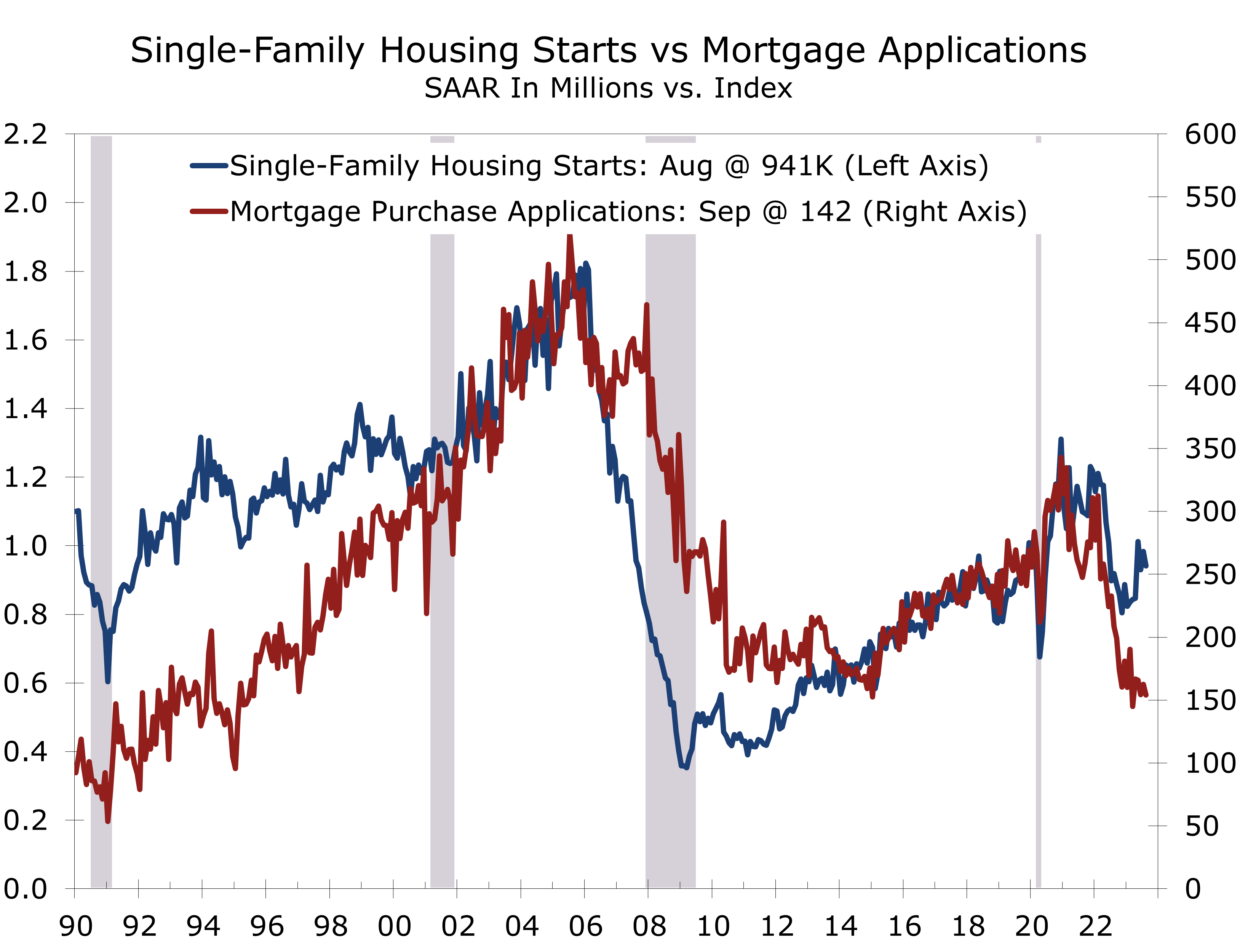
- Single-family starts fell a more modest 4.3% to a 941K pace, and rose modestly in the South, which accounts for more than half the nation’s starts.
- Homebuilder confidence fell 5 points to 45 in September, reflecting rising interest rates and weaker prospective buyer traffic.
- Higher interest rates are clearly making an impact in the housing market. While much has been made of sales lost due to the lock-in effect on existing homes, higher mortgage rates are pricing out even more potential home buyers at the same time higher short term rates are curbing spec development.
Housing starts fell 11.3% in August to a 1.283-million unit pace, marking their largest monthly drop in more than a year. Both single-family (-4.3%) and multi-family starts (-26.3%) declined, with multi-family accounting for the bulk of the drop. Starts fell in every region of the country except the Northeast, where they inched up 1.0%. The largest drop was in the West, where Hurricane Hillary helped slash starts by 28.9%.
While builders caught a break earlier this year when buyers frustrated by the lack of existing homes turned to the new home market, higher interest rates are clearly taking a bite out of home building. More buyers are being priced out of home buying altogether than are being diverted from the existing home market. Mortgage applications for the purchase of a home have plummeted 12.6% over the past 10 weeks, which was when the rate on a 30-Year conventional mortgage began to rise above 7% on a sustained basis.
Higher mortgage rates have cut into home buying, which is causing builders to slow starts.
While single-family starts are now trending lower, this past month’s drop was exaggerated by Hurricane Hillary, which depressed starts in Southern California and Nevada. Single-family starts plummeted 26.9% in the West. Home construction also slowed in the Northeast and Midwest, where single-family starts fell 1.8% and 12.3%, respectively. Single-family starts rose a solid 8.1% in the South, which is by far the largest region for single-family starts.
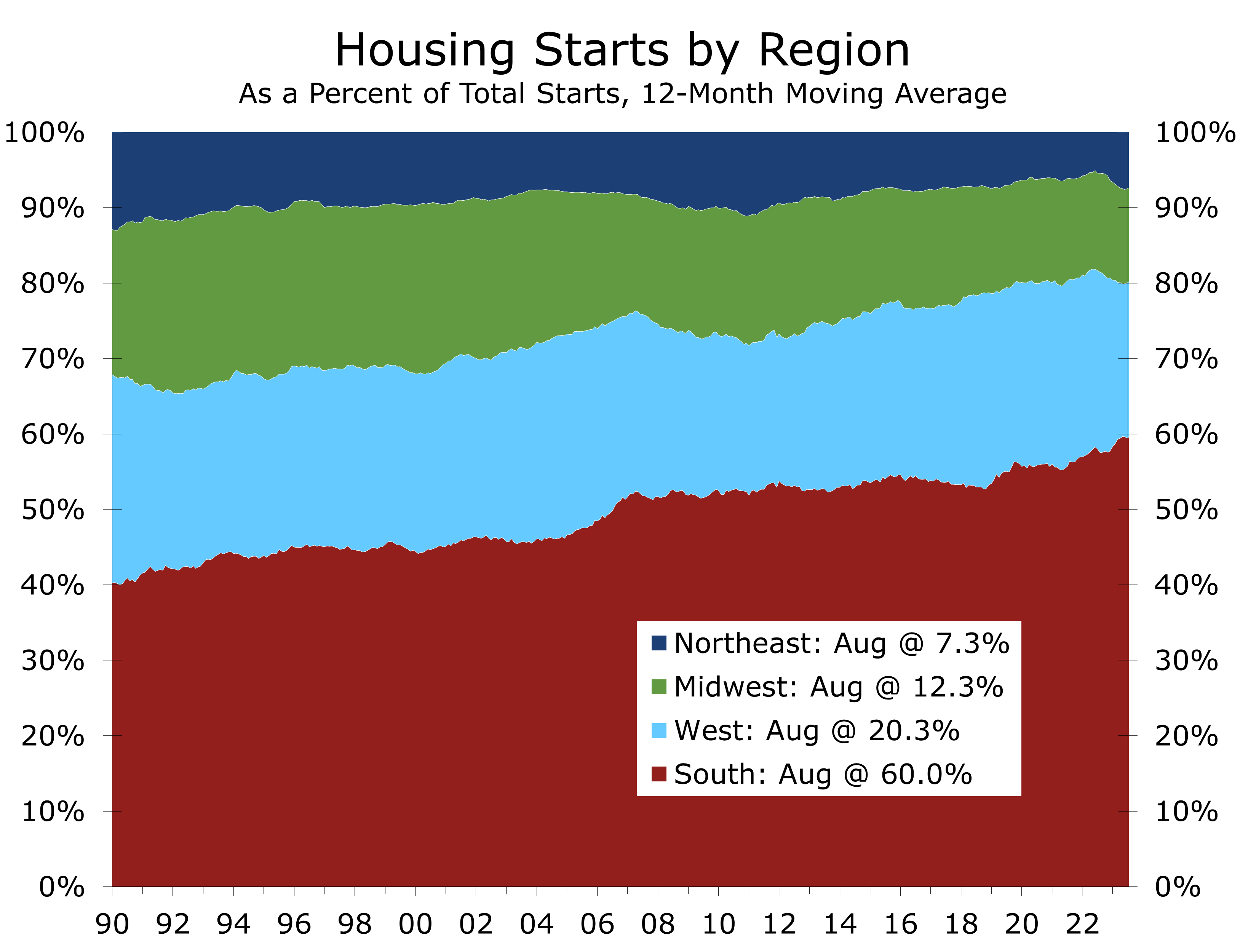
The South is benefitting from an influx of new residents and businesses, and continues to see strong overall job growth, which is fueling home building in Texas, Florida, the Carolinas, Georgia, and middle Tennessee. The South accounted for 60% of all single-family starts through the first 8 months of this year.
Apartment building is also going strong in the South, but activity has begun to cool in recent months due to rising interest rates and tightening credit conditions amidst concerns about overbuilding. Multi-family starts plunged 35.6% in the South in August, falling to their lowest level since December 2020. The pullback in construction comes at a time when there are a record number of apartments set to be completed in rapidly growing markets such as Austin, Raleigh, Nashville, and Charlotte. The bulk of new construction in the South is in the largest metros, including Dallas-Fort Worth, Houston, Atlanta, and South Florida.
The hurdles for financing new apartment projects have risen substantially.
The South is not the only region seeing a pullback in apartment construction. Apartments account for the bulk of multi-family starts of projects with 5 or more units. Such starts have tumbled 27.9% since peaking last August. Starts of projects with 2 to 4 units, while off their peak, still appear to be trending higher.
The housing market is one area of the economy where the Fed can see some tangible signs that higher interest rates are making an impact. This past month’s drop in housing starts, however, was exaggerated by the effects of Hurricane Hillary, which slashed starts in the West. Higher interest rates have also had some perverse effects, as they reduced the supply of existing homes for sale and sent home prices sharply higher.
The housing market is one area where the Fed’s rate hikes are cooling demand.
Low interest rates helped ignite an apartment construction boom following the pandemic. That earlier surge in construction is now slowing rent increases, as the supply of apartments rises up to meet demand. There are some notable exceptions. Rents have surged to record heights in Manhattan, where construction lagged following the pandemic, and is now seeing the return of office workers.
We expect the Fed to hold rates steady at the September FOMC meeting. The Fed will also likely maintain a dot plot that keeps the door open for at least one more quarter-point rate hike at the two remaining FOMC meetings in 2024.

Disclaimer: This publication has been prepared for informational purposes only and is not intended as a recommendation offer or solicitation with respect to the purchase or sale of any security or other financial product nor does it constitute investment advice.