
Hiring Hit Some Speed Bumps
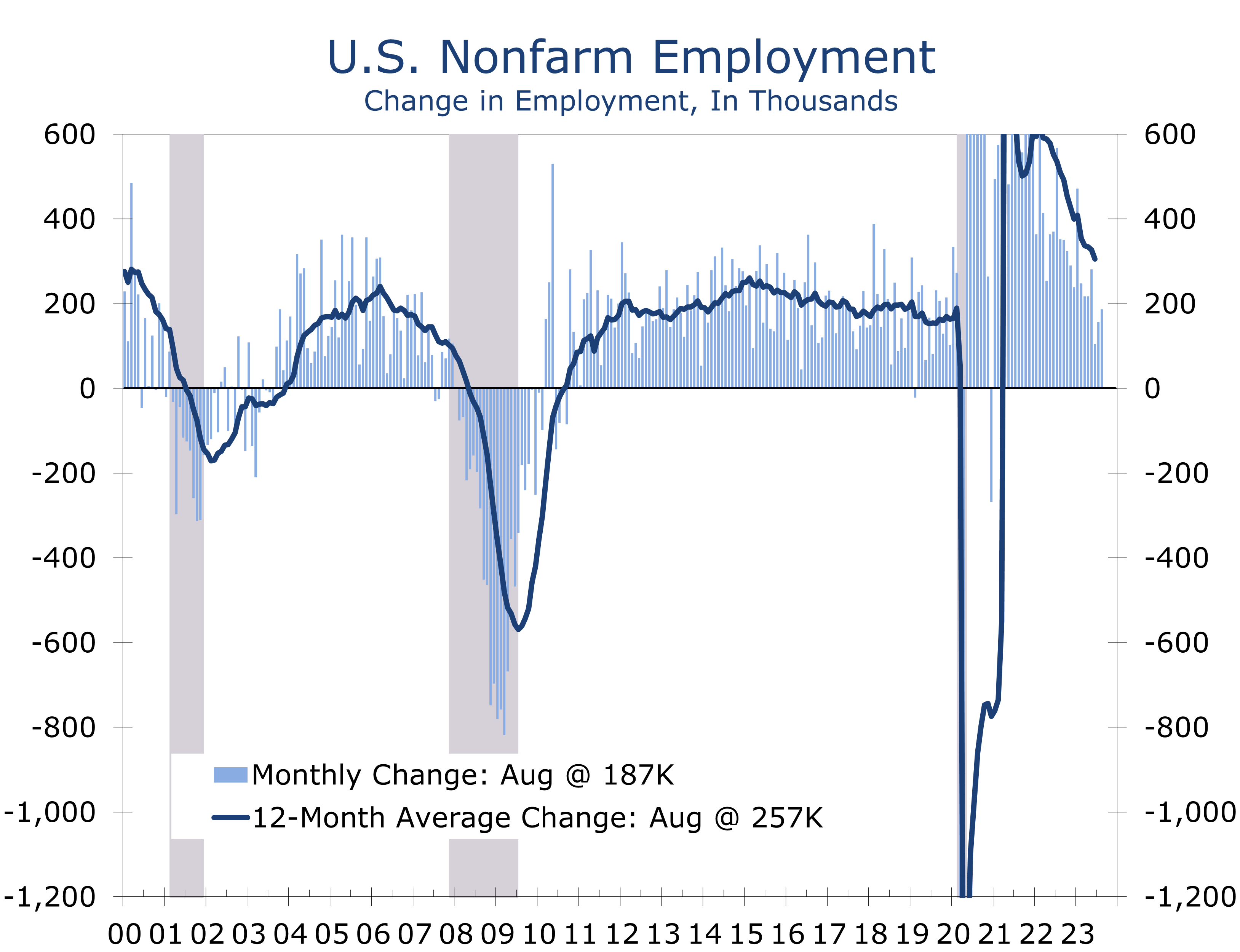
- Employers added 187,000 jobs in August, while the unemployment rate rose to 3.8%.
- Hiring was held back by the closure of Yellow Freight Lines, which pulled down employment in the trucking and warehousing by 36.7K.
- The Hollywood Strike also cut employment in the motion picture industry by 16.8K.
- Hiring remains strong in areas still striving to bring payrolls back to their pre-pandemic trend, including health care, leisure and hospitality and other services.
- Construction (+22K) and manufacturing (+16K) also posted solid gains.
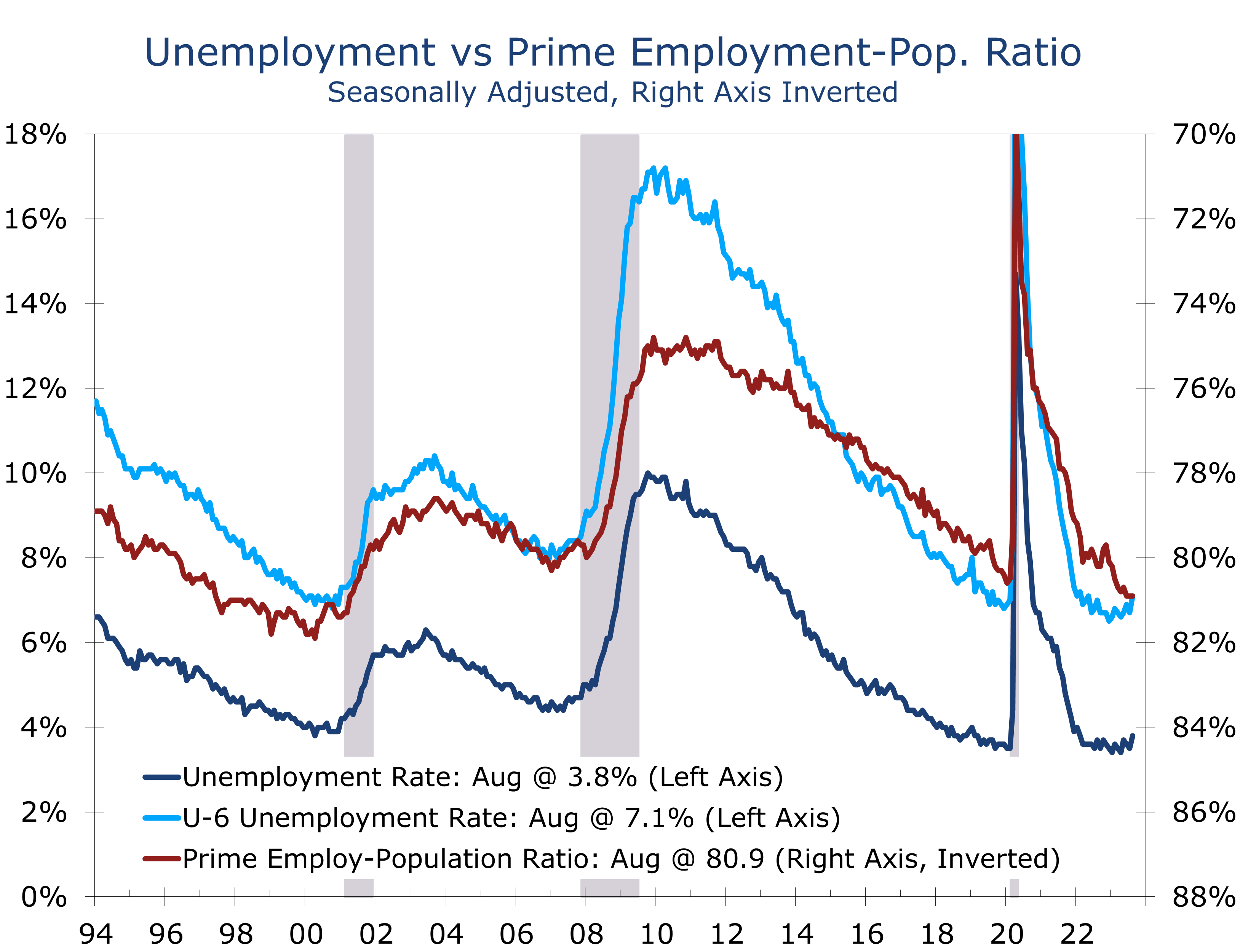
- The unemployment rate rose 0.3 percentage points to 3.8%, as a 736,000-person surge in labor force growth outpaced a 222,000 rise in household employment.
- Average hourly earnings rose just 0.2% in August and are now up 4.3% year-to-year.
- Nonfarm employment rose solidly in August, despite large losses due to the Yellow Freight Lines shutdown and Hollywood actors strike, which combined to eliminate 53,500 jobs.
Nonfarm payrolls rose a more modest 187,000 in August, as the shutdown of Yellow Freight Lines helped cut employment in trucking and warehousing by 36,700 jobs. In addition, the ongoing actors and writers strike cut 16,800 jobs from payrolls in the motion picture business, which is included in information services. The unemployment rate rose to 3.8%.
The initial read on August employment is this is a Goldilocks-type of report. Hiring is cooling off, the unemployment rate is inching higher and wage increases are slowing. The eye-popping 0.3-percentage-point rise in the unemployment rate to 3.8% reflects an outsized gain in the labor force, which is a positive. Household employment rose a solid 222,000 in August.
Wages and salaries rose just 0.2% in August, which marks the smallest increase since February 2022. Wages and salaries posted uncharacteristically small gains in the goods sector this past month, with the weakness most notable in staff and administrative positions. Wages for production workers rose solidly.
The key takeaway from August payrolls is hiring continues to decelerate. Employers added a net 187,000 jobs, compared to an average monthly gain of 271,000 jobs during the prior 12 months. While last month’s gain slightly topped expectations, revisions to the June (-80K) and the July (-30K) data reinforce the pre-existing downward trend. Moreover, job gains remain heavily concentrated in health care and leisure and hospitality, both of which are striving to bring payrolls back to their pre-pandemic trend.
Service providers accounted for the bulk of job growth in August, adding a net 143,000 jobs. The bulk of that increase was in health care and social services, which added 97,000 jobs. Demand for health care has surged in recent months, as people are going back to the doctor and dentist office and moving forward with treatments and procedures put off during the pandemic. Ambulatory health care added 40,000 jobs in August, and hospitals added 15,000 jobs. Another 17,000 jobs were added at nursing homes and residential care facilities.
Construction continues to benefit from fiscal stimulus, which is also lifting manufacturing.
Construction is another notable bright spot. Much of this past month’s gains were in nonresidential specialty contractors (+12.1K) and heavy and civil engineering (+7.1K). The gains reflects ongoing commercial projects, as well as a bevy of industrial projects driven in part by the Inflation Reduction Act and CHIPs Act. Residential construction also remains solid, as builders still have a massive backlog of homes under construction.
Manufacturers added 16,000 jobs in August, with much of that growth occurring in wood products (3.1K) and fabricated metals (+4.6K), two industries that directly benefit from the ongoing construction boom.
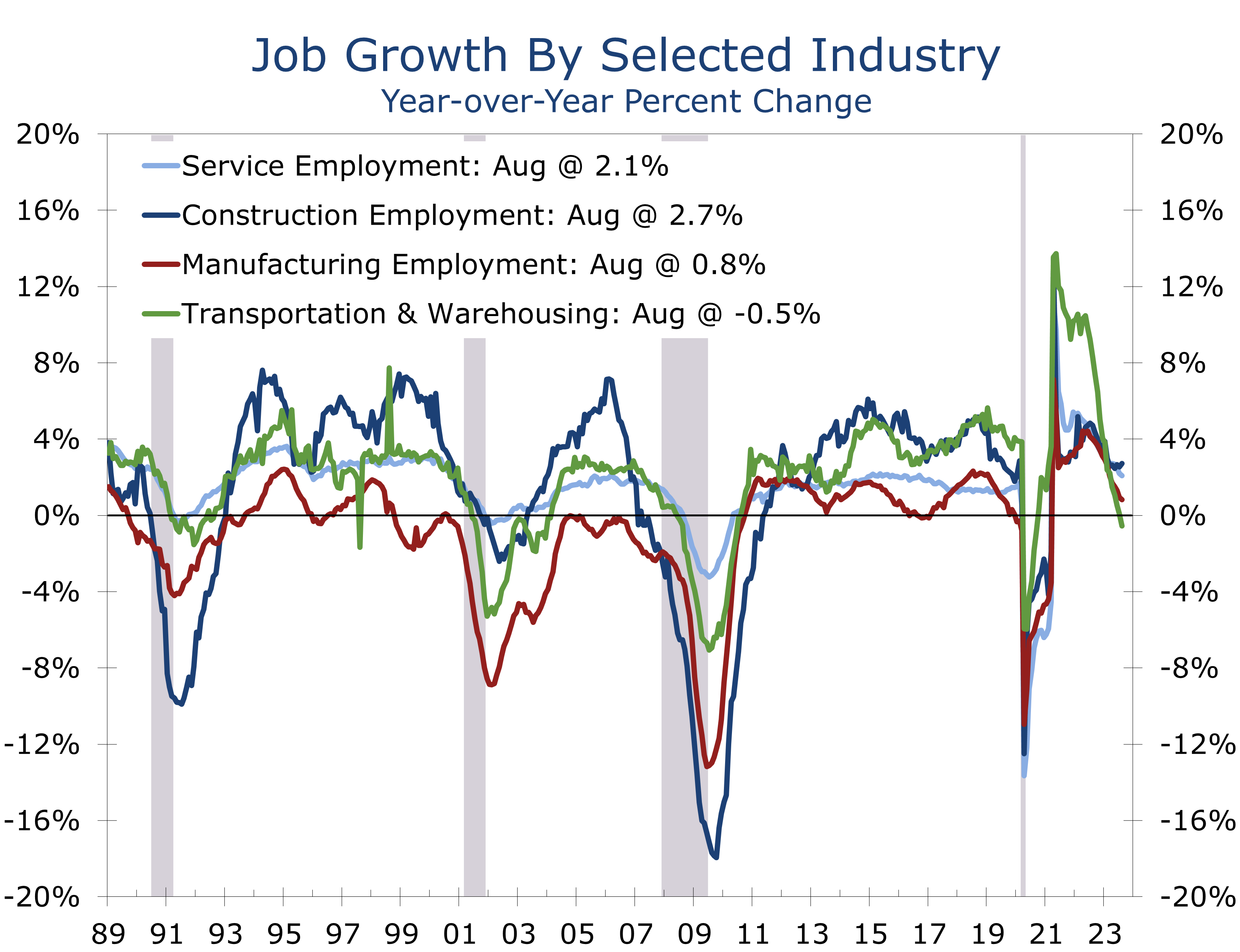
Trucking and warehousing posted an outsized 36,700 job loss in August, driven largely by the shutdown of Yellow Freight Lines. The economy is going through a broader inventory cycle, however, that is resulting in lower freight volumes for truckers in general. Demand for consumer discretionary goods also remains soft, resulting in some shutdowns and job losses in the furniture industry and other areas.
The freight recession took a toll on trucking and warehousing jobs in August.
Inventory building in the motor vehicle sector, ahead of a possible strike this fall, is helping offset some of the weakness at consumer products manufacturers.
The bottom line for the August employment report is hiring has likely slowed enough to take a September rate hike off the table. The CME notes the odds of a November hike also fell sharply following the report. We feel this reaction is overdone and premature. The August payrolls have tended to underestimate job growth, resulting in subsequent upward revisions. Aggregate hours worked bounced back a solid 0.4% in August, which is consistent with the third quarter real GDP growth in the 3% to 3.5% range.
Disclaimer: This publication has been prepared for informational purposes only and is not intended as a recommendation offer or solicitation with respect to the purchase or sale of any security or other financial product nor does it constitute investment advice.