The CPI Looks Better Than It Was a Year Ago, But Core Inflation Remains Sticky
- The Consumer Price Index rose 0.1% in May, which was about half the consensus estimate.
- The smaller rise in the CPI brought the year-over-year change down to 4%, less half the gain seen a year ago.
- Energy prices fell 3.6% in May, with gasoline prices falling 5.6% and fuel oil prices tumbling 7.7%. Electricity prices fell 1.0%.
- Food prices rose 0.2% in May, with grocery store prices rising 0.1% and prices at restaurants climbing 0.5%.
- Prices excluding food and energy items rose 0.4% and remain up 5.3% year-to-year.
- Core inflation has been very persistent, rising 0.4% in five of the six past months. Shelter, used cars, and motor vehicle insurance were among the largest gainers.
- Bottom line: The smaller rise in the headline CPI gives the Fed room to pause in June. With the core CPI stuck at 5.3%, however, the Fed will likely signal they have more work to do.
The Consumer Price Index rose 0.1% in May, as sharp declines in energy and less price pressure at the grocery store offset gains elsewhere. Prices excluding food and energy items rose 0.4%, with shelter cost responsible for the bulk of that increase. Prices for used cars and trucks, motor vehicle insurance and clothing and apparel all rose solidly as well.
On a year-to-year basis, the headline CPI dipped back to 4% in May, which marks the smallest gain since February 2021. Inflation peaked on a year-to-year basis back in June of last year at 9.1%.
Much of the improvement in the headline CPI has come from lower energy prices. Gasoline prices have plunged 19.7% over the past year, while fuel oil prices have plummeted 37%.
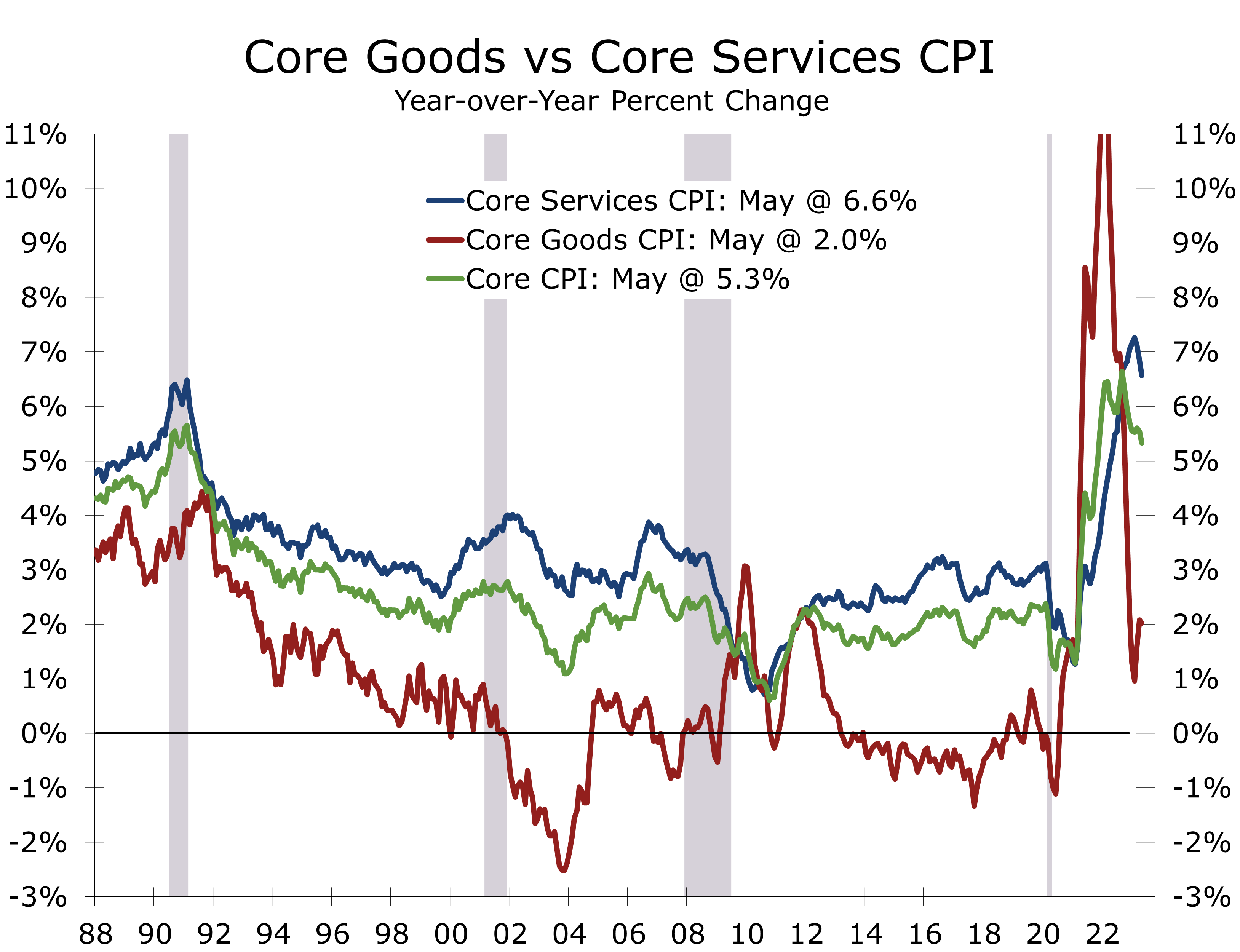
Prices excluding food and energy items rose 0.4% in May and are up 5.3% year-to-year. The core CPI has been remarkably persistent, rising 0.4% in five of the past six months. February was the lone exception when it rose 0.5%. The core peaked at 6.5% in March 2022 and has fallen much less than the headline series.
The core CPI has risen persistently, climbing 0.4% in five of the past six months.
The persistence of core inflation, particularly in the shelter and used car components, continues to focus attention on more leading measures of these prices. Market rents have been decelerating recently, with the latest Apartment List data showing apartment rents up just 0.9% year-to-year compared with an 8.7% increase in the BLS rent measure. Auction prices for used cars have also fallen somewhat.

The mismatch between the more leading market measures and the CPI is another reason for the Fed to take time to reassess where they are in the inflation battle and take a deeper look into how tighter credit conditions will impact the economy. So far, the Fed has been less swayed by the market measures. A rising proportion renters are renewing their leases at higher rents, as home prices have firm back up and mortgage rates have risen. The proportion of household income needed to pay rent or make principal and interest payments also remains near a modern-era high.
The one area where inflation has clearly cooled off is in areas tied to shortages and supply chain bottlenecks. Energy was one of those items and the emptying of the Strategic Petroleum Reserve brought about some immediate relief. Supply chain bottlenecks in general have eased as production has ramped up and shipping rates have fallen back below pre-pandemic levels.
Food prices are another area where inflation is cooling off. Overall food prices rose 0.2% in May, with prices for food at home rising 0.1% and prices for food away from home rising 0.5%. Much of the recent easing in prices at the grocery store has come from a reversal in earlier price spikes. Prices for eggs plunged 13.8%, fish and seafood prices fell 1.6%, and prices for dairy products fell 1.1%. Prices for beef and fresh fruits and vegetables continue to increase, however, and prices for cereals, breads, and snacks remain problematic.
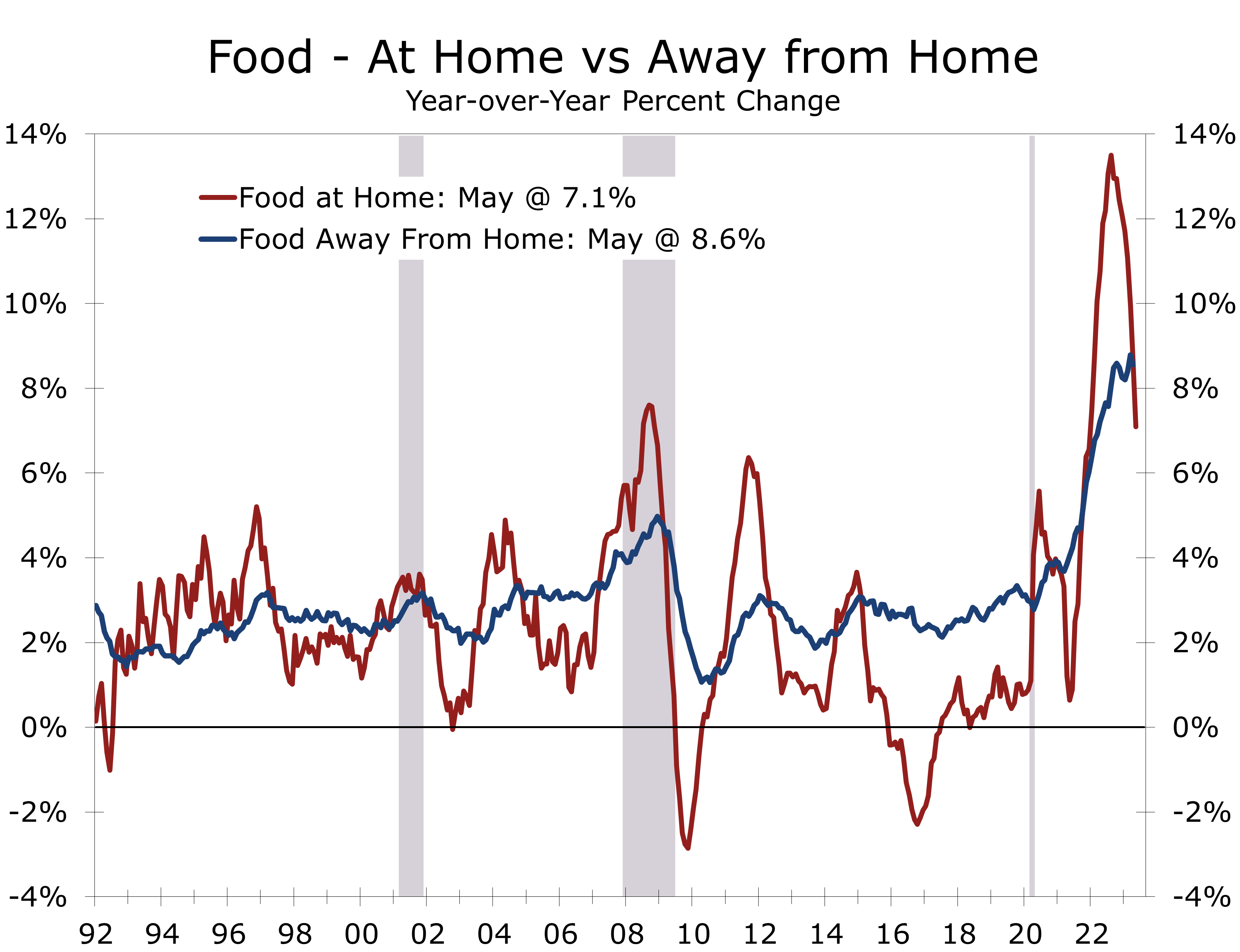
The Fed is also likely to further debate how much higher wages are fueling inflation. Wages are rising the fastest in areas of the economy that are still striving to rehire workers lost during the pandemic. Restaurants are a prime example. Prices at full-service restaurants rose 0.4% in May, while prices at limited-service restaurants rose 0.5%. On a year-to-year basis prices at limited-service restaurants are up 8%, likely reflecting high labor prices.
Services prices in general remain more problematic. Prices for services, excluding energy, rose 0.4% in May, marking the third straight month they rose by that amount. Core services prices are up 6.6% year-to-year. While shelter costs are responsible for much of this gain, prices are also rising in more labor-intensive parts of the economy and will likely persist.
The May CPI data are generally supportive of the Fed pausing its rate hikes in June.
We expect the Fed to leave its federal funds rate target unchanged tomorrow but signal more rate hikes are likely. We expect one more quarter-point hike, most likely in July, and look for tightening credit conditions later this year to do the rest of the Fed’s work for them.
Disclaimer: This publication has been prepared for informational purposes only and is not intended as a recommendation offer or solicitation with respect to the purchase or sale of any security or other financial product nor does it constitute investment advice.