Inflation Continued to Decelerate in March
- The Consumer Price Index rose 0.1% in March and is now up 5.0% year-to-year.
- Prices excluding food and energy items, rose 0.4% and are now up 5.6% year-to-year.
- Energy prices fell 3.5% in March, with gasoline prices plunging 4.6%.
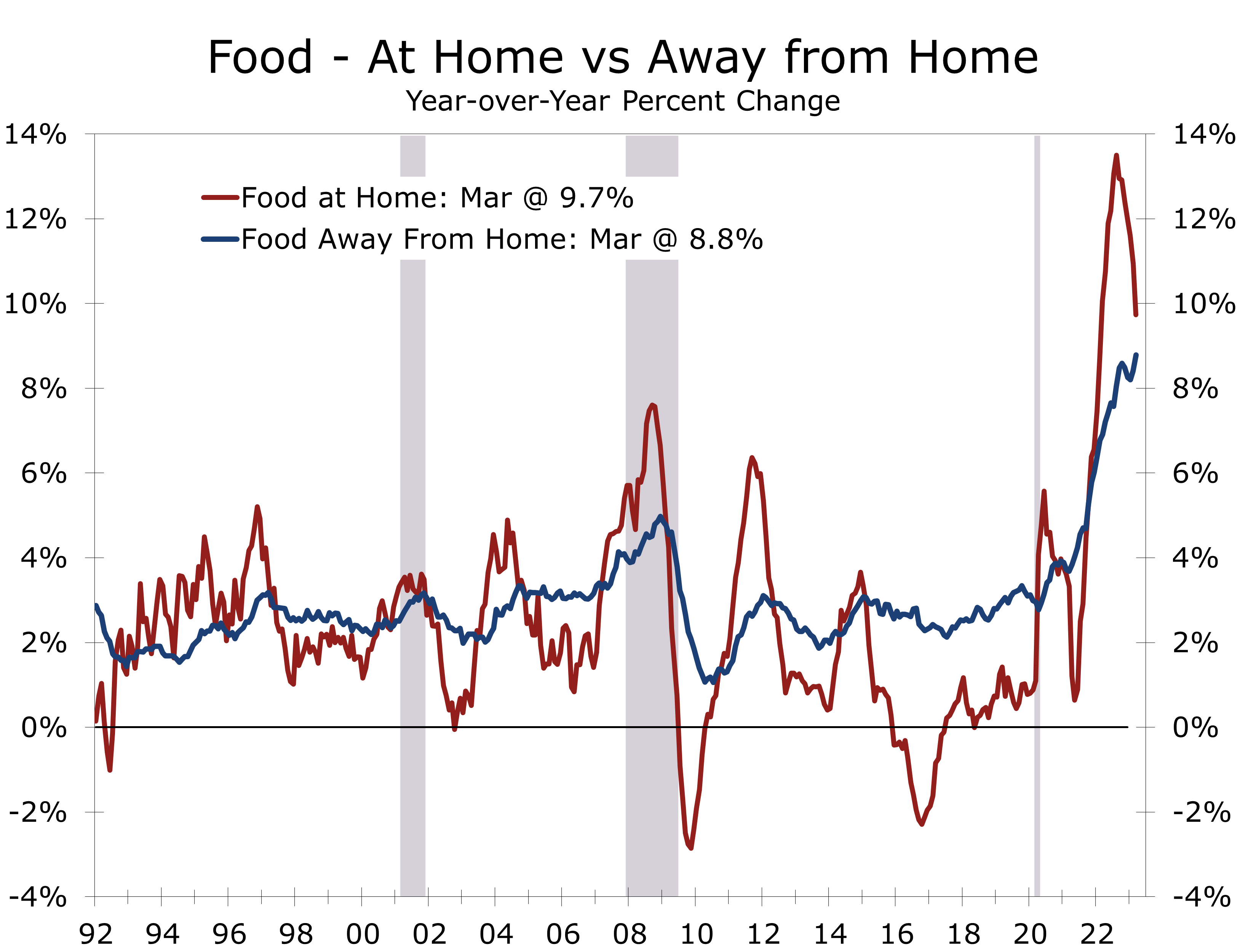
- Food prices were unchanged, as a 0.6% rise in prices at restaurants was offset by a 0.3% drop in prices at the grocery store.
- Shelter costs rose 0.6% in March, marking a slight deceleration from the three prior months. Both rent and owners’ equivalent rent rose 0.5%, while lodging cost rose 2.7%.
- Used car prices fell 0.9%, continuing its recent string of declines. Prices at used-car auctions have been rising, however, so this trend appears unsustainable.
- Prices for motor vehicle insurance rose 1.2% in March and are up 15% year-to-year.
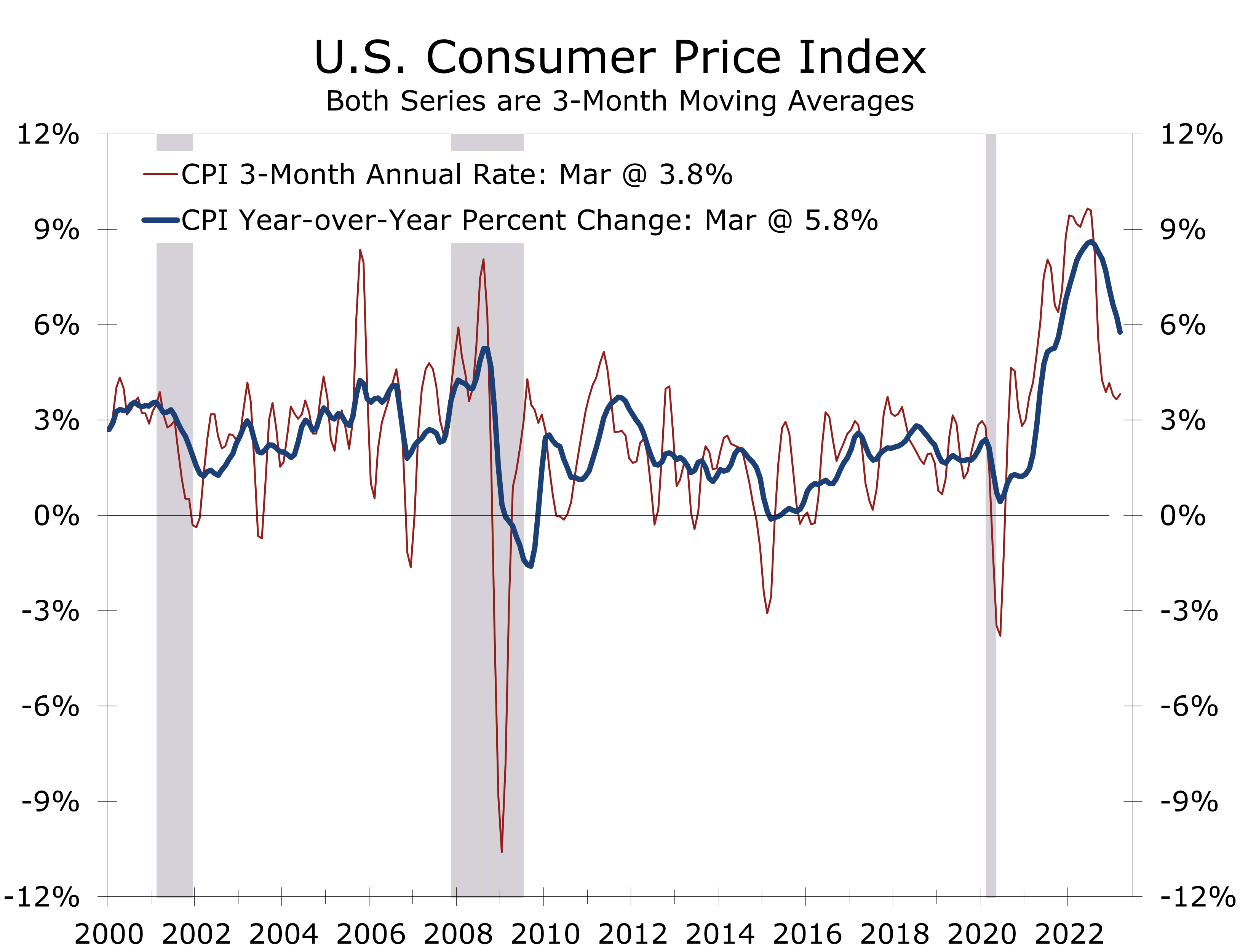
Consumer prices rose more modestly in March, with the headline Consumer Price Index rising just 0.1% following a 0.4% gain in February and 0.5% gain January. Prices have risen at a 3.6% annual rate over the past three months and are now up 5.0% over the past year. The year-to-year rate has been steadily decelerating since it peaked last June, although the pace of deceleration has ebbed.
The moderation in inflation is a relief to consumers and the financial markets. Prices of frequently purchased items such as groceries and gasoline eased notably. While overall food prices were unchanged, prices at grocery stores fell 0.3%. Prices for meats, poultry, fish and eggs fell 1.4%, with declines evident across every major category. Eggs saw the largest drop, with prices falling 10.9%, following a 6.7% drop the prior month. Prices are still up a whopping 36% over the past year, however. Prices for fresh fruit and vegetables fell 1.7% in March and are down 0.2% from the prior year.
Prices eased for many items consumers buy frequently, such as gasoline and groceries.
Energy prices fell 3.5% in March, with prices for motor fuels falling 4.7% and prices for fuel oil falling 2.5%. Prices for energy services also declined, as natural gas prices fell 7.1% and prices for electricity fell 0.7%.
The slide in gasoline prices might come as a surprise to folks that fill up their tanks regularly. Prices for all grades of gasoline have been rising in recent weeks. The increases, however, are less than they usually are this time of year, resulting in a seasonally adjusted decline. Oil prices have risen more recently, suggesting we will likely see gasoline prices rebound.
Energy prices fell 0.6% in February, following a 2% rise the prior month. The price of natural gas declined 8%, marking the largest 1-month drop since October 2006. The price of fuel oil fell 7.9% in February. Demand for both fell sharply this past month, as much of the country enjoyed unseasonably mild weather. Gasoline prices rose 1% in February, following a 2.4% rise the prior month.
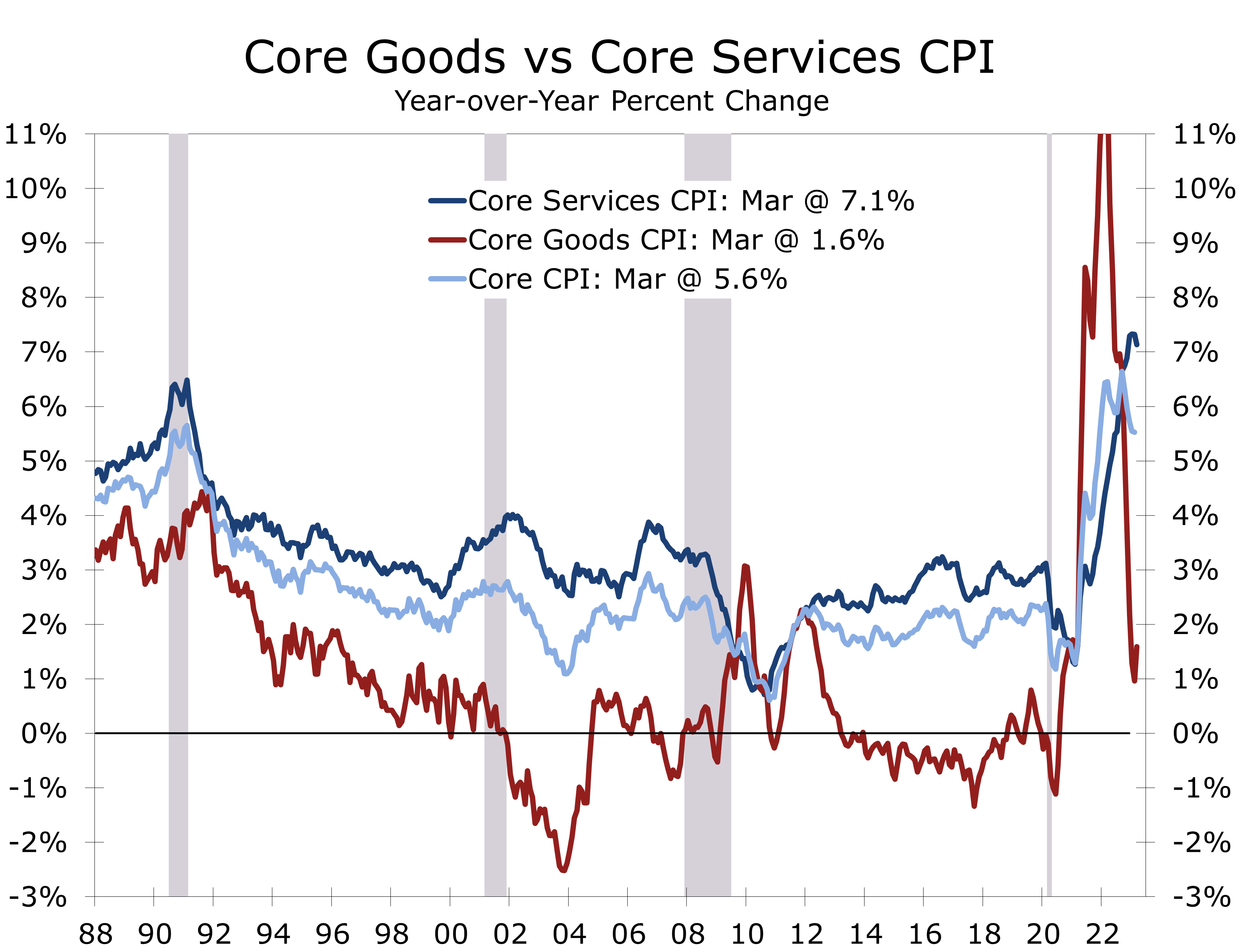
Prices excluding food and energy rose 0.45% in February and remain up 5.5% year to year. Prices for core goods were unchanged in February and are now up just 1% year-to-year. Much of the deceleration in core goods prices is due to falling prices for used cars and trucks, which fell 2.8% in February and are down 13.6% over the prices year.
Shelter costs continue to increase, reflecting past increases in market rents.
Prices for services excluding energy rose 0.6% in February, with high shelter costs accounting for much of the gain. Shelter costs rose 0.8% in February and are up 8.1% year to year. Rent of primary residence and owners’ equivalent rent account for the bulk of shelter costs. Both measures are calculated by the BLS using a complex formula that appropriately captures the costs of housing for renters and homeowners but tends to lag changes in market rents.
Prices for services, less energy, rose 0.4% in March and are up 7.1% year-to-year. Most of that increase is due to higher shelter costs, which are coming down. The BLS measure of rents and owners’ equivalent rent trails market-based rent measures, all of which have moderated substantially in recent months so we should see continued relief in the BLS measures.
Beyond shelter, services prices are proving persistent. Services prices, excluding energy and shelter, rose 0.4%. The sharpest price gains continue to be in labor-intensive areas or areas still enjoying a strong rebound from the pandemic. Travel in leisure spending is a notable hotspot, with airline fares rising 4.0% in March following a 6.4% rise in February. Fares are up 17.7 over the past year. Prices of other personal services rose 0.5% in March and are up 5.3% over the past year.
Taming services prices is essential if inflation is to return to the Fed’s 2% target.
While the March CPI data was in line with consensus expectations, the markets breathed a sigh of relief as there were no big negative surprises. Inflation appears to be moderating enough that the Fed will likely only need to hike rates 1 or 2 more times this cycle.
Disclaimer: This publication has been prepared for informational purposes only and is not intended as a recommendation offer or solicitation with respect to the purchase or sale of any security or other financial product nor does it constitute investment advice.