Inflation Continues to Slowly Decelerate
- The Consumer Price Index came in close to expectations, with the headline index rising 0.4% and the core rising 0.5%.
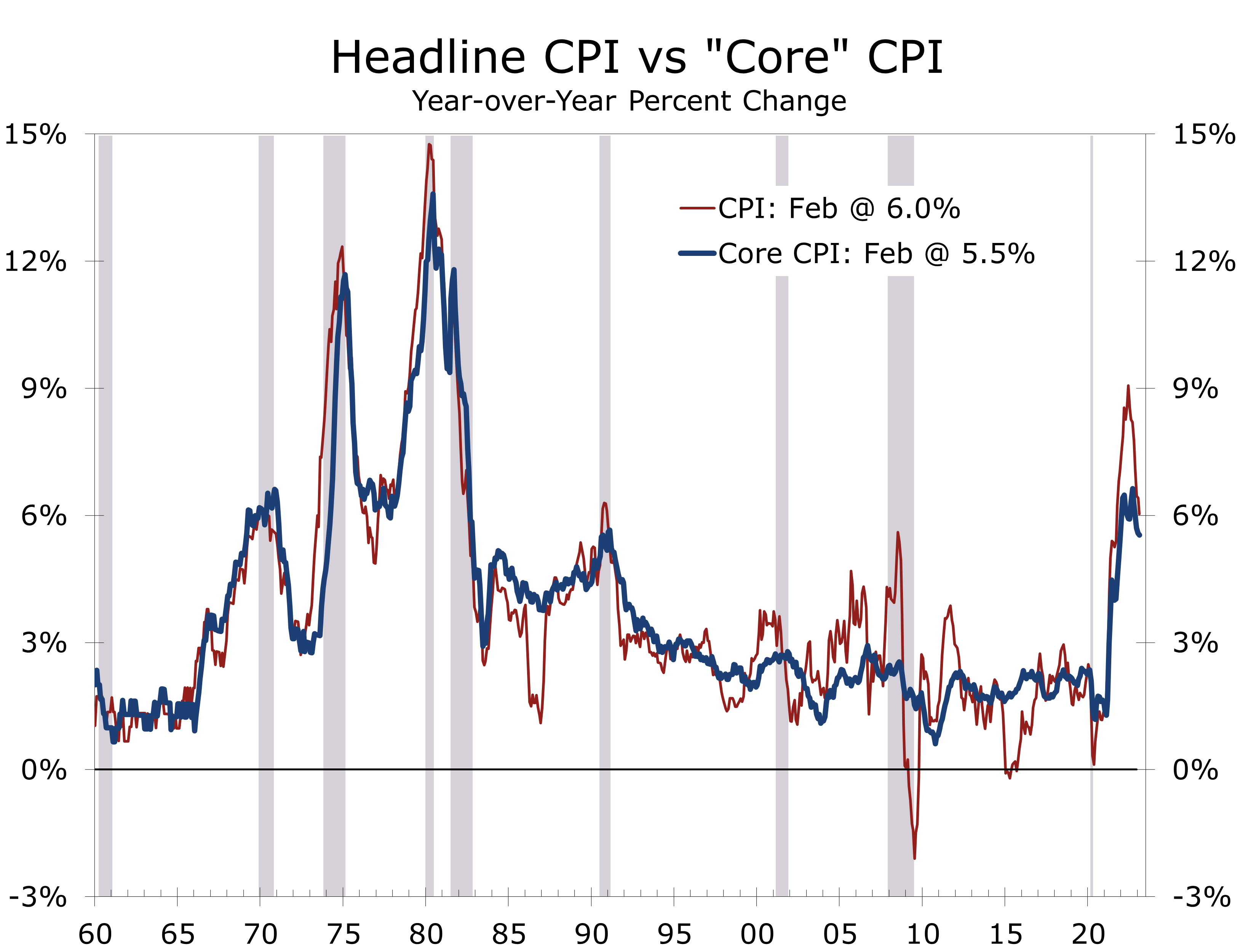
- February’s gains leave the headline index up 6.0% year-to-year, and the core up 5.5%.
- Price increases eased at the grocery store, with food prices rising 0.4% overall and just 0.3% at the grocery store.
- Sharply lower prices for fuel oil and natural gas – both byproducts of milder winter weather – pulled energy prices down 0.6%.
- Used-car prices fell 2.8% but higher prices for airfares and another big rise in shelter cost more than offset that drop, resulting in a slightly larger-than-expected rise in the core CPI.
- Shelter costs were driven higher by an 0.8% increase in residential rents and 0.7% rise in owners’ equivalent rent.
- Medical care costs fell 0.5%, reflecting a 0.5% drop in physician’ services as well as uncharacteristically small increases in hospital services and prescription drugs.
After this past week’s surprise blow up in the banking sector, a ho-hum CPI report was sorely needed. Inflation is now moving in the right direction, although the moderation is still too modest to allow the Fed to end its tightening regimen. We expect another quarter-point hike at next week’s FOMC meeting, provided concerns about the banking system subside.
Inflation is clearly decelerating on a year-to-year basis. The headline CPI peaked at 9.1% last June and has now slowed to just 6.0%. Most of that deceleration has come from a sharp reversal in energy prices due to the draw down of the Strategic Petroleum Reserve and milder than usual winter weather in much of the U.S. and Europe. Falling prices for used cars and light trucks and some moderation in food prices has also helped pull down the headline and core numbers.
Food prices are finally moderating, thanks to lower fuels costs and fewer bottlenecks.
Prices for groceries rose just 0.3% in February, marking their smallest gain since March 2021. The moderation reflects some easing of supply bottlenecks and lower prices for diesel fuel. Prices for meats, poultry, fish and eggs fell 0.1% in February, marking their first monthly drop since December 2021. Egg prices fell 6.7% in February, following huge increases in prior months. Even with the declines in these highly visible areas, grocery store prices remain 10.2% higher than they were a year ago.
Energy prices fell 0.6% in February, following a 2% rise the prior month. The price of natural gas declined 8%, marking the largest 1-month drop since October 2006. The price of fuel oil fell 7.9% in February. Demand for both fell sharply this past month, as much of the country enjoyed unseasonably mild weather. Gasoline prices rose 1% in February, following a 2.4% rise the prior month.
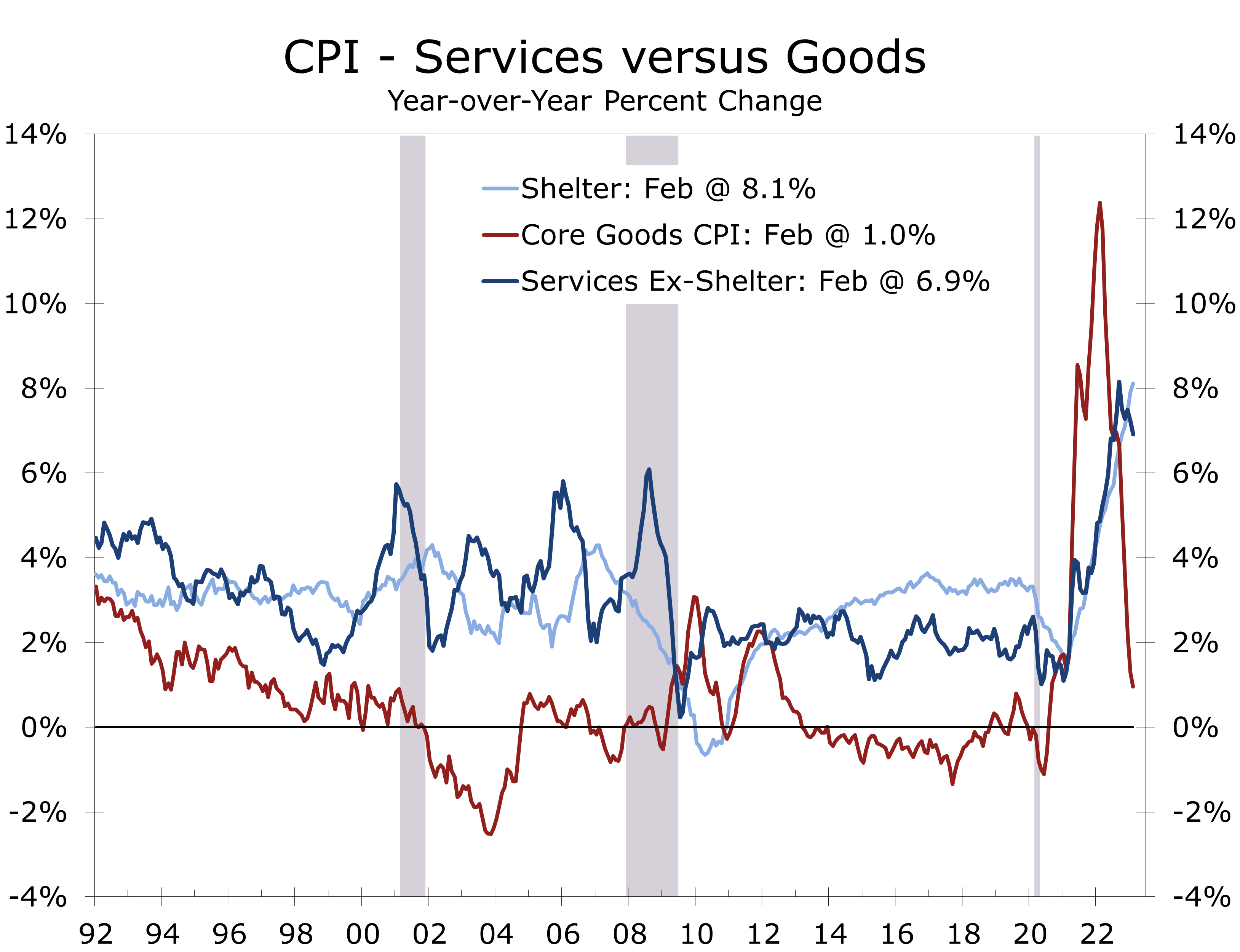
Prices excluding food and energy rose 0.45% in February and remain up 5.5% year to year. Prices for core goods were unchanged in February and are now up just 1% year-to-year. Much of the deceleration in core goods prices is due to falling prices for used cars and trucks, which fell 2.8% in February and are down 13.6% over the prices year.
Shelter costs continue to increase, reflecting past increases in market rents.
Prices for services excluding energy rose 0.6% in February, with high shelter costs accounting for much of the gain. Shelter costs rose 0.8% in February and are up 8.1% year to year. Rent of primary residence and owners’ equivalent rent account for the bulk of shelter costs. Both measures are calculated by the BLS using a complex formula that appropriately captures the costs of housing for renters and homeowners but tends to lag changes in market rents.
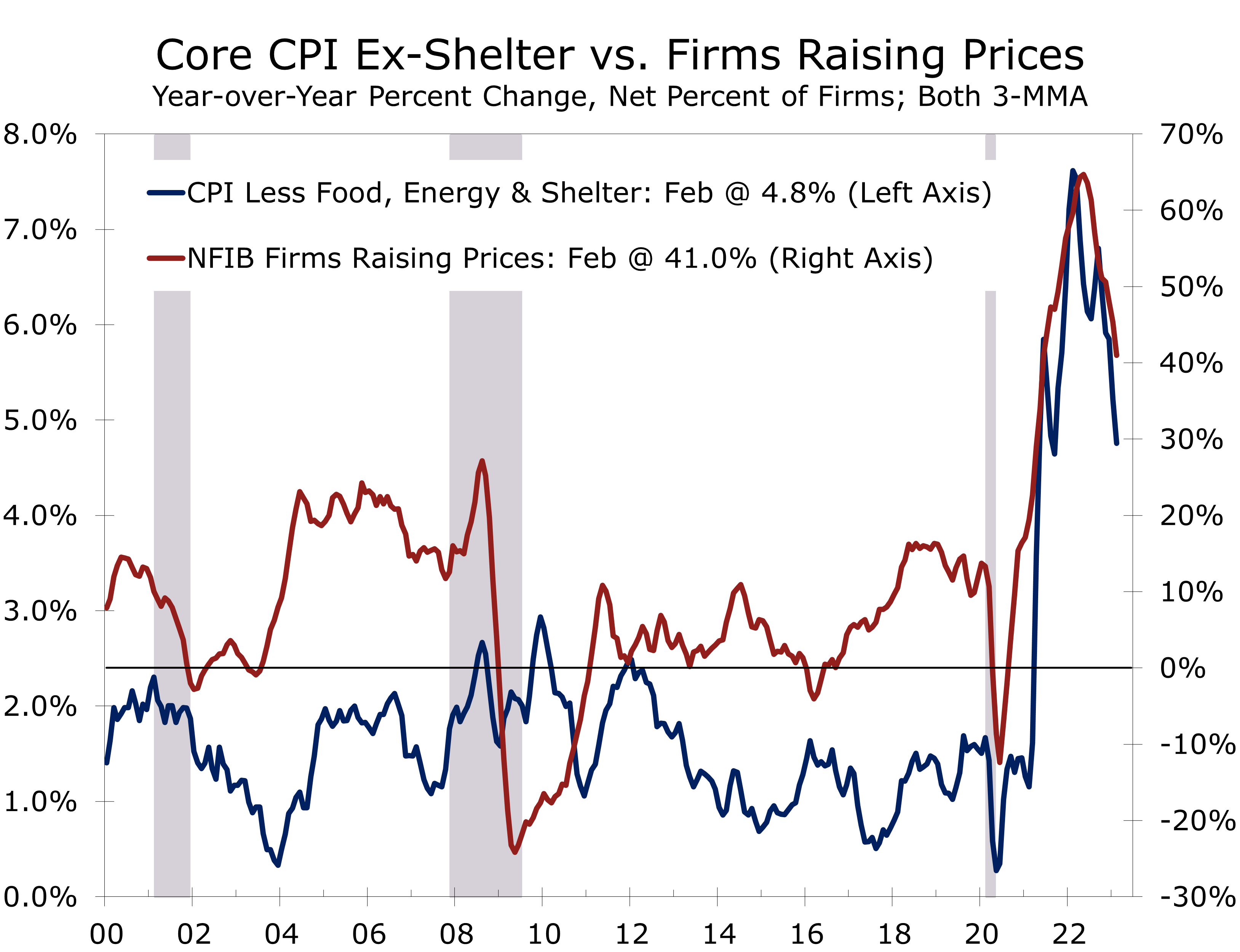
The lags of shelter costs and their outsized weight in the CPI have prompted questions about whether inflation has already decelerated enough for the Fed to stop tightening. We do not believe so. Wages are still rising faster than productivity and price measures where wages are the primary driver of selling prices have been slower to moderate. Prices for services excluding energy and shelter, a category repeatedly mentioned by Fed Chair Jerome Powell, have risen 6.0% over the past year, which is down only modestly from their peak of 6.7% hit last September.
The share of firms raising prices has fallen sharply, hinting inflation will decelerate further.
One of our favorite inflation measures is the share of small businesses raising prices over the past three months. This measure surged to a record high when the economy reopened following the pandemic and is a big reason why we never bought into the “transitory” inflation story. The more recent data is encouraging, with the share raising prices over the past three months falling 4 points in February to 38, which is the lowest level April 2021. A similar measure of firms boosting compensation remains notably higher, however, and has fallen more slowly.
Disclaimer: This publication has been prepared for informational purposes only and is not intended as a recommendation offer or solicitation with respect to the purchase or sale of any security or other financial product nor does it constitute investment advice.